Artwork
Mountain Landscape
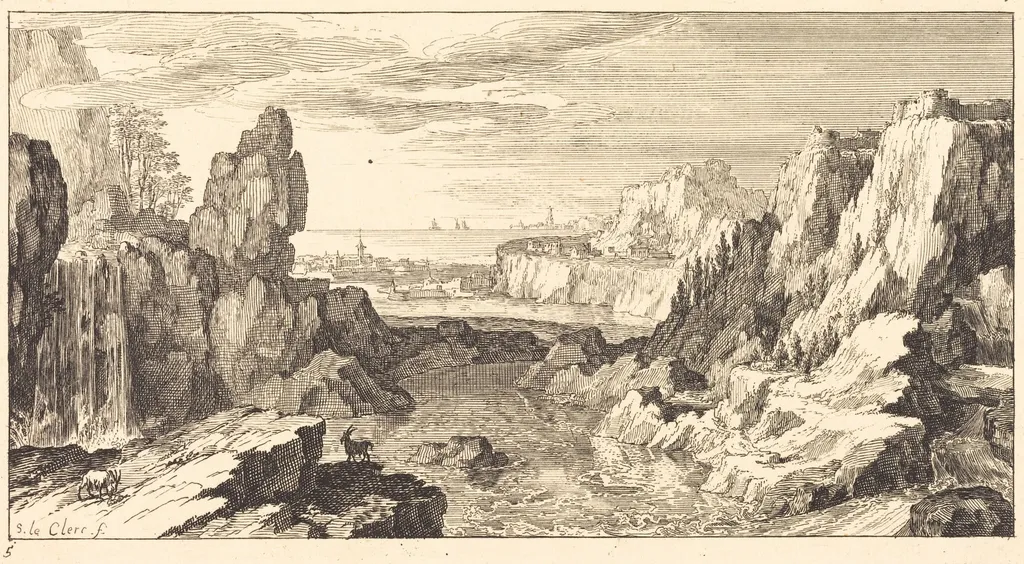
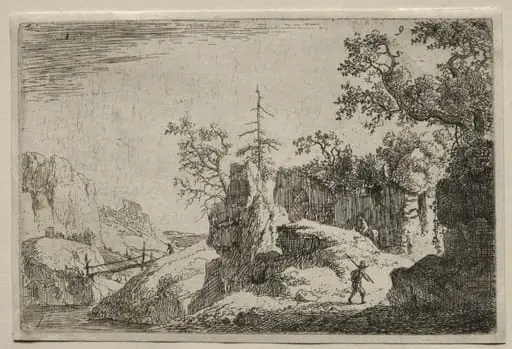
Mountain Landscape is an ink print by the Baroque artist Sébastien Le Clerc I. It dates from 1673 and is held in the collection of the National Gallery of Art.
About this work
Overview
The composition emphasizes vertical rock formations that frame a narrow valley, leading the eye toward a distant settlement nestled on a low plateau.
Created in 1673 by Sébastien Le Clerc I, this etching depicts a rugged mountainous terrain with a winding watercourse. The composition emphasizes vertical rock formations that frame a narrow valley, leading the eye toward a distant settlement nestled on a low plateau. The work is part of a broader tradition of topographical prints, valued for its precise rendering of natural features rather than idealized scenery.
Subject & Meaning
The scene presents a quiet, unpopulated landscape, with a modest village perched on distant terrain, suggesting human habitation within an imposing natural setting. The absence of figures or activity invites contemplation of scale and solitude. The interplay of dark, jagged cliffs and pale, misty skies conveys a sense of atmospheric depth, reflecting a quiet reverence for the untamed earth.
Technique & Style
Le Clerc employed etching to incise fine lines into a metal plate, allowing for intricate textural detail in the rock faces and water. The contrast between dense, cross-hatched shadows and delicate, wavy lines in the sky creates a sense of movement and air. The precision of the lines captures the hardness of stone and the fluidity of mist, demonstrating mastery of the medium’s capacity for both structure and atmosphere.
History & Provenance
The print was produced during Le Clerc’s early career in France, before his later prominence as an engraver for royal commissions. It likely circulated among scholars and collectors interested in landscape studies. No definitive early ownership records are known, but its technical refinement suggests it was intended for an educated audience familiar with printmaking conventions of the period.
Context
In late 17th-century Europe, landscape etchings served both artistic and scientific purposes, often used in cartography or as studies for larger works. Le Clerc’s approach aligns with contemporaries who prioritized observational accuracy over romantic embellishment. This piece reflects a growing interest in natural forms as subjects worthy of detailed documentation, separate from mythological or religious narratives.
Legacy
Though not widely exhibited today, the etching exemplifies the quiet rigor of French printmaking before the rise of Romanticism. Its restrained composition and technical discipline influenced later topographical artists who valued clarity over drama. The work remains a reference for understanding how etching could convey natural complexity with minimal means.
Artist & collection


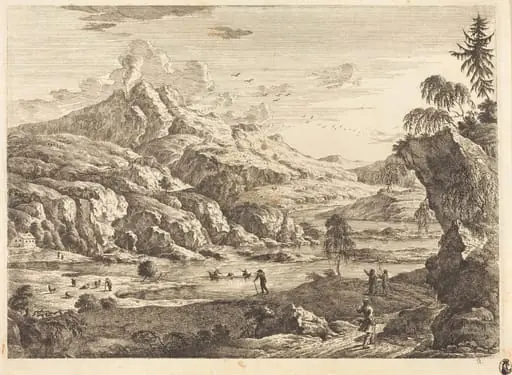 Mountainous Riverscape with Figures
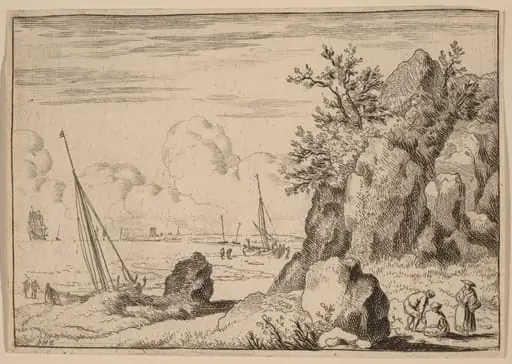 Seascape with Three Figures to the Right
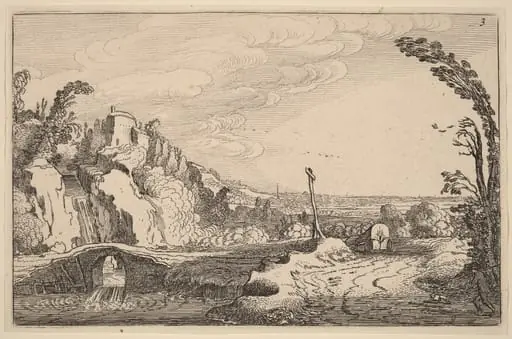 Cascade under a Stone Bridge
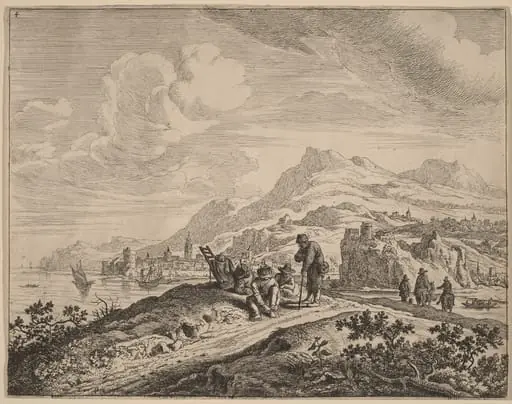 View of the River Rhine
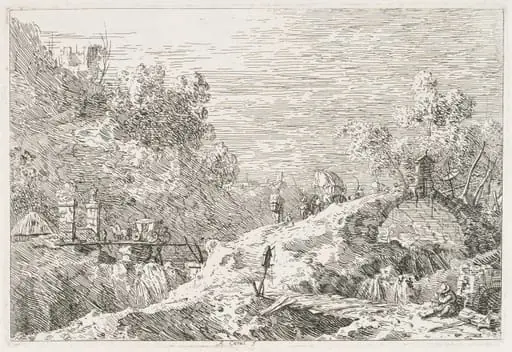 Views: Mountain Landscape with Five Bridges
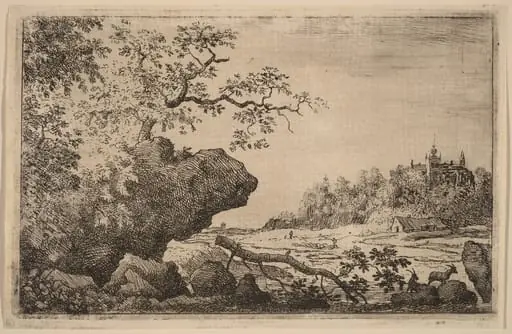 Branch in the Water
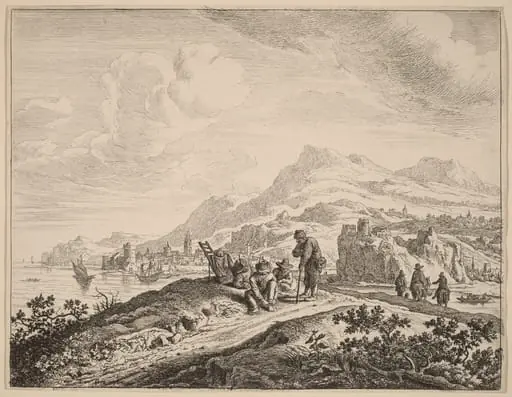 View of the River Rhine
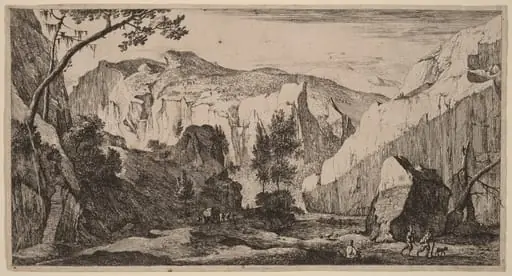 Rocky Landscape: pl.2
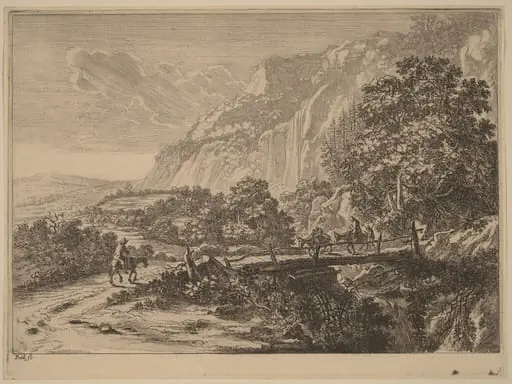 The Wooden Bridge at Sulmona near Tivoli
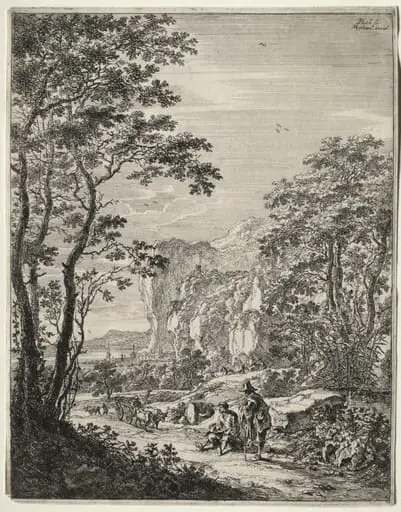 Ox-Cart. View between Ancona and Sinigaglia
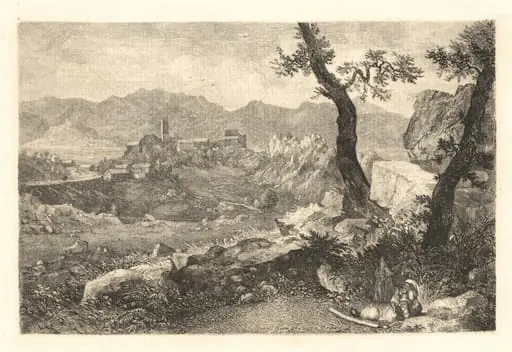 A View near Rome
 A Mountain Landscape