Artwork
A Sailing Ship [verso]
![A Sailing Ship [verso], by Edward Lear, chalk, 1842](https://artifactworldgallery.com/img/edward-lear--a-sailing-ship-verso--c9eebd6783d42a3d-w1024.webp)
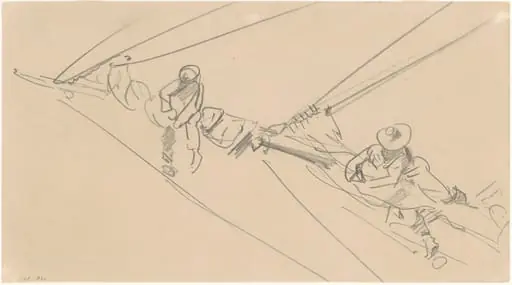
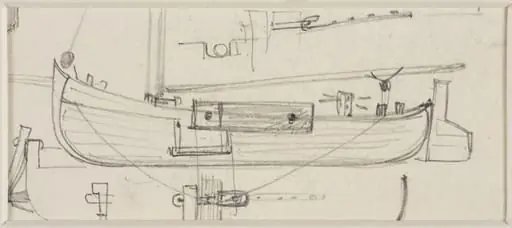
A Sailing Ship [verso] is a chalk drawing by the Romanticist artist Edward Lear. It dates from 1842 and is held in the collection of the National Gallery of Art.
About this work
Overview
Created in 1842, *A Sailing Ship [verso]* is a small drawing executed in black chalk on a light‑brown wove sheet. The work measures only a few inches and presents a quick, gestural depiction of two vessels suspended from a single line. The artist’s signature, the name "Lear," appears in the lower corner, accompanied by the catalog reference "E.600."
Subject & Meaning
The composition captures a brief study of two sailing ships, their masts and rigging rendered with minimal but suggestive lines. The sketch functions as a preparatory observation rather than a finished illustration, emphasizing the basic forms of hulls and sails while hinting at the motion and atmosphere of a marine setting.
Technique & Style
Lear employed loose, rapid strokes of black chalk, allowing the medium’s darkness to contrast sharply with the warm tone of the wove paper. The drawing’s economy of line reflects a draughtsman’s eye for essential structure, with the chalk’s smudging potential used to suggest texture in rigging and sailcloth without detailed rendering.
History & Provenance
Edward Lear, best known for his literary nonsense and detailed travel sketches, produced this piece during a period of extensive nautical observation. The drawing is catalogued as "E.600" in the artist’s own inventory, indicating its role as a study among many similar marine sketches made while he documented voyages and coastal scenes.
Artist & collection
Artist
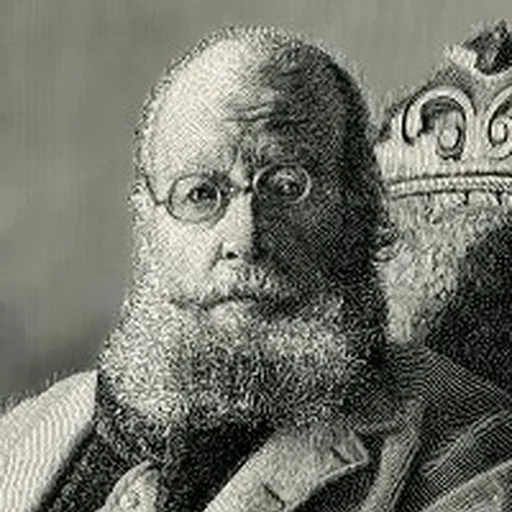
Edward Lear (12 May 1812 – 29 January 1888) was an English artist, illustrator, musician, author and poet, who is known mostly for his literary nonsense in poetry and prose and especially his limericks, a form he popularised but which term…


![Study for "Shoeing Calvary Horses at the Front" [verso], by John Singer Sargent](https://artifactworldgallery.com/img/john-singer-sargent--study-for-shoeing-calvary-horses-at-the-front-verso--6f6d1a163e84e9ab-w320.webp)