Artwork
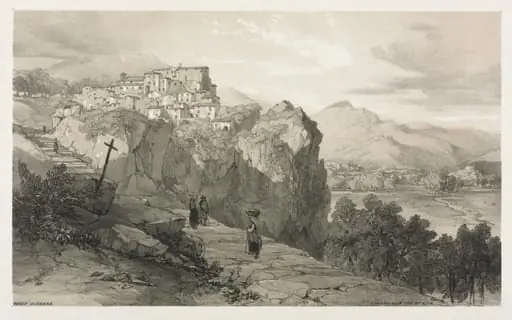
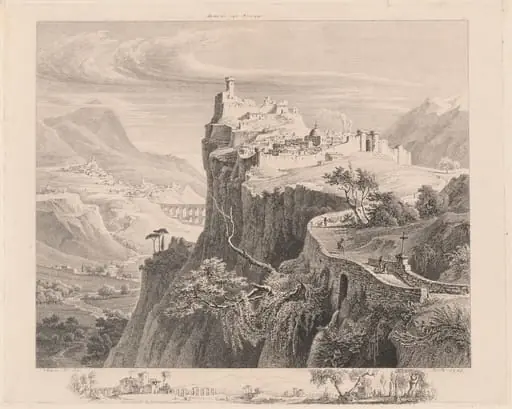
Veduta di Albe e Monte Velino negli Abruzzi
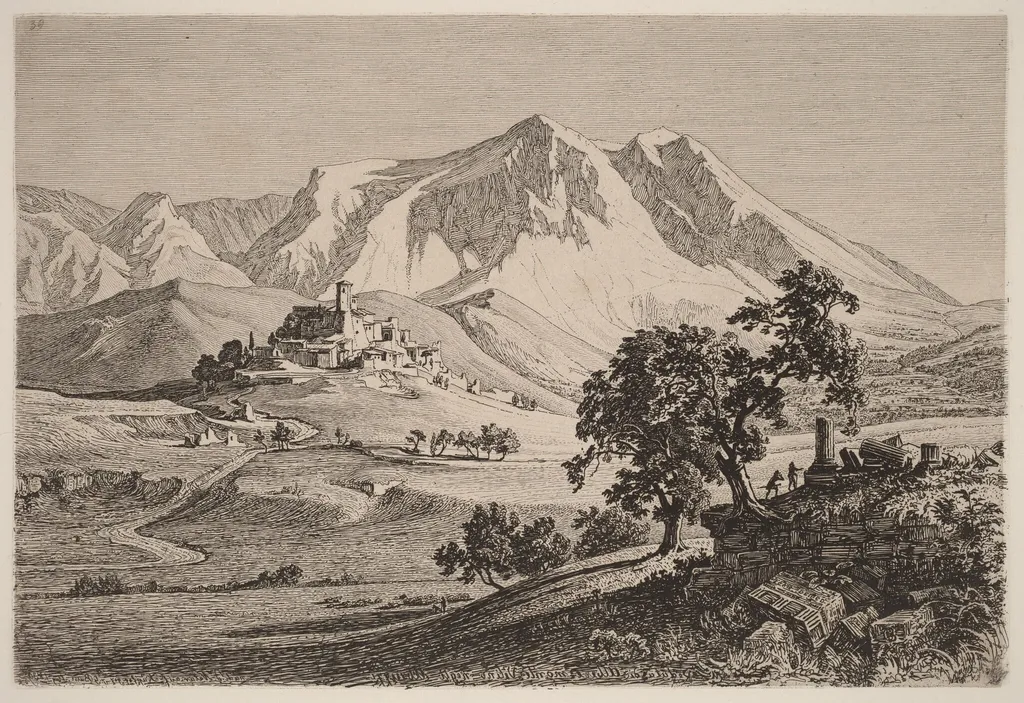
Veduta di Albe e Monte Velino negli Abruzzi is an ink print by the Romanticist artist Georg Heinrich Busse. It dates from 1839 and is held in the collection of the National Gallery of Art.
About this work
Overview
Veduta di Albe e Monte Velino negli Abruzzi is an 1839 etching on chine collé by Georg Heinrich Busse, capturing a serene Italian landscape.
Subject & Meaning
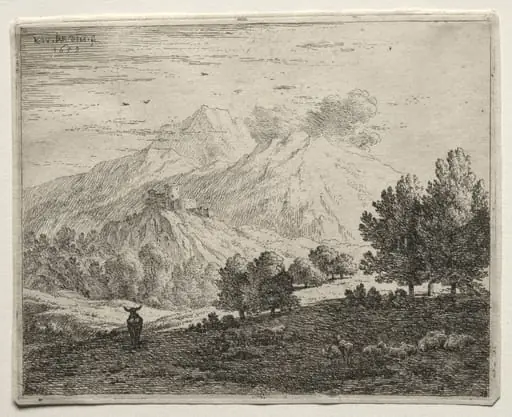
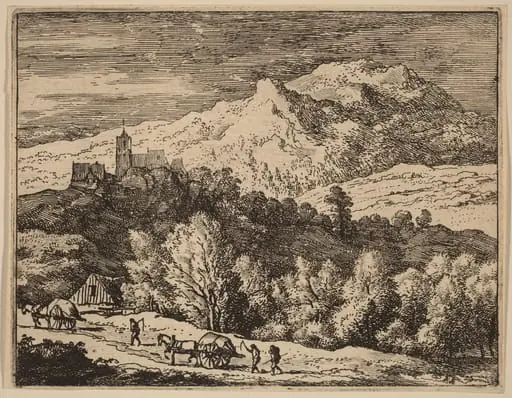
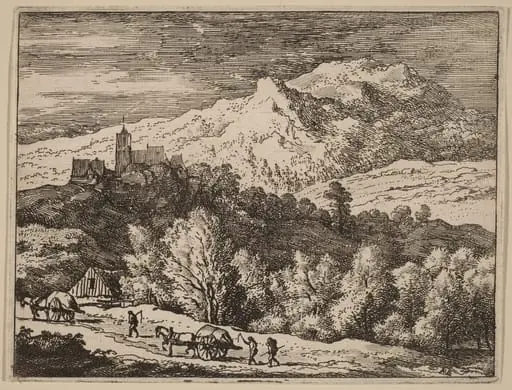
The print depicts a tranquil scene of a small village at the base of Monte Velino in the Abruzzi region, surrounded by lush vegetation, rolling hills, and a prominent tree in the foreground, evoking a sense of peaceful coexistence between nature and human settlement.
Technique & Style
Busse employed intricate etching techniques with varied line work and shading to achieve depth and realism. The incorporation of chine collé introduces warmth and softness, contrasting with the sharper etched elements.
History & Provenance
Created in 1839, specific details regarding the etching's provenance and exhibition history are not provided in the available information.
Context
This work reflects the 19th-century European interest in landscape etchings, particularly in depicting serene and majestic natural settings often with small human habitations, highlighting the era's aesthetic appreciation for nature.
Legacy
The legacy of 'Veduta di Albe e Monte Velino negli Abruzzi' lies in its representation of Busse's contribution to the tradition of landscape etching, though its broader impact on the art historical canon is not detailed in the provided sources.
Own this work as a print
Artist & collection