Artwork
Avisavella, Ceylon
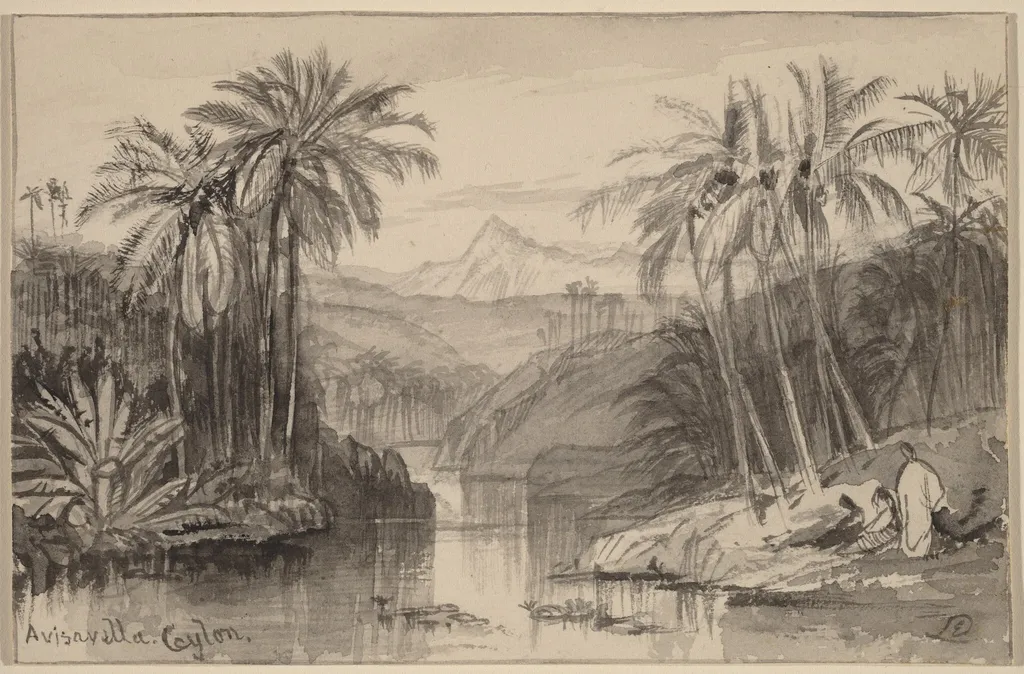
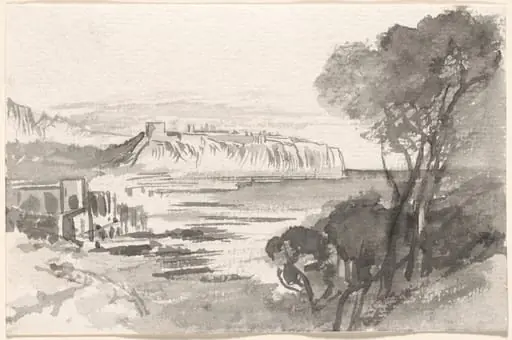
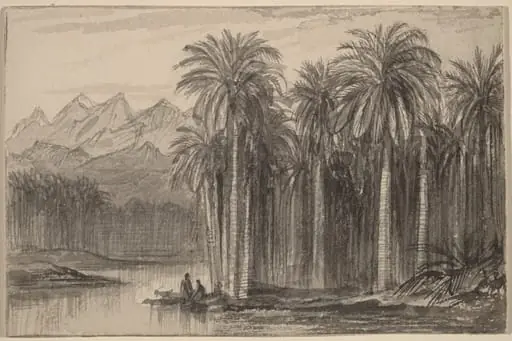
Avisavella, Ceylon is a drawing by the Impressionist artist Edward Lear. It dates from 1884 and is held in the collection of the National Gallery of Art.
About this work
Overview
Avisavella, Ceylon is a drawing created by Edward Lear in 1884, executed in gray wash on wove paper and subsequently mounted on card.
Subject & Meaning
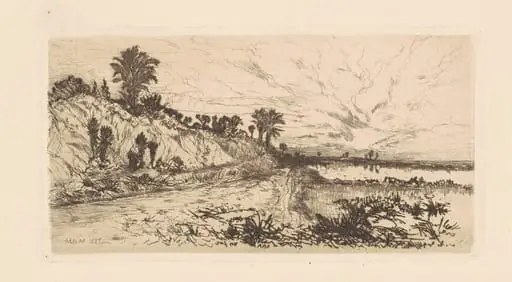
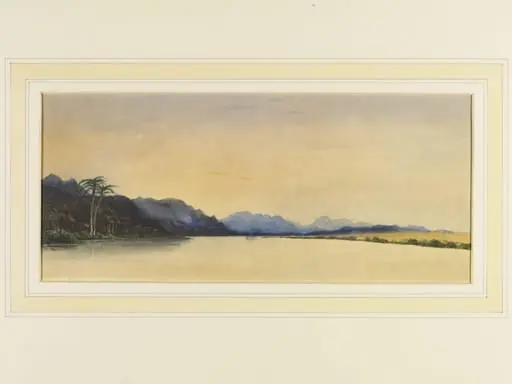
The work captures a serene tropical landscape from Ceylon (now Sri Lanka), featuring palm trees, a tranquil water body, and a contemplative figure in the foreground, conveying a sense of calm and inviting introspection.
Technique & Style
Lear utilized gray wash to achieve a soft, dreamy effect, characteristic of his travel drawings, which often emphasized capturing the essence of visited places in a subdued yet evocative manner.
History & Provenance
Created during Lear's travels, the piece reflects his dual role as artist and writer, likely intended for adaptation into one of his books, though specific provenance details after creation are not provided.
Context
While Lear is known for his illustrations of fauna and travel scenes, this work's serene quality aligns more closely with the contemplative aspects of landscape art, distinct from his more whimsical or satirical outputs.
Legacy
Avisavella, Ceylon, though not a hallmark of Impressionism, shares a peaceful ambiance found in some Impressionist works, suggesting a broader influence of serene landscape traditions in Lear's oeuvre.
Own this work as a print
Artist & collection
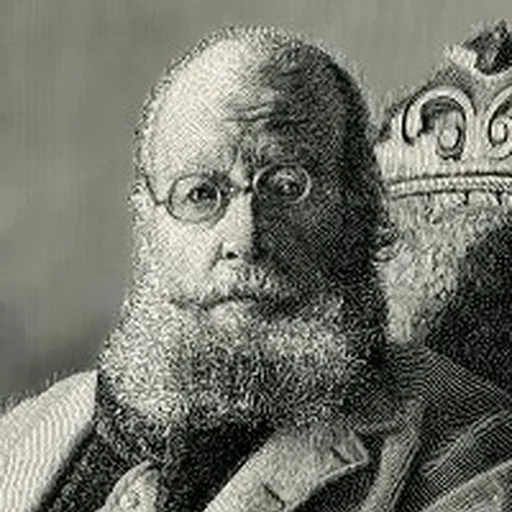
Artist
Edward Lear (12 May 1812 – 29 January 1888) was an English artist, illustrator, musician, author and poet, who is known mostly for his literary nonsense in poetry and prose and especially his limericks, a form he popularised but which term…