Artwork
Thebes
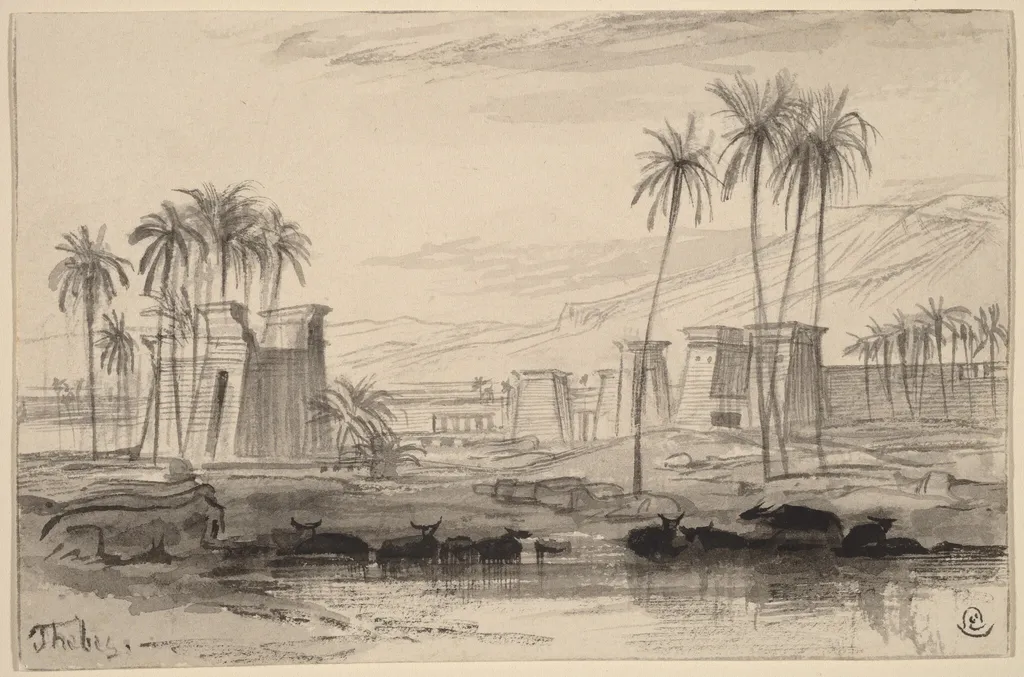
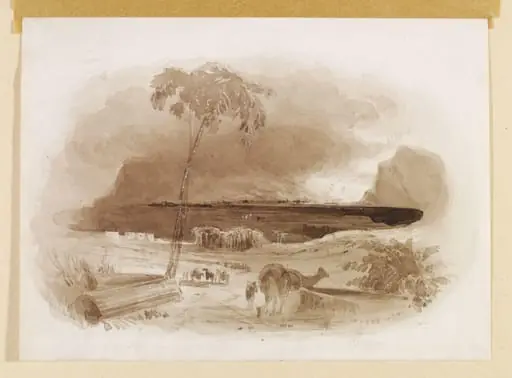
Thebes is a graphite drawing by the Impressionist artist Edward Lear. It dates from 1884 and is held in the collection of the National Gallery of Art.
About this work
Overview
Thebes is a drawing created by Edward Lear in 1884, executed in black and gray wash over graphite on card. It exemplifies Lear's skill as a draftsman and his ability to capture landscapes with subtlety.
Subject & Meaning
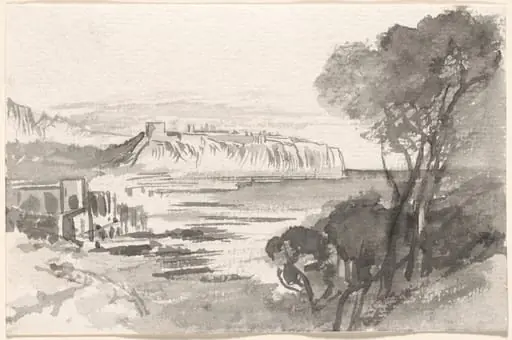
The drawing depicts a serene riverside scene near Thebes, characterized by a meandering river, simple buildings, and a low sky. The tranquil atmosphere evokes a sense of stillness.
Technique & Style
Lear employed soft grays and black wash to define the composition, allowing underlying graphite lines to remain visible. The loose application of wash conveys a sense of movement and immediacy, suggesting a rapid study.
Context
Thebes reflects Lear's practice of sketching during his travels, which he would later refine and adapt for his travel books and other illustrations. As an illustrator, Lear was known for his detailed drawings of landscapes and natural history subjects.
Artist & collection
Artist
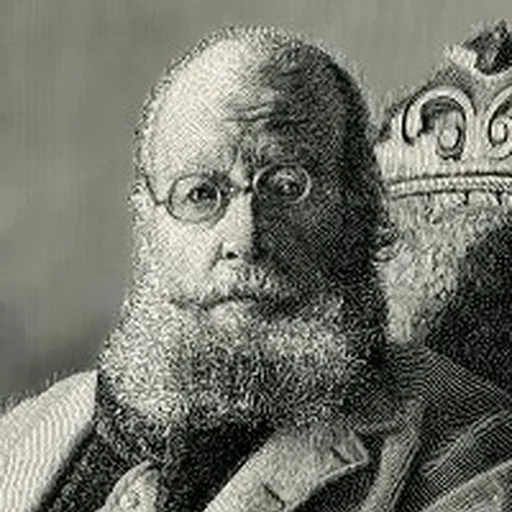
Edward Lear (12 May 1812 – 29 January 1888) was an English artist, illustrator, musician, author and poet, who is known mostly for his literary nonsense in poetry and prose and especially his limericks, a form he popularised but which term…

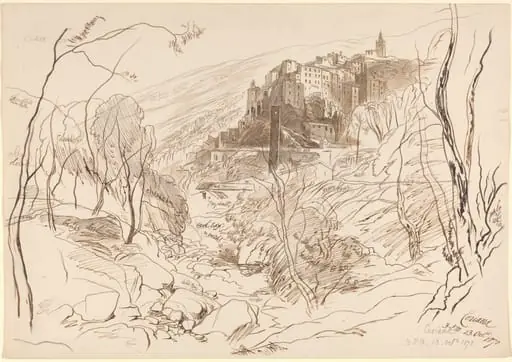
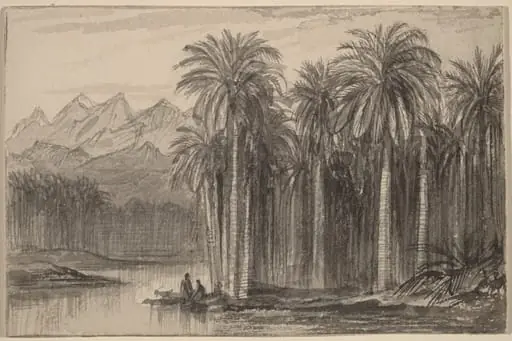
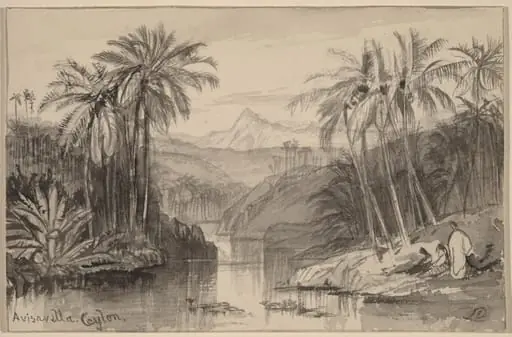 Avisavella, Ceylon
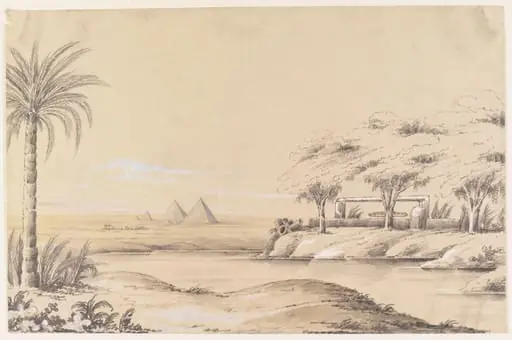 Pyramids of Geezeh. Egypt
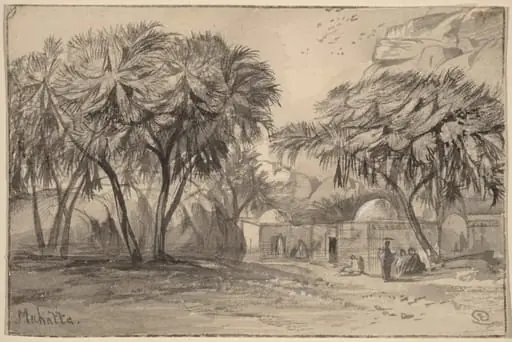 Mahatta
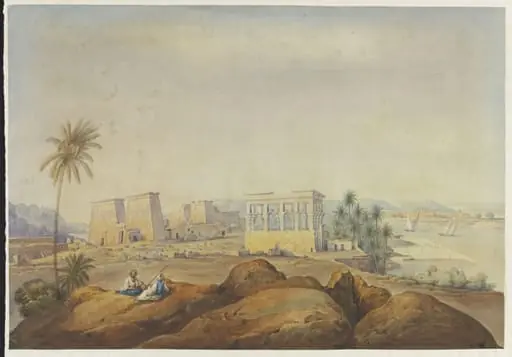 The Temple of Isis and Kiosk of Trajan on the Island of Philae
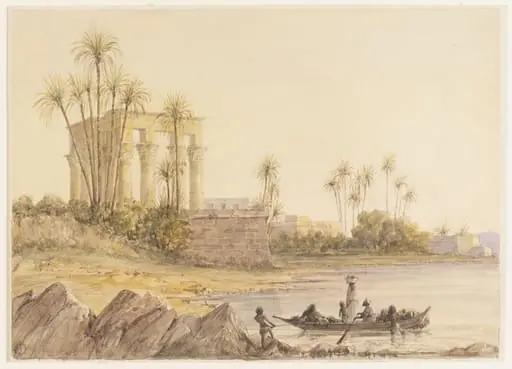 Landing Place. Philoe
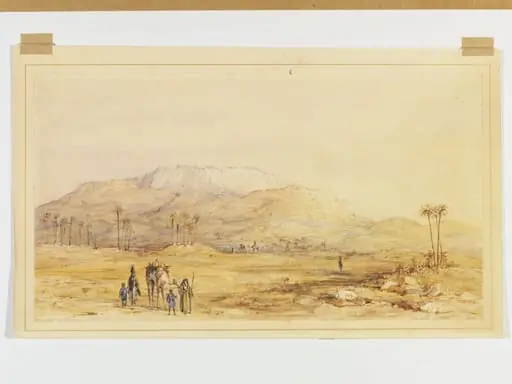 Pyramid of Abu Roash from the Village of Kerdassy
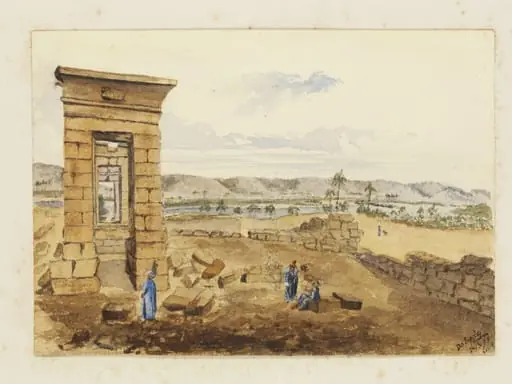 `Dabode Nubia '
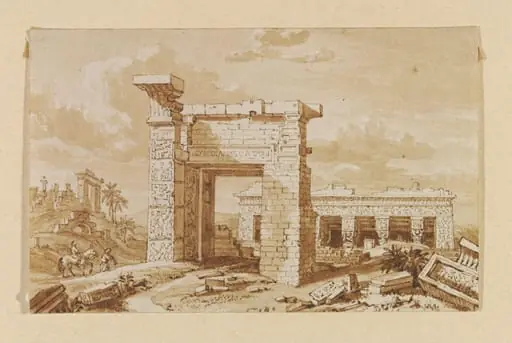 View of the Northern Gate of Dendera or Tentyra
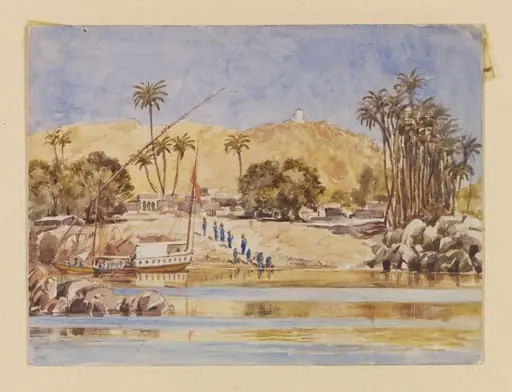 View on the Nile, opposite Aswan
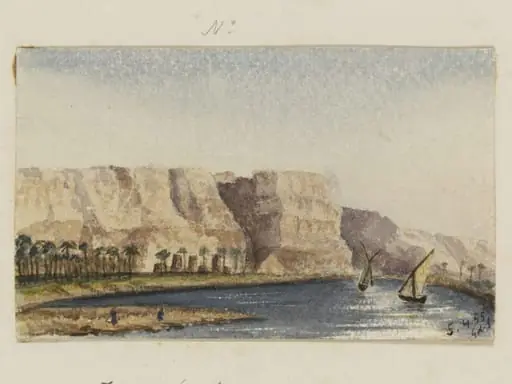 `Kusr-é-Syad. Opposite Choenoboscion. Upper Egypt'
 The Valley of Ajalon