Artwork
Banks of the Liane (Les bords de la Liane)
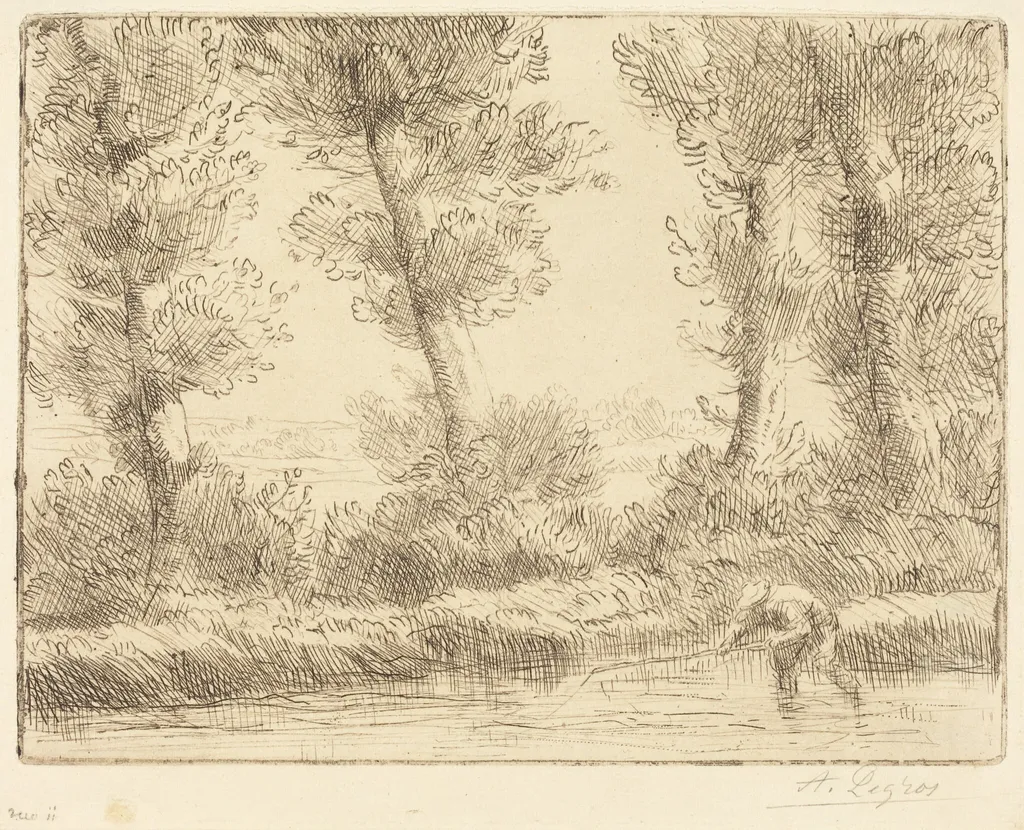
Banks of the Liane (Les bords de la Liane) is an ink print by the Romanticist artist Alphonse Legros. It dates from 1874 and is held in the collection of the National Gallery of Art.
About this work
Overview
The work belongs to a period when Legros was actively engaged in reviving the artistic potential of etching in England.
Created in 1874, *Banks of the Liane* is an etching by Alphonse Legros, a French artist who moved to London in 1863 and became influential in British printmaking. The work belongs to a period when Legros was actively engaged in reviving the artistic potential of etching in England. Unlike polished studio pieces, this print presents a spontaneous, unidealized view of a rural riverside, reflecting his interest in direct observation and tactile mark-making.
Subject & Meaning
The scene depicts a narrow path flanked by two gnarled trees along the Liane River, their branches interwoven and leaves sparse. Wild grasses and underbrush fill the foreground, rendered with agitated, linear strokes. There is no human presence, and the composition avoids narrative or sentiment. The focus lies in the raw, unembellished character of the landscape, suggesting an appreciation for nature’s unstructured vitality rather than its picturesque qualities.
Technique & Style
Legros employed traditional etching methods, using acid to bite lines into a metal plate, which he then inked and printed. The surface is densely worked with quick, irregular strokes that suggest texture and movement rather than define form precisely. The rough, sketch-like quality reflects a deliberate departure from polished academic conventions, aligning with a more immediate, expressive approach to printmaking that emphasized process over finish.
History & Provenance
The etching was made during Legros’s early years in Britain, a time when he was gaining recognition for his printmaking alongside his teaching at the Slade School of Art. While specific ownership records for this particular impression are not widely documented, it is known to have been produced in his London studio and circulated among collectors interested in the revival of etching as a serious artistic medium in the late 19th century.
Context
In the 1870s, British artists were re-engaging with etching as a medium for personal expression, moving away from reproductive prints toward original compositions. Legros, influenced by French Realism and the Barbizon painters, contributed to this shift by emphasizing direct observation of nature. His work contrasted with idealized landscapes, offering instead a quiet, unromanticized vision rooted in the physicality of the natural world.
Legacy
Legros’s etchings, including *Banks of the Liane*, helped redefine printmaking in Britain by demonstrating its capacity for emotional and textural depth. His emphasis on the artist’s hand and the integrity of the medium influenced a generation of British etchers. Though less celebrated than his paintings, these works remain significant for their role in elevating printmaking to the status of independent artistic practice.
Own this work as a print
Artist & collection

Artist
Alphonse Legros (French pronunciation: ; 8 May 1837 – 8 December 1911) was a French, later British, painter, etcher, sculptor, and medallist.

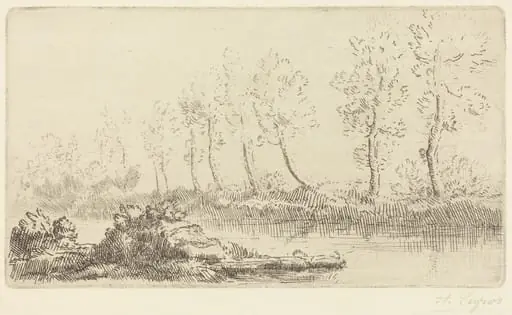 Banks of the Adour (Bord de l'Adour)
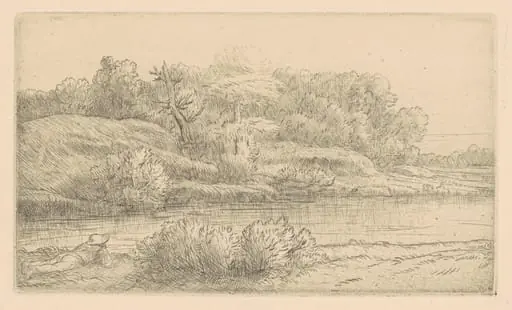 Banks of the Venelle (Bord de la Venelle)
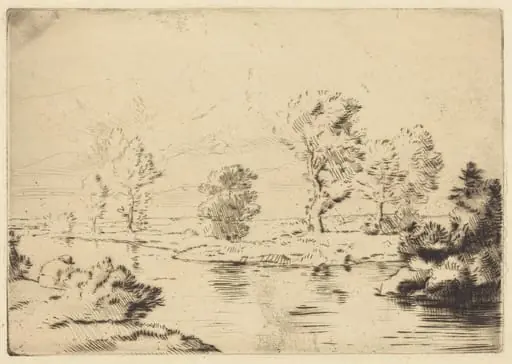 Banks of the Marne (Bord de la Marne)
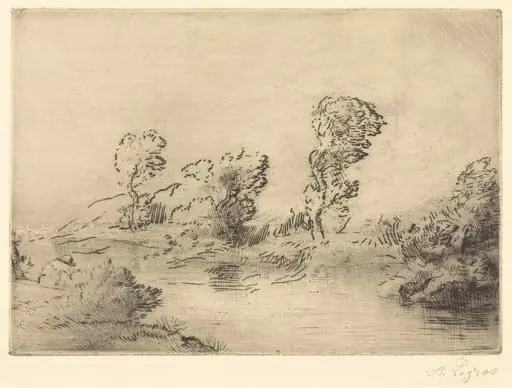 Banks of the Marne (Bord de la Marne)
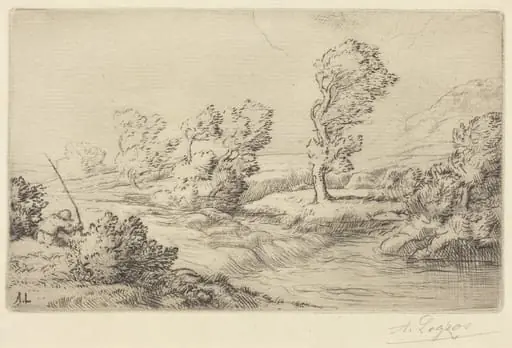 Banks of the Marne (Bord de la Marne)
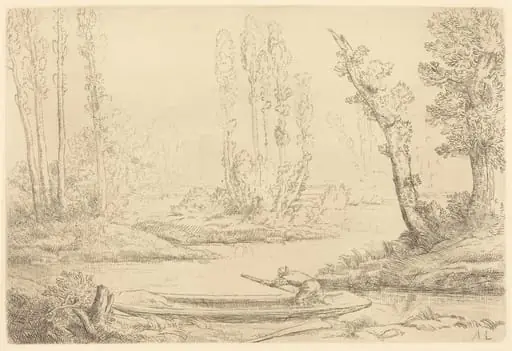 Banks of the Somme near Amiens (Bord de la Somme pres d'Amiens)
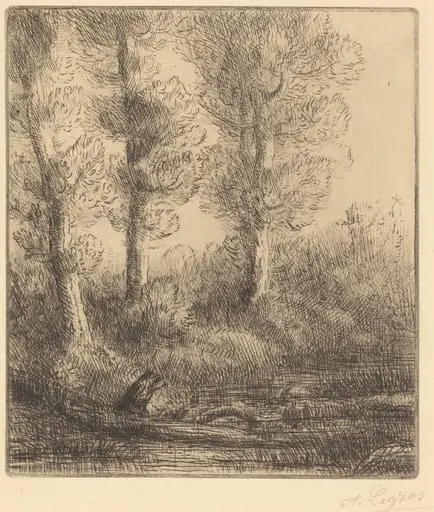 Banks of the Saint-Pre (Rive du Saint-Pre)
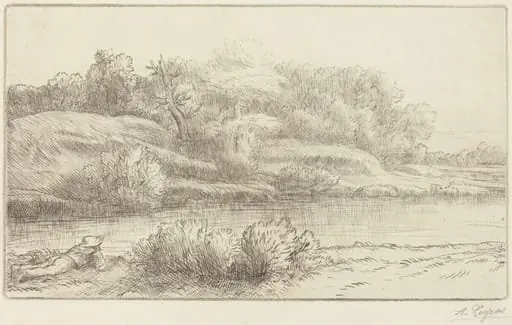 Banks of the Venelle (Bord de la Venelle)
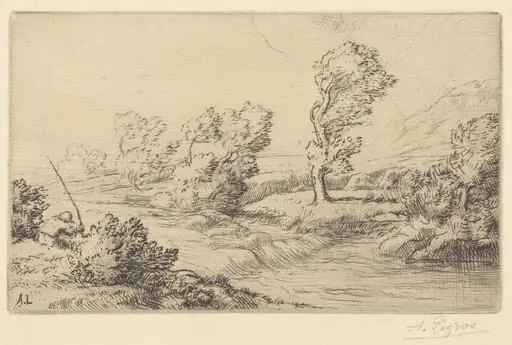 Banks of the Marne (Bord de la Marne)
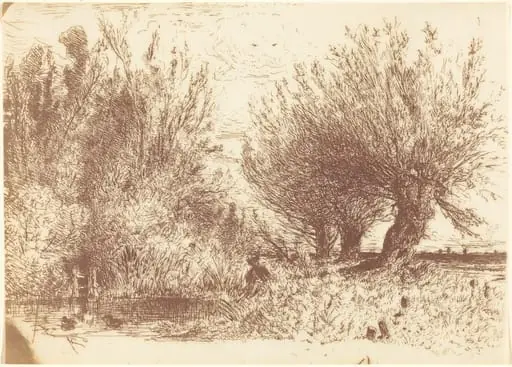 Banks of a River (Bords de Riviere)
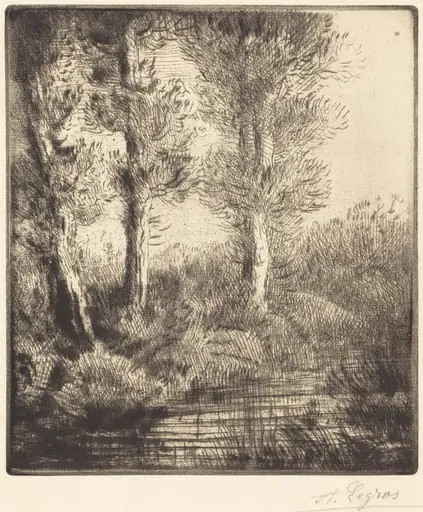 Banks of the Saint-Pre (Rive du Saint-Pre)