Artwork
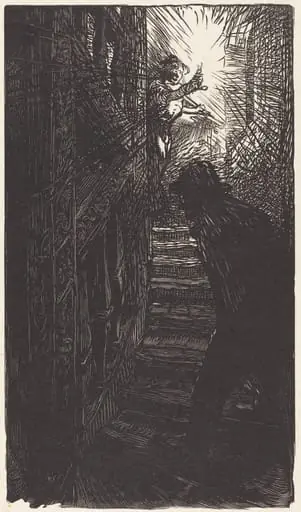
Escalier de la maison ou etait le Chateau Rouge
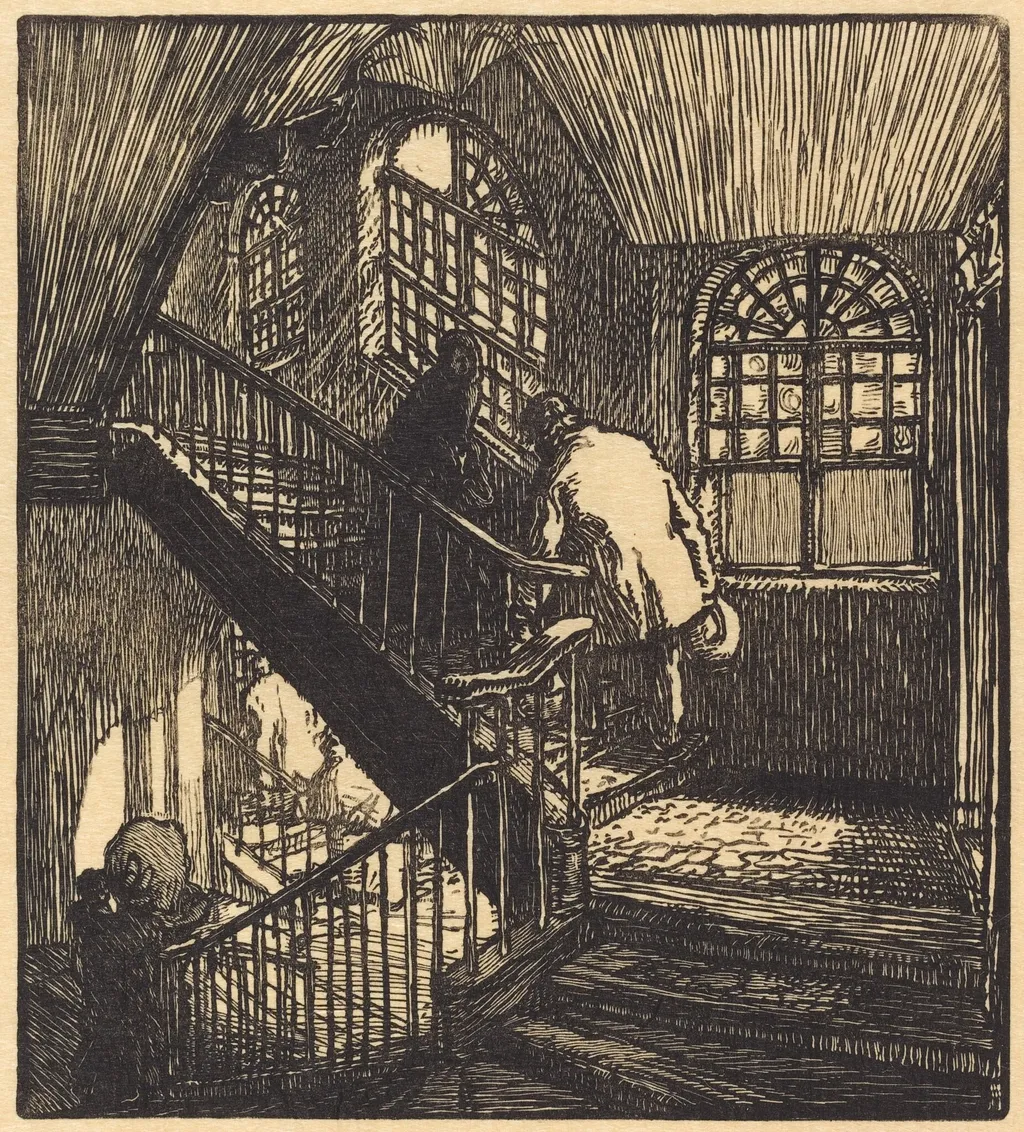
Escalier de la maison ou etait le Chateau Rouge is an ink print by Auguste Lepère. It dates from 1901 and is held in the collection of the National Gallery of Art.
About this work
Overview
As a key figure in the early 20th-century revival of wood engraving in Europe, Lepère elevated the medium through meticulous hand-carving and tonal precision.
Louis-Auguste Lepère produced this wood engraving in 1901, capturing an interior space once associated with the Château Rouge. As a key figure in the early 20th-century revival of wood engraving in Europe, Lepère elevated the medium through meticulous hand-carving and tonal precision. The print stands as a quiet example of his commitment to printmaking as a serious artistic form, distinct from painting or etching.
Subject & Meaning
The scene depicts an intimate, dimly lit room with two figures: one seated, absorbed in reading or writing, the other standing behind, partially out of focus. The presence of a staircase along the left edge suggests transition or passage, while the patterned window implies a boundary between interior solitude and the outside world. No narrative is overt; instead, the image evokes stillness and private contemplation.
Technique & Style
Lepère employed fine, intersecting lines to build gradations of tone through cross-hatching, a hallmark of wood engraving. The texture is dense yet controlled, creating depth without color. Light filters weakly through a stained-glass window, its pattern rendered in delicate linear motifs. The figures are rendered with soft edges, enhancing the sense of quiet movement and spatial ambiguity within the confined interior.
History & Provenance
Created during a period when Lepère was actively promoting wood engraving as a fine art medium, this print emerged from his studio in France, where he collaborated with publishers and fellow artists to revive traditional techniques. Though specific ownership records are not widely documented, the work aligns with his broader output from the early 1900s, often circulated in limited editions among collectors and print societies.
Context
At the turn of the century, European artists sought to reclaim handcrafted printmaking from industrial reproduction. Lepère’s work responded to this movement, drawing inspiration from Japanese woodblock prints and 19th-century English engravers. His focus on domestic interiors reflected a broader interest in everyday life, contrasting with the grand historical themes favored in academic painting of the time.
Legacy
Lepère’s wood engravings, including this one, helped reestablish the medium’s legitimacy in fine art circles. His technical rigor influenced later generations of printmakers who valued precision and tonal subtlety. Though less known today than his contemporaries, his contributions remain embedded in the history of modern printmaking as a bridge between tradition and innovation.
Artist & collection
Artist
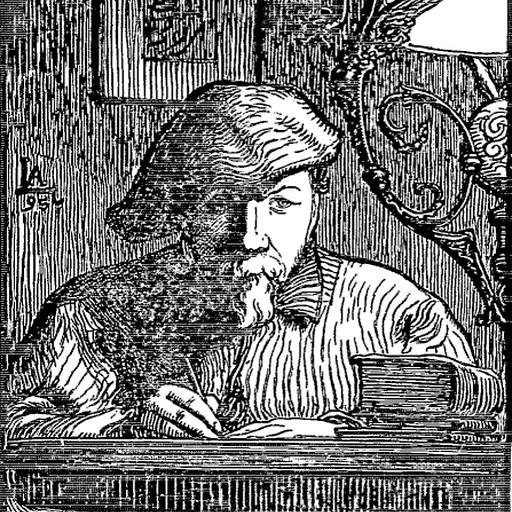
Louis-Auguste Lepère (30 November 1849 – 20 November 1918) was a French painter and etcher. Lepère is also considered a leader in the creative revival of wood engraving in Europe.

 Escalier sculpte rue Boutebrie
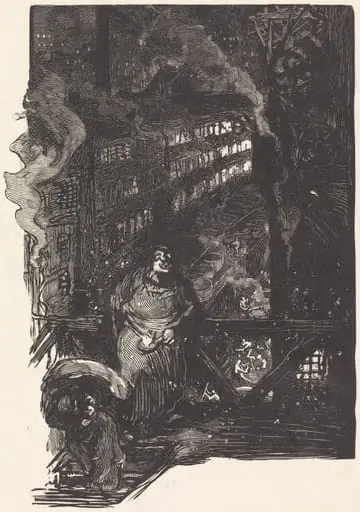 Atelier de magisserie aux Gobelins
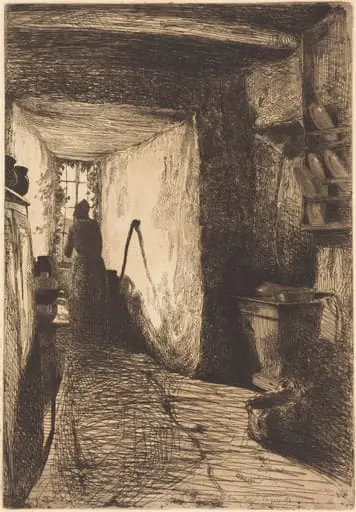 The Kitchen
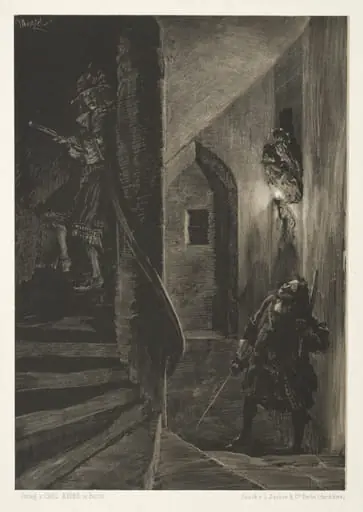 Essay on Stone with Brush and Scraper: Chase on the Winding Staircase
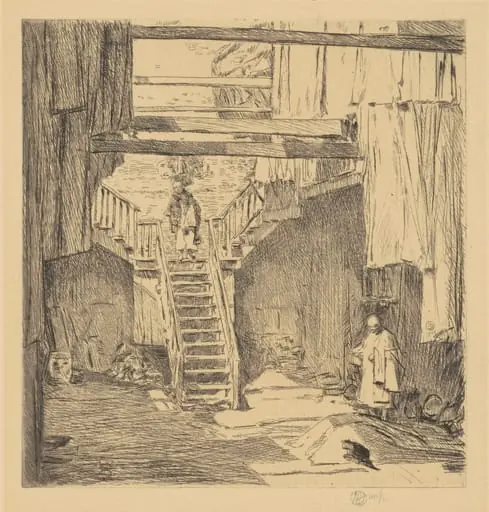 Old Chinatown, San Francisco
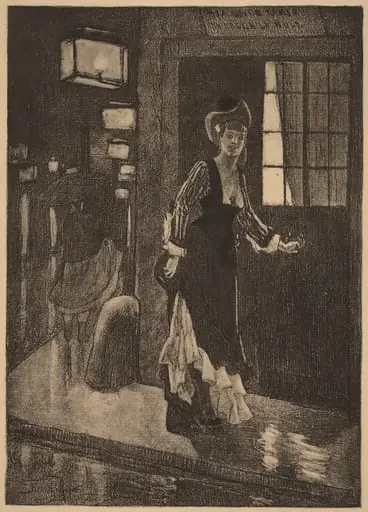 Le Rydeack
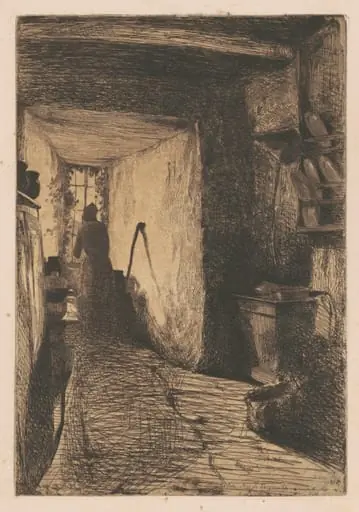 The Kitchen
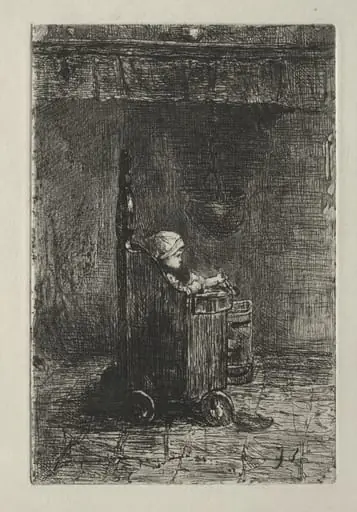 Baby in His Chair
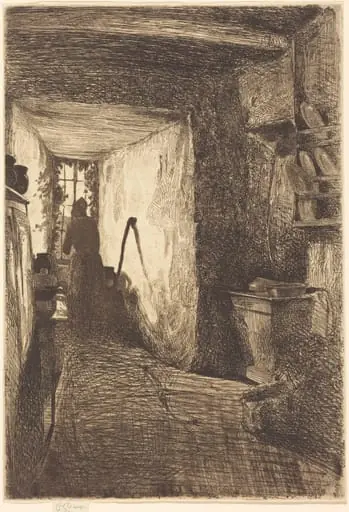 The Kitchen
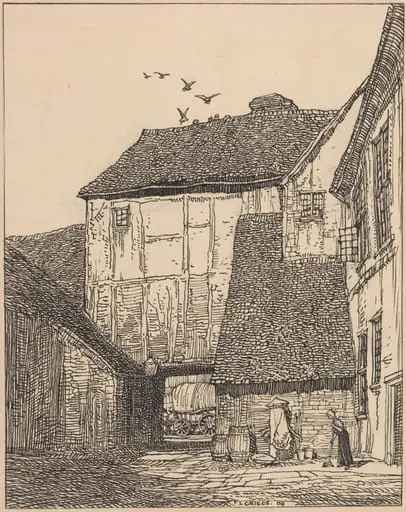 The George Inn, Beaconsfield
![House of Dante da Castiglione [Casa di Dante da Castiglione], by Telemaco Signorini](https://artifactworldgallery.com/img/telemaco-signorini--house-of-dante-da-castiglione-casa-di-dante-da-castiglione--92db125a9a8d04db-w320.webp) House of Dante da Castiglione [Casa di Dante da Castiglione]
House of Dante da Castiglione [Casa di Dante da Castiglione]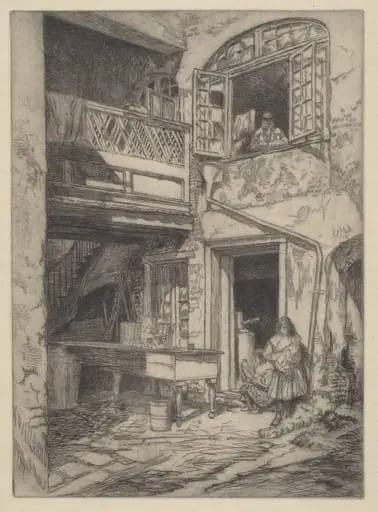 An Old Courtyard (New Orleans)