Artwork
Saint-Severin
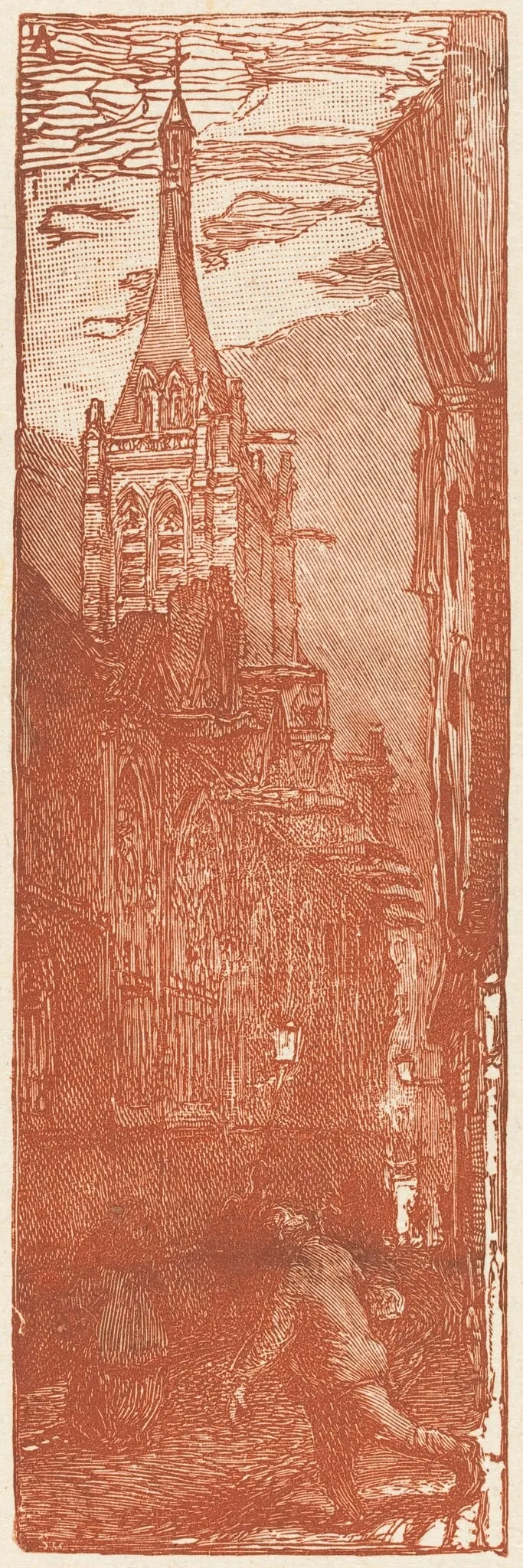
Saint-Severin is an ink print by Auguste Lepère. It dates from 1901 and is held in the collection of the National Gallery of Art.
About this work
Overview
Saint-Severin is a 1901 wood engraving printed in sanguine by Auguste Lepère, a key figure in the European revival of wood engraving. The print captures the Parisian church of Saint-Severin, emphasizing its architectural features and atmospheric setting.
Subject & Meaning
The subject is the Parisian church Saint-Severin, depicted with its distinctive pointed towers and numerous small windows. The dark, swirling sky and roughly rendered foliage in the foreground create a sense of contrast, highlighting the church's verticality.
Technique & Style
Executed in deep red sanguine ink, the engraving showcases Lepère's mastery of tonal wood engraving techniques popular during the period. The varied line weights, ranging from thick to thin, add texture and visual interest to the composition.
History & Provenance
Created in 1901 by Auguste Lepère, a French painter and etcher, Saint-Severin exemplifies the early 20th-century resurgence of interest in traditional printmaking methods. Provenance details are not provided.
Context
This work reflects the artistic climate of its time, where detailed, tonal engraving was highly valued. Lepère's use of wood engraving also aligns with the broader revival of this medium in Europe during the late 19th and early 20th centuries.
Legacy
As a product of Lepère's contributions to the wood engraving revival, Saint-Severin contributes to the medium's renewed popularity in early 20th-century Europe, though its specific impact or influence is not detailed here.
Artist & collection
Artist
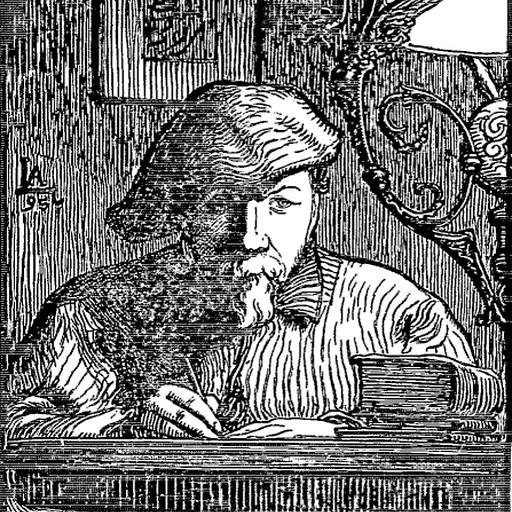
Louis-Auguste Lepère (30 November 1849 – 20 November 1918) was a French painter and etcher. Lepère is also considered a leader in the creative revival of wood engraving in Europe.

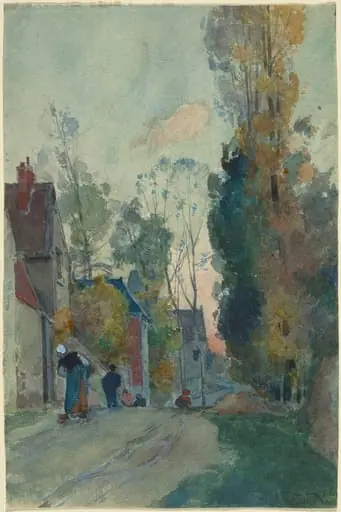
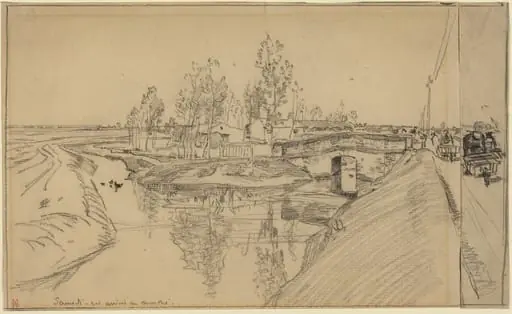
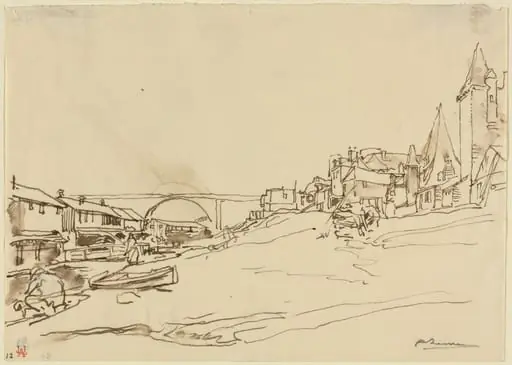
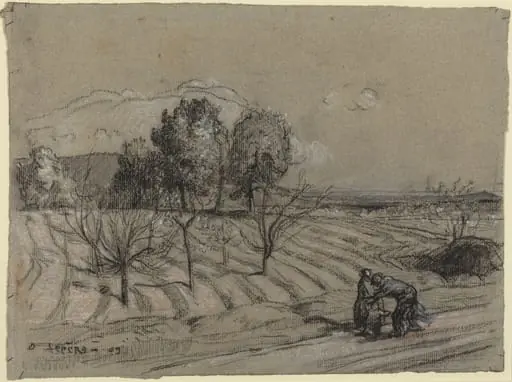
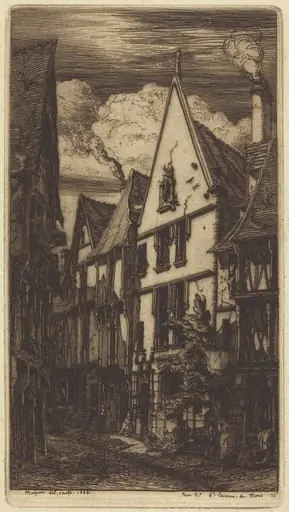 La Rue des Toiles, à Bourges
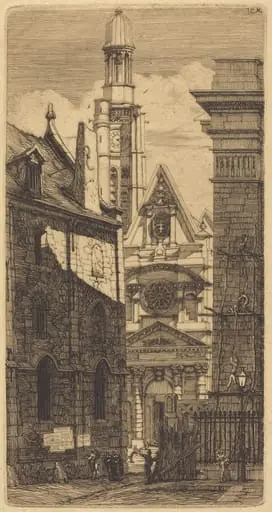 Saint-Etienne-du-Mont, Paris (Church of St. Stephen of the Mount, Paris)
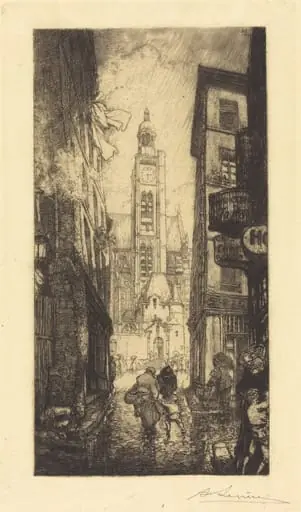 Rue de la Montagne-Sainte-Genevieve, Paris
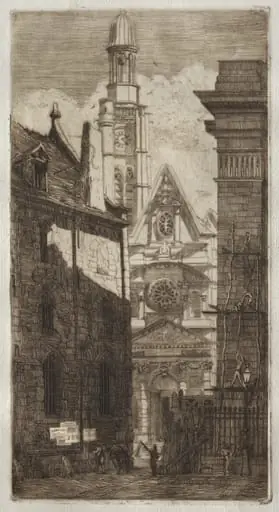 Saint-Etienne-du-Mont
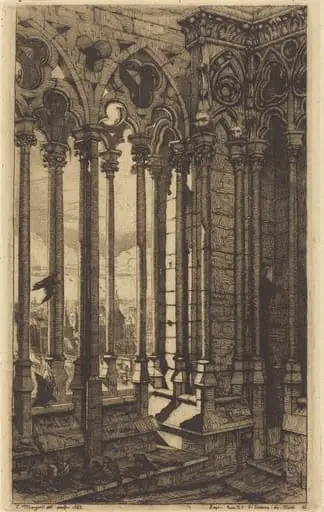 La galerie Notre-Dame, Paris (The Gallery of Notre Dame, Paris)
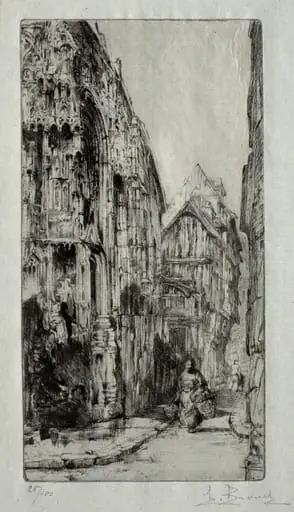 Saint-Etienne des Tonneliers a Rouen
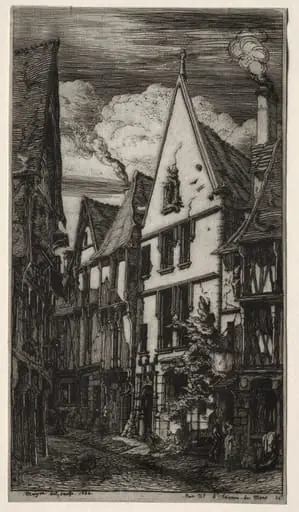 Rue des Toiles, Bourges
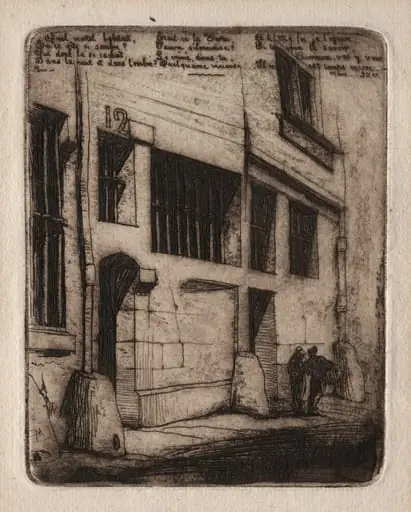 Etchings of Paris: The Street of the Bad Boys
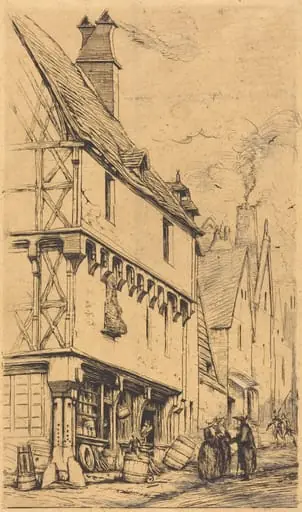 Ancienne habitation à Bourges, dite "La Maison du Musicien" (An Old House at Bourges, Sometimes Called the "Musician's House")
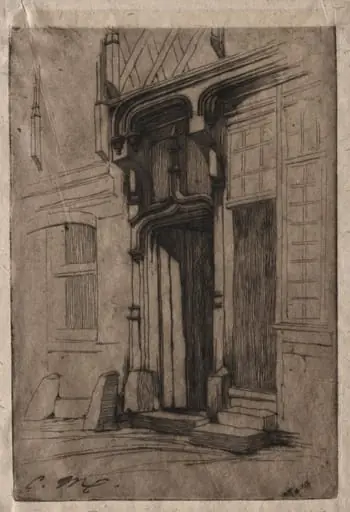 Doorway of an Ancient Convent in the Rue Mirabeau, Bourges
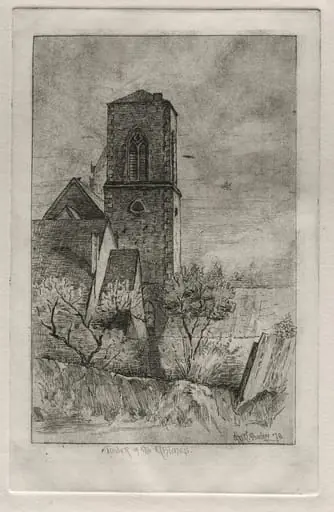 Tower of the Chimes
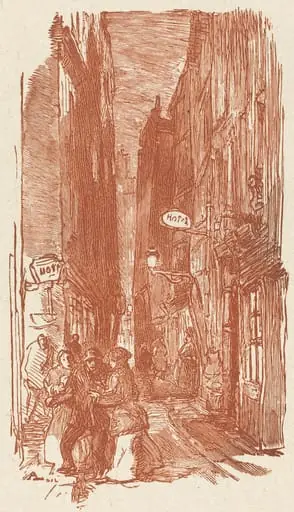 Rue Saint-Severin