Artwork
Summer in Saint-Martin, the Past Nuptials (Ete de la Saint-Martin, la noce qui passe)
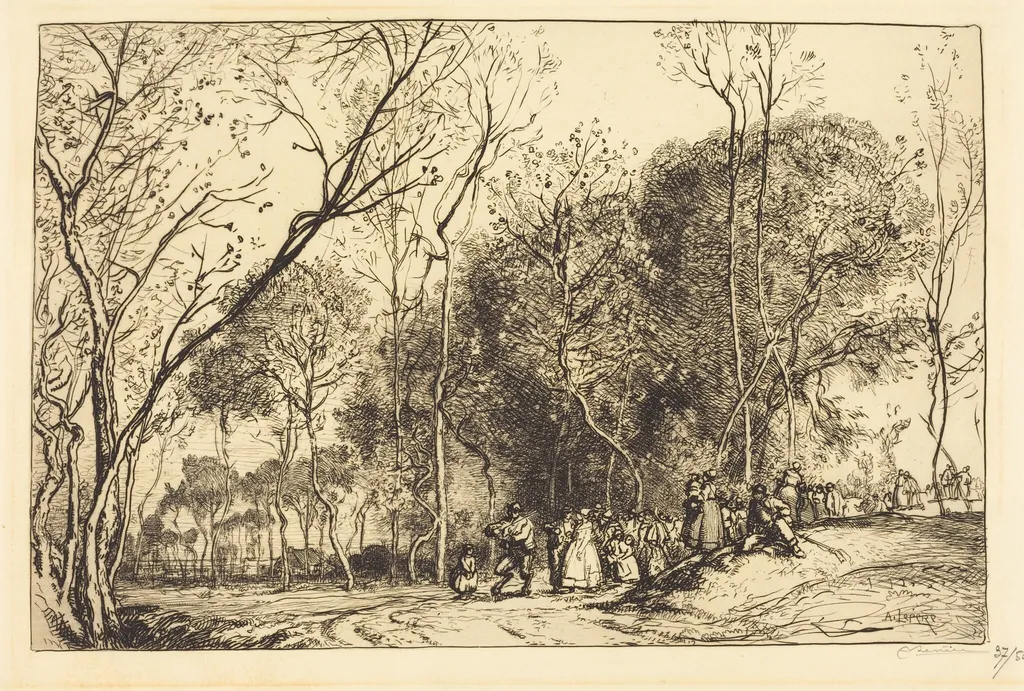
Summer in Saint-Martin, the Past Nuptials (Ete de la Saint-Martin, la noce qui passe) is an ink print by Auguste Lepère. It dates from 1908 and is held in the collection of the National Gallery of Art.
About this work
Overview
The work belongs to a series of landscape-focused prints that reflect his interest in everyday life and the subtleties of natural light.
Created in 1908, this etching by Auguste Lepère captures a quiet rural moment in Saint-Martin. As both a painter and printmaker, Lepère was instrumental in the early 20th-century revival of traditional print techniques. The work belongs to a series of landscape-focused prints that reflect his interest in everyday life and the subtleties of natural light. Its monochrome palette and delicate line work emphasize atmosphere over narrative detail.
Subject & Meaning
The scene portrays a wedding procession moving along a dirt path, its figures sparse and unobtrusive. The title suggests the event is already receding into memory—'the past nuptials'—implying transience. The procession is not the focus; instead, the quietude of the landscape and the passage of time are central. Animals and trees frame the figures, reinforcing a sense of nature’s continuity beyond human rituals.
Technique & Style
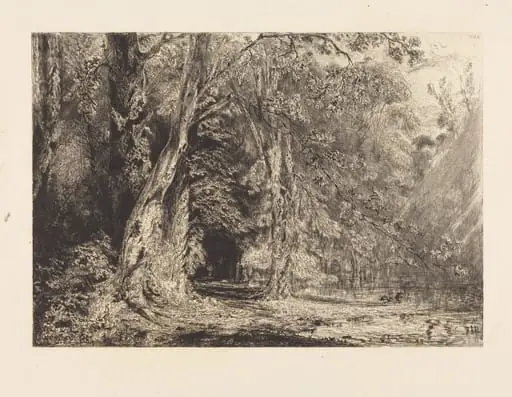
Lepère employed fine, controlled etching lines to render texture in foliage, fabric, and earth. The contrast between light and shadow is subtle, suggesting soft daylight without harsh definition. The composition avoids dramatic angles, favoring a horizontal calm. The river along the right edge and the hazy horizon create depth without perspective exaggeration, aligning with the restrained tone of the scene.
History & Provenance
This print emerged during Lepère’s mature period, when he was deeply engaged in reviving wood engraving and etching as fine art forms in France. Though not widely exhibited at the time, it was part of a broader movement among artists to elevate printmaking beyond reproduction. Its provenance traces to private collections in France, with later acquisitions by institutions interested in late 19th- and early 20th-century print revival.
Context
Lepère worked amid a European resurgence of interest in handcrafted prints, reacting against industrial reproduction. His focus on rural life aligned with broader artistic trends that valued authenticity and regional character. Unlike urban scenes popular among contemporaries, this work isolates a quiet moment in a provincial setting, reflecting a deliberate turn toward introspection and the rhythms of agricultural communities.
Legacy
Though not among Lepère’s most reproduced works, this etching exemplifies his contribution to the technical and aesthetic renewal of printmaking. It influenced later artists who sought to convey mood through restrained line and tonal nuance. Today, it remains a quiet reference point in studies of French print revival, valued for its understated observation of rural life and time’s gentle passage.
Own this work as a print
Artist & collection
Artist
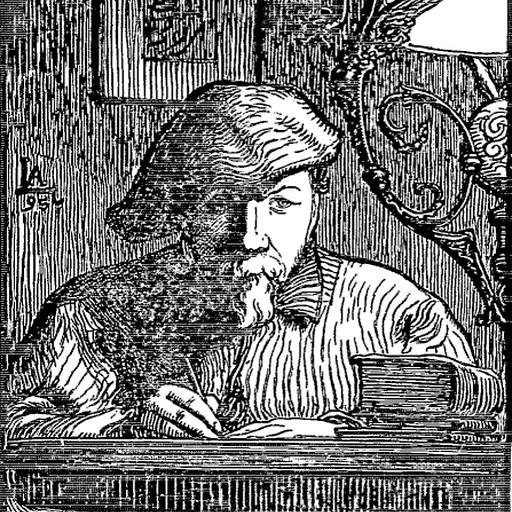
Louis-Auguste Lepère (30 November 1849 – 20 November 1918) was a French painter and etcher. Lepère is also considered a leader in the creative revival of wood engraving in Europe.

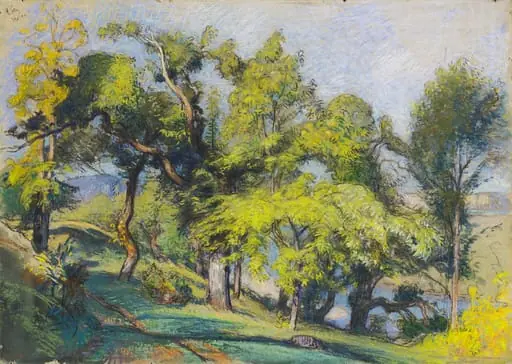
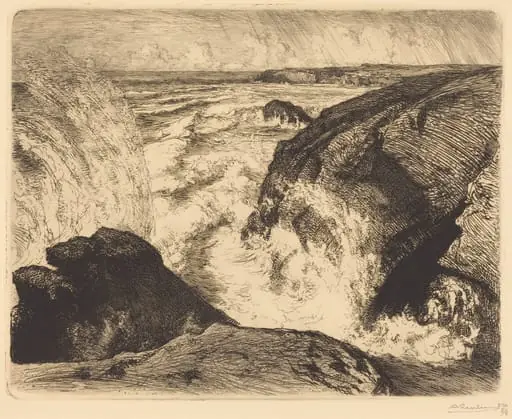
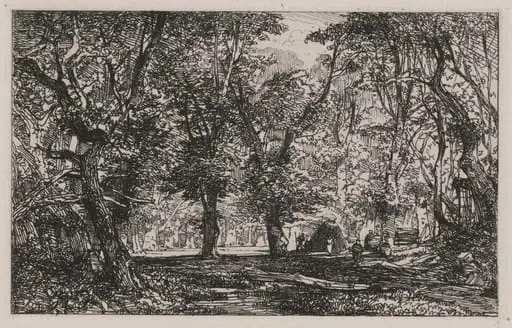 View from a Forest Stream Into a Clearing
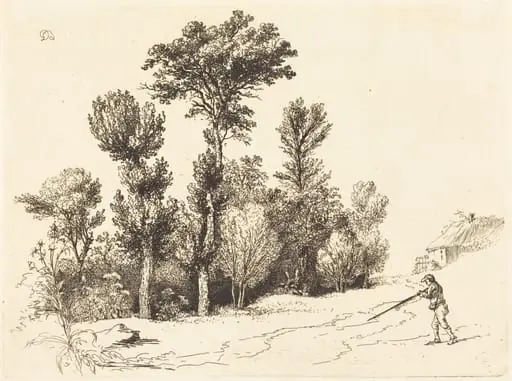 Petit Bosquet au Chasseur
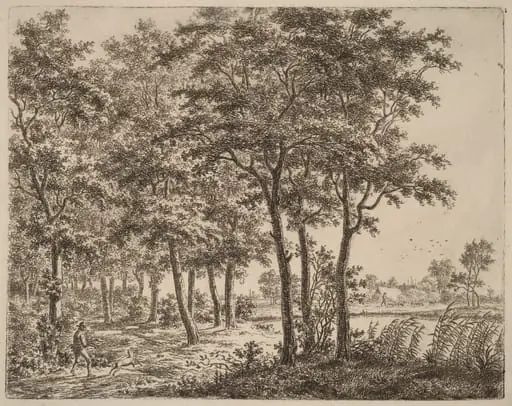 Landscape with a Peasant Carrying Firewood
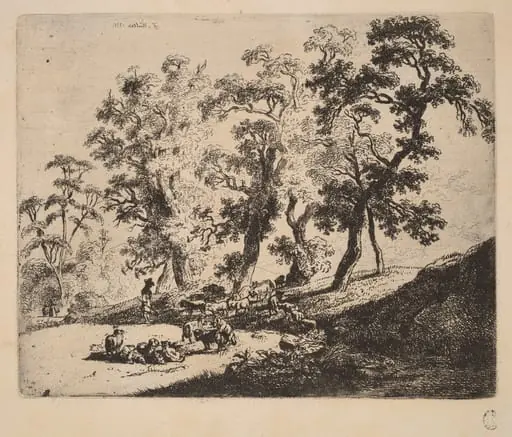 Landscape with Shepherds
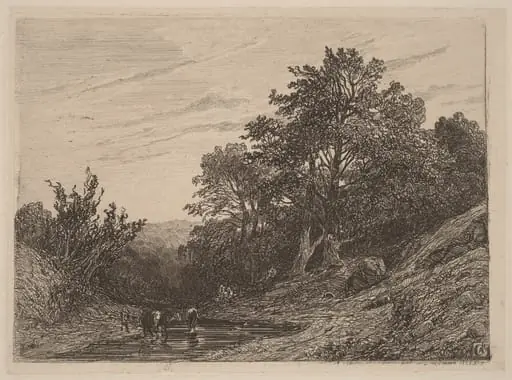 Herd in a Stream
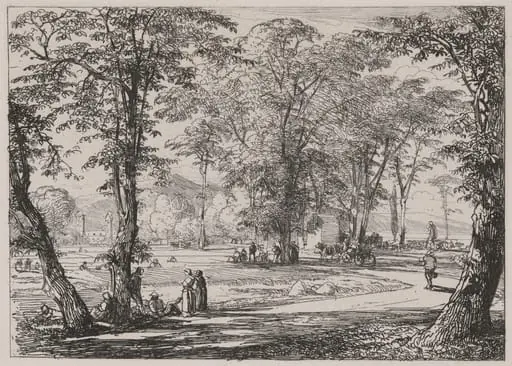 Village Scene with Workers in a Field and at Rest
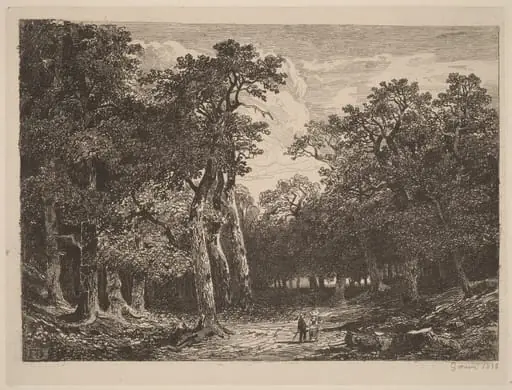 Couple in a Clearing
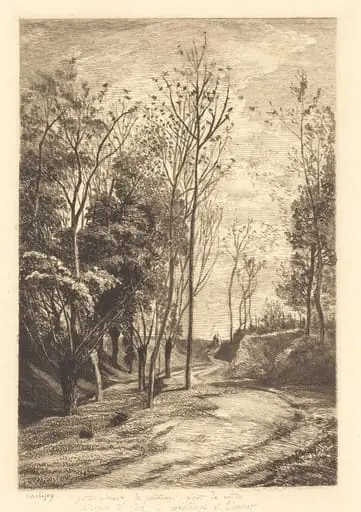 Little Birds (Les Petits oiseaux)
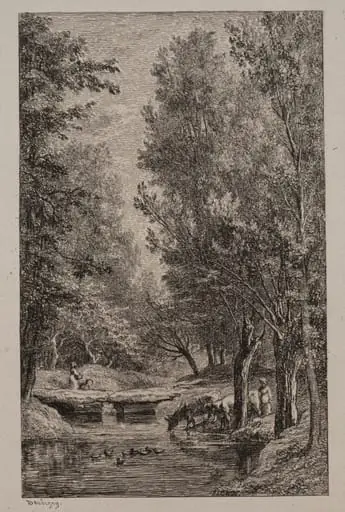 Brook in the Val Mondois
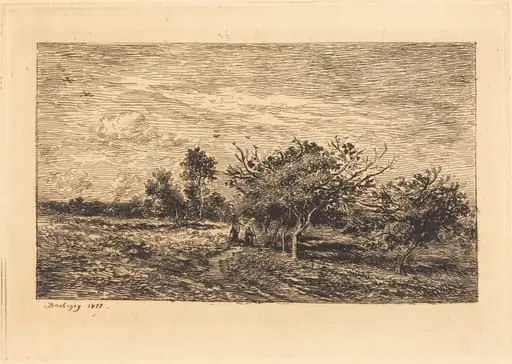 Apple Trees in Auvers (Pommiers a Auvers)
 Flooding in the Forest of the Ile Séguin
 Landscape with Cows