Artwork
The Falling Balloon, in Pre-Saint-Gervais (Lebaloon qui tombe, au Pre-Saint-Gervais)
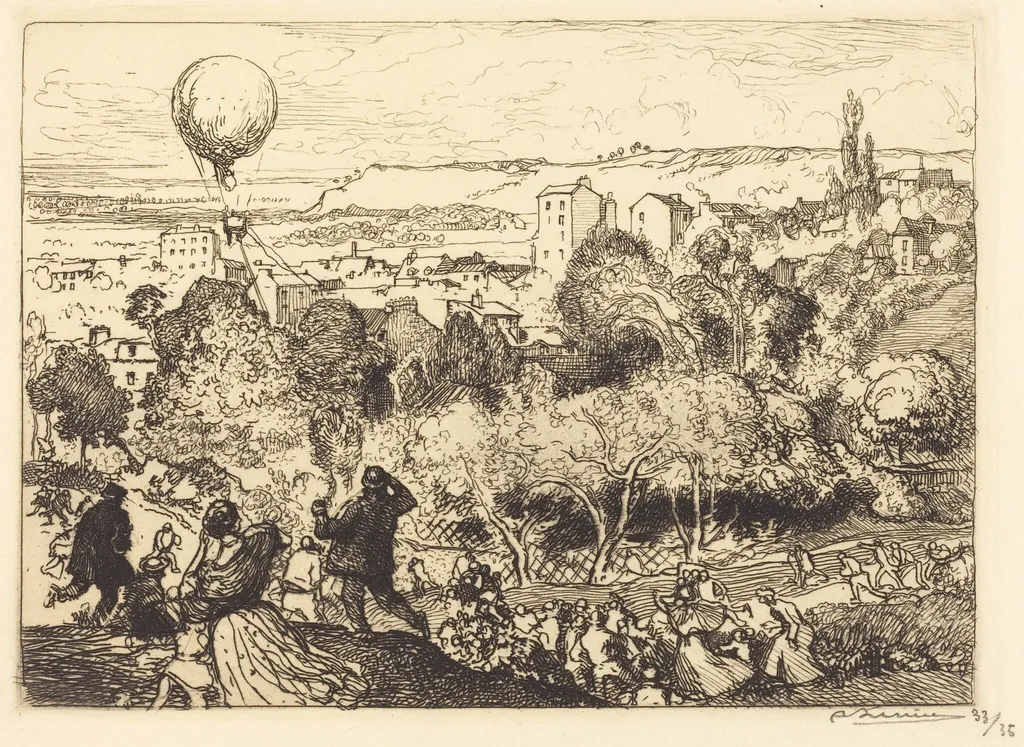
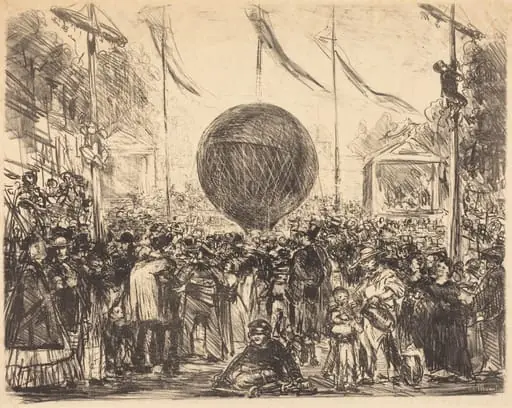
The Falling Balloon, in Pre-Saint-Gervais (Lebaloon qui tombe, au Pre-Saint-Gervais) is an ink print by Auguste Lepère. It dates from 1910 and is held in the collection of the National Gallery of Art.
About this work
Overview
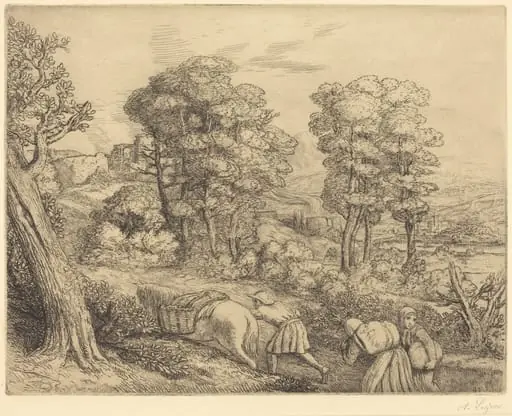
Created in 1910 by French artist Auguste Lepère, this etching captures a moment of quiet disruption in a rural landscape. Lepère, known for his dedication to printmaking, used the etching technique to render a balloon descending near Pre-Saint-Gervais. The scene balances natural stillness with human reaction, emphasizing the tension between the ordinary and the unexpected.
Subject & Meaning
The image depicts a tethered balloon in mid-fall over a quiet countryside, its basket and ropes clearly defined. Figures in the foreground pause and look upward, their postures suggesting surprise or unease. The work does not dramatize disaster but instead observes a fleeting, ambiguous event—neither heroic nor tragic—inviting contemplation of human response to the unforeseen in daily life.
Technique & Style
Delicate cross-hatching defines the balloon’s fabric and the foliage, while looser strokes suggest distance and atmosphere.
Lepère employed etching to achieve fine gradations of tone and texture, using acid to bite lines into a metal plate. Delicate cross-hatching defines the balloon’s fabric and the foliage, while looser strokes suggest distance and atmosphere. The composition directs the eye from the grounded figures to the falling object, using contrast and line weight to guide visual movement without overt theatricality.
History & Provenance
The work emerged during a period when Lepère was deeply involved in revitalizing traditional print methods in France. Though not widely exhibited at the time, it reflects his broader interest in capturing everyday scenes through meticulous hand-rendered techniques. Its survival as a single impression underscores its status as a personal, experimental work rather than a commercial print.
Context
In early 20th-century France, aerial ballooning was both a scientific pursuit and a public spectacle, often linked to early aviation experiments. Lepère’s choice to depict its unglamorous collapse—rather than its ascent—aligns with a broader trend among printmakers to focus on quiet, unheroic moments, distancing themselves from grand historical narratives.
Legacy
Though not widely reproduced, the etching exemplifies Lepère’s commitment to the expressive potential of printmaking. It contributes to a lesser-known strand of modern print art that valued subtlety over spectacle, influencing later generations of artists who sought to elevate the everyday through precise, hand-crafted imagery.
Artist & collection
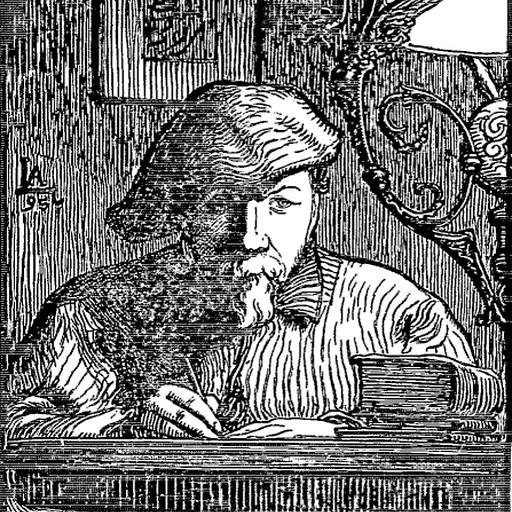
Artist
Louis-Auguste Lepère (30 November 1849 – 20 November 1918) was a French painter and etcher. Lepère is also considered a leader in the creative revival of wood engraving in Europe.