Artwork
The Prima Macchina for the Chinea of 1758: A "Deliziosa" with Hanging Gardens
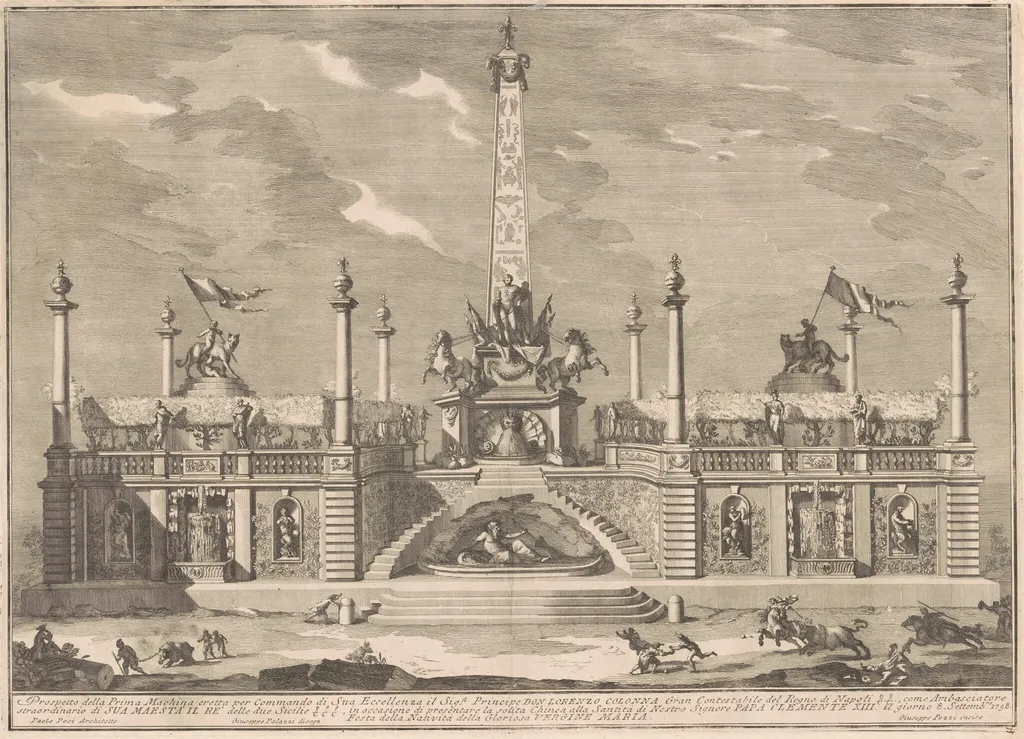
The Prima Macchina for the Chinea of 1758: A "Deliziosa" with Hanging Gardens is an ink print by the Romanticist artist Giuseppe Pozzi. It dates from 1758 and is held in the collection of the National Gallery of Art.
About this work
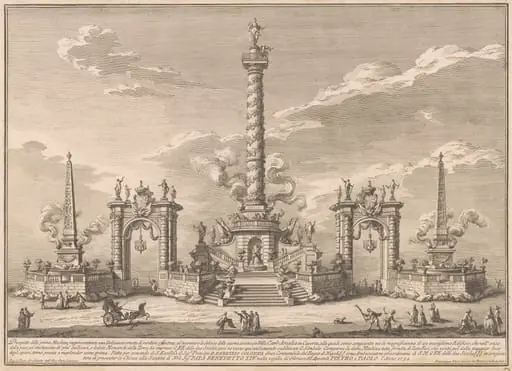
The whole scene looks like a mix of a palace and a garden, with flags and decorative details everywhere.
This image shows a grand, imaginary stage set with tall columns and statues. At the center is a tall column topped with a statue, flanked by two smaller statues on horses. Below it, a wide staircase leads up to a platform with more statues and framed pictures. The whole scene looks like a mix of a palace and a garden, with flags and decorative details everywhere.
The tiny figures at the bottom suggest this was meant for a performance or ceremony. The text at the bottom hints it was built for a special event in 1758.
Check out the technique: etching to see how artists like Pozzi created these detailed prints.
Overview
The Prima Macchina for the Chinea of 1758: A 'Deliziosa' with Hanging Gardens is an etching by Giuseppe Pozzi, created in 1758. It depicts a fantastical architectural scene with ornate details and figures.
Subject & Meaning
The print shows an elaborate, imaginary setting with a central column, statues, and a staircase leading to a decorated platform. The presence of tiny figures and the overall design suggest it was intended for a ceremonial or performance context.
Technique & Style
The work is an etching, a technique that allowed Pozzi to achieve a high level of detail in the print. The level of intricacy in the architectural and decorative elements is notable.
History & Provenance
The print was created for a special event in 1758, as indicated by the text at the bottom of the image. It is associated with the Chinea, a significant occasion that year.
Artist & collection


 The Prima Macchina for the Chinea of 1757: The Colonnade of the Athenian Lyceum
 The Prima Macchina for the Chinea of 1757: The Colonnade of the Athenian Lyceum
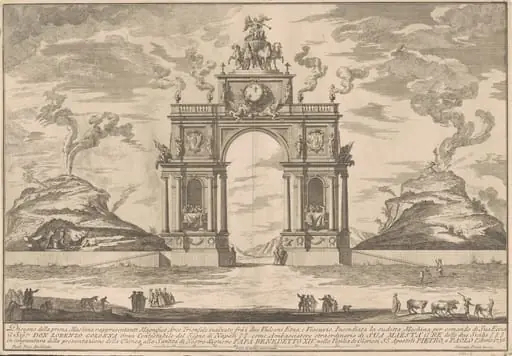 The Prima Macchina for the Chinea of 1756: A Triumphal Arch between Mount Etna and Mount Vesuvius
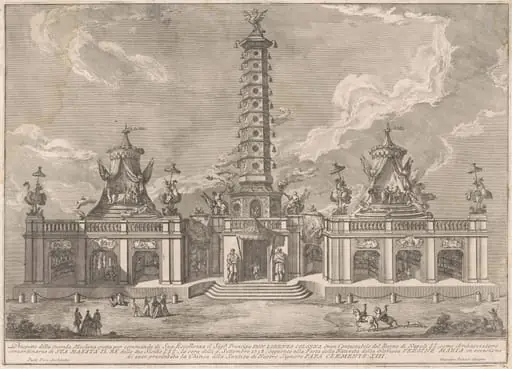 The Seconda Macchina for the Chinea of 1758: The Porcelain Tower of Nanjing
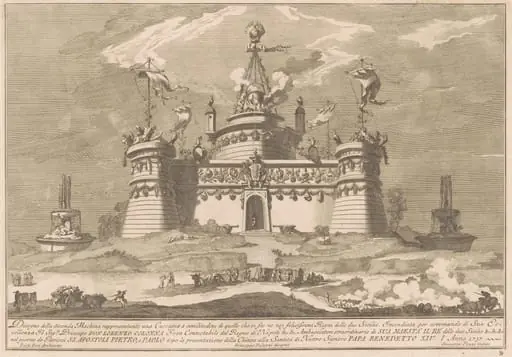 The Seconda Macchina for the Chinea of 1757: The Fortress of Cockaigne
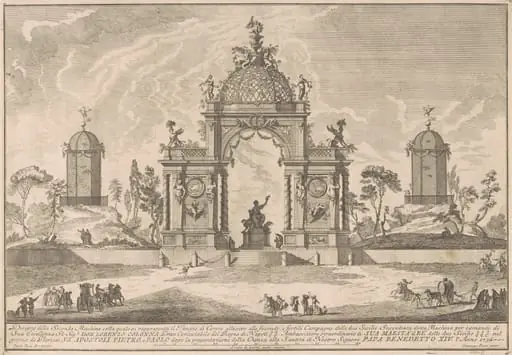 The Seconda Macchina for the Chinea of 1756: The Temple of Ceres
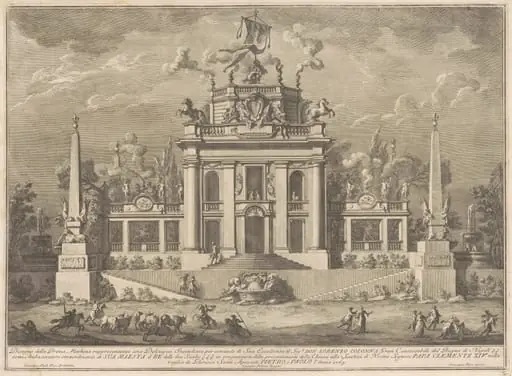 The Prima Macchina for the Chinea of 1769: A "Deliziosa"
 The Prima Macchina for the Chinea of 1752: A "Deliziosa" Alluding to Villa Carl'Amalia in Caserta
 The Prima Macchina for the Chinea of 1755: A Triumphal Bridge with Antiquities from Herculaneum
 The Prima Macchina for the Chinea of 1755: A Triumphal Bridge with Antiquities from Herculaneum
 The Prima Macchina for the Chinea of 1771: The Temple of Asclepius
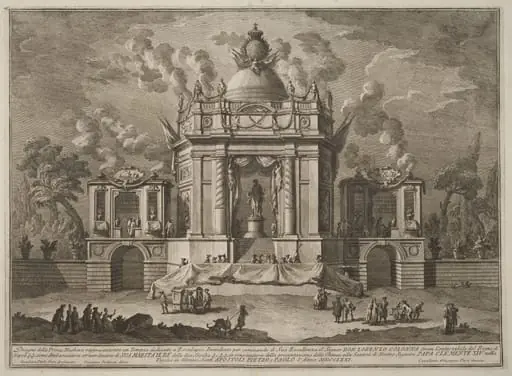 The Prima Macchina for the Chinea of 1771: The Temple of Asclepius
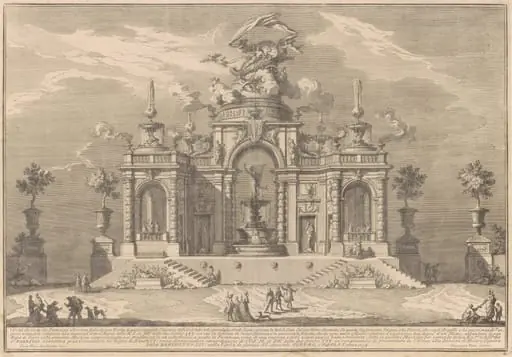 The Prima Macchina for the Chinea of 1754: The Palace of Venus in Cyprus
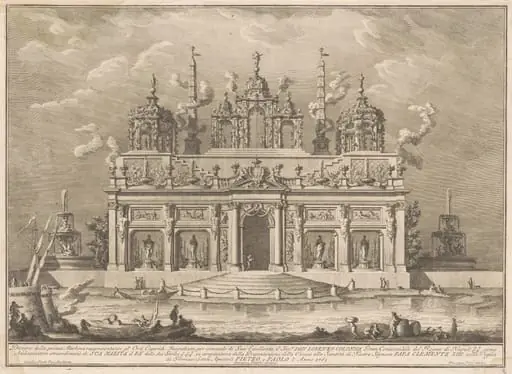 The Prima Macchina for the Chinea of 1765: The Garden of the Hesperides
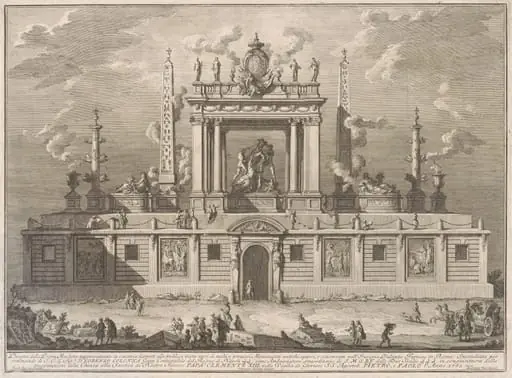 The Prima Macchina for the Chinea of 1762: The Farnese Bull and Other Antiquities from Palazzo Farnese
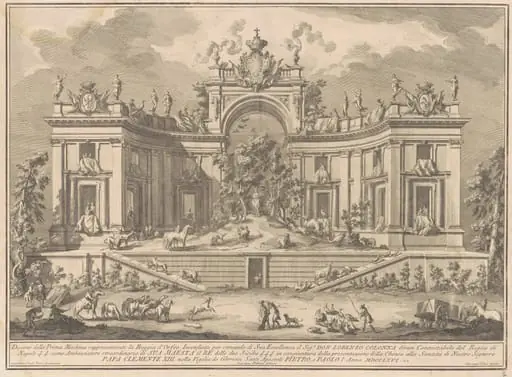 The Prima Macchina for the Chinea of 1766: The Palace of Orpheus
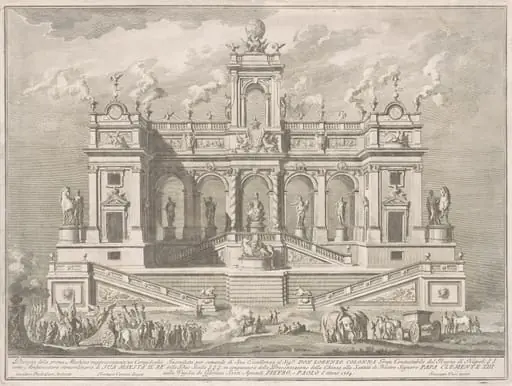 The Prima Macchina for the Chinea of 1764: A Capitol Building
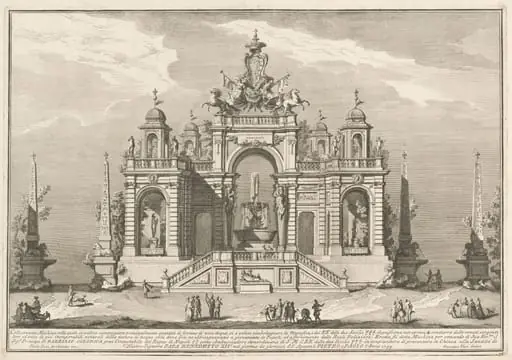 The Seconda Macchina for the Chinea of 1754: An Allegory of Waterworks