Artwork
Henry III of France
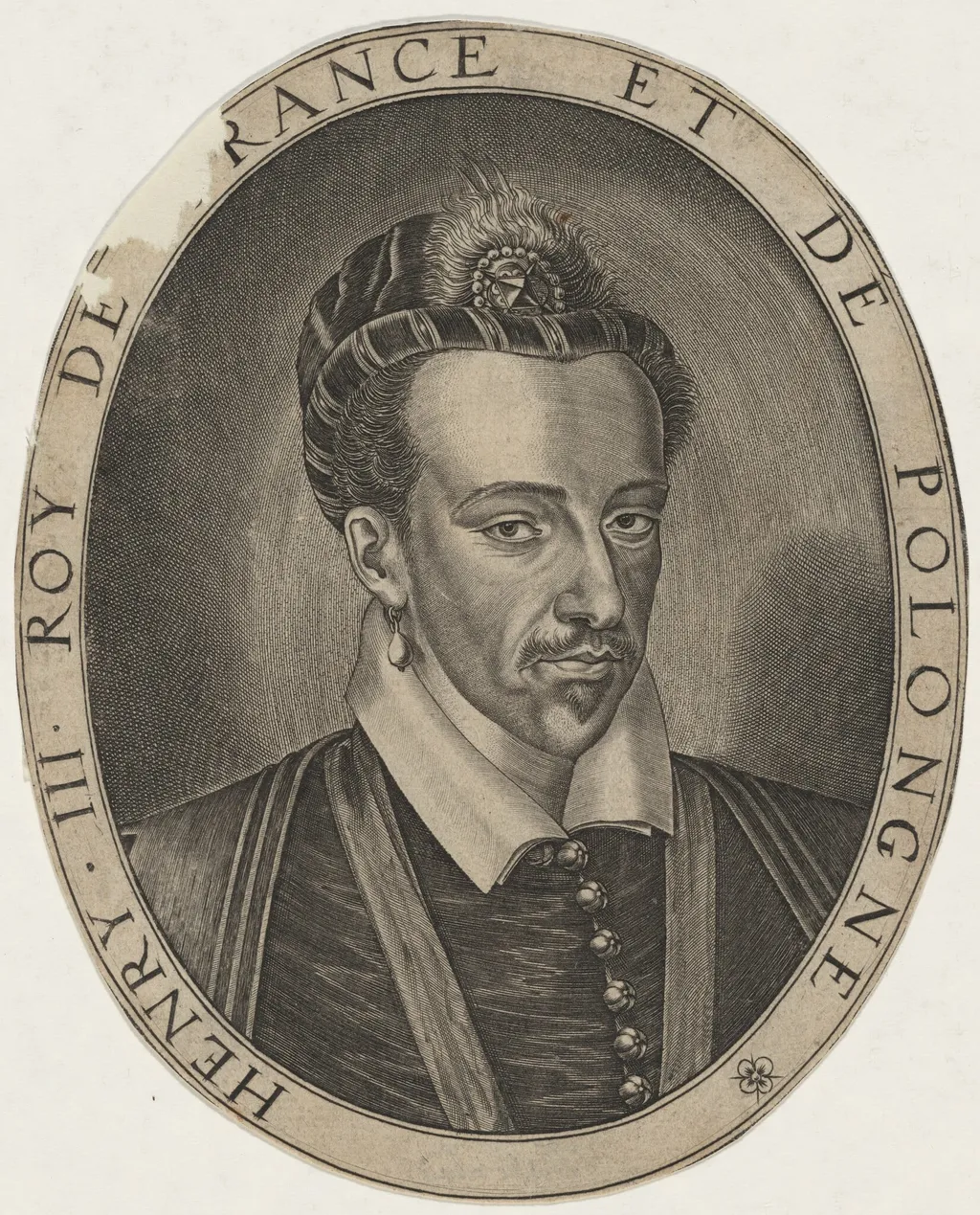
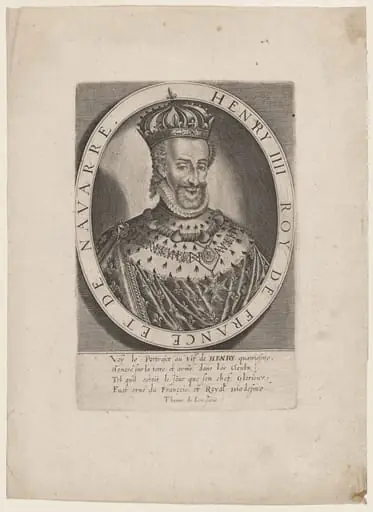
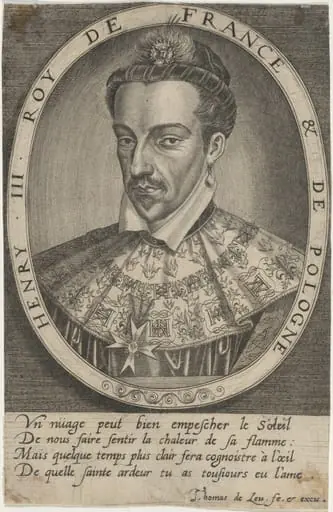
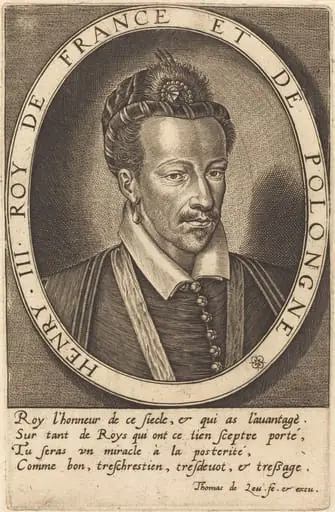
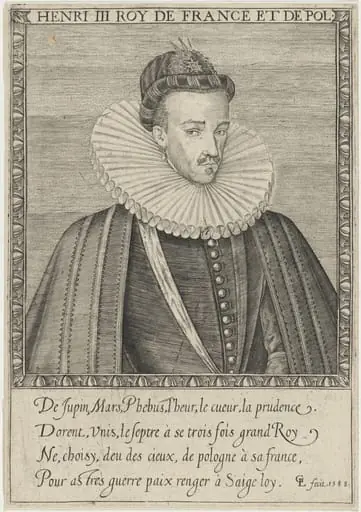
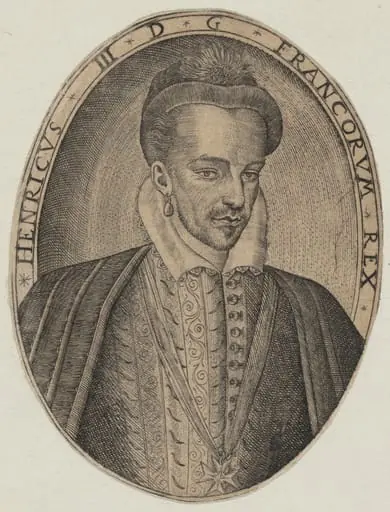
Henry III of France is an ink print by the Renaissance artist Thomas de Leu. It dates from 1590 and is held in the collection of the National Gallery of Art.
About this work
Overview
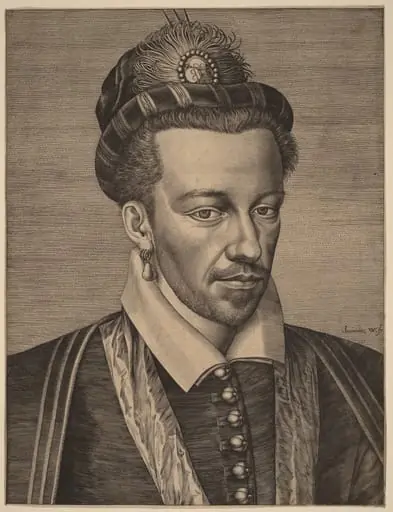
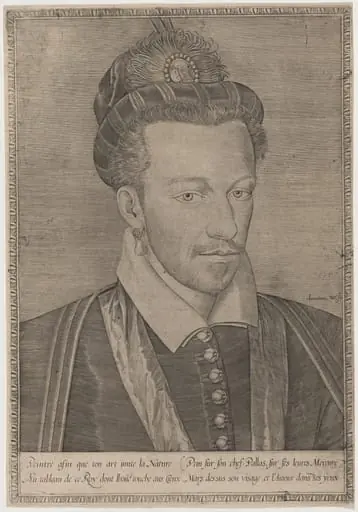
Thomas de Leu, a Flemish‑born engraver active in France during the late 1500s, produced an engraved portrait of King Henry III in 1590. The print presents the former monarch in a formal pose, his dark hair gathered in a bun and accented with a modest ornament. He wears a dark doublet with a white collar and a line of round buttons, set against a plain background.
Subject & Meaning
The image captures Henry III, who ruled France from 1574 until his death in 1589. The sober expression and aristocratic attire reflect the king’s status and the solemnity associated with royal portraiture of the period, emphasizing authority rather than personal intimacy.
Technique & Style
De Leu employed fine cross‑hatching to render the textures of fabric, hair, and facial features, achieving a nuanced tonal range within the monochrome medium. The precision of the line work demonstrates the high level of craftsmanship typical of late‑Renaissance French engraving.
History & Provenance
Created shortly after the king’s death, the print was part of de Leu’s broader output as a publisher and dealer, intended for wide circulation among collectors and the courtly audience. Copies would have been distributed through his print shop, contributing to the visual memory of Henry III in early modern France.
Context
The portrait belongs to a tradition of posthumous royal images that reinforced dynastic continuity during the turbulent Wars of Religion. Engravings like this served both as commemorative objects and as political tools, reinforcing the legitimacy of the Valois line amid succession crises.
Artist & collection
Artist
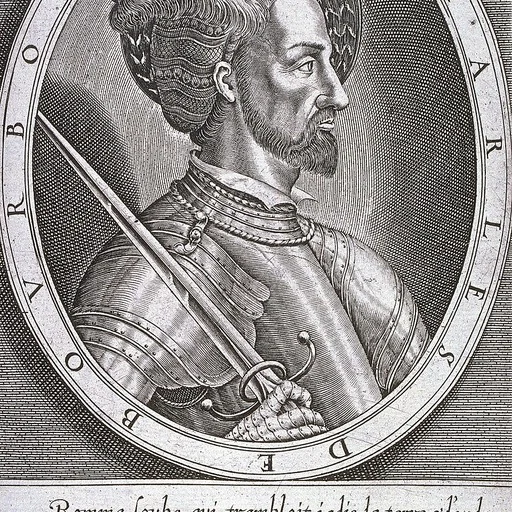
Thomas de Leu or Leeuw or Le Leup or Deleu (1560–1612) was a French engraver, publisher, and print dealer of Flemish origin.