Artwork
Henry III of France
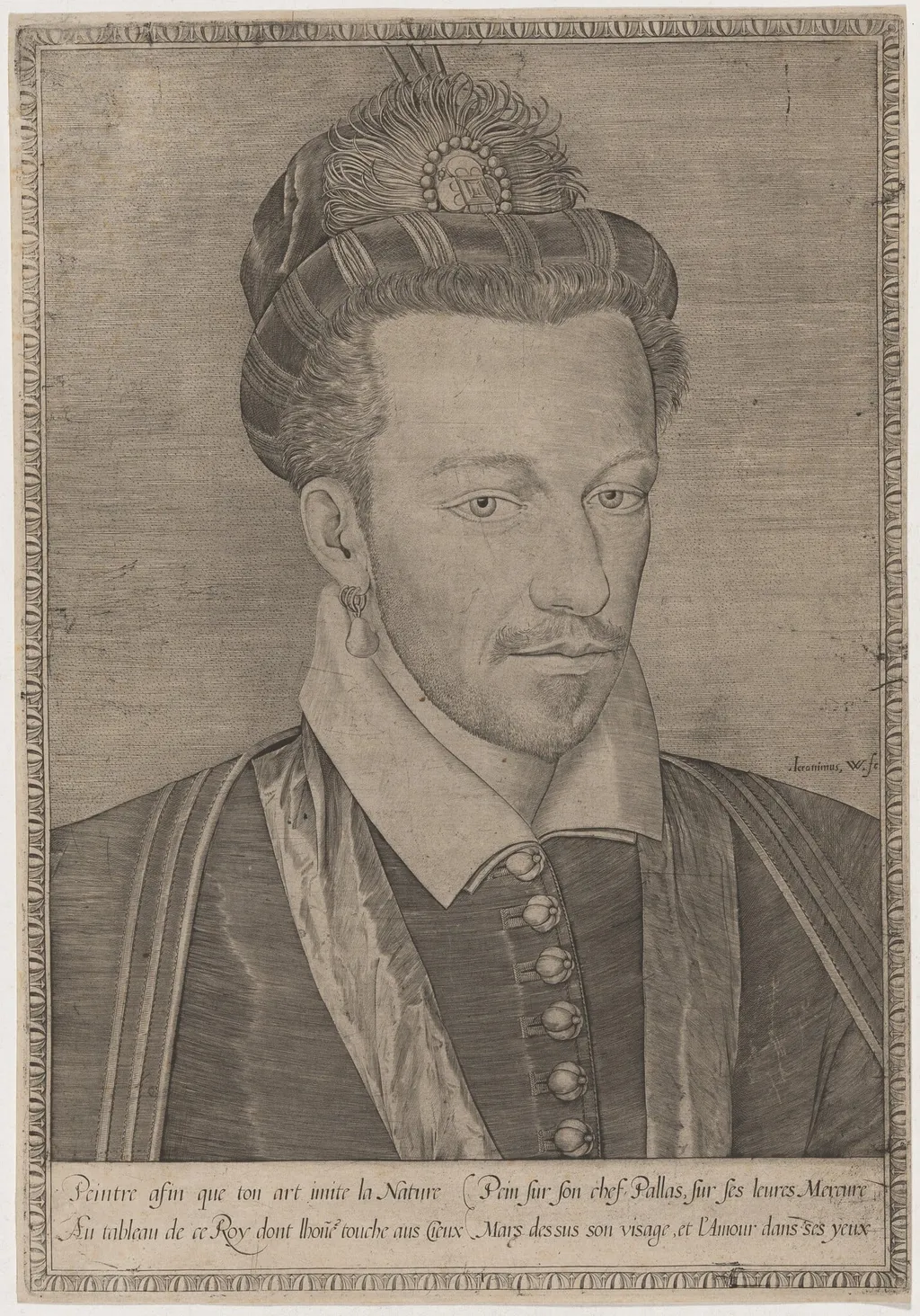
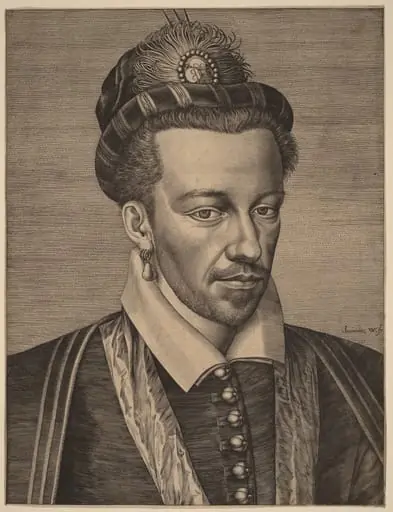
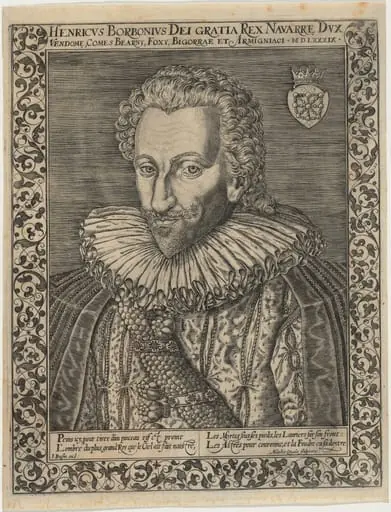
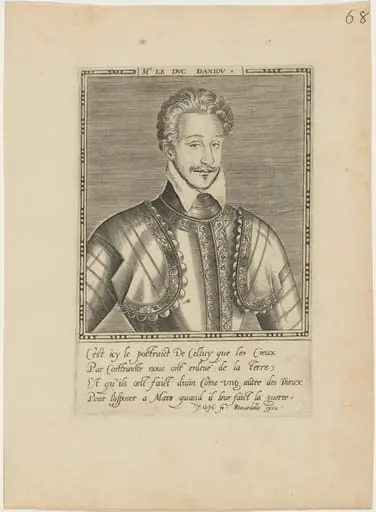
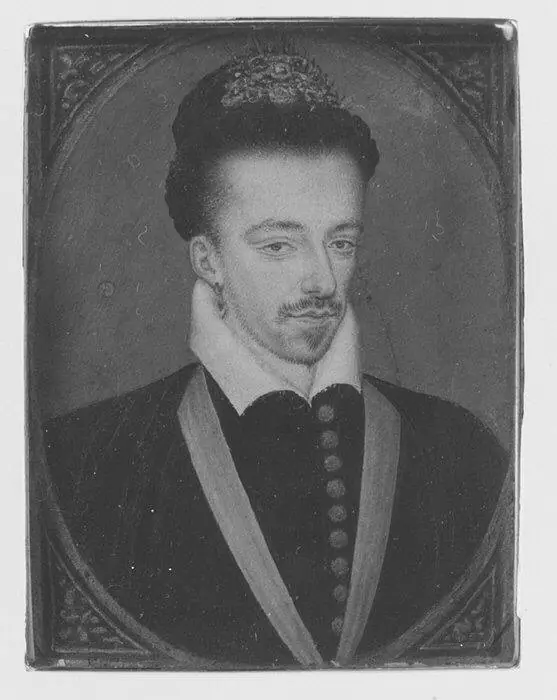
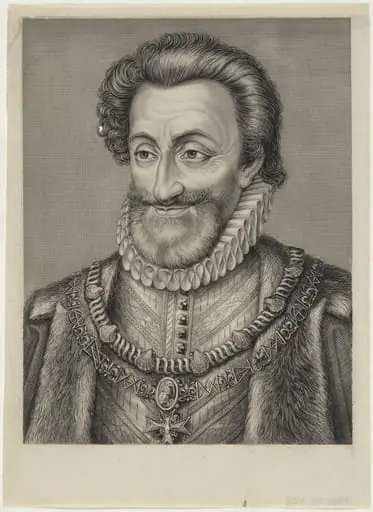
Henry III of France is an ink print by the Renaissance artist Hieronymus Wierix. It dates from 1586 and is held in the collection of the National Gallery of Art.
About this work
Overview
This 1586 engraving by Hieronymus Wierix portrays Henry III of France, highlighting the artist's skill in reproductive engraving and his family's influence in disseminating Netherlandish art across Europe.
Subject & Meaning
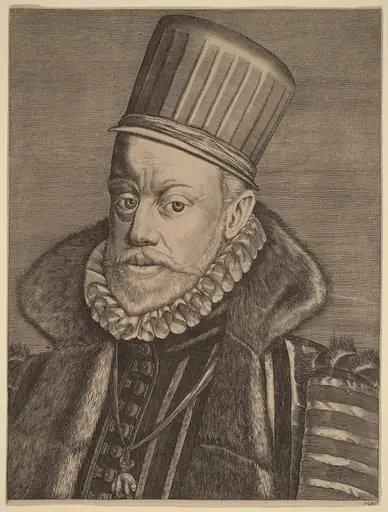
The engraving depicts Henry III with a serious expression, adorned in attire indicative of his royal status, including a high-collared black coat, large buttons, a feathered hairstyle, and a ruff. The plain background emphasizes the monarch's presence, reflecting the Wierix family's engagement with political themes through their prints.
Technique & Style
Executed in black-and-white, the engraving showcases Wierix's mastery of cross-hatching, a technique employing layered lines to achieve textured details, such as the folds in Henry's clothing, and to create shading that adds depth to the portrait.
History & Provenance
Created in 1586 by Hieronymus Wierix, a Flemish engraver active from 1553 to 1619, this work is characteristic of his reproductive engravings, often after notable artists like Albrecht Dürer, underscoring the Wierix family's role in European art dissemination.
Context
Produced in the Southern Netherlands, the engraving engages with the religious and political climate of the time, reflecting the Wierix family's thematic focus in their prints.
Legacy
While specific lasting impacts of this engraving are not detailed, it contributes to the broader legacy of the Wierix family in popularizing Netherlandish art and the enduring technique of cross-hatching in printmaking.
Artist & collection

Artist
Hieronymus Wierix (1553–1619) was a Flemish engraver, draughtsman and publisher. He is known for his reproductive engravings after the work of well-known local and foreign artists including Albrecht Dürer. Together with…