Artwork
Jean de Beaugrand
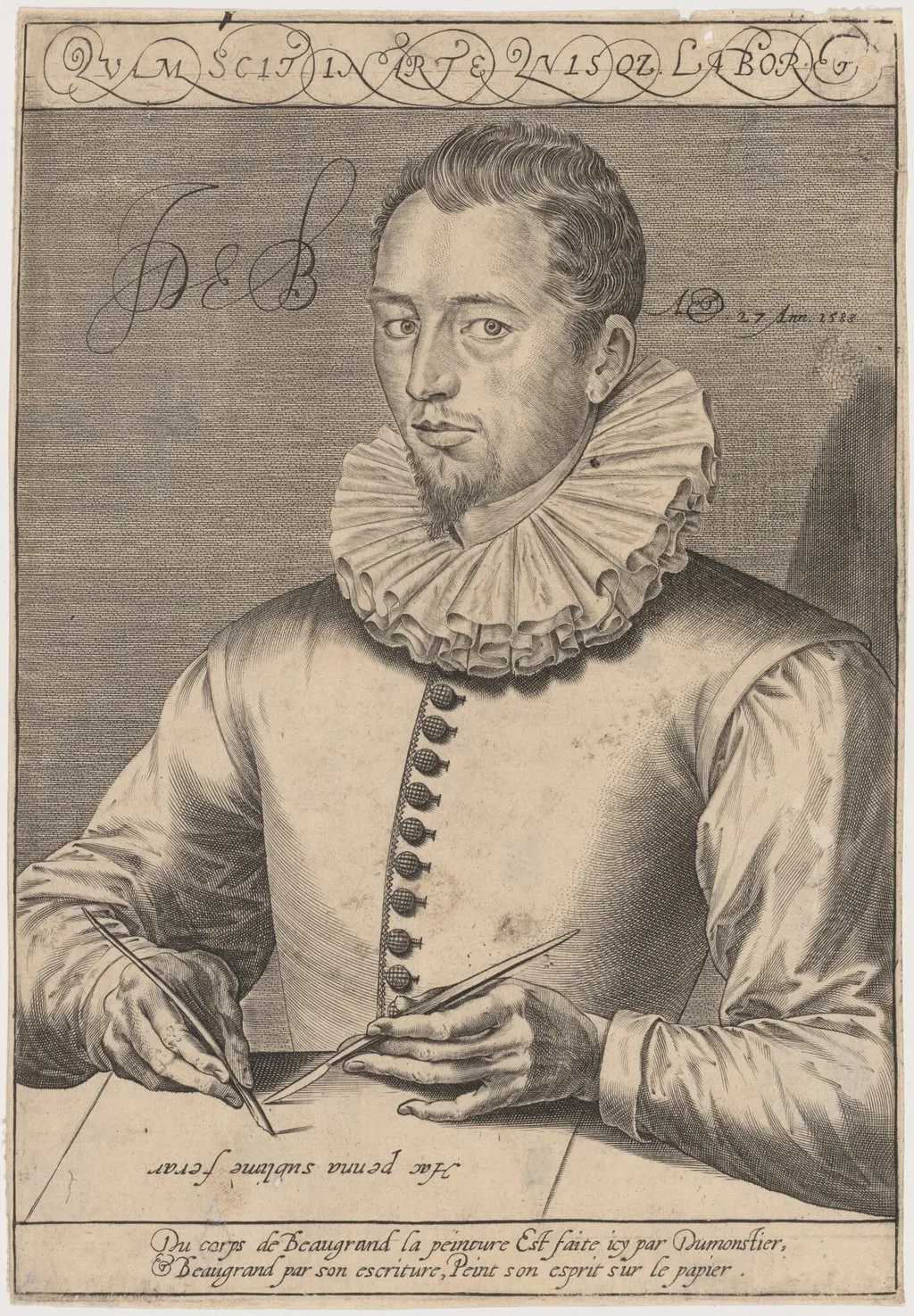
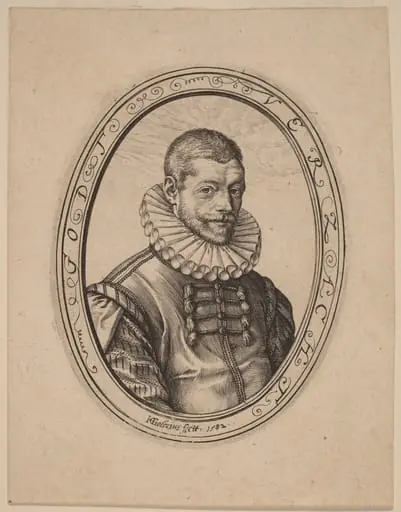
Jean de Beaugrand is an ink print by the Renaissance artist Thomas de Leu. It dates from 1588 and is held in the collection of the National Gallery of Art.
About this work
The level of detail in the engraving, particularly in the folds of the man's clothing, indicates a high level of skill on the part of the artist.
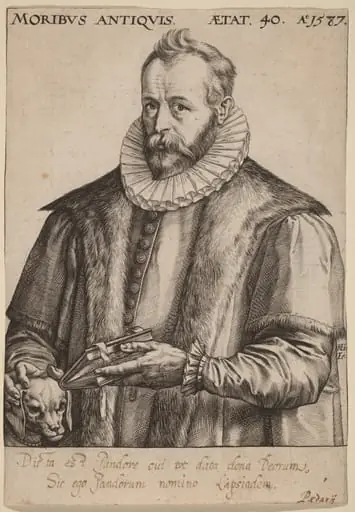
This engraving depicts a man sitting at a desk, holding a pen in his right hand and a compass in his left. He wears a ruffled collar and a buttoned-up shirt with a high neckline. The background is a simple, textured surface.
The man's attire and the tools he holds suggest that he is an artist or craftsman. The level of detail in the engraving, particularly in the folds of the man's clothing, indicates a high level of skill on the part of the artist.
The engraving is a portrait of Jean de Beaugrand, created by Thomas de Leu in 1588. To learn more about the Renaissance movement, which influenced this artwork, you can explore further.
Overview
Thomas de Leu’s 1588 engraving presents a seated figure identified as Jean de Beaugrand. Rendered in fine line work, the image shows the subject at a desk, his right hand gripping a pen and his left a drafting compass. The composition is set against a modest, textured backdrop that emphasizes the figure’s posture and the tools of his trade.
Subject & Meaning
The portrait conveys Beaugrand as a learned practitioner, likely a mathematician, architect, or draftsman, suggested by the presence of the compass and writing instrument. His attire—a ruffled collar, high‑necked shirt, and buttoned cuffs—marks him as a gentleman of the period, while the objects he holds underscore his intellectual and technical pursuits.
Technique & Style
De Leu employs precise, cross‑hatching to model the folds of the clothing and the contours of the face, achieving a subtle gradation of tone. The engraving’s linear clarity reflects the late‑Renaissance interest in detailed observation and the emerging emphasis on individual portraiture within the print medium.
History & Provenance
Created in 1588, the print was produced by Thomas de Leu, a Flemish‑born engraver who established a successful workshop in Paris. De Leu was active in the French print market, both as an artist and a dealer, and his works circulated among collectors and scholars of the period.
Context
The portrait emerges from the late Renaissance, a time when printmaking expanded the reach of portraiture and scientific illustration. Engravings such as this served both documentary and didactic purposes, reflecting the era’s growing fascination with the intersection of art, mathematics, and engineering.
Artist & collection
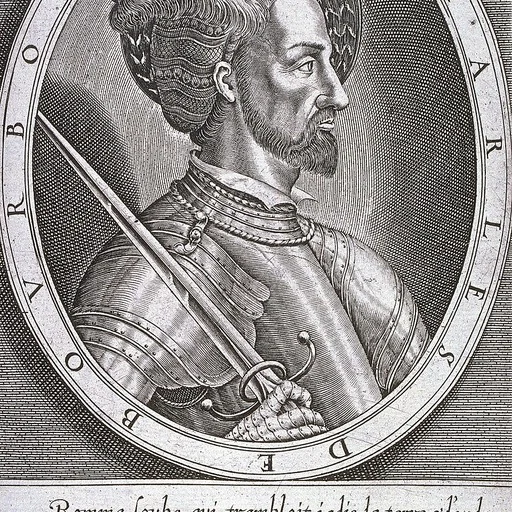
Artist
Thomas de Leu or Leeuw or Le Leup or Deleu (1560–1612) was a French engraver, publisher, and print dealer of Flemish origin.