Artwork
Albert, Archduke of Austria
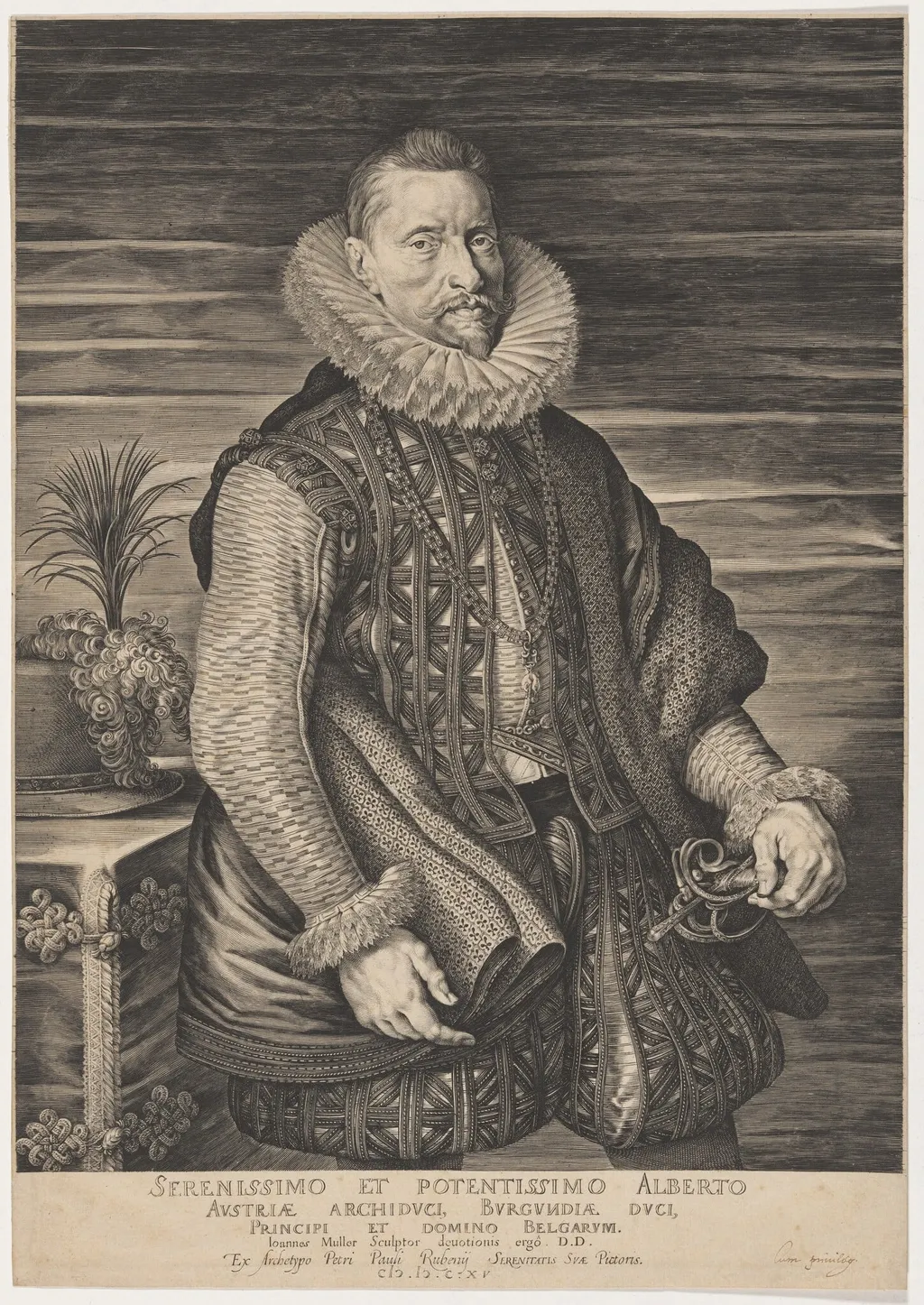
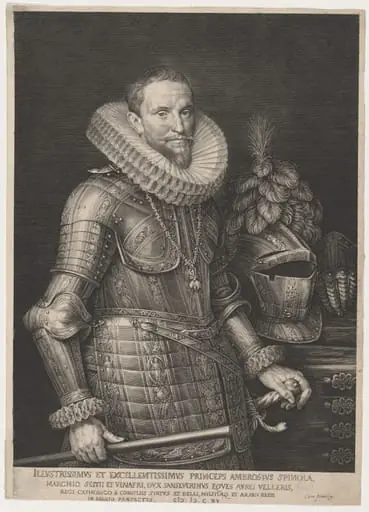
Albert, Archduke of Austria is an ink print by the Baroque artist Jan Muller. It dates from 1615 and is held in the collection of the National Gallery of Art. This 1615 engraving by Jan Harmensz.
About this work
Overview
Muller presents a formal portrait of Albert, Archduke of Austria, rendered in monochrome with meticulous line work.
This 1615 engraving by Jan Harmensz. Muller presents a formal portrait of Albert, Archduke of Austria, rendered in monochrome with meticulous line work. The image is a reproductive print, likely intended for distribution among noble circles, capturing the archduke’s status through controlled detail and restrained composition. Muller, trained in Amsterdam and influenced by Italian techniques, applied his skill in engraving to translate portraiture into the printed medium with precision.
Subject & Meaning
Albert, Archduke of Austria, is depicted in full regalia, emphasizing his political and dynastic role. His high ruff, embroidered coat, and ornate chain signify aristocratic rank, while the sheathed sword and folded document suggest authority and administrative duty. The plain, dark background focuses attention on his figure, reinforcing the portrait’s function as a symbol of power rather than a personal likeness. The inclusion of a small plant in the corner may allude to continuity or virtue, common in Habsburg iconography.
Technique & Style
Muller employed fine, controlled etching lines to model form and texture, particularly in the fabric of the archduke’s garments and the intricate embroidery. Shading is achieved through cross-hatching and delicate parallel strokes, creating a sense of volume without tone. The background’s rough texture contrasts with the smoothness of the figure, enhancing the subject’s prominence. The engraving’s clarity and precision reflect Muller’s mastery of the medium and his training in both Dutch and Italian traditions.
History & Provenance
Created in 1615, the engraving was produced during Muller’s tenure leading his family’s print workshop in Amsterdam. As a skilled reproductive artist, he often translated paintings into prints for wider circulation. This portrait likely served to disseminate the image of Albert, a key Habsburg figure, across Europe. No early ownership records are documented, but its survival suggests it was valued within aristocratic or scholarly collections of the period.
Context
Albert, Archduke of Austria, was Governor of the Spanish Netherlands and a central figure in Habsburg politics during the early 17th century. Portraits like this were part of a broader visual strategy to reinforce dynastic legitimacy. Muller’s work reflects the transnational exchange of artistic methods between the Netherlands and Italy, where engravers often adapted Italian compositional ideals to Northern European subjects. The print genre allowed for the replication and dissemination of such imagery beyond courtly circles.
Legacy
Muller’s engraving exemplifies the role of printmaking in shaping political imagery during the early modern era. While not widely known today, his technique influenced later generations of Dutch engravers who specialized in portraiture. The work remains a documented example of how Habsburg authority was visually sustained through reproducible media, bridging the gap between painted originals and the broader public sphere of printed images.
Artist & collection

Artist
Jan Harmensz. Muller (1571–1628) was a Dutch engraver and painter. Muller was born in Amsterdam. His father was a book printer, engraver and publisher. He learned the engraving trade while working in the family…