Artwork
Lycidas
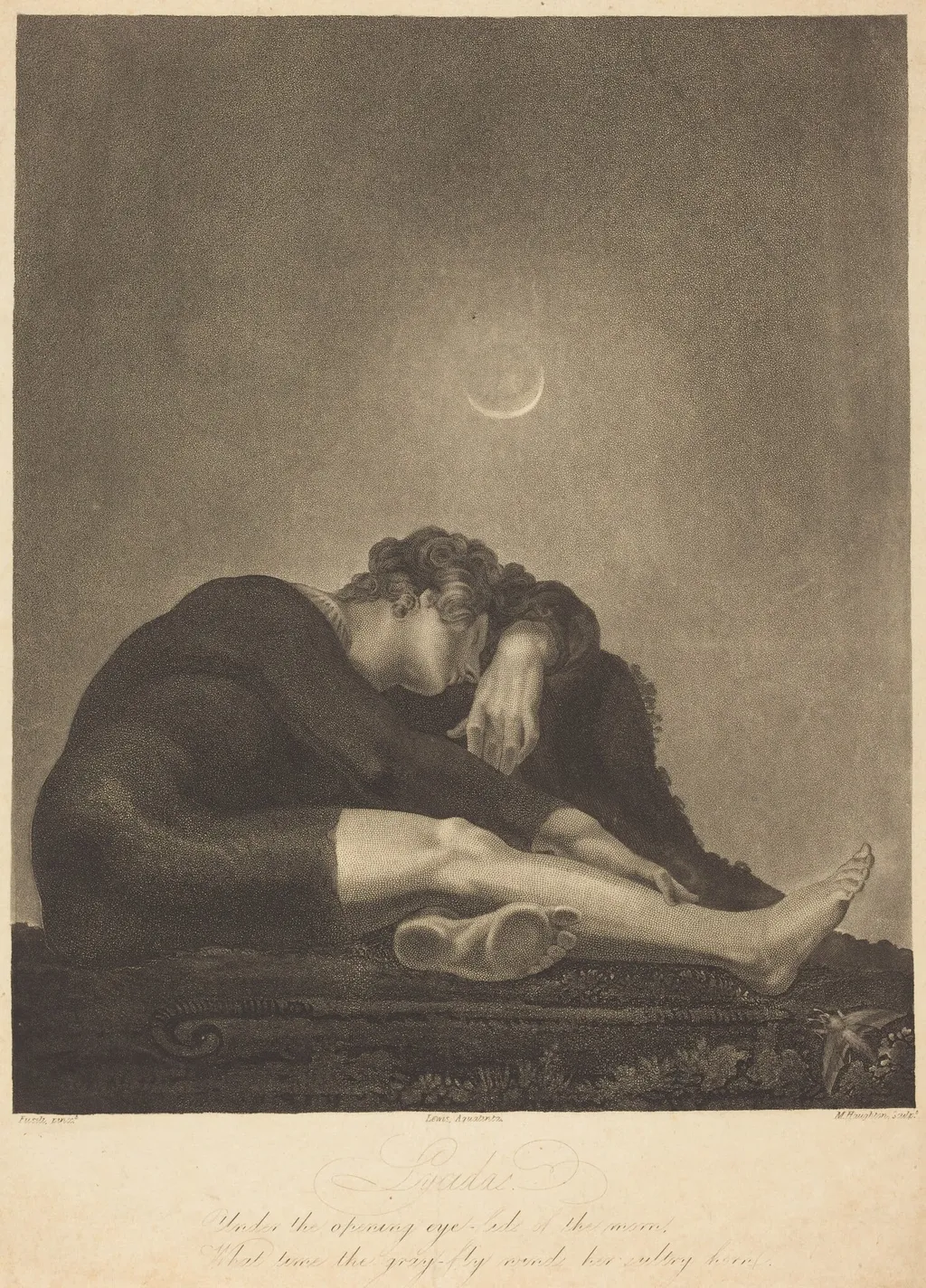
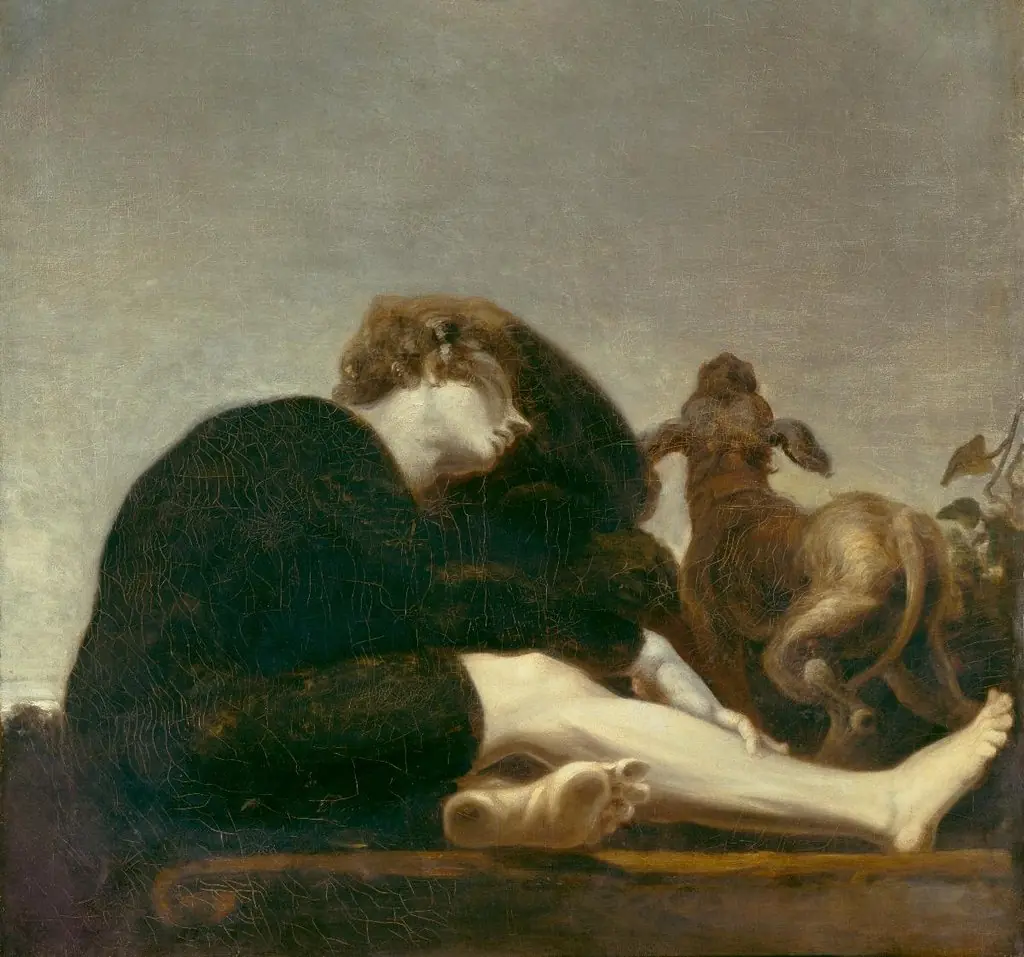
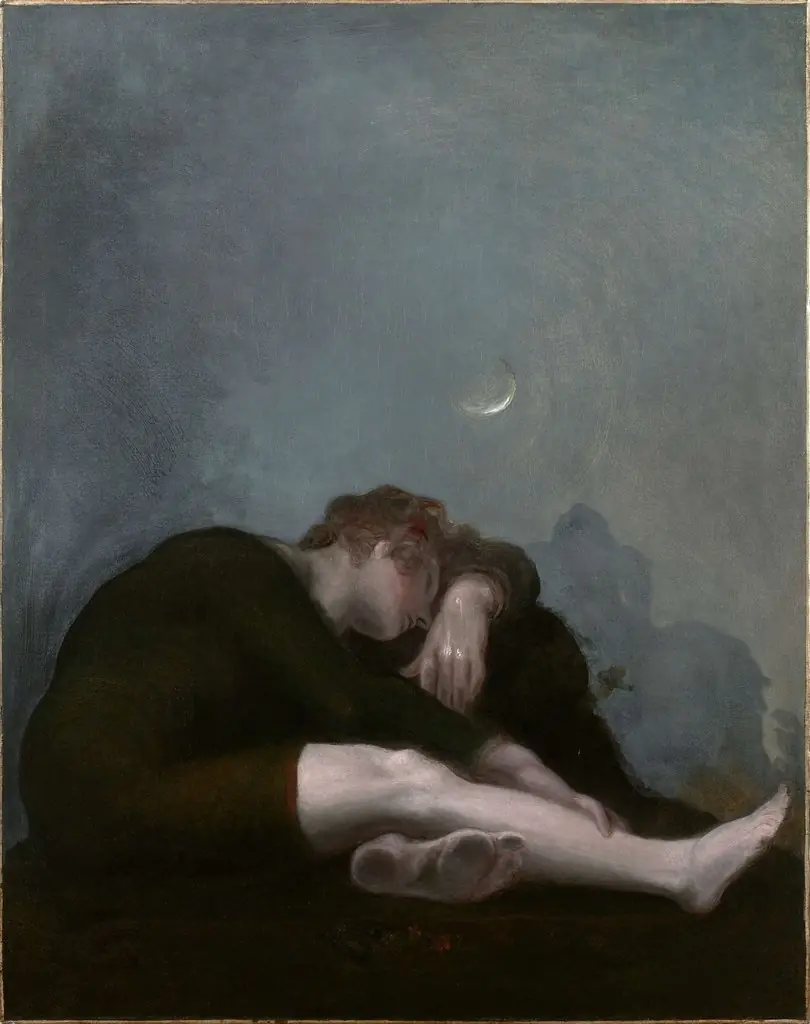
Lycidas is an ink print by the Romanticist artist Frederick Christian Lewis I. It dates from 1803 and is held in the collection of the National Gallery of Art.
About this work
Overview
Created in 1803 by Frederick Christian Lewis I, Lycidas is a print composed of etching and aquatint on wove paper. It depicts a solitary figure reclining beside a large dog, both resting on a padded surface under a pale moon. The composition conveys stillness and quiet companionship, achieved through delicate tonal gradations and soft line work characteristic of the aquatint process.
Subject & Meaning
The figure and dog, positioned in intimate proximity, suggest a bond of quiet solace. The title, Lycidas, alludes to John Milton’s pastoral elegy, evoking themes of loss and mourning. The dim lighting and reclining posture imply a moment of rest after grief, transforming the scene into a contemplative meditation on companionship in solitude.
Technique & Style
Lewis employed etching for fine linear detail and aquatint to produce subtle tonal transitions, mimicking the softness of moonlight. The wove paper’s smooth surface enhanced the print’s delicate gradations. The absence of harsh contours and the muted palette reinforce a somber, introspective mood, typical of early 19th-century romantic sensibilities in printmaking.
History & Provenance
The print was produced in 1803 during Lewis’s early career as a topographical and literary illustrator. It was likely issued as part of a series inspired by classical poetry, reflecting contemporary interest in literary subjects within print culture. No documented early ownership records survive, but it was known among collectors of illustrated poetry volumes by the mid-1800s.
Context
Lycidas emerged during a period when British artists increasingly turned to literary themes for print subjects. The Romantic movement’s emphasis on emotion and nature influenced Lewis’s choice of subject and tone. Etching and aquatint were favored for their ability to convey atmospheric effects, making them ideal for illustrating poetic moods in an age before photography.
Legacy
Though not widely exhibited today, Lycidas remains a representative example of early 19th-century literary printmaking. It illustrates how engravers translated poetic sentiment into visual form, bridging literature and graphic art. Its quiet intimacy continues to resonate as a modest but evocative artifact of Romantic-era print culture.
Artist & collection


 Debut from "Paradise and the Peri" (3rdplate )
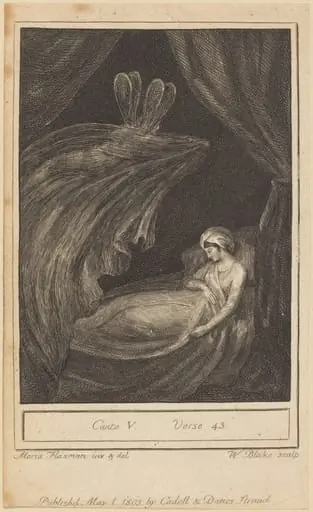 Canto V, Verse 43
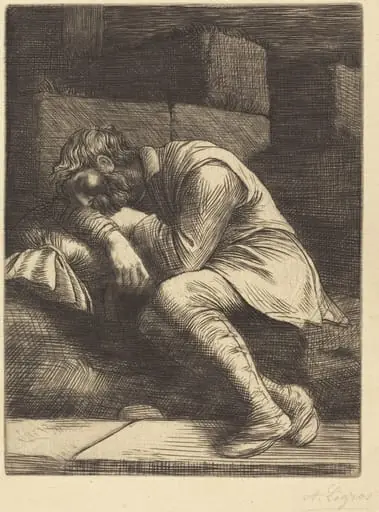 Sleeping Beggar (Mendiant endormi)
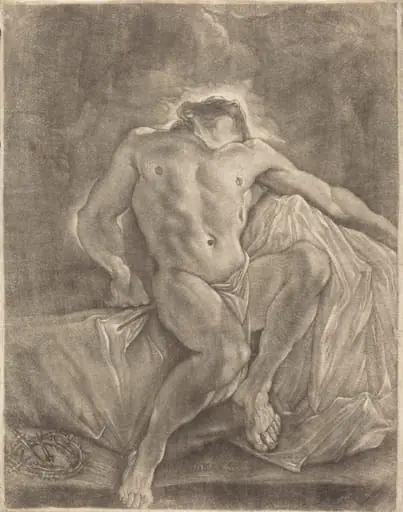 The Dead Body of Christ
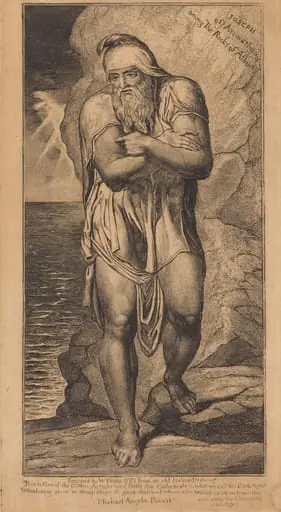 Joseph of Arimathea Among the Rocks of Albion
 La Zingana
 Debut from "Paradise and the Peri" (2nd plate)
 Sinbad the Sailor (Sinbad le marin)
 Einsamkeit im Morgenzwielicht
 The Return to Life
 Standing Man in Pensive Pose
 Lycidas