Artwork
East Frisian Peasants Eating Supper
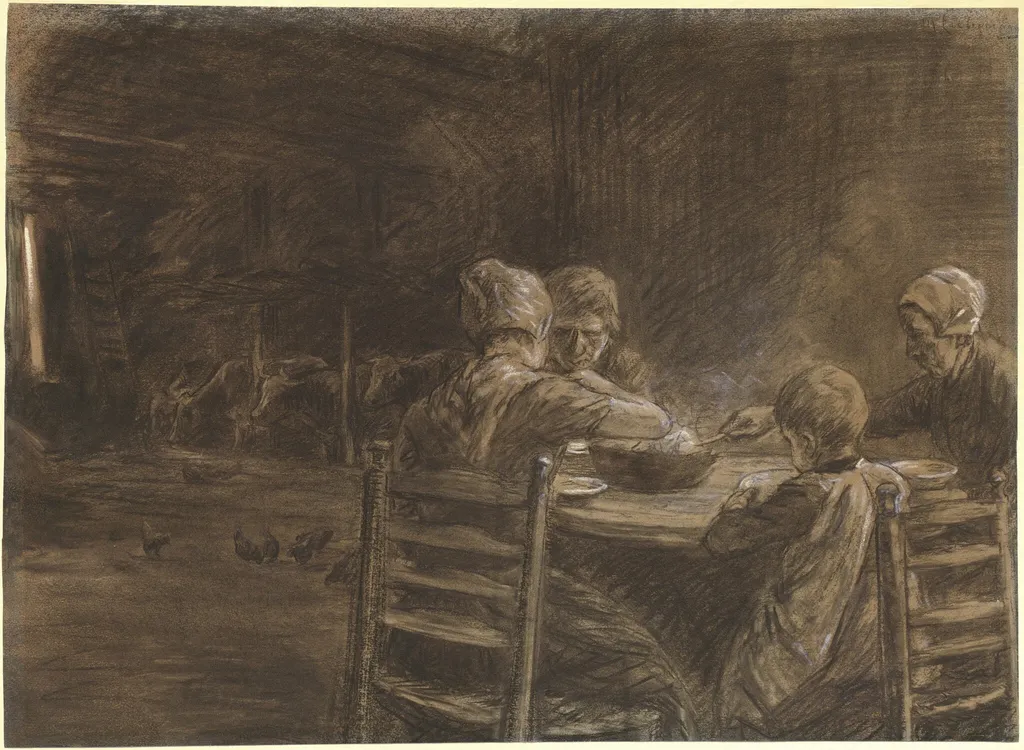
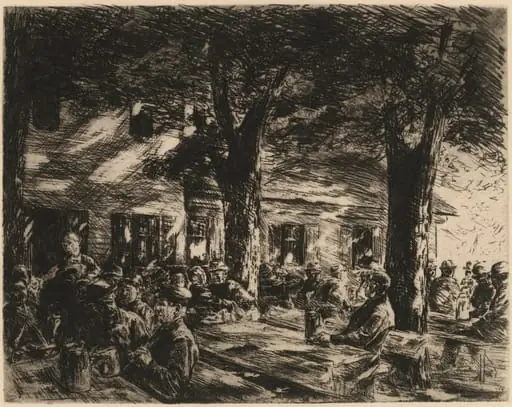
East Frisian Peasants Eating Supper is a chalk drawing by the Impressionist artist Max Liebermann. It dates from 1893 and is held in the collection of the National Gallery of Art.
About this work
Overview
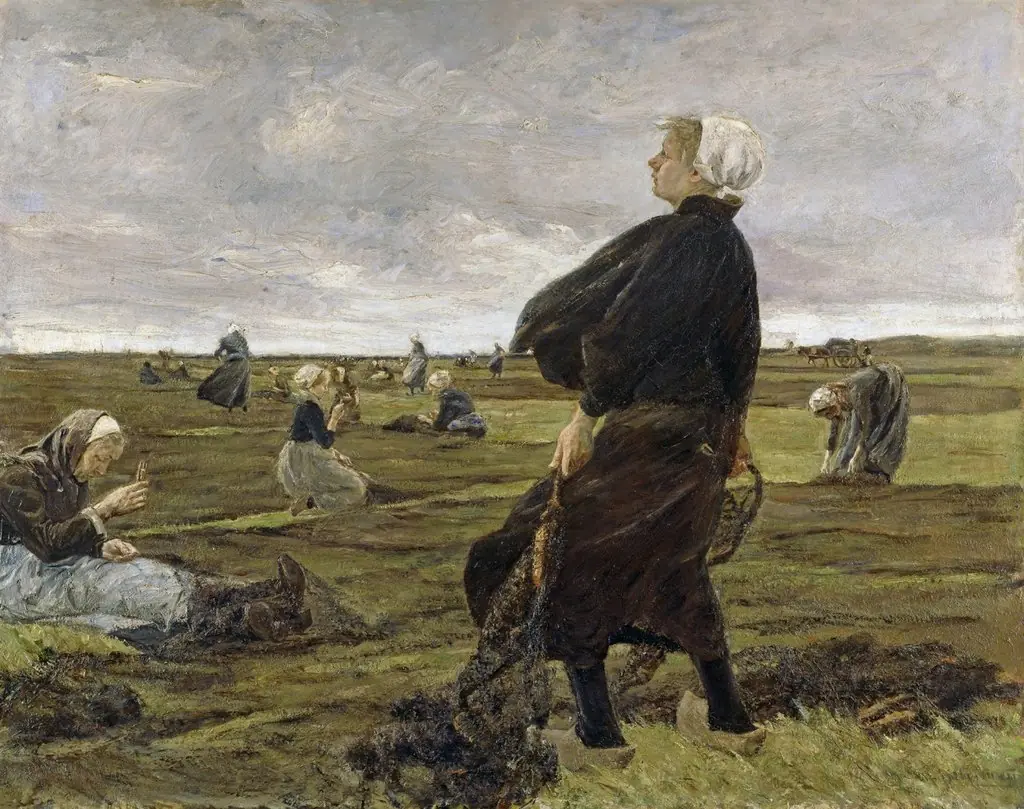
The piece belongs to Liebermann’s broader exploration of laboring communities during the 1890s, reflecting his shift toward intimate, unidealized scenes.
Created in 1893, this charcoal and chalk drawing by Max Liebermann captures a quiet moment of rural life in East Frisia. Executed on light green wove paper, the work employs white chalk to lift highlights and red chalk for subtle accents along the upper edge. The verso, rendered in charcoal on similar paper, suggests the artist’s iterative process. The piece belongs to Liebermann’s broader exploration of laboring communities during the 1890s, reflecting his shift toward intimate, unidealized scenes.
Subject & Meaning
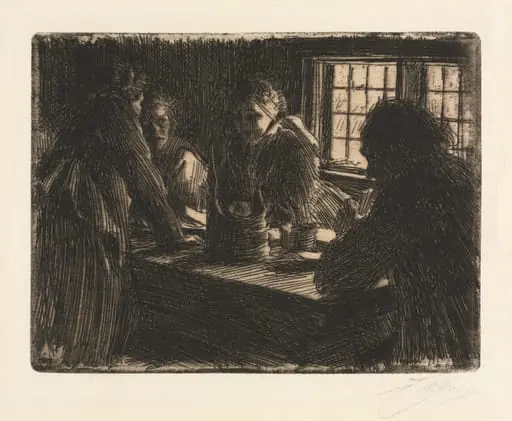
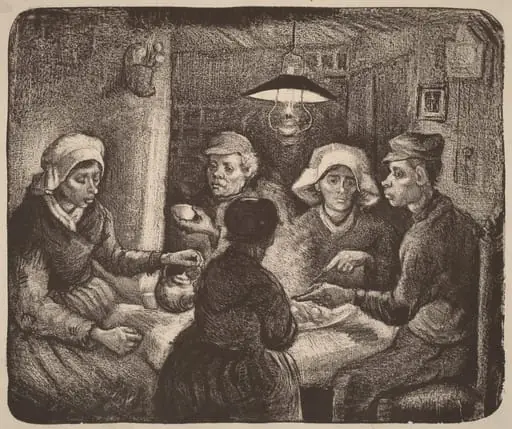
The drawing portrays a group of East Frisian peasants sharing an evening meal around a modest wooden table. A woman pours coffee while others eat from simple bowls, their postures relaxed yet weary. The scene avoids narrative drama, instead emphasizing the dignity of routine labor and communal endurance. The dim light from a single lamp underscores the intimacy of the moment, grounding the figures in a tangible, unadorned reality.
Technique & Style
Liebermann used charcoal for its flexibility, building form through layered strokes and smudges, then lifting areas with white chalk to suggest lamplight and skin tones. The rough texture of the green paper enhances the tactile quality of worn clothing and weathered hands. Red chalk, added later, subtly defines contours and shadows without overpowering the tonal harmony. The loose handling reflects an Impressionist sensitivity to light and atmosphere, applied here with a draftsmanship rooted in observation.
History & Provenance
Liebermann produced this work during a period of deep engagement with rural subjects in northern Germany, following his earlier studies in Paris and the Netherlands. Though he was born into a wealthy Berlin Jewish family, his artistic focus turned toward the lives of ordinary people after the 1880s. The drawing remained in private collections until entering a public institution, where it is now preserved as part of his graphic oeuvre, distinct from his more widely known oil paintings.
Context
In the 1890s, German artists increasingly turned to social realism, influenced by French naturalism and the rise of urban labor movements. Liebermann’s focus on peasant life aligned with broader cultural interest in regional identity and the dignity of manual work. Unlike idealized rural depictions, his drawings avoided sentimentality, presenting laborers with unembellished presence, reflecting both his personal ethics and the shifting artistic climate of Wilhelmine Germany.
Legacy
This drawing exemplifies Liebermann’s commitment to capturing everyday life with psychological nuance and technical restraint. While his paintings gained greater public recognition, his graphic works like this one reveal a more immediate, intimate approach to form and light. The piece influenced later German realists who valued direct observation over academic convention, securing its place as a quiet but significant contribution to late 19th-century drawing practices.
Artist & collection
Artist
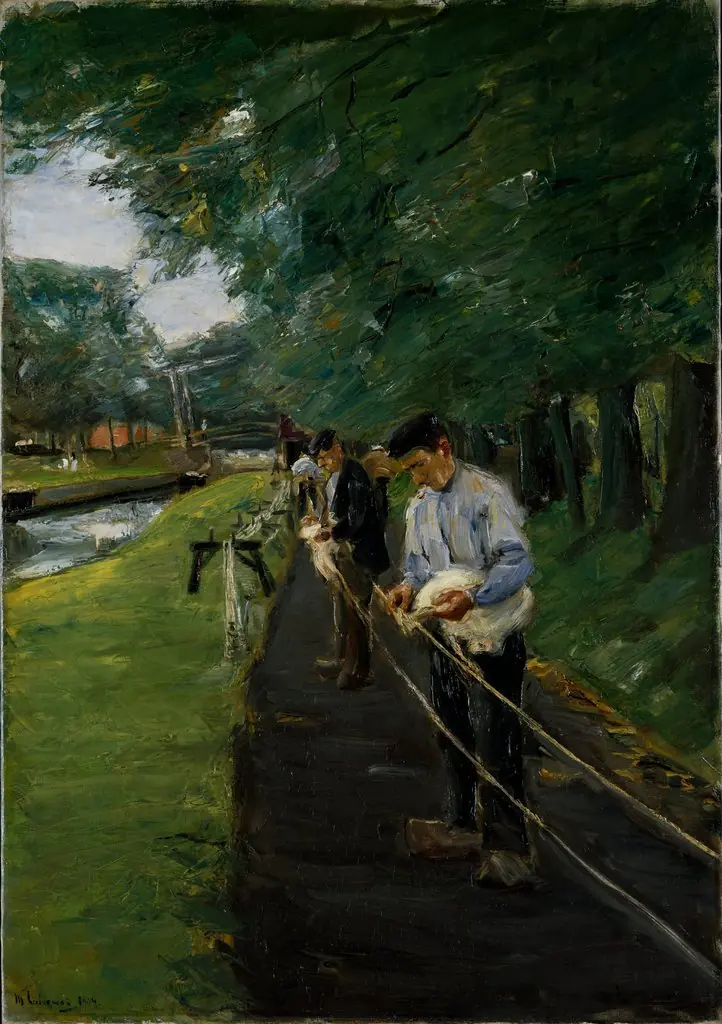
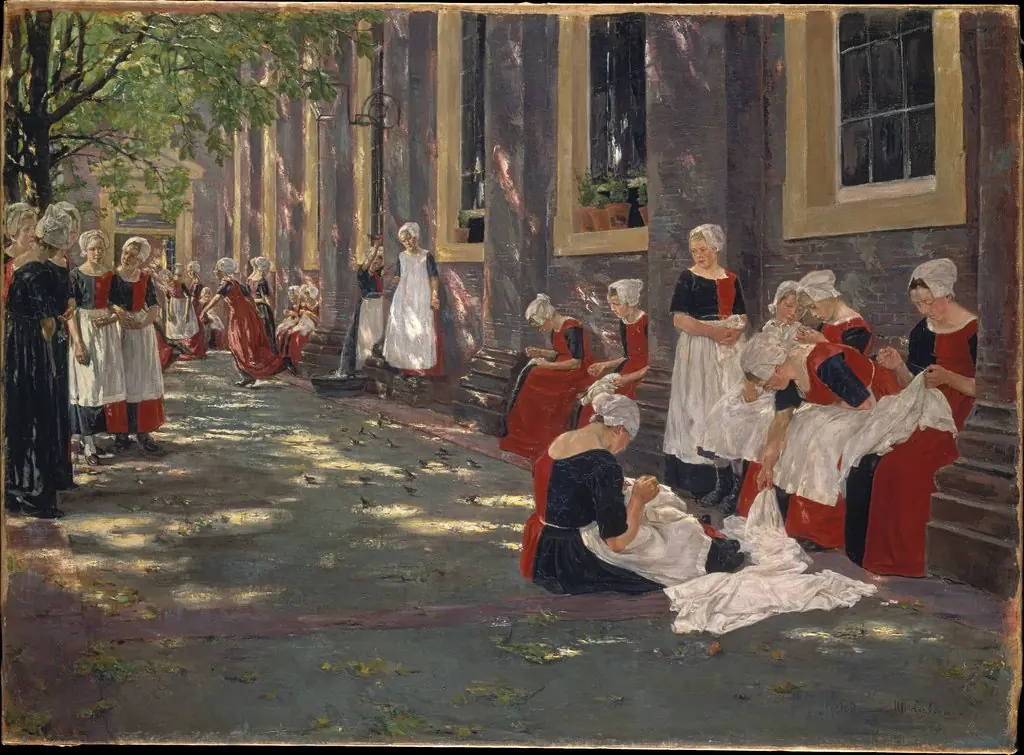
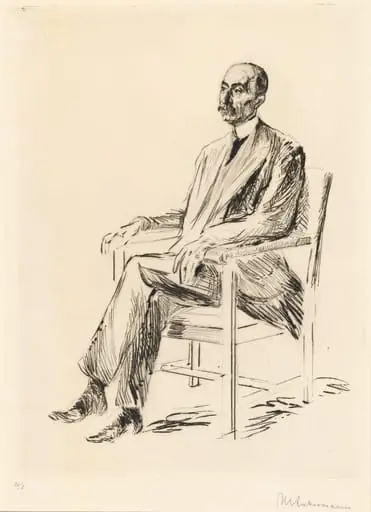
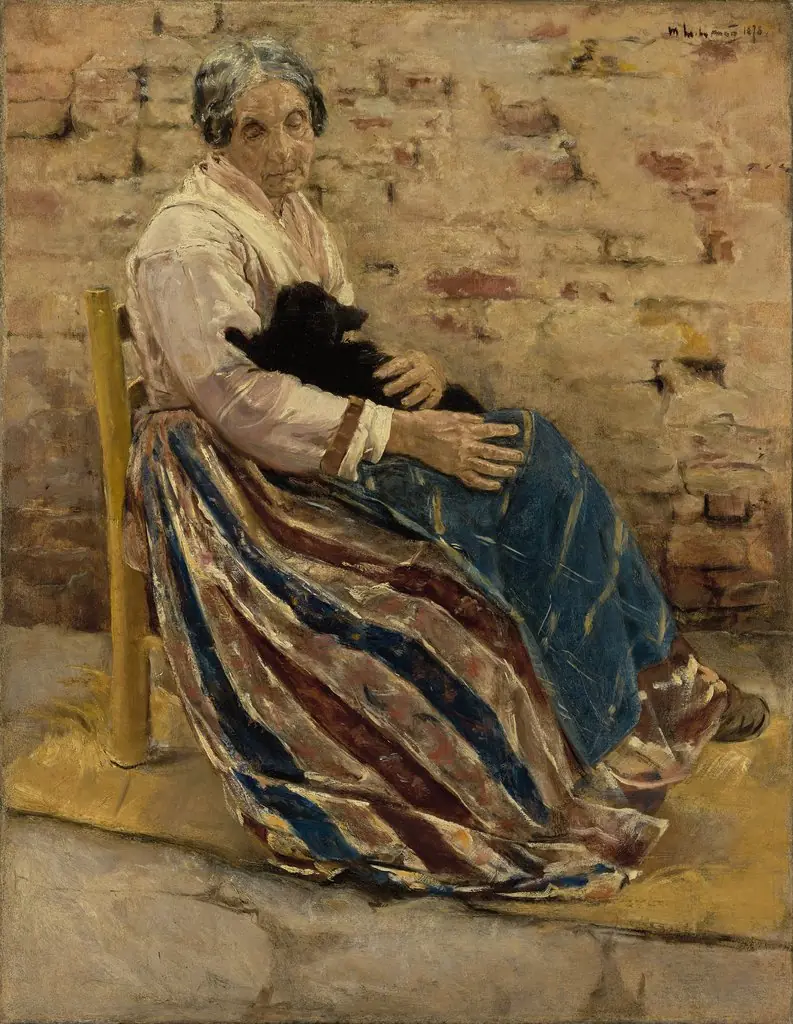
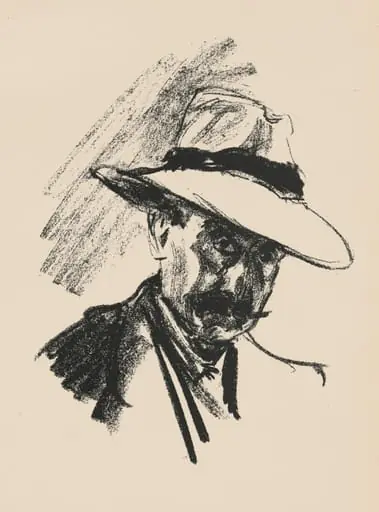
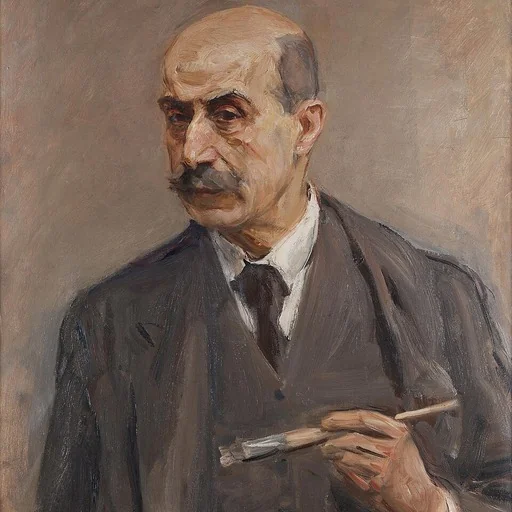
Max Liebermann (20 July 1847 – 8 February 1935) was a German painter and printmaker, and one of the leading proponents of Impressionism in Germany and continental Europe.