Artwork
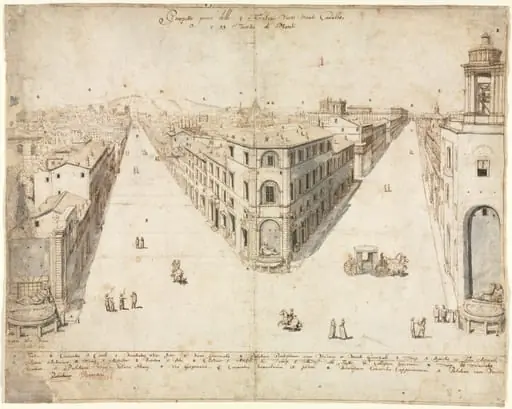
Eighteen Views of Rome: The Piazza Barberini (recto); Tracing of a Fountain from recto and Sketches of Two Faces (verso)
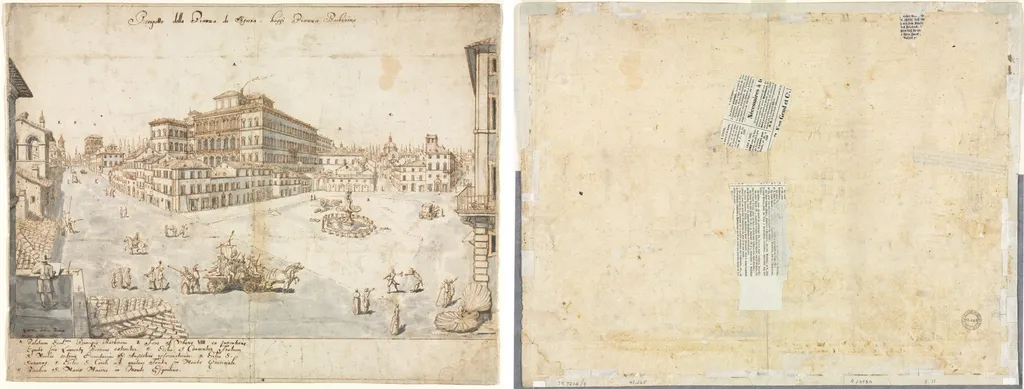
Eighteen Views of Rome: The Piazza Barberini (recto); Tracing of a Fountain from recto and Sketches of Two Faces (verso) is a drawing by the Baroque artist Lievin Cruyl. It dates from 1665 and is held in the collection of the Cleveland Museum of Art.
About this work
Overview
Lievin Cruyl’s 1665 drawing presents a panoramic view of Rome’s Piazza Barberini.
Lievin Cruyl’s 1665 drawing presents a panoramic view of Rome’s Piazza Barberini. Rendered on a single sheet, the composition captures the bustling square, its central monumental façade, a fountain, and the surrounding streets filled with pedestrians, horse‑drawn carts, and laborers. The work is part of the Cleveland Museum of Art’s collection and exemplifies the detailed urban surveys popular among 17th‑century Flemish artists working in Italy.
Subject & Meaning
The scene records a moment of everyday activity in one of Rome’s principal public spaces. By depicting a variety of figures—merchants, travelers, and workers—Cruyl emphasizes the piazza’s role as a commercial and social hub. The inclusion of the fountain and the grand building underscores the interplay between civic architecture and communal life, offering a documentary glimpse of Baroque urban vitality.
Technique & Style
Executed in fine pen and wash on paper, the drawing combines precise linear rendering with delicate tonal shading. Cruyl employs a slightly elevated viewpoint, allowing the architectural forms to dominate the composition while still conveying depth through overlapping figures. The light, sketch‑like strokes suggest a rapid yet careful observation, characteristic of the topographical drawing tradition of the period.
History & Provenance
Created in 1665 during Cruyl’s extended stay in Rome, the work was likely intended for a series of city views that circulated among collectors and travelers. It entered the Cleveland Museum of Art’s holdings through a 20th‑century acquisition, where it remains a key example of Baroque-era urban documentation.
Artist & collection

Artist
Lievin Cruyl or Lieven Cruyl was a Flemish priest and a draughtsman and etcher of landscapes, seascapes, and architectural views.

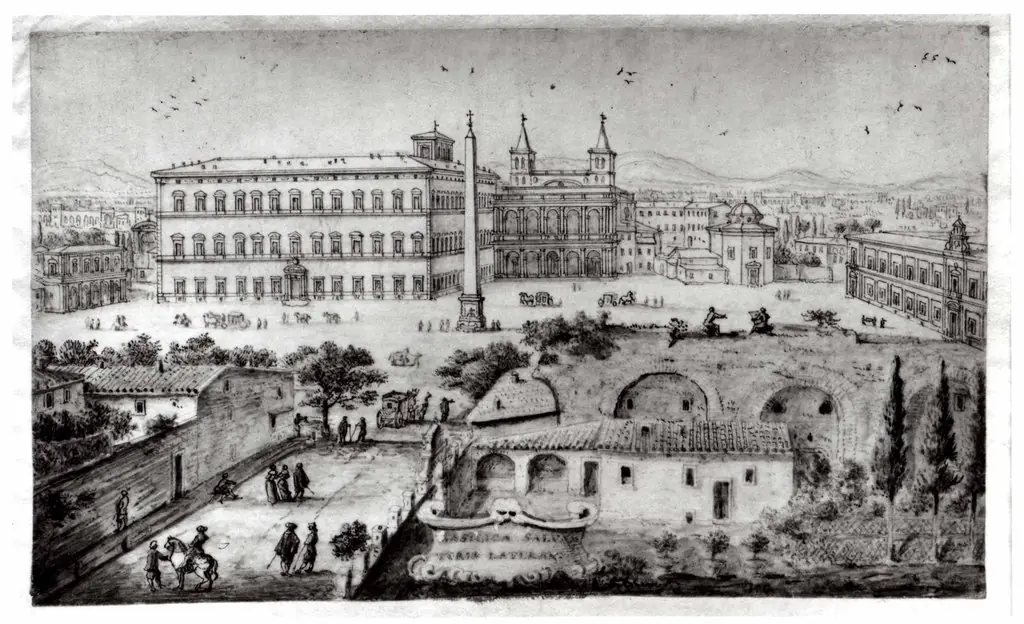 View of Lateran, Rome
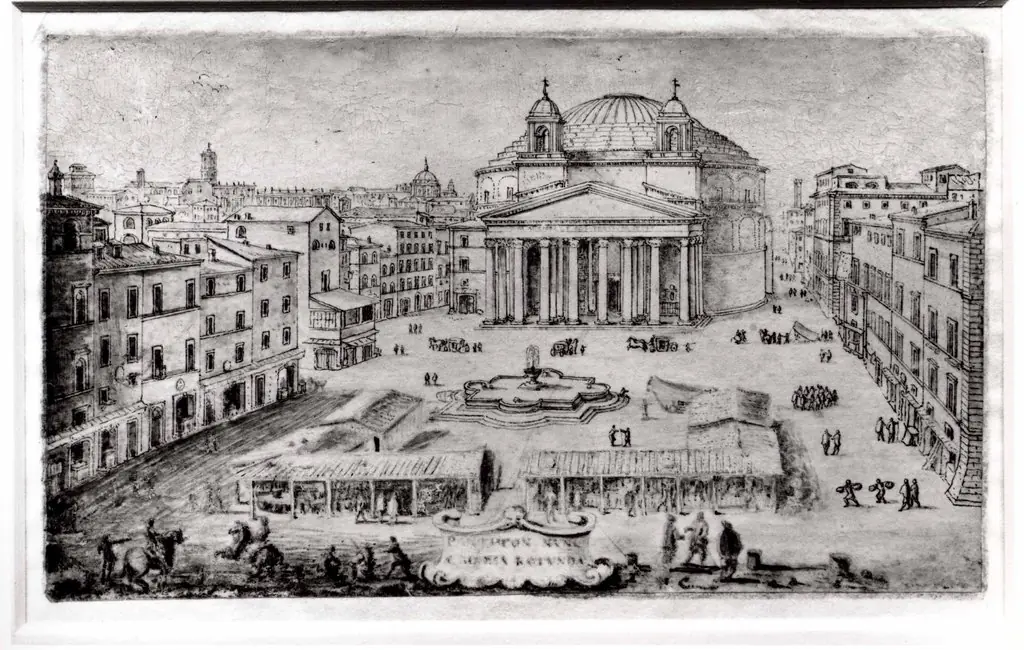 View of the Pantheon, Rome
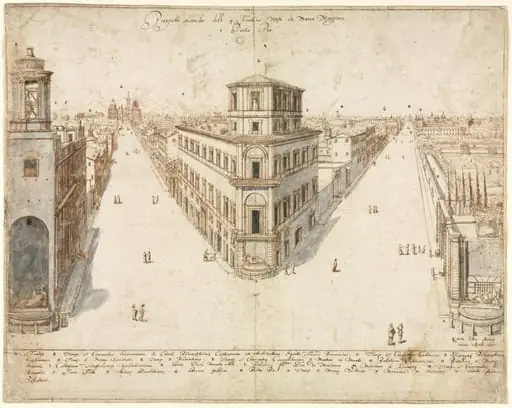 Eighteen Views of Rome: The Quattro Fontane Looking Toward Santa Maria Maggiore
 Eighteen Views of Rome: The Quattro Fontane Looking Toward Monte Cavallo
 Sketch for San Giovanni in Laterano (verso)
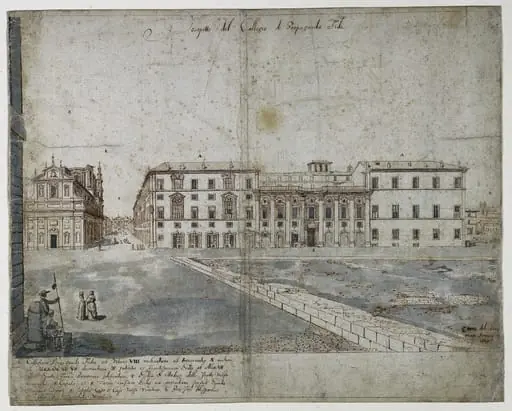 Eighteen Views of Rome: The Collegio di Propaganda Fide (recto)
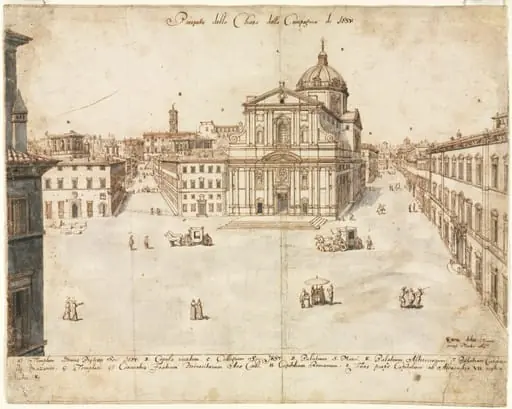 Eighteen Views of Rome: The Church of the Gesù
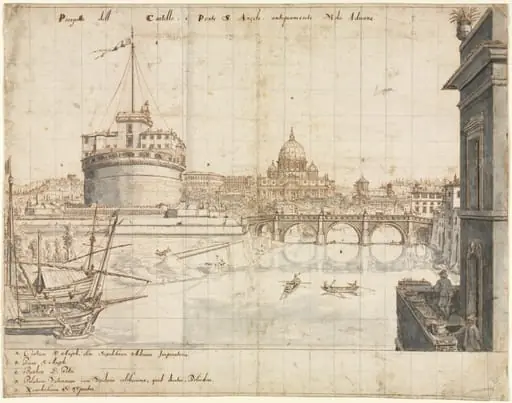 Eighteen Views of Rome: The Castel Sant'Angelo
 Eighteen Views of Rome: The Piazza del Popolo (recto); Sketch for San Giovanni in Laterano (verso)
 Eighteen Views of Rome: The Collegio di Propaganda Fide (recto); Sketches of Windows and Pilasters of the Attic Storey of the Collegio di Propaganda Fide (verso)
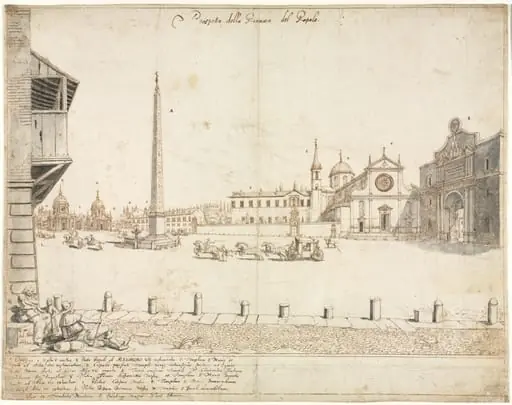 Eighteen Views of Rome: The Piazza del Popolo (recto)
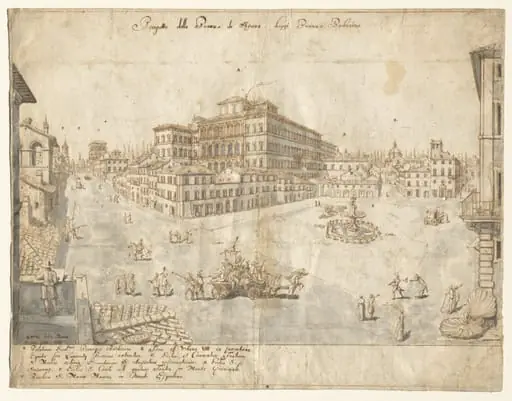 Eighteen Views of Rome: The Piazza Barberini (recto)
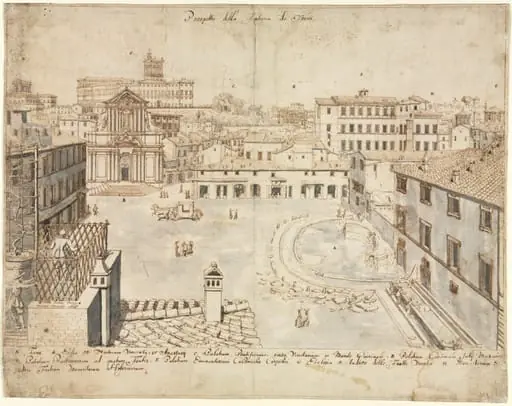 Eighteen Views of Rome: The Trevi Fountain
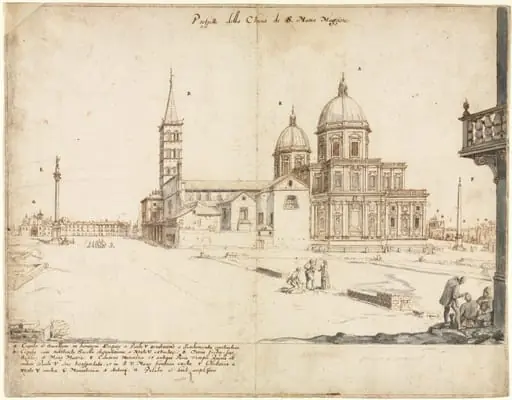 Eighteen Views of Rome: The Basilica of Santa Maria Maggiore
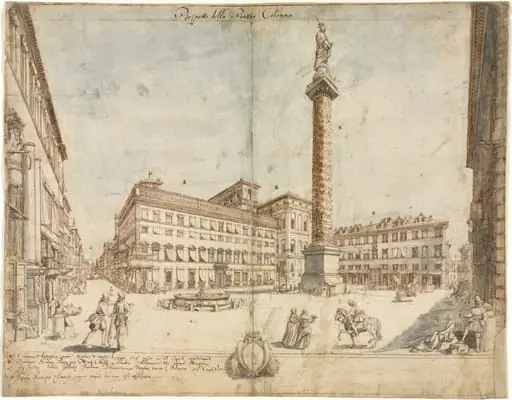 Eighteen Views of Rome: The Piazza Colonna
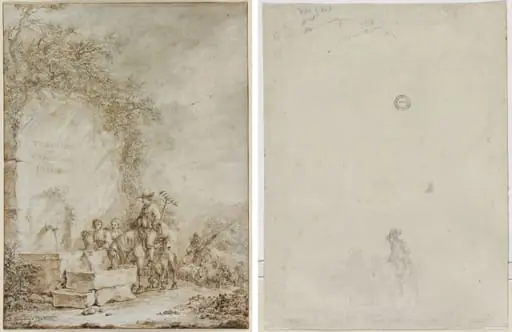 Frontispiece for an Album of Drawings: Peasants at a Fountain (recto); Sketch of Peasants at a Fountain (verso)
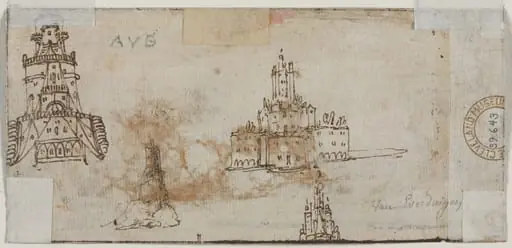 Sketches of Castles (verso)