Artwork
Eighteen Views of Rome: The Trevi Fountain
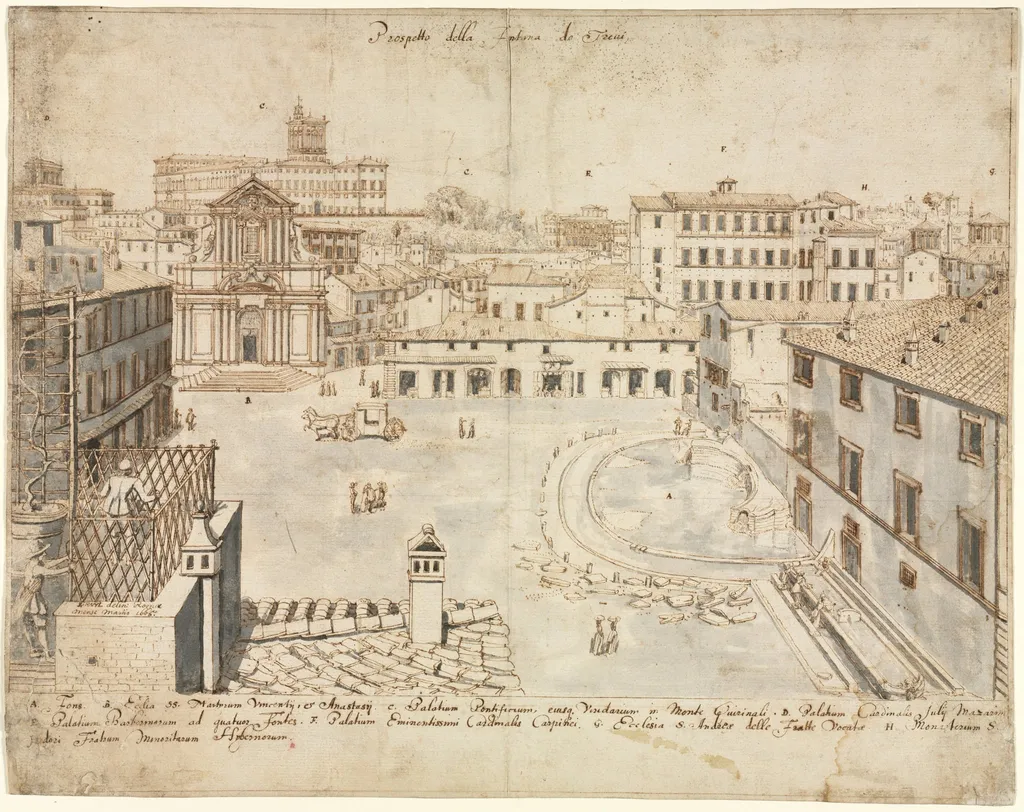
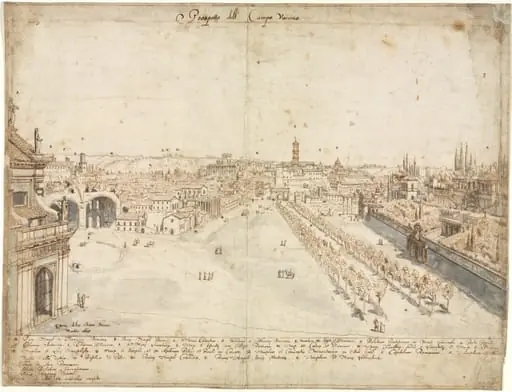
Eighteen Views of Rome: The Trevi Fountain is a drawing by the Baroque artist Lievin Cruyl. It dates from 1665 and is held in the collection of the Cleveland Museum of Art.
About this work
Overview
Created in 1665 by Lievin Cruyl, this drawing is one of eighteen views of Rome capturing urban life with precision.
Created in 1665 by Lievin Cruyl, this drawing is one of eighteen views of Rome capturing urban life with precision. Executed in pen and ink with wash, it depicts the Trevi Fountain as a focal point within a bustling streetscape. The work is part of a series documenting Roman architecture and daily activity, now held by The Cleveland Museum of Art as a significant example of 17th-century topographical drawing.
Subject & Meaning
The scene centers on the Trevi Fountain, then still under development, surrounded by active construction and pedestrian traffic. Figures in carriages and on foot suggest the fountain’s role as a social hub. Scaffolding on adjacent buildings implies ongoing civic works, reflecting Rome’s transformation during the Baroque era. The composition emphasizes the interplay between public space and urban growth.
Technique & Style
Cruyl employed pen and ink with subtle washes to model form and depth, using chiaroscuro to distinguish foreground from background. Architectural details are rendered with careful line work, while atmospheric perspective softens distant elements. The controlled use of light and shadow enhances spatial realism without embellishment, aligning with the observational aims of topographical draftsmanship.
History & Provenance
The drawing originated as part of Cruyl’s series commissioned during his time in Rome, likely for European patrons interested in Italian urbanism. It entered The Cleveland Museum of Art’s collection in the 20th century, where it remains one of the few surviving examples of his detailed city views. Its preservation reflects early modern interest in documenting architectural change.
Context
In the mid-17th century, Rome was undergoing significant architectural renewal under papal patronage. Cruyl’s drawings coincided with the expansion of fountains and public spaces meant to glorify the Church and enhance civic life. His work stands alongside other topographical records of the period, offering a documentary record of Rome’s evolving urban fabric.
Legacy
Cruyl’s series influenced later artists and architects seeking accurate depictions of Roman monuments. Though not widely known today, his precise renderings provided valuable visual references for scholars and travelers. The drawing exemplifies how topographical art served both aesthetic and informational purposes in early modern Europe.
Artist & collection

Artist
Lievin Cruyl or Lieven Cruyl was a Flemish priest and a draughtsman and etcher of landscapes, seascapes, and architectural views.

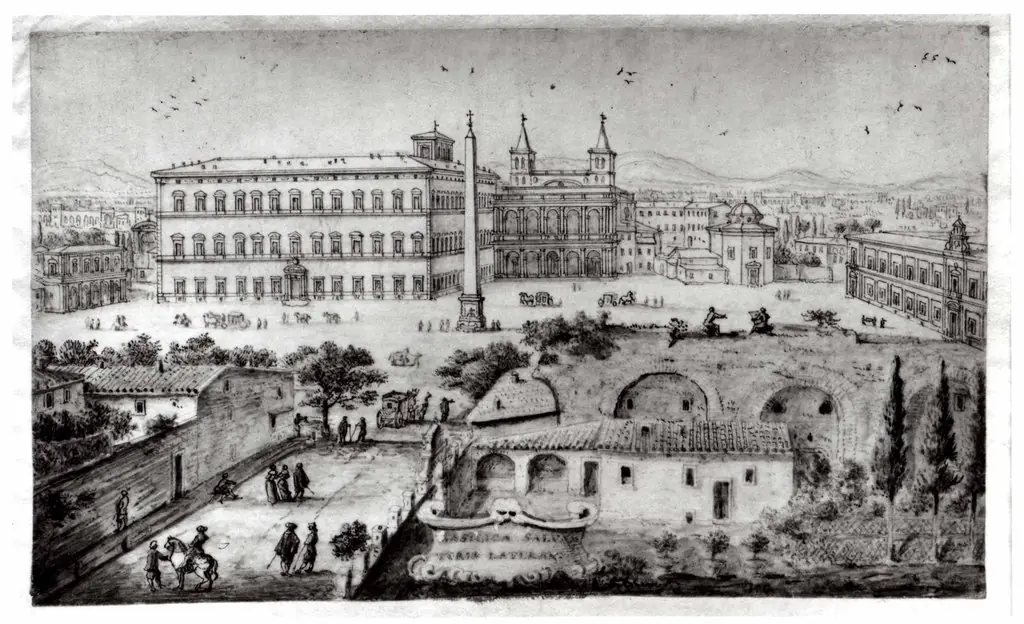 View of Lateran, Rome
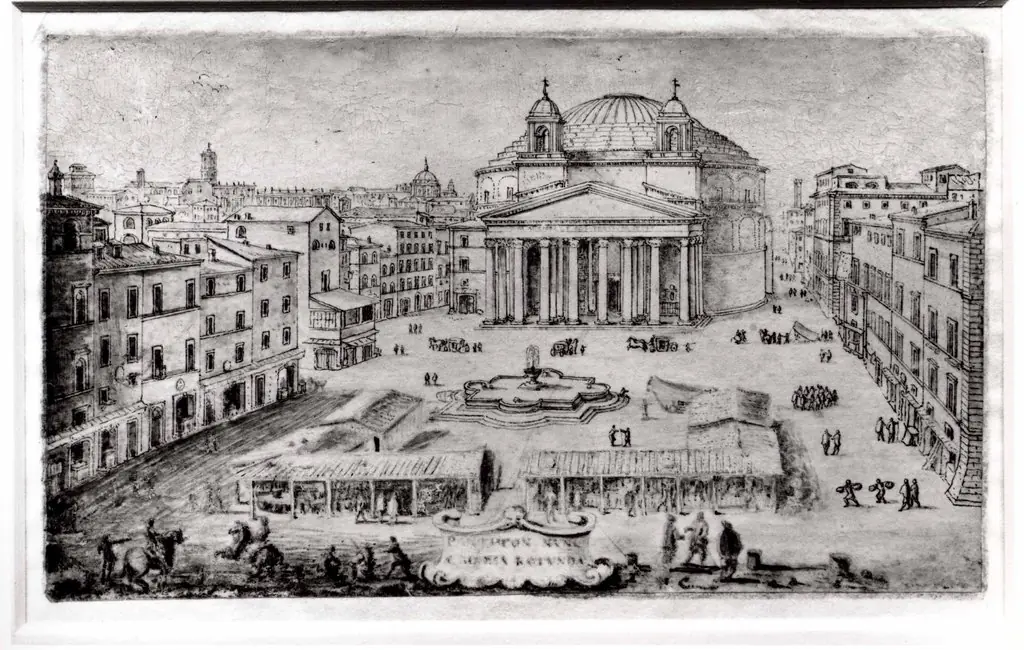 View of the Pantheon, Rome
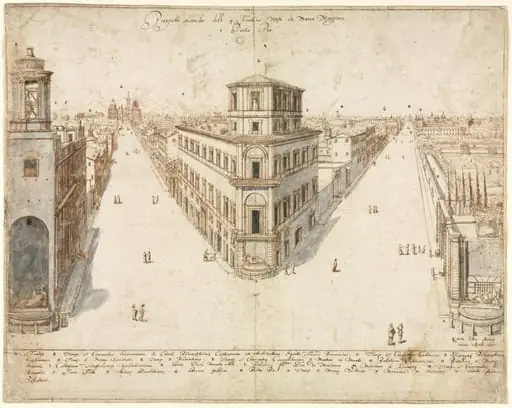 Eighteen Views of Rome: The Quattro Fontane Looking Toward Santa Maria Maggiore
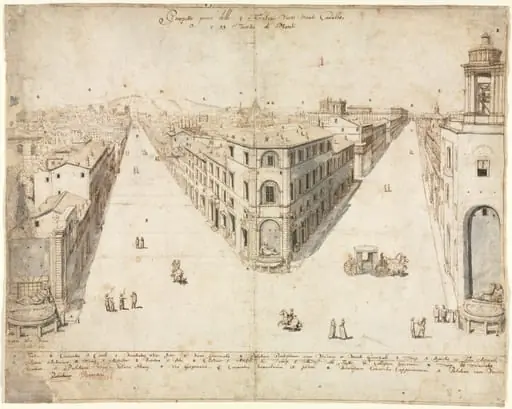 Eighteen Views of Rome: The Quattro Fontane Looking Toward Monte Cavallo
 Sketch for San Giovanni in Laterano (verso)
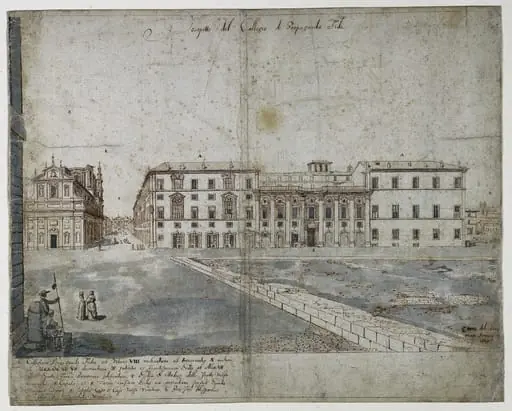 Eighteen Views of Rome: The Collegio di Propaganda Fide (recto)
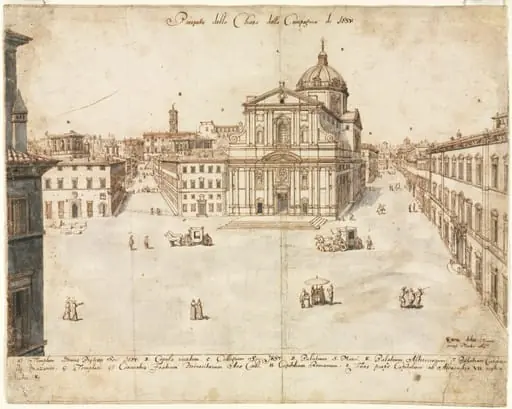 Eighteen Views of Rome: The Church of the Gesù
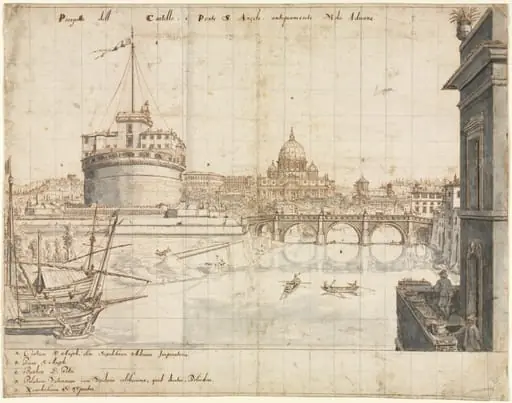 Eighteen Views of Rome: The Castel Sant'Angelo
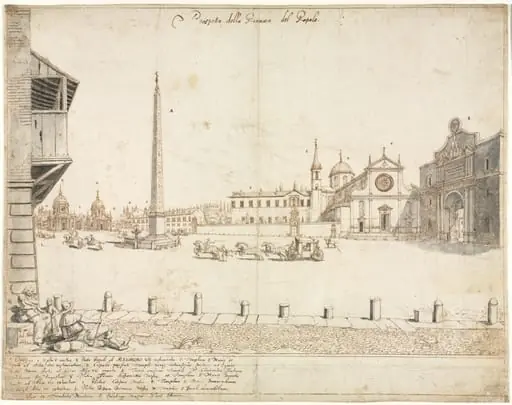 Eighteen Views of Rome: The Piazza del Popolo (recto)
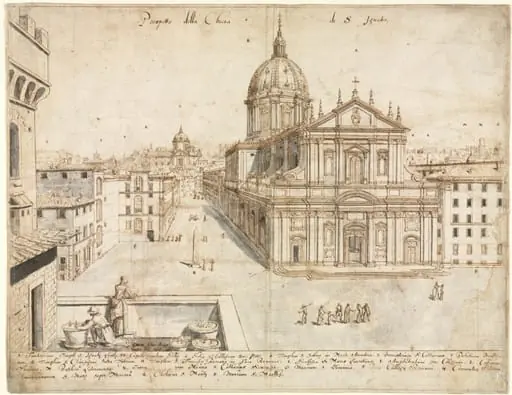 Eighteen Views of Rome: The Church of Sant'Ignazio
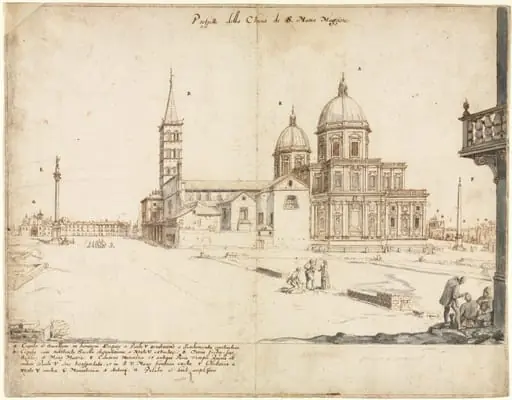 Eighteen Views of Rome: The Basilica of Santa Maria Maggiore
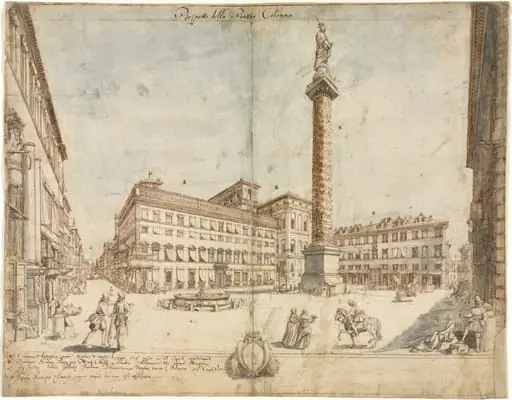 Eighteen Views of Rome: The Piazza Colonna
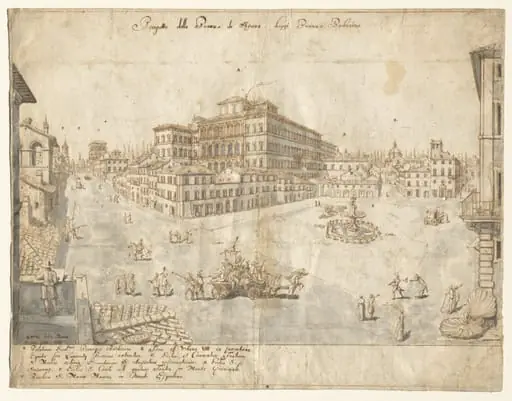 Eighteen Views of Rome: The Piazza Barberini (recto)
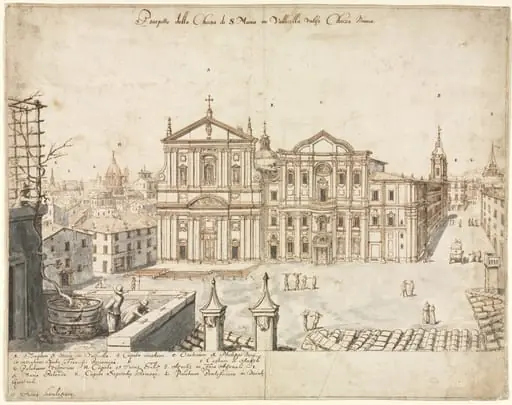 Eighteen Views of Rome: The Church of Santa Maria in Vallicella
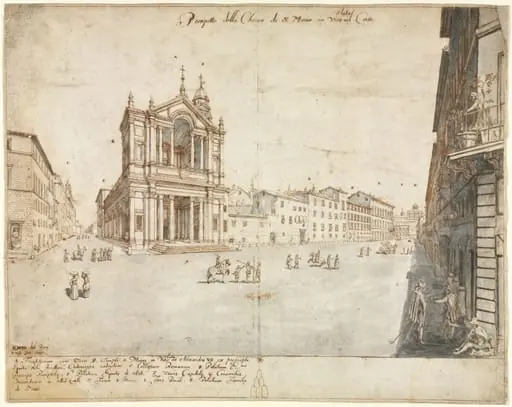 Eighteen Views of Rome: Santa Maria in Via Lata
 Eighteen Views of Rome: The Campo Vaccino (The Roman Forum)