Artwork
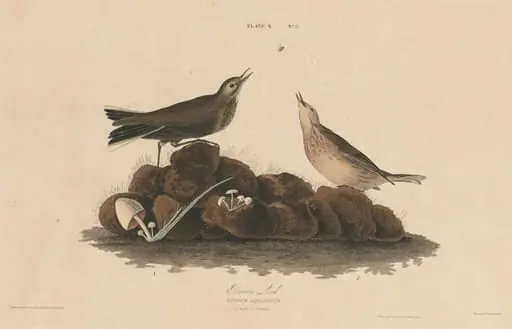
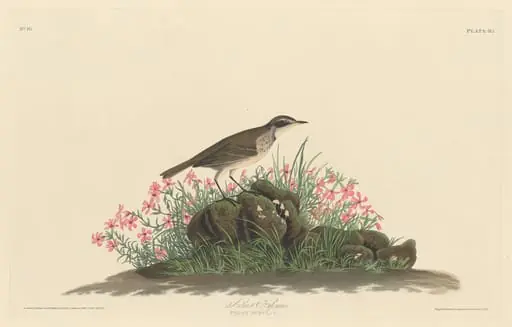
Brown Lark
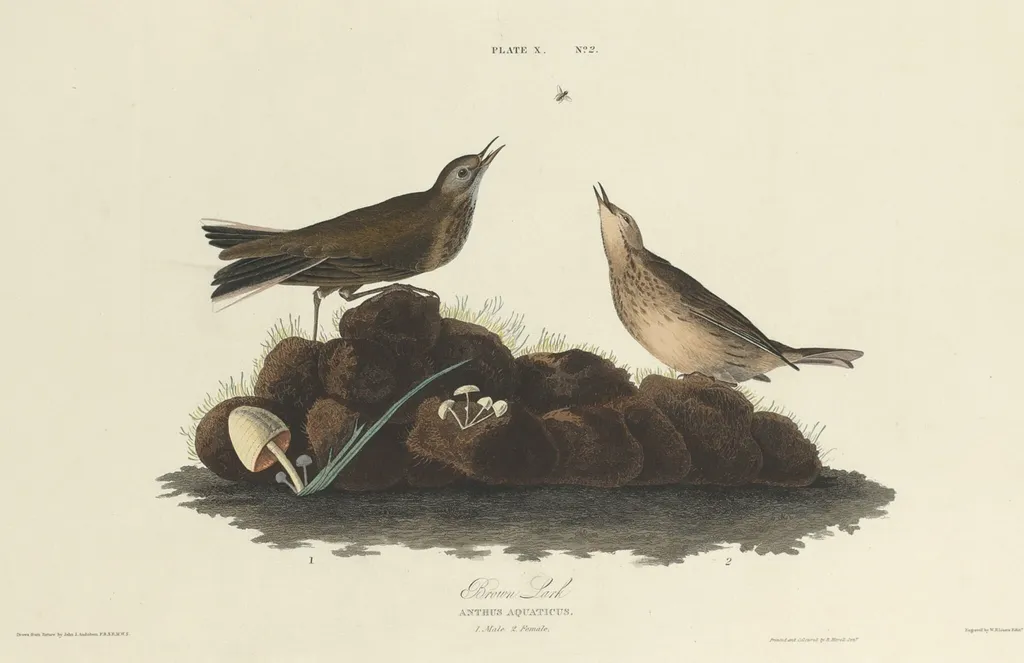
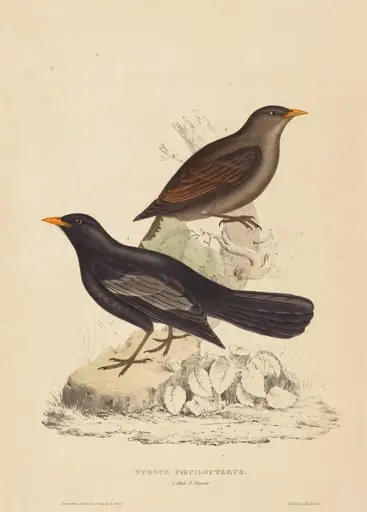
Brown Lark is an ink print by the Romanticist artist William Home Lizars. It dates from 1827 and is held in the collection of the National Gallery of Art.
About this work
Overview
Brown Lark is a print produced in 1827 by Scottish artist William Home Lizars. Executed as an etching and engraving on Whatman paper, the work is finished with hand‑applied colour. The image presents a quiet natural scene, rendered in fine line work and muted tones that emphasize the delicate forms of the birds and their nest.
Subject & Meaning
The composition depicts two small larks positioned beside a modest nest constructed of mud and grass. One bird, rendered in a darker brown, is identified as male, while the lighter, speckled counterpart is marked as female. The setting, a shallow water margin fringed with reeds, suggests a tranquil breeding habitat and highlights the intimate moment of parental care.
Technique & Style
Lizars employed a combination of etching and engraving, using acid to bite lines into a copper plate and then sharpening details with a burin. After printing on high‑quality Whatman paper, he applied subtle hand‑colours to bring out the birds’ plumage and the surrounding reeds. The result is a precise, almost scientific rendering that balances line clarity with gentle tonal variation.
History & Provenance
Created in the early nineteenth century, Brown Lark reflects Lizars’ interest in natural history illustration, a genre popular among British artists of the period. The print has been held in several private collections before entering a museum’s holdings in the mid‑twentieth century, where it remains a representative example of early wildlife printmaking.
Artist & collection