Artwork
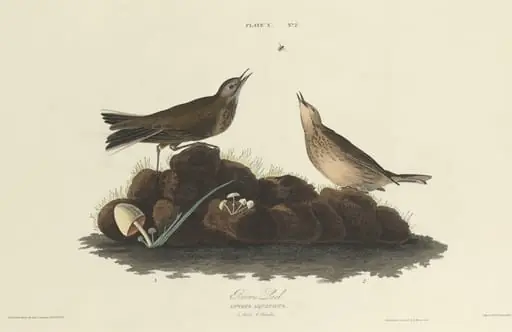
Prairie Titlark
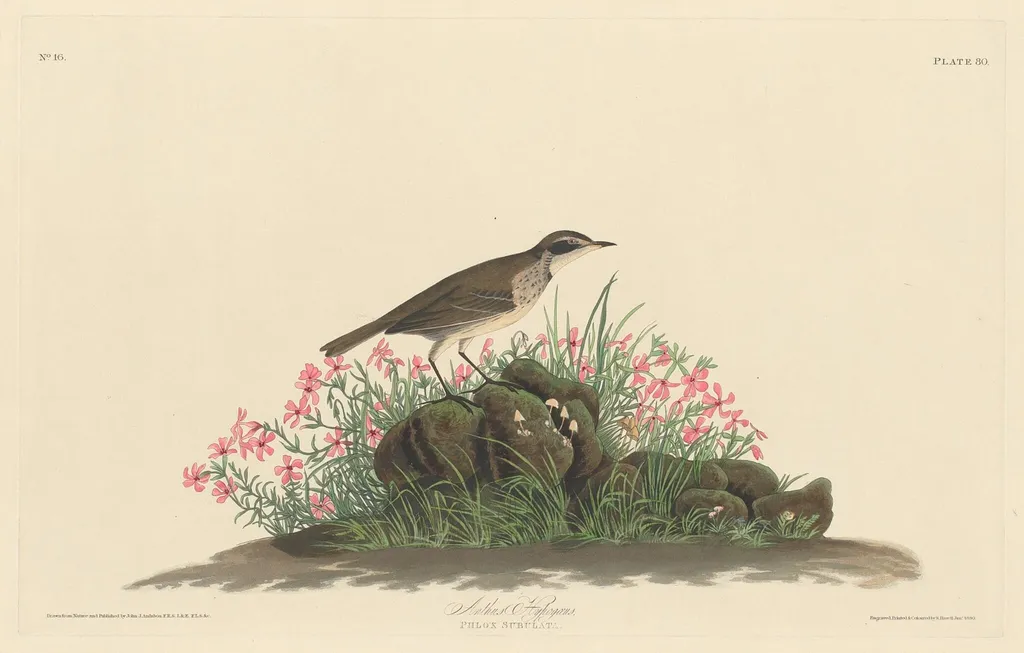
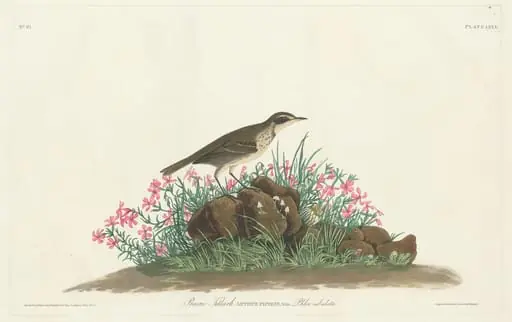
Prairie Titlark is an ink print by the Romanticist artist Robert Havell Jr.. It dates from 1830 and is held in the collection of the National Gallery of Art.
About this work
Overview
Prairie Titlark is a hand-colored engraving and aquatint print created by Robert Havell Jr. in 1830 on Whatman wove paper, showcasing the artist's technical proficiency within his family's renowned lineage of engravers and printmakers.
Subject & Meaning
The print depicts a serene scene of a small bird, identified as a Prairie Titlark, perched on a moss-covered rock amidst pink flowers and green grass. The composition conveys a sense of natural beauty and tranquility.
Technique & Style
Havell Jr. utilized the aquatint technique in conjunction with hand-coloring to achieve soft, muted tones for the bird's feathers, contrasting with the more vibrant hues of the surrounding flora, demonstrating the Havell family's expertise in reproductive engraving.
History & Provenance
Created in 1830, the print is part of the Havell family's body of work, with Robert Havell Jr. building upon the foundations laid by his father, Robert Havell the Elder, and uncle, Luke Havell, in the fields of engraving, etching, and painting.
Context
While the broader cultural or geographical context of *Prairie Titlark*'s creation is not explicitly detailed, it reflects the early 19th-century interest in natural history and the artistic techniques prevalent among British printmakers of the time.
Legacy
As part of Robert Havell Jr.'s portfolio, *Prairie Titlark* contributes to the family's lasting impact on the development of engraving and aquatint techniques, though its individual significance within the broader art historical canon is not prominently highlighted.
Artist & collection

Artist
The Havell family of Reading, Berkshire, England, included a number of notable engravers, etchers and painters, as well as writers, publishers, educators, and musicians.