Artwork
Prothonotary Warbler
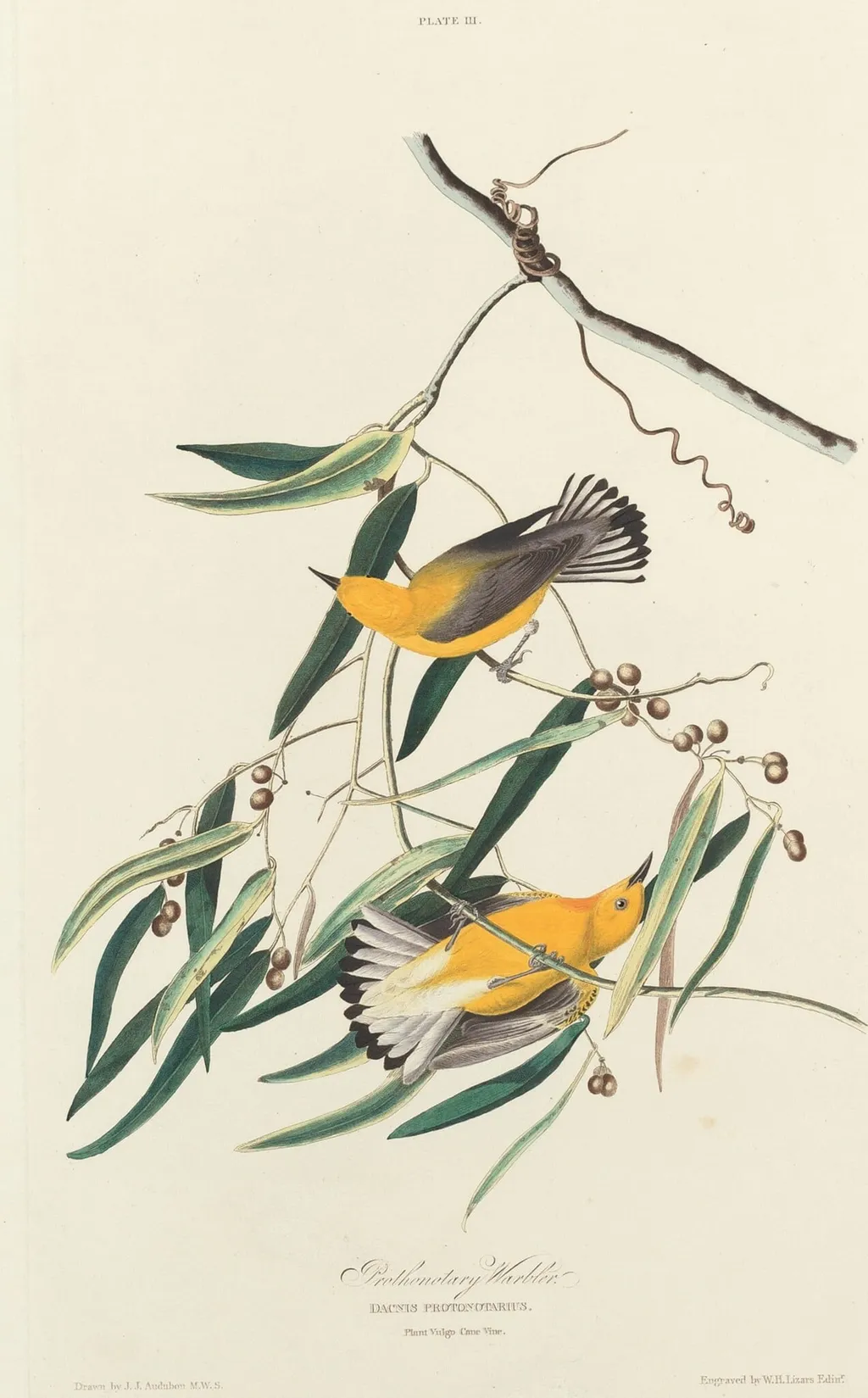
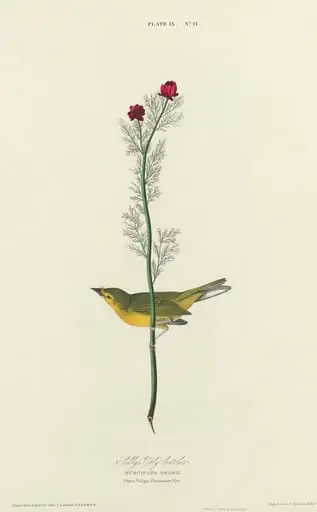
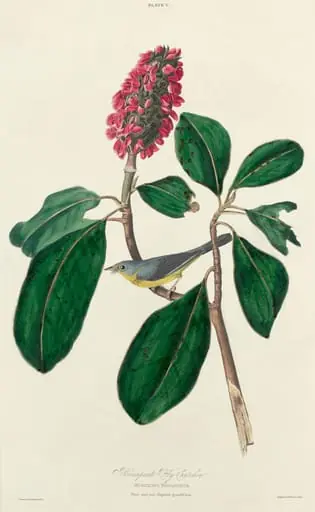
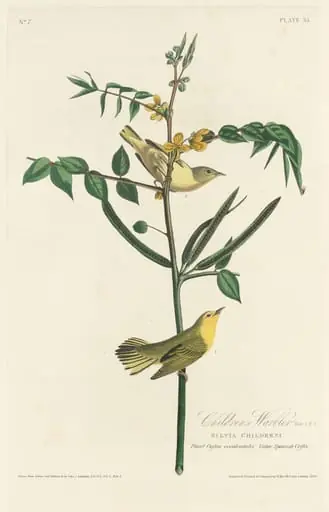
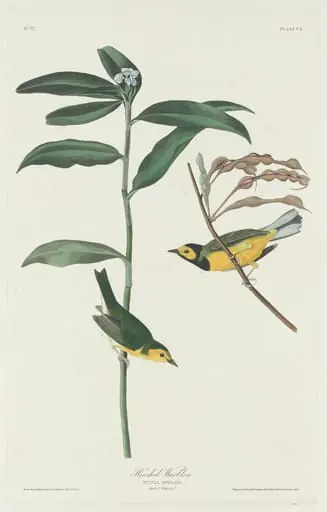
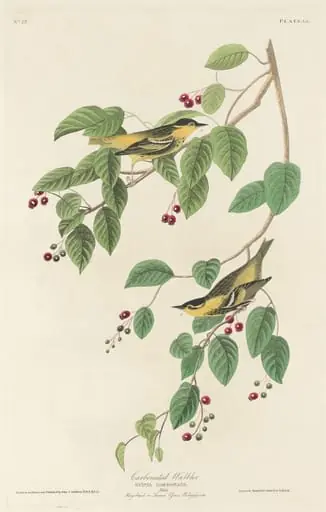
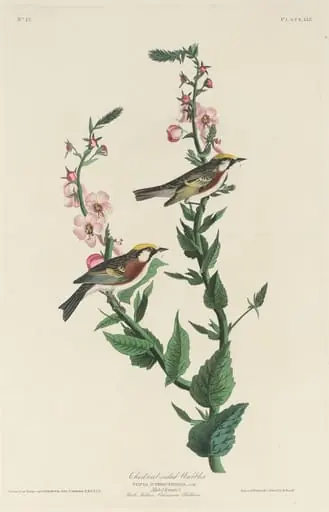
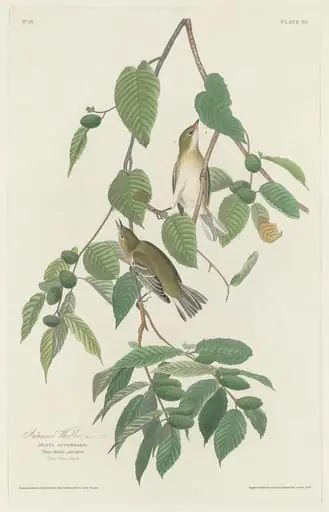
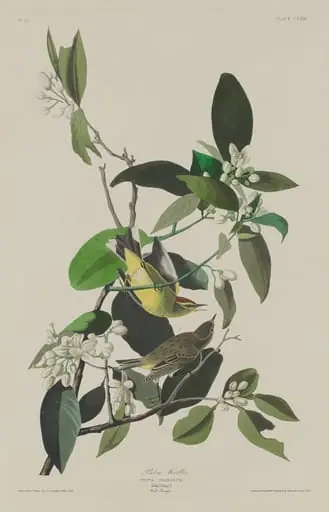
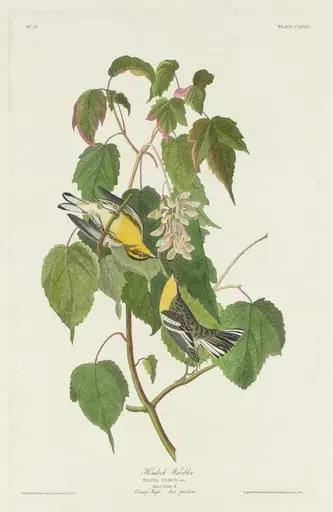
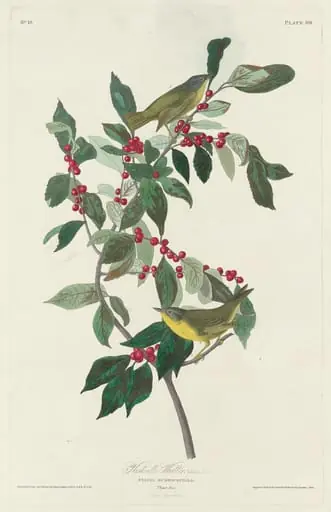
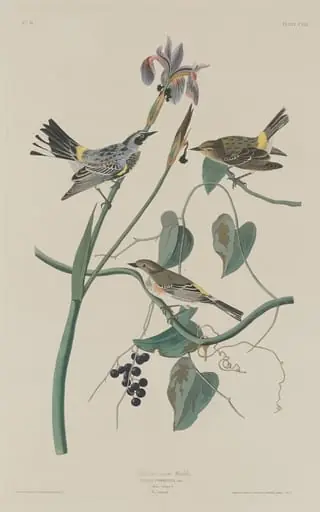
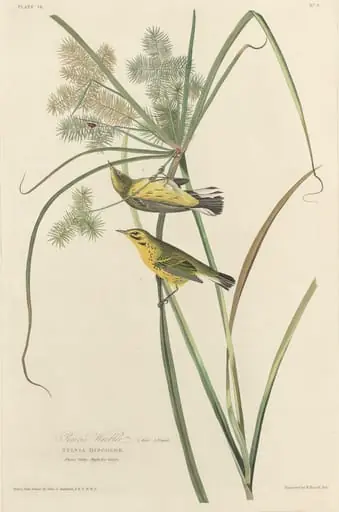
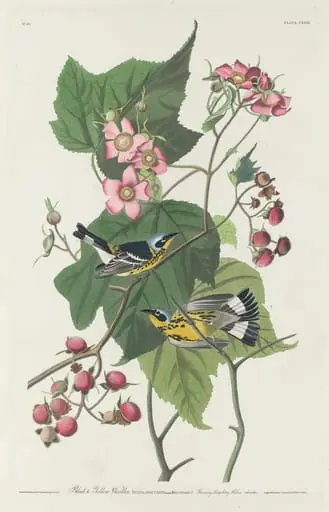
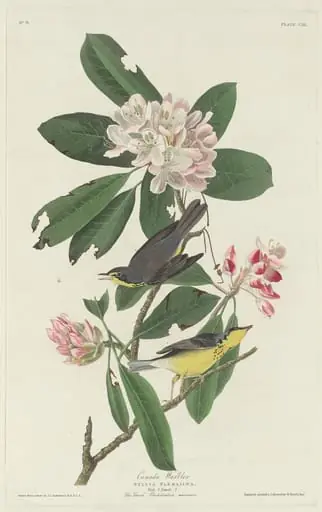
Prothonotary Warbler is an ink print by the Romanticist artist William Home Lizars. It dates from 1827 and is held in the collection of the National Gallery of Art.
About this work
Overview
The composition centers on the birds and their surrounding foliage, emphasizing texture and movement over ornamental framing.
Created in 1827 by William Home Lizars, this print depicts a Prothonotary Warbler in two dynamic poses: one perched calmly, the other mid-flight with wings fully extended. Executed in etching and engraving on Whatman paper, the image is delicately hand-colored to enhance naturalistic detail. The composition centers on the birds and their surrounding foliage, emphasizing texture and movement over ornamental framing.
Subject & Meaning
The Prothonotary Warbler, a small North American songbird known for its vivid yellow plumage, is rendered with scientific precision. The inclusion of berries and curling twigs situates the birds within their natural habitat. The dual poses suggest behavioral observation rather than idealized representation, reflecting 19th-century natural history’s emphasis on documenting species in motion and context.
Technique & Style
Lizars employed fine etched lines and engraved details to define individual feathers and leaf veins, then applied subtle hand coloring to mimic the bird’s luminous yellow and the leaves’ muted greens. The use of Whatman paper, prized for its durability and smooth surface, allowed for crisp ink retention and delicate washes. The result is a blend of technical accuracy and quiet aesthetic restraint.
History & Provenance
This print was produced during a period of heightened interest in ornithological illustration in Britain. Lizars, known for his contributions to natural history publications, likely created this as part of a larger series. Though specific early ownership records are sparse, its craftsmanship aligns with prints distributed to scientific societies and private collectors interested in avian taxonomy.
Context
In the 1820s, detailed bird illustrations were vital to biological classification, preceding widespread photography. Artists like Lizars worked alongside naturalists to produce accurate visual records. This print reflects the convergence of art and science, where aesthetic care served educational goals, and hand-coloring ensured each impression retained unique fidelity to the living subject.
Legacy
Though not widely exhibited today, Lizars’s work contributed to the foundation of American and British ornithological illustration. His attention to anatomical detail and behavioral nuance influenced later naturalists and artists. The print remains a quiet example of how printmaking advanced scientific documentation before the era of mechanical reproduction.
Artist & collection