Artwork
Planting seeds at Khamgaon
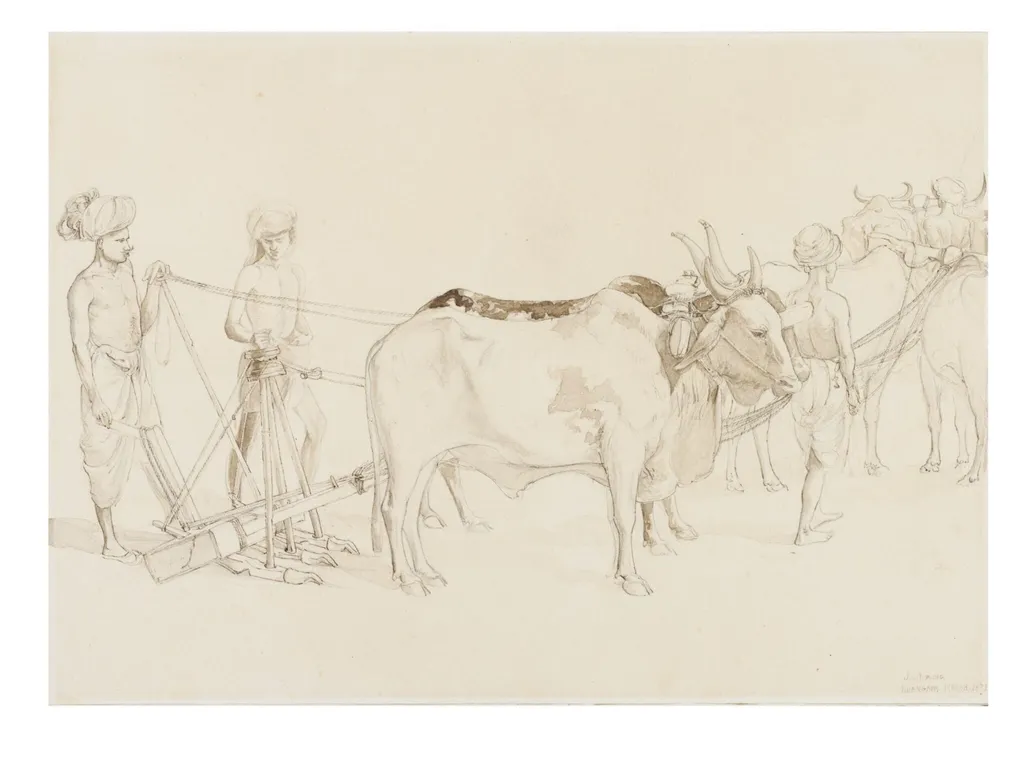
Planting seeds at Khamgaon is a drawing by the Impressionist artist John Lockwood Kipling. It dates from 1872 and is held in the collection of the Victoria and Albert Museum.
About this work
Overview
Planting seeds at Khamgaon is a drawing by John Lockwood Kipling, created during his 1872 visit to Khamgaon in Berar, India. It is part of a series documenting the cotton cultivation process.
Subject & Meaning
The drawing focuses on the labor-intensive process of planting seeds, highlighting Kipling's interest in Indian agricultural practices and crafts, which he actively promoted during his tenure in India.
Technique & Style
While specific details on the drawing's technique are not provided, Kipling's work from this period typically featured meticulous, observational sketches, reflecting his background in architectural sculpture and design.
History & Provenance
Commissioned by the government in 1870 to sketch Indian craftsmen, Kipling produced this piece two years later. It is part of a collection from his travels in the North-West Provinces.
Context
Created in 1872, the drawing contextualizes the preservation of traditional Indian practices amidst the decline due to European imports, a challenge Kipling addressed during his leadership at the Mayo College of Arts.
Artist & collection
Artist
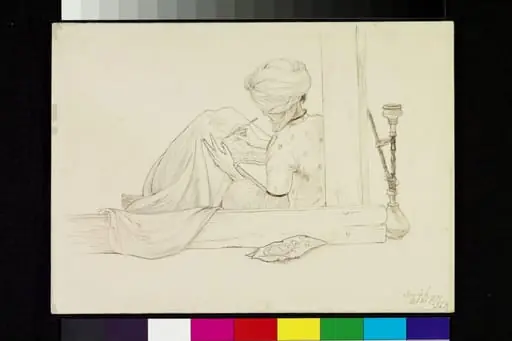
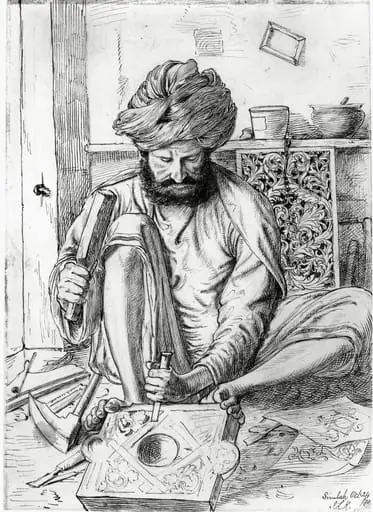
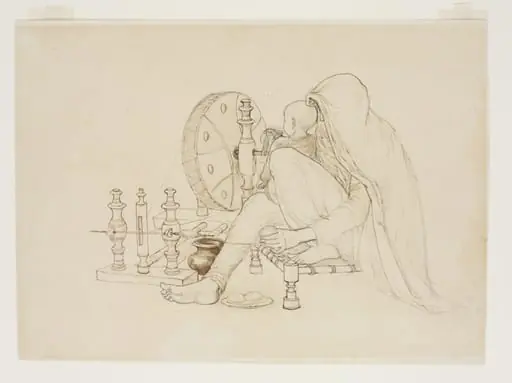
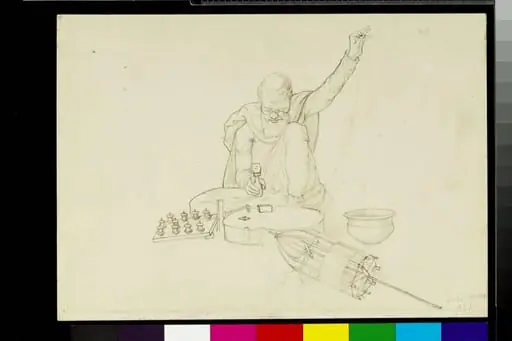
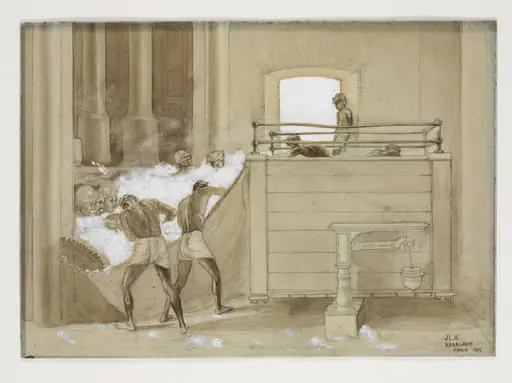
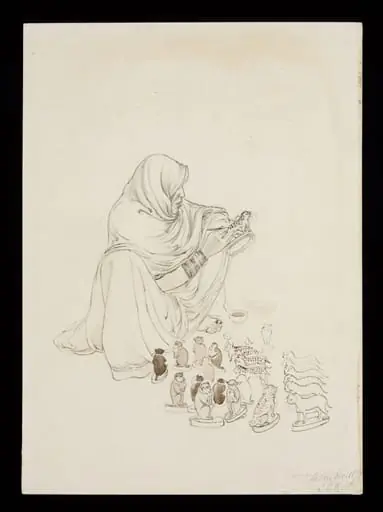
John Lockwood Kipling filled sketchbooks with the daily life he saw around him in British India, drawing craftsmen at work, farmers at market, and seed planters in fields.

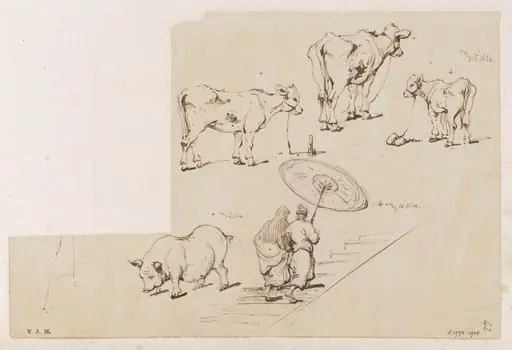 Figures ascending a staircase, a pig, a cow and two calves
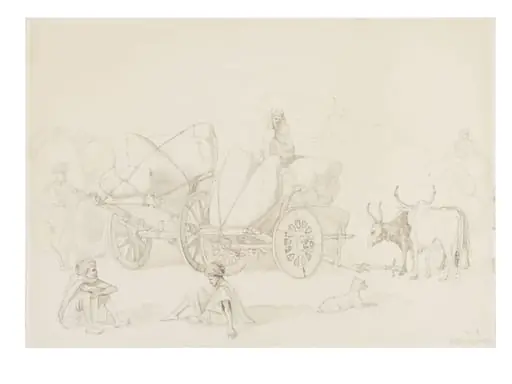
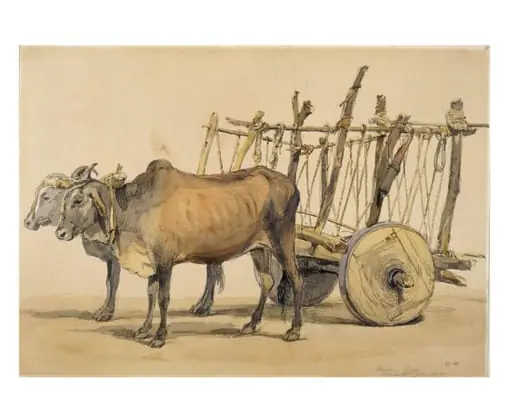 Deccani bullock cart
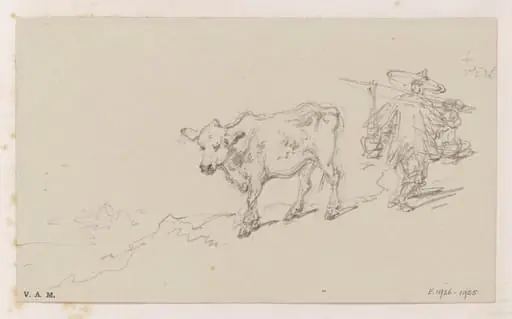 A Chinese porter and a cow
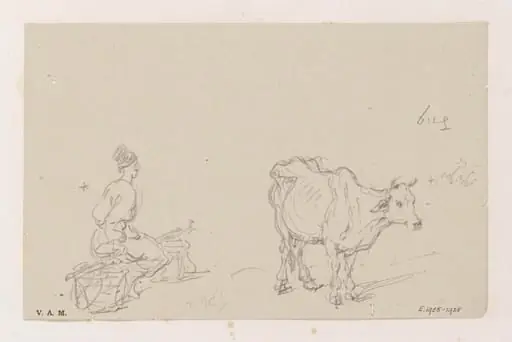 A figure seated between two baskets, and a cow
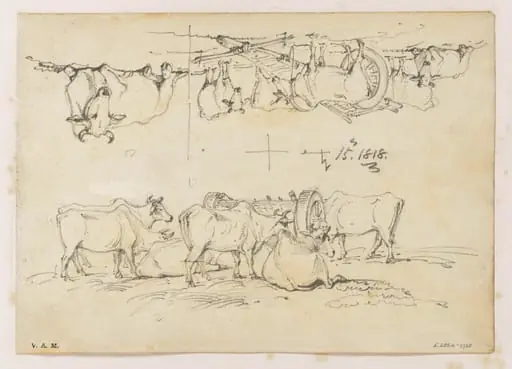 Two drawings of cattle surrounding a bullock cart
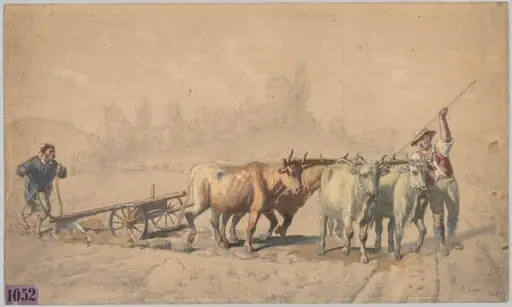 Four Oxen Pulling a Plough
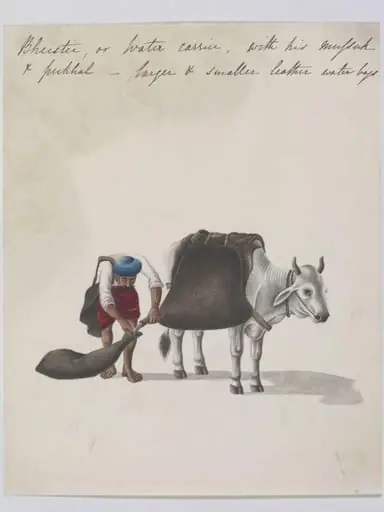 A water-carrier
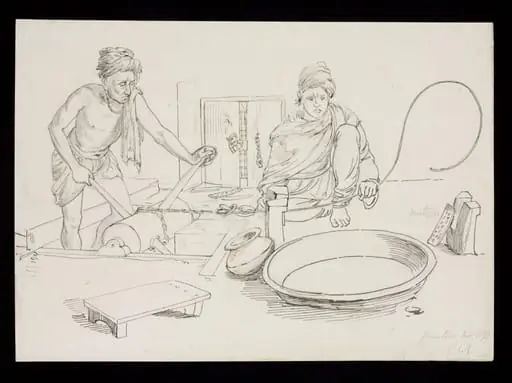
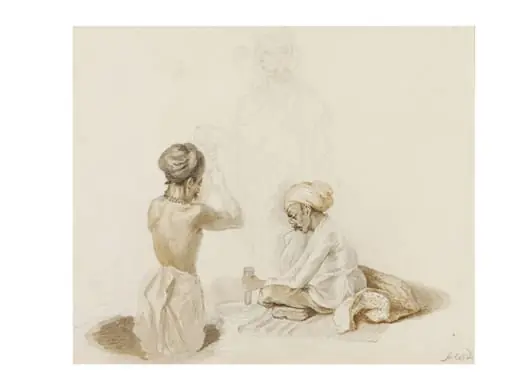 An Indian metal-worker seated cross-legged with his assistant, who raises and hammer, and another figure standing behind