Artwork
Untitled
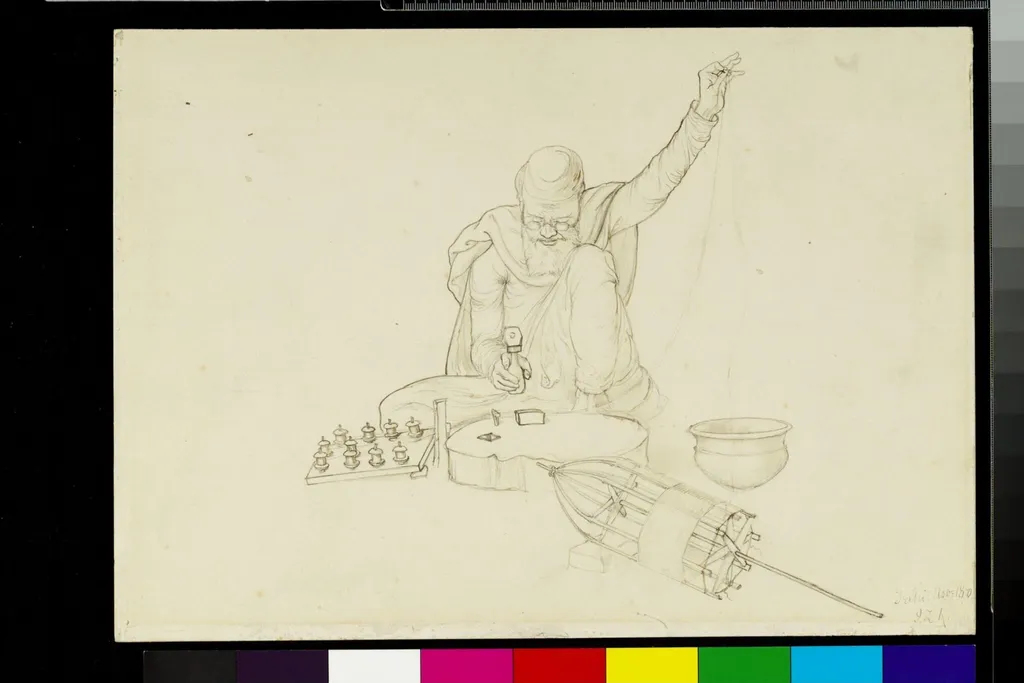
Untitled is a drawing by the Impressionist artist John Lockwood Kipling. It dates from 1870 and is held in the collection of the Victoria and Albert Museum.
About this work
Overview
This drawing is one of twenty-eight studies created by John Lockwood Kipling during his tenure at the Bombay School of Art.
This drawing is one of twenty-eight studies created by John Lockwood Kipling during his tenure at the Bombay School of Art. It captures a craftsman engaged in the meticulous work of drawing silver gilt wire, surrounded by tools and personal items. The series was assembled to document traditional artisan practices in North-western India and was later transferred to the Victoria and Albert Museum in 1879 from the India Museum.
Subject & Meaning
The figure is a Muslim artisan, depicted in quiet concentration as he manipulates fine wire with a handheld tool. His attire—a turban and long-sleeved shirt—reflects regional dress, while the objects on the table, including a chessboard and stringed instrument, suggest a life where labor and leisure coexist. The scene emphasizes dignity in craft, portraying work not as labor alone but as a sustained, thoughtful practice.
Technique & Style
Executed in pencil or ink, the drawing employs fine linework and careful shading to render textures of fabric, metal, and wood with precision. The composition is tightly framed, focusing attention on the artisan’s hands and the cluttered surface, avoiding background distraction. The style aligns with 19th-century Realism, prioritizing observational accuracy over idealization.
History & Provenance
Created during Kipling’s time in Bombay, the series was originally intended as an educational resource for students and colonial administrators. After his departure from India, the drawings were transferred to the India Museum in London. In 1879, they were moved to the Victoria and Albert Museum, where they remain part of the South Asian decorative arts collection.
Context
Kipling’s drawings emerged during a period of heightened colonial interest in documenting Indian crafts, often as part of broader efforts to preserve or reform traditional industries. His work stood apart by avoiding romanticization, instead recording artisans with quiet fidelity. These studies reflect a growing academic interest in material culture beyond elite or imperial narratives.
Legacy
The series remains a valuable record of pre-industrial craftsmanship in western India. Kipling’s approach influenced later ethnographic documentation in the region. His son, Rudyard Kipling, would later draw on these observations in his writings, though the drawings themselves continue to be studied for their anthropological and artistic merit, not as literary precursors.
Artist & collection
Artist
John Lockwood Kipling filled sketchbooks with the daily life he saw around him in British India, drawing craftsmen at work, farmers at market, and seed planters in fields.

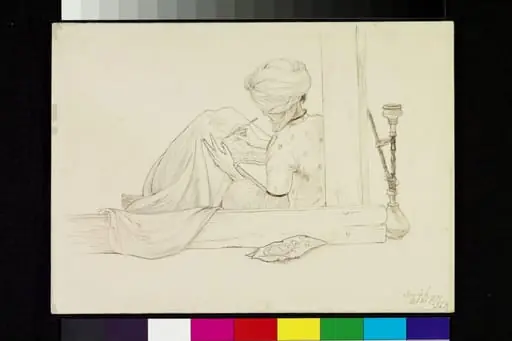 A Turbaned man drawing a pattern on to a piece of cloth
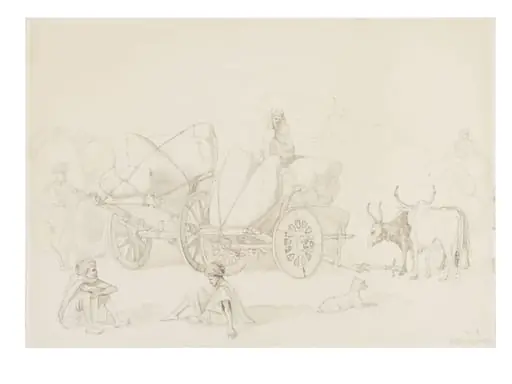 Farmers waiting for an offer at Khamgaom cotton market
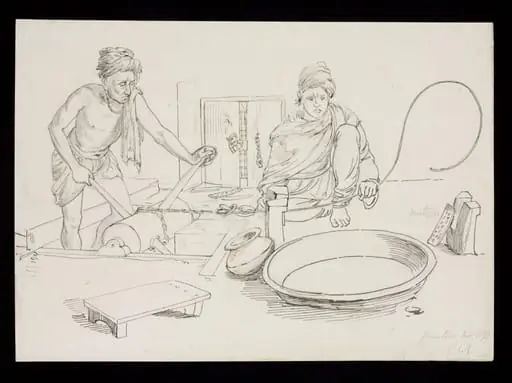 Two men working with machines to produce silver gilt wire
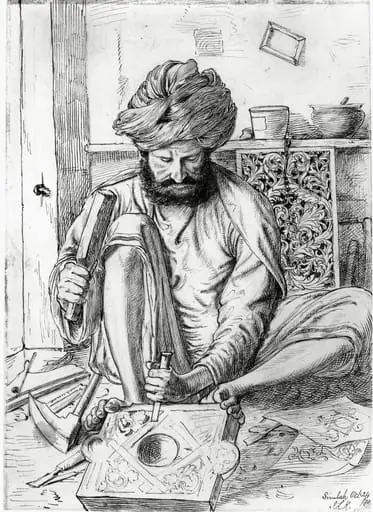 A wood carver
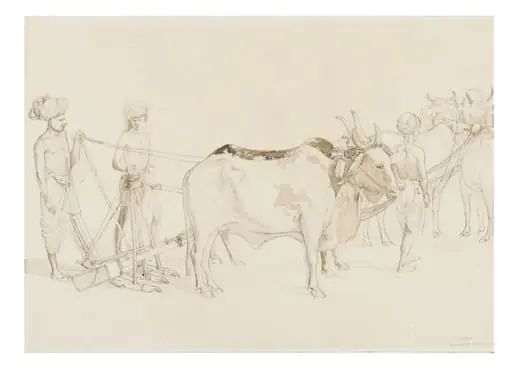 Planting seeds at Khamgaon
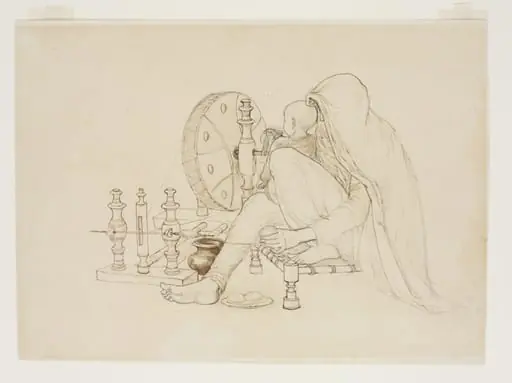 Spinning shawl wool
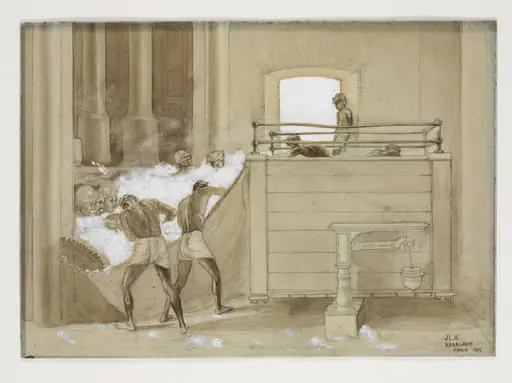 Filling the Gunny bag with cotton at Khamgaon
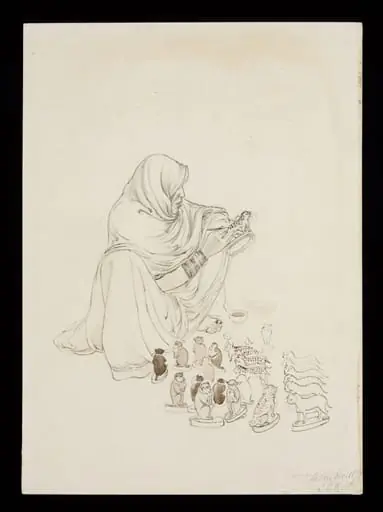 A seated woman painting spots on a toy leopard
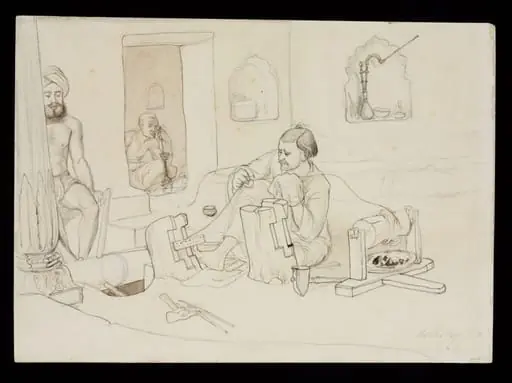 Three men in a workshop producing silver gilt wire
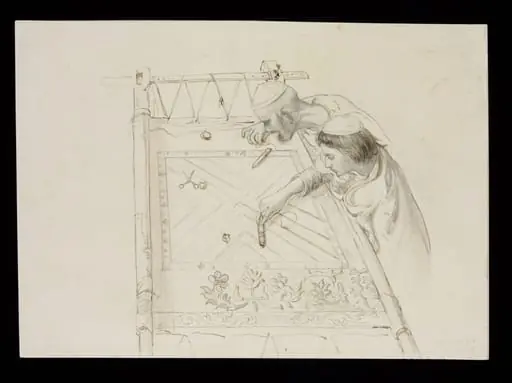 Two men working at an embroidery frame
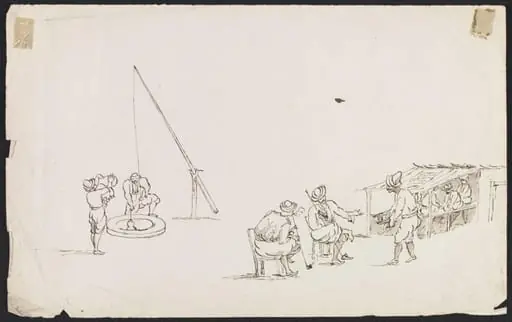 Wayside café, with men drawing water from a well, and others seated, smoking, being served with coffee
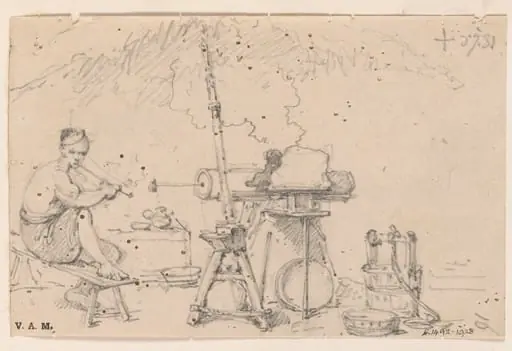 A Chinese blacksmith at his forge
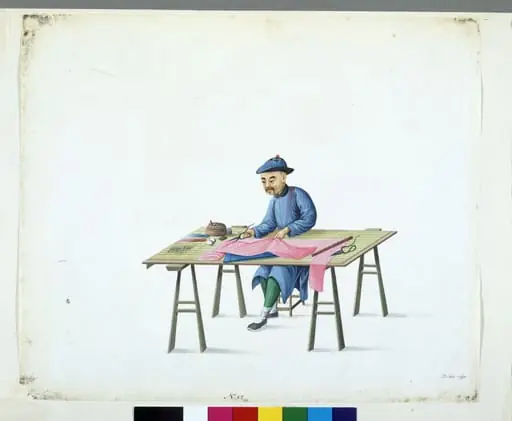 A Tailor
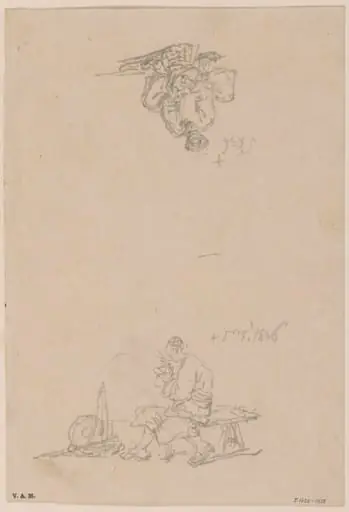 Two drawings of Chinese figures
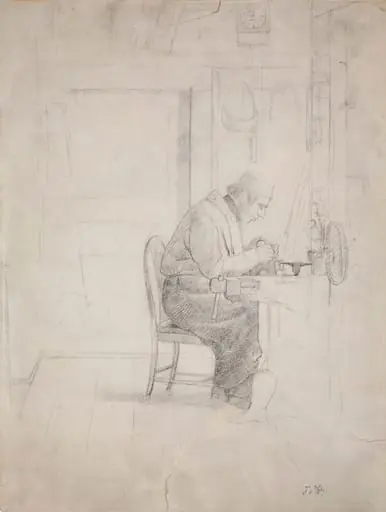 Wilhelm von Wright höyläpenkin ääressä, piirustus "Mariebergin verstas" -maalausta varten
 A Cooper
 Man Making Rice Huller
 Two drawings of Chinese men