Artwork
A wood carver
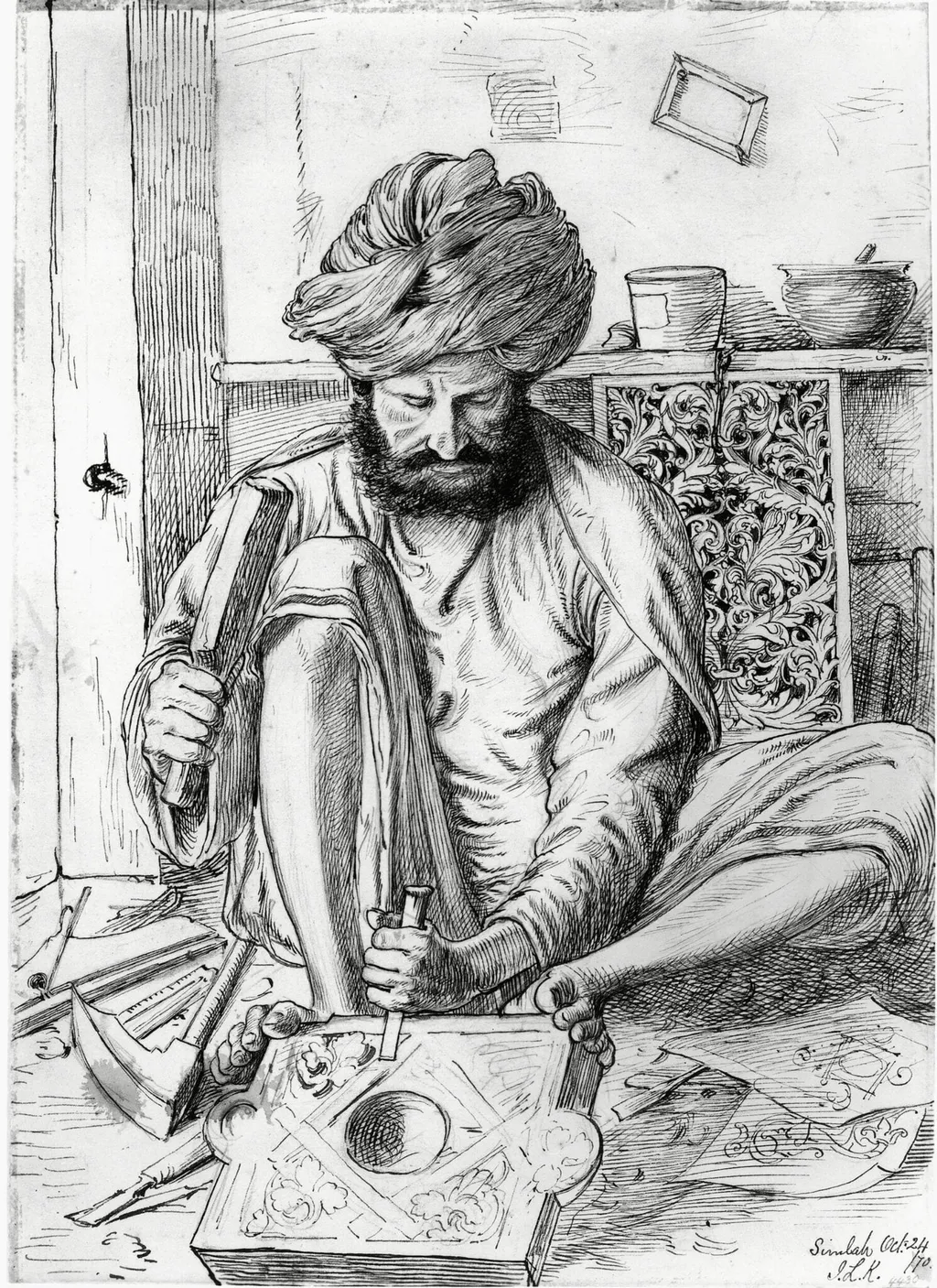
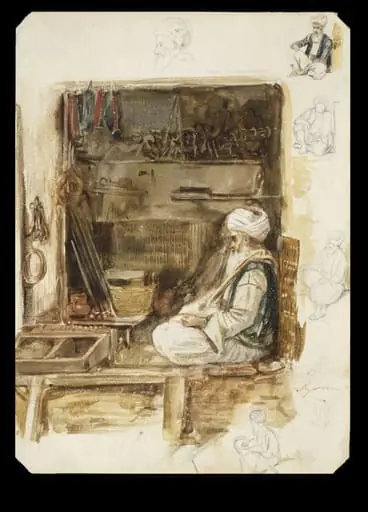
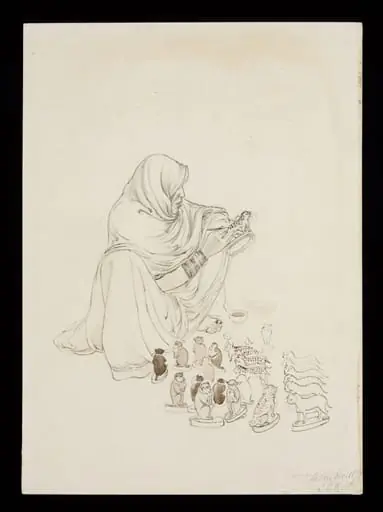
A wood carver is a drawing by the Impressionist artist John Lockwood Kipling. It dates from 1870 and is held in the collection of the Victoria and Albert Museum.
About this work
The drawing is titled "A wood carver" by John Lockwood Kipling.
It was created in 1870, a time when Lockwood Kipling was involved in various artistic pursuits. He had recently moved to India and was teaching at the Sir Jamsetjee Jeejeebhoy School of Art and Industry in Bombay.
You can learn more about Lockwood Kipling's style by exploring the movement: Realism.
Overview
His work there extended beyond teaching to include architectural design and the documentation of local crafts.
John Lockwood Kipling, an English artist and educator, arrived in India in 1865 to take up a position at the Sir Jamsetjee Jeejeebhoy School of Art and Industry in Bombay. His work there extended beyond teaching to include architectural design and the documentation of local crafts. This 1870 drawing, made during a government-sponsored tour of northern India, captures a moment of artisanal labor in Simla, reflecting his commitment to recording indigenous skills at a time of cultural transition.
Subject & Meaning
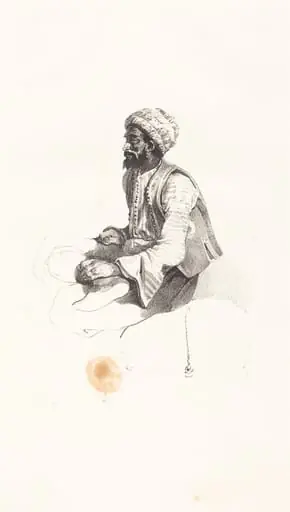
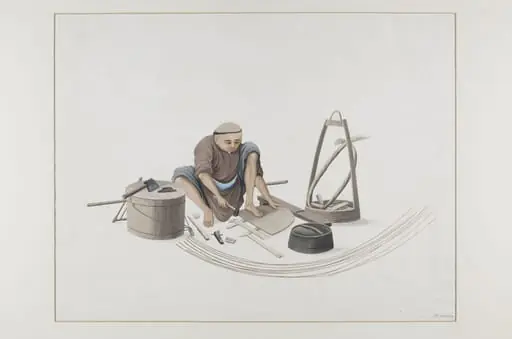
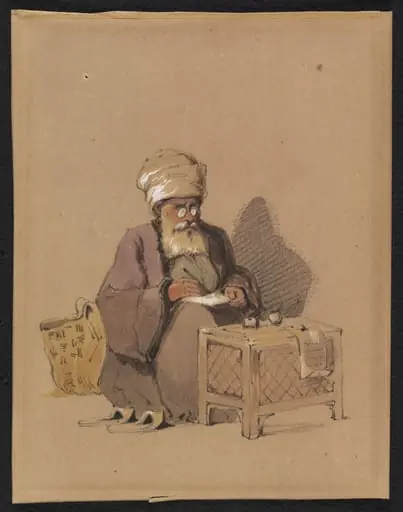
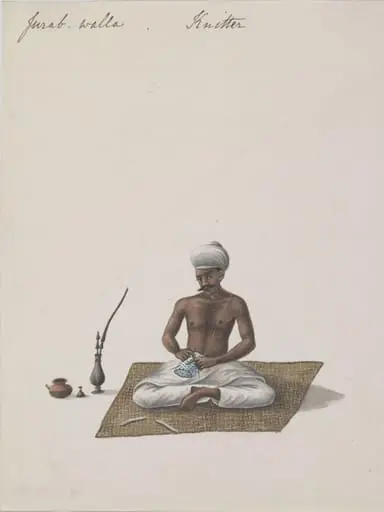
The drawing portrays a woodcarver at work, engaged in the focused, physical act of shaping timber with hand tools. Rather than idealizing the subject, Kipling presents him with quiet dignity, emphasizing the precision of his craft. The image serves as both a record of a specific trade and a quiet assertion of the value of traditional Indian craftsmanship, which Kipling sought to preserve amid the encroachment of mass-produced European goods.
Technique & Style
Executed in pencil and ink, the drawing employs precise linework and subtle tonal gradations to convey texture and form. Kipling’s approach aligns with Realist principles, avoiding romanticism in favor of direct observation. The composition is uncluttered, centering the artisan and his tools, with minimal background detail that directs attention to the act of making. The sketch’s immediacy suggests it was drawn on-site, capturing the subject in a fleeting, authentic moment.
History & Provenance
Created in October 1870 during a government-commissioned survey of the North-West Provinces, the drawing was part of a broader effort to document Indian artisans and their methods. Kipling produced dozens of such studies during this tour, many of which informed his later curatorial and educational work. The piece remained within institutional collections tied to his professional roles in Bombay and Lahore, eventually entering public archives as part of his legacy in Indian art education.
Context
In the late 19th century, colonial authorities increasingly recognized the need to preserve indigenous crafts as traditional industries declined under economic pressure from imported goods. Kipling’s drawings were part of a larger movement to catalog and revitalize these practices. His position in Bombay and later Lahore placed him at the center of efforts to integrate local aesthetics into formal art education, positioning him as both observer and advocate for Indian artisanal heritage.
Legacy
Kipling’s sketches, including this one, became foundational references for the revival of traditional Indian crafts in educational institutions. His advocacy helped shift colonial attitudes toward valuing local artisanship, influencing curriculum and museum practices. Though less known than his son Rudyard, John Lockwood Kipling’s work laid critical groundwork for the recognition of Indian craftsmanship as a legitimate and worthy subject of study and preservation.
Artist & collection
Artist
John Lockwood Kipling filled sketchbooks with the daily life he saw around him in British India, drawing craftsmen at work, farmers at market, and seed planters in fields.

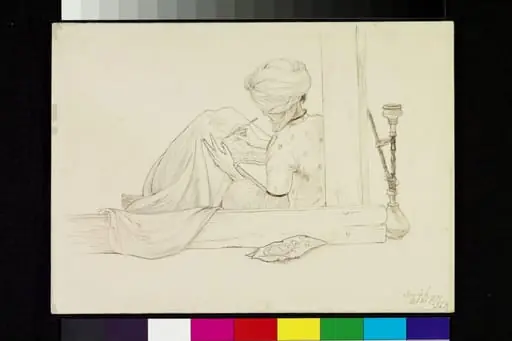 A Turbaned man drawing a pattern on to a piece of cloth
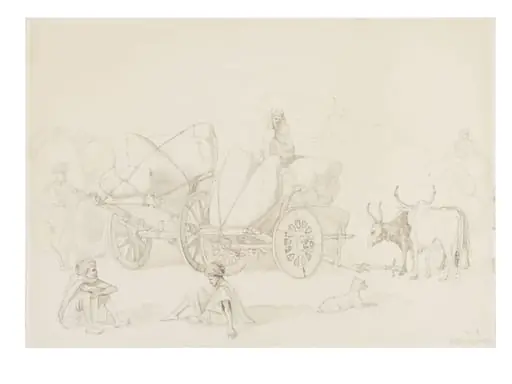 Farmers waiting for an offer at Khamgaom cotton market
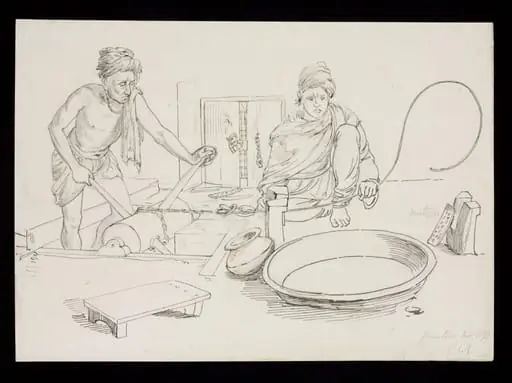 Two men working with machines to produce silver gilt wire
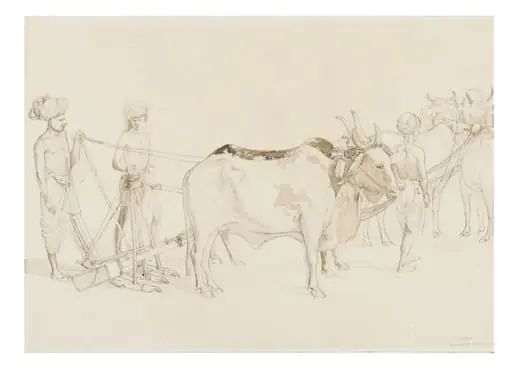 Planting seeds at Khamgaon
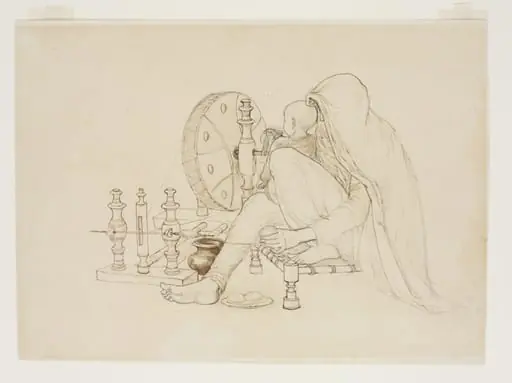 Spinning shawl wool
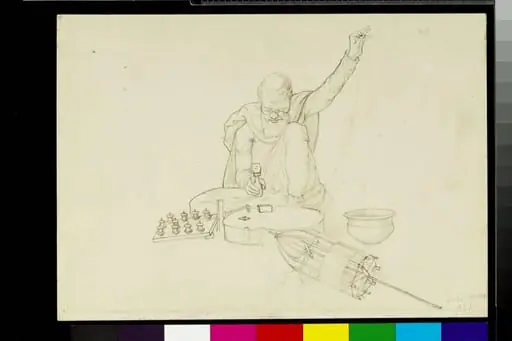 Untitled
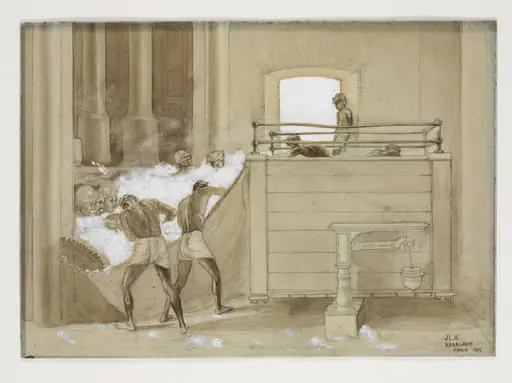 Filling the Gunny bag with cotton at Khamgaon
 A seated woman painting spots on a toy leopard