Artwork
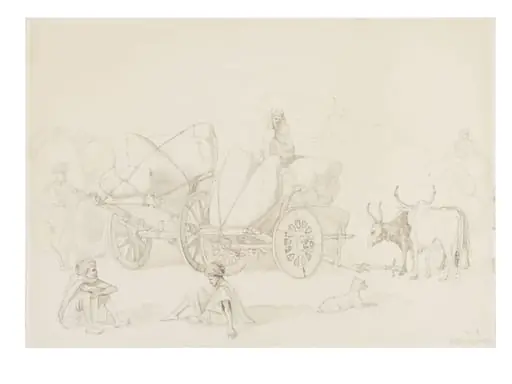
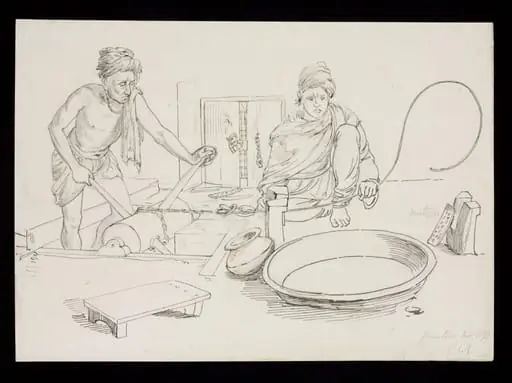
Filling the Gunny bag with cotton at Khamgaon
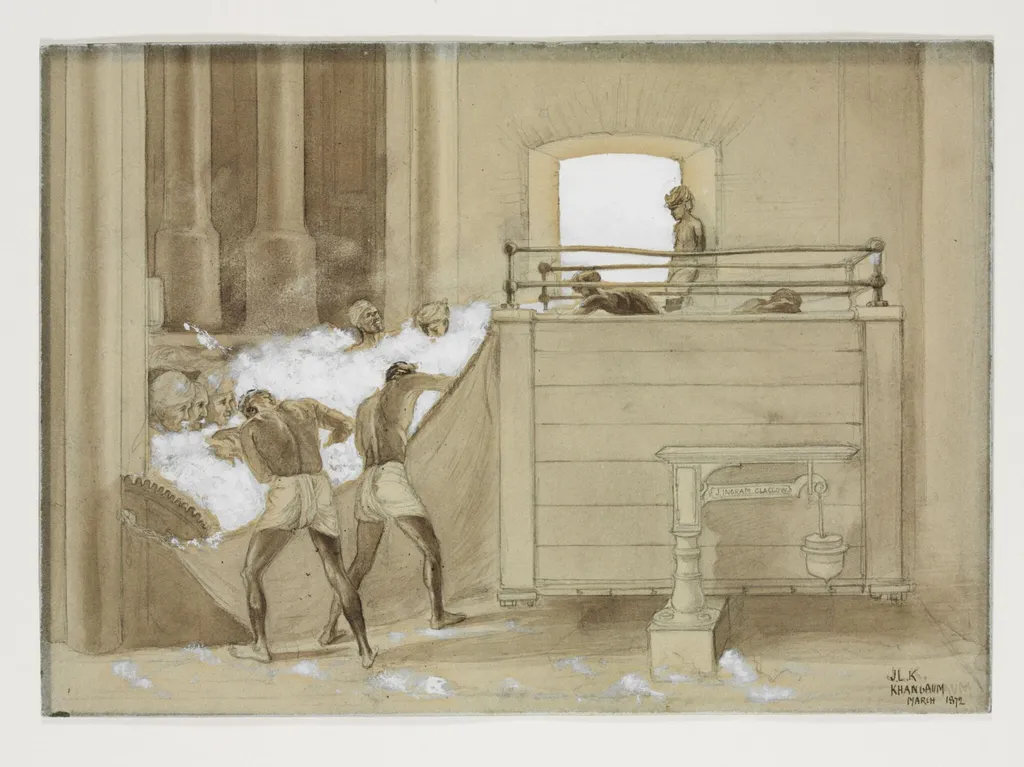
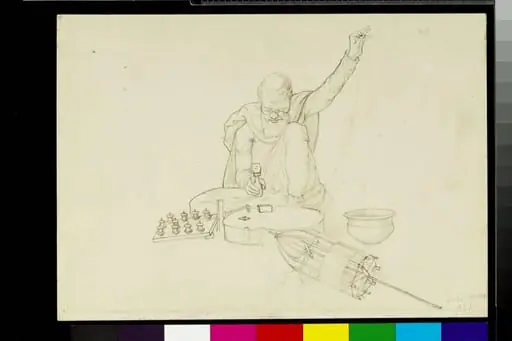
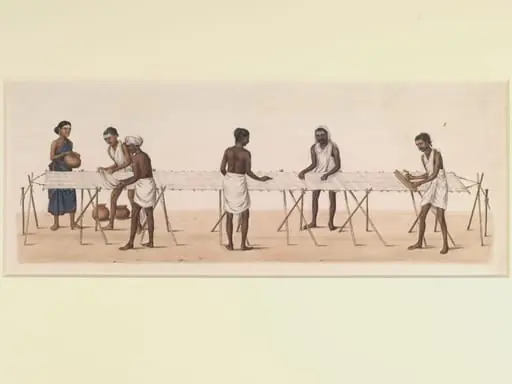
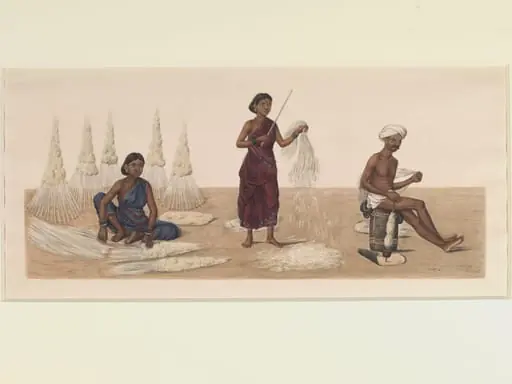
Filling the Gunny bag with cotton at Khamgaon is a drawing by the Impressionist artist John Lockwood Kipling. It dates from 1872 and is held in the collection of the Victoria and Albert Museum.
About this work
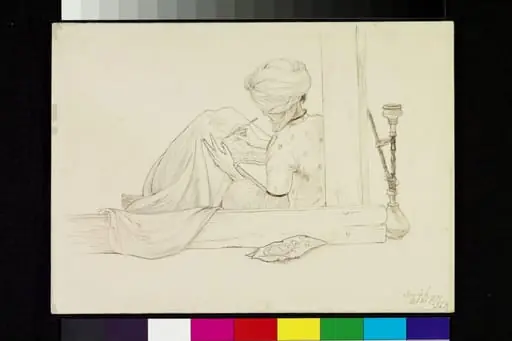
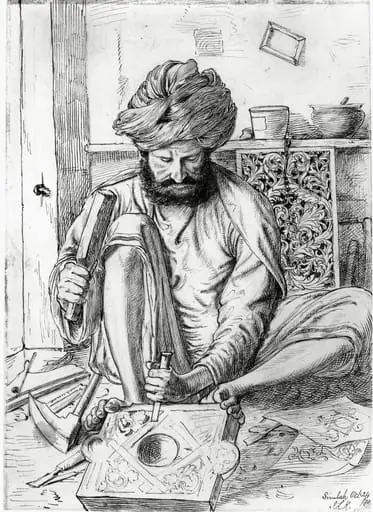
This is a drawing by John Lockwood Kipling from 1872. It shows people working with cotton in Khamgaon. The work uses a mix of Impressionism and Realism styles.
Kipling lived in India after moving there in 1865. He also helped start an art school in Bombay. His son Rudyard later became a famous writer.
Check out the Victoria and Albert Museum next.
Overview
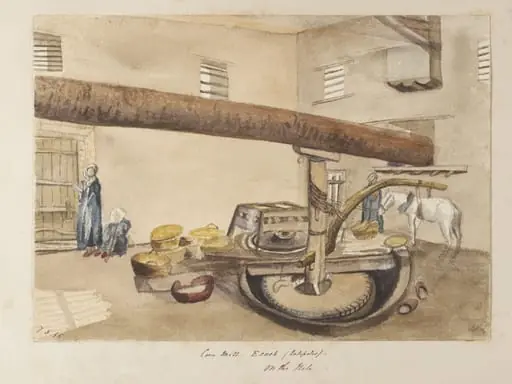
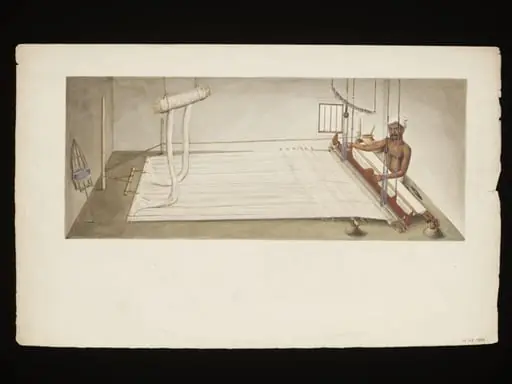
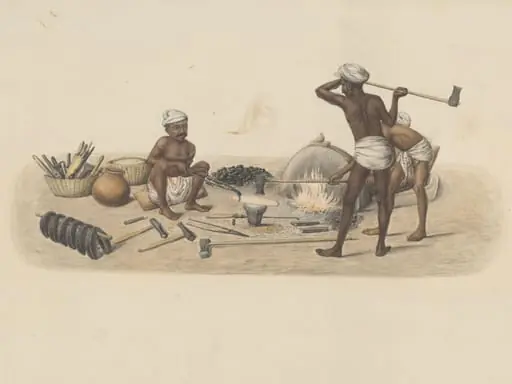
This 1872 drawing by John Lockwood Kipling depicts cotton processing in Khamgaon. It is part of a series documenting Indian crafts.
Subject & Meaning
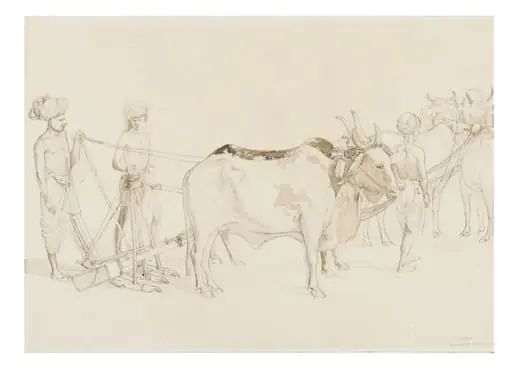
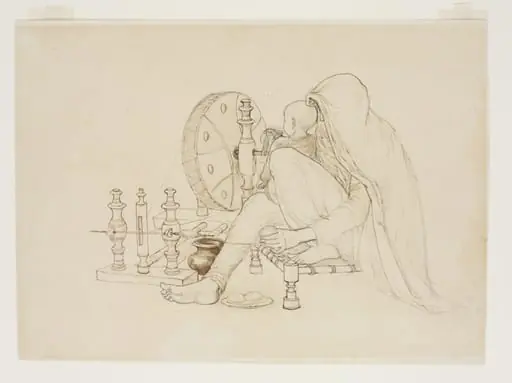
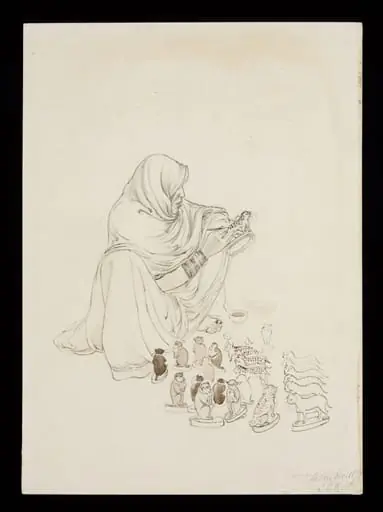
The drawing shows people working with cotton, highlighting the process of cotton cultivation and processing. Kipling's work captures the labor involved in this traditional Indian craft.
Technique & Style
The drawing blends elements of Impressionism and Realism, reflecting Kipling's observational skills and attention to detail. The style is characteristic of his documentation of Indian crafts and daily life.
History & Provenance
Kipling created this drawing during a government-commissioned tour in 1872. He traveled to Khamgaon in Berar to record local crafts, resulting in a series of studies from life.
Context
Kipling's work was part of a broader effort to document and promote traditional Indian crafts, which were facing decline due to European imports. As Principal of the Mayo College of Arts, he continued to support these crafts.
Artist & collection
Artist
John Lockwood Kipling filled sketchbooks with the daily life he saw around him in British India, drawing craftsmen at work, farmers at market, and seed planters in fields.