Artwork
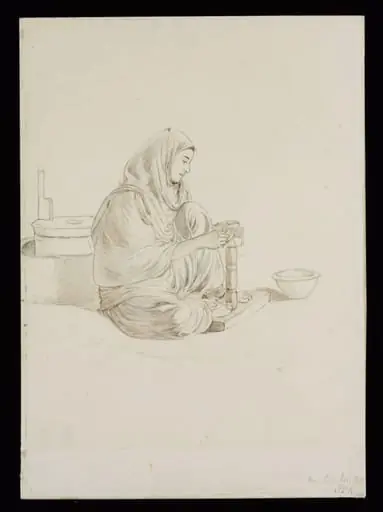
Spinning shawl wool
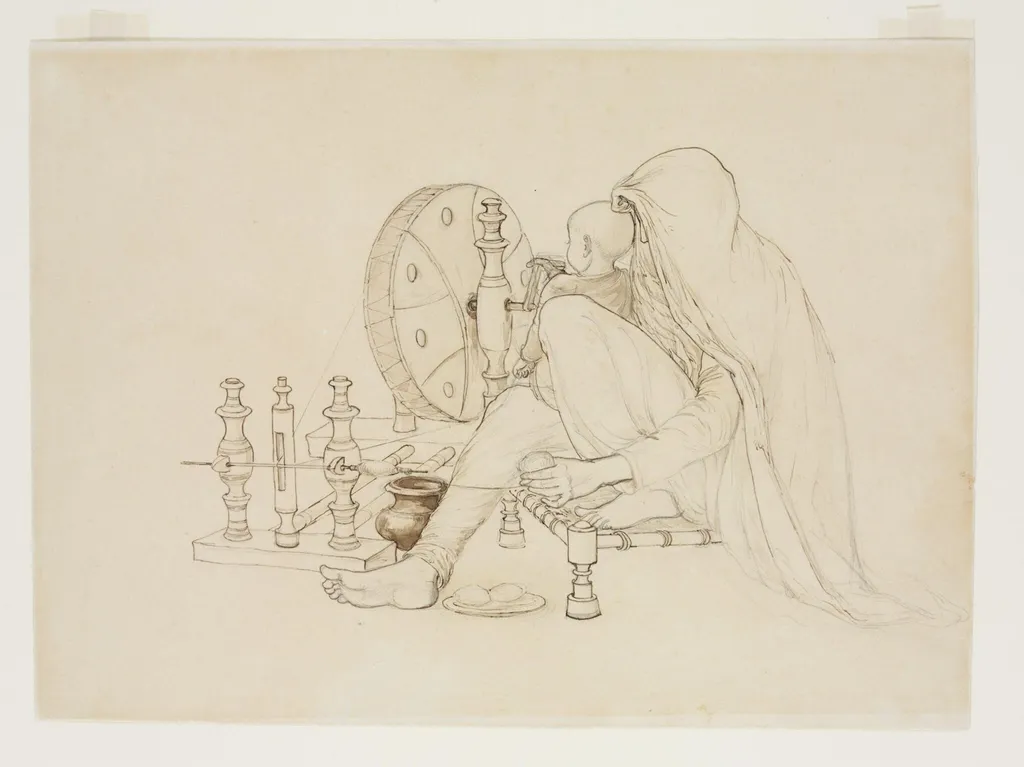
Spinning shawl wool is a drawing by the Impressionist artist John Lockwood Kipling. It dates from 1870 and is held in the collection of the Victoria and Albert Museum.
About this work
Overview
Rendered in pencil, it portrays a woman seated on a charpoi, spinning wool with a charka while cradling an infant.
This 1870 drawing by John Lockwood Kipling captures a quiet moment of labor in northwestern India. Rendered in pencil, it portrays a woman seated on a charpoi, spinning wool with a charka while cradling an infant. The composition emphasizes routine activity over spectacle, reflecting Kipling’s interest in documenting local craftsmanship during his tenure in Lahore as a professor and museum curator.
Subject & Meaning
The scene centers on the dual responsibilities of domestic and artisanal labor, common among women in the region. The presence of the infant suggests that textile production was woven into daily life, not confined to dedicated workshops. Kipling’s choice to depict this intimate, unidealized moment underscores his focus on the dignity of ordinary work rather than ceremonial or elite subjects.
Technique & Style
Kipling employed light, fluid pencil lines to suggest form without heavy shading. The absence of detailed backgrounds directs attention to the figures and tools: the spinning wheel, clay pot, and spools of thread. Subtle cross-hatching defines folds in fabric and the contours of the charpoi, conveying texture and volume with minimal strokes, characteristic of observational sketching.
History & Provenance
Created during Kipling’s time in British India, the drawing entered the India Museum’s collection and was transferred to the Victoria and Albert Museum in 1879. By 1880, it was cataloged as part of a series documenting regional artisans, reflecting institutional efforts to preserve ethnographic records of Indian crafts under colonial administration.
Context
Kipling’s sketches emerged amid growing colonial interest in cataloging Indian industries, particularly hand-spinning and weaving. His role at the Lahore Museum placed him among scholars and administrators seeking to systematize knowledge of local techniques. This work is one of many that aimed to record practices seen as threatened by industrialization.
Legacy
The drawing remains a valuable record of pre-industrial textile production in Punjab. Though not widely exhibited, it contributes to scholarly understanding of gendered labor and material culture in 19th-century India. Its modest scale and direct observation distinguish it from more stylized ethnographic imagery of the period.
Artist & collection
Artist
John Lockwood Kipling filled sketchbooks with the daily life he saw around him in British India, drawing craftsmen at work, farmers at market, and seed planters in fields.

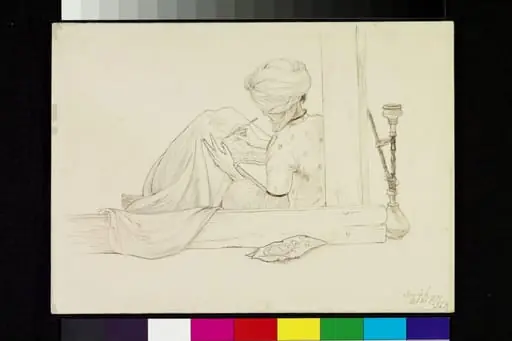 A Turbaned man drawing a pattern on to a piece of cloth
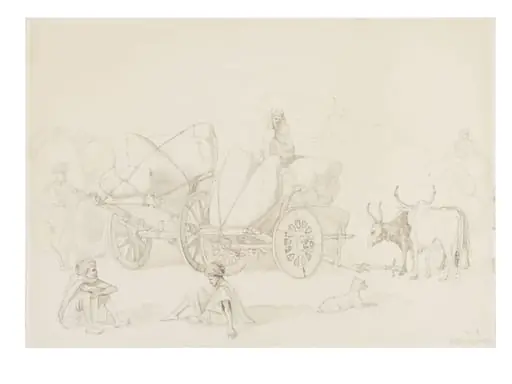 Farmers waiting for an offer at Khamgaom cotton market
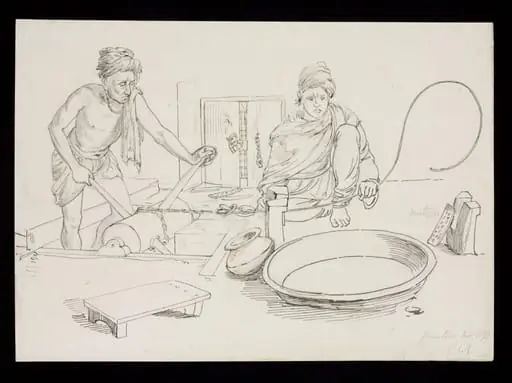 Two men working with machines to produce silver gilt wire
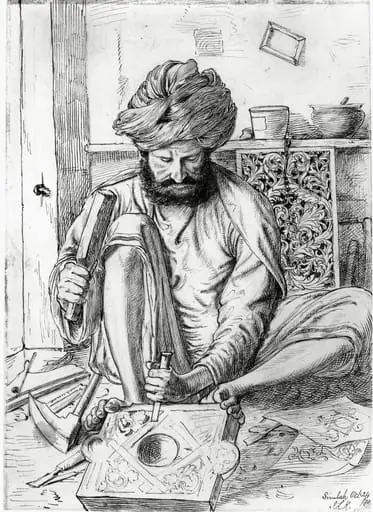 A wood carver
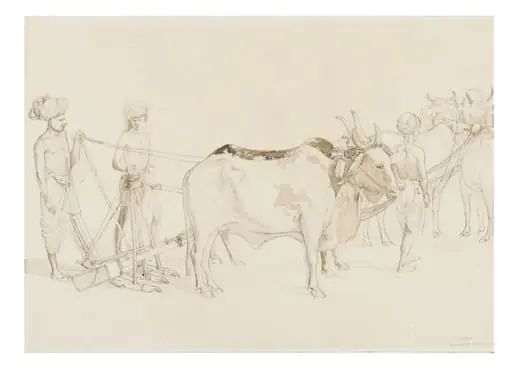 Planting seeds at Khamgaon
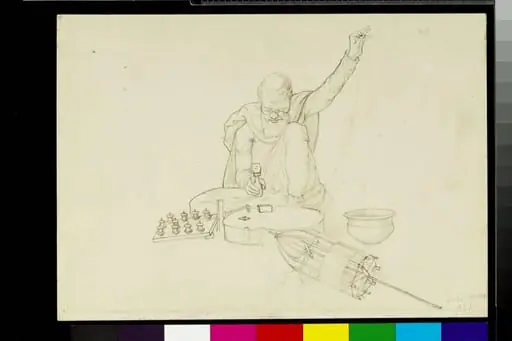 Untitled
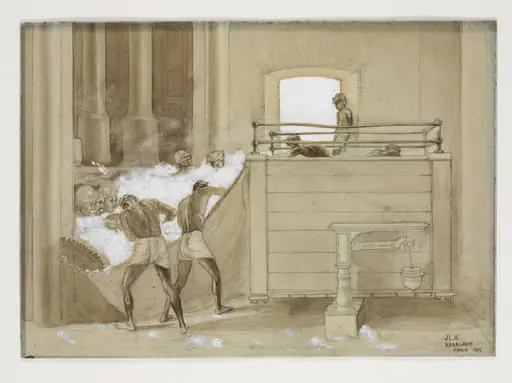 Filling the Gunny bag with cotton at Khamgaon
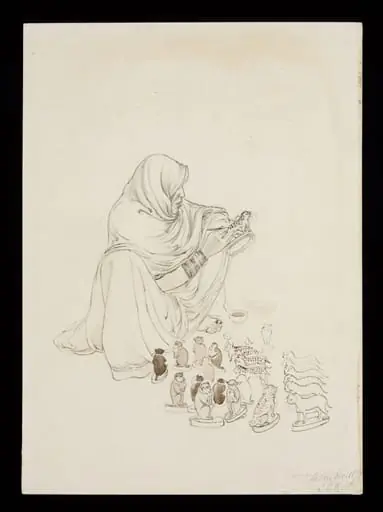 A seated woman painting spots on a toy leopard