Artwork
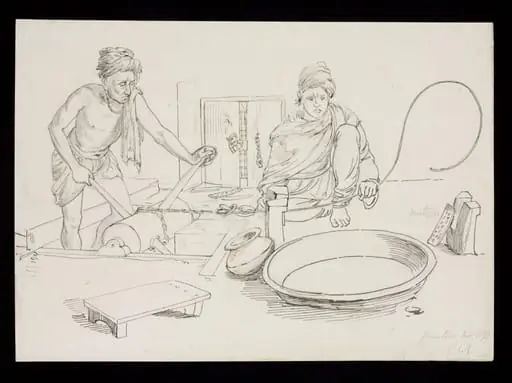
Three men from Amritsar jail working at a carpet loom
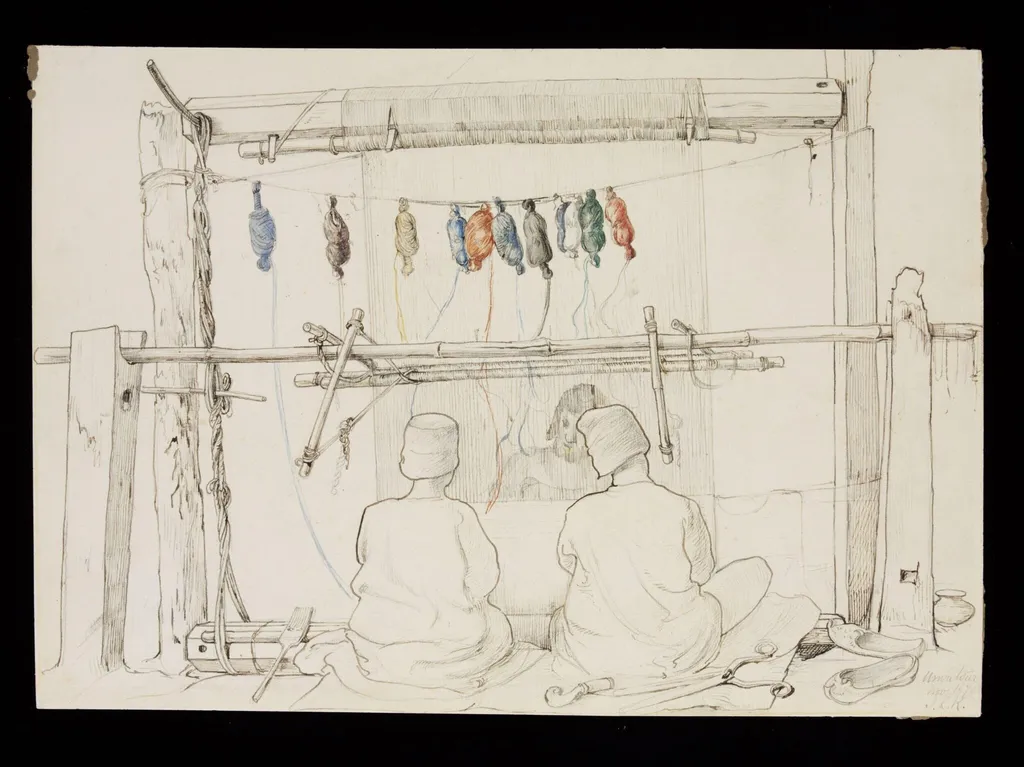
Three men from Amritsar jail working at a carpet loom is a drawing by the Impressionist artist John Lockwood Kipling. It dates from 1870 and is held in the collection of the Victoria and Albert Museum.
About this work
This drawing shows three men weaving a carpet in a jail. John Lockwood Kipling sketched it in 1870. He was an English artist who worked in India.
Kipling studied art in London before moving to India. He liked to draw the many crafts he saw there. The jail in Amritsar made carpets at the time.
Look up Lockwood Kipling, John next.
Overview
Kipling, an English artist and educator, created it during his tenure in British India, where he sought to record traditional skills through direct observation.
This 1870 drawing by John Lockwood Kipling depicts three incarcerated men weaving a carpet at Amritsar Jail in the Punjab. Executed in pencil or ink, the work is part of a broader series documenting Indian craft practices. Kipling, an English artist and educator, created it during his tenure in British India, where he sought to record traditional skills through direct observation. The drawing was later acquired by the Indian Museum in London and transferred to the South Kensington Museum in 1879.
Subject & Meaning
The scene captures labor within a colonial penal institution, where carpet weaving was both a form of rehabilitation and a commercial enterprise. The men’s focused postures and the presence of specialized tools suggest a highly skilled, repetitive craft. Rather than romanticizing the setting, Kipling presents it with documentary precision, reflecting the complex relationship between incarceration, industry, and artisanal tradition in late 19th-century Punjab.
Technique & Style
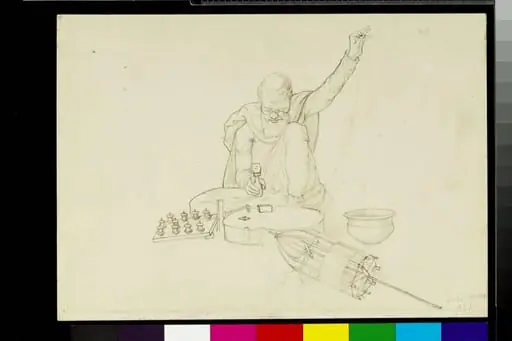
Kipling rendered the scene with careful attention to detail, emphasizing the tools and gestures of weaving: the beater for packing wefts, the curved knife for trimming knots, and the large shears for finishing the pile. The composition is unadorned, avoiding dramatic lighting or emotional exaggeration. His draftsmanship is precise, prioritizing accuracy over aesthetic flourish, consistent with his ethnographic intent to record craft processes as they were practiced.
History & Provenance
Created in 1870, the drawing entered the collection of the Indian Museum in London, which specialized in artifacts from the subcontinent. In 1879, it was transferred to the South Kensington Museum—later the Victoria and Albert Museum—as part of a broader reorganization of colonial-era collections. Its preservation reflects institutional interest in documenting Indian material culture during the height of British rule.
Context
In the late 1800s, Amritsar Jail was one of several institutions in Punjab where prisoners were employed in carpet production, a trade once thriving but then in decline due to shifting markets and mechanization. Kipling, as an educator and curator, was deeply engaged with preserving indigenous crafts. His drawings served as both records and pedagogical tools, aiming to safeguard knowledge he feared was being lost.
Legacy
Kipling’s drawings remain valuable as historical documents of craft labor under colonial administration. They offer insight into the intersection of punishment, industry, and traditional skill. Though not widely exhibited today, they continue to inform scholarship on material culture, colonial institutions, and the documentation of artisanal practices in 19th-century India.
Artist & collection
Artist
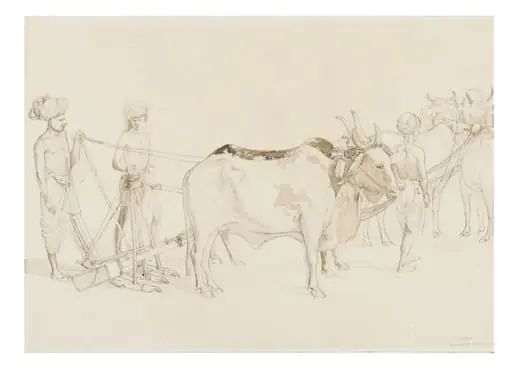
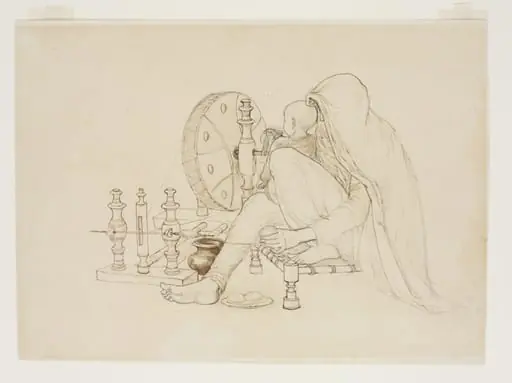
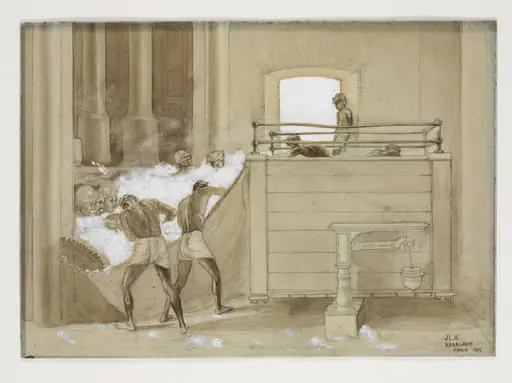
John Lockwood Kipling filled sketchbooks with the daily life he saw around him in British India, drawing craftsmen at work, farmers at market, and seed planters in fields.