Artwork
Untitled
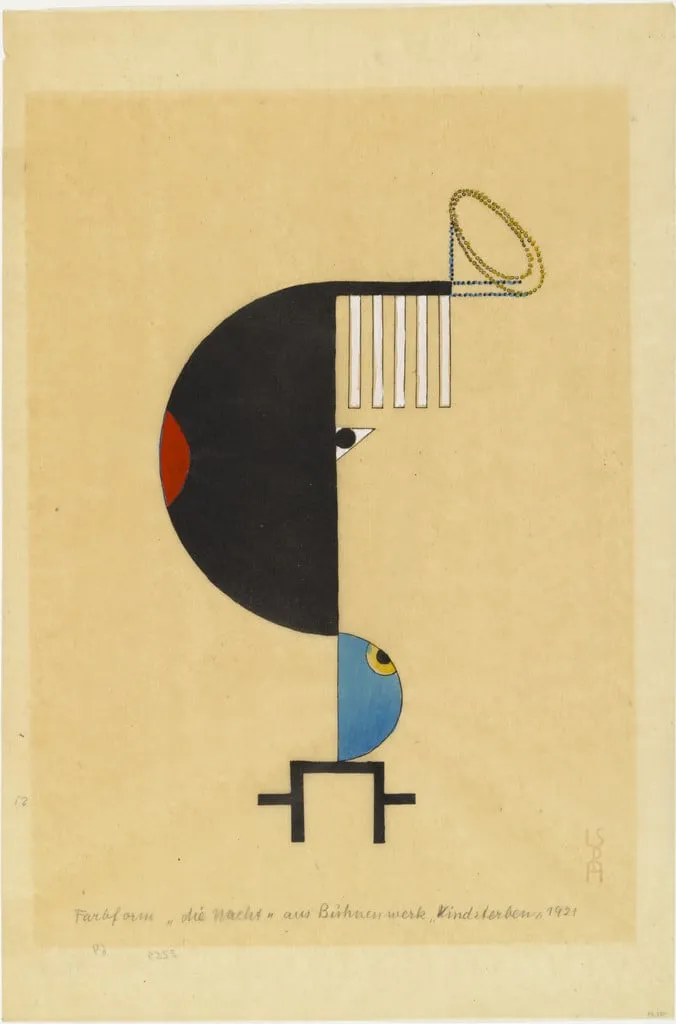
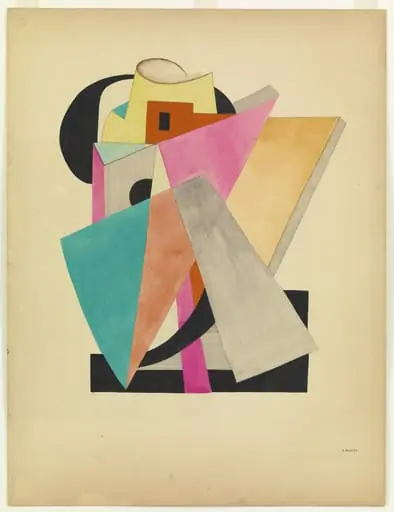
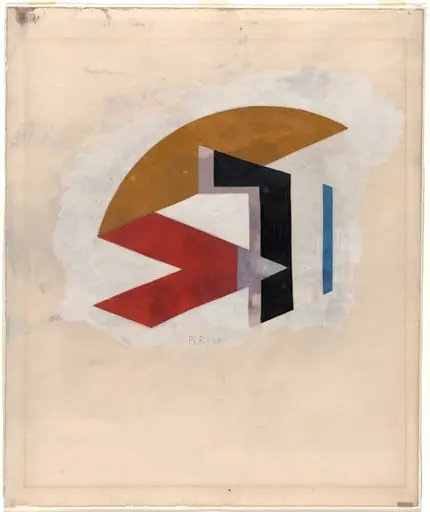
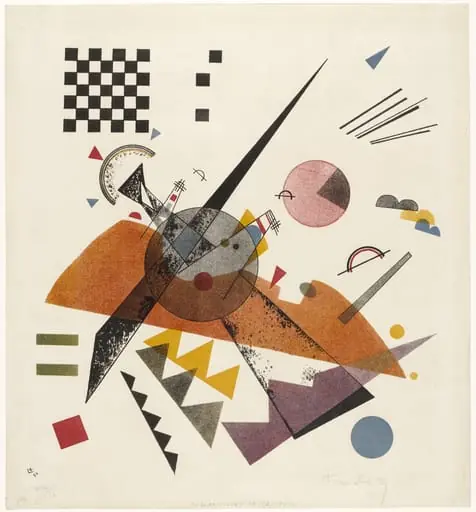
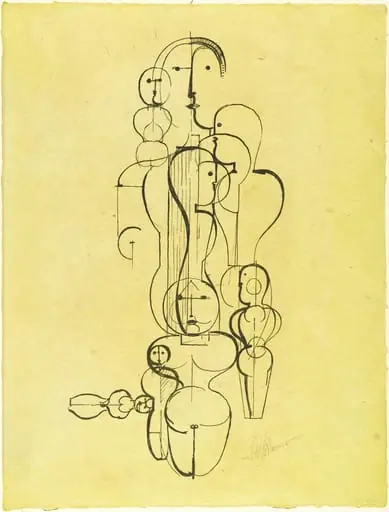
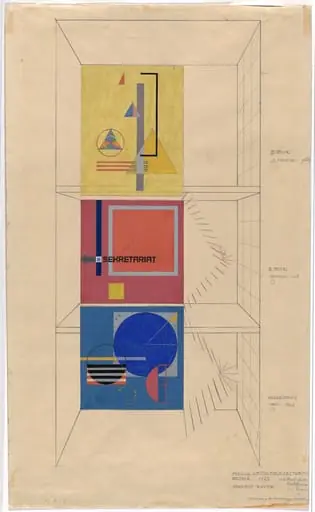
Untitled is a watercolor print by Lothar Schreyer. It dates from 1921 and is held in the collection of the Museum of Modern Art.
About this work
The artist used bold colors and sharp shapes to create a striking, almost cartoonish look.
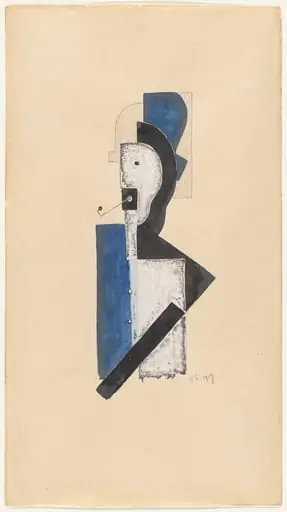
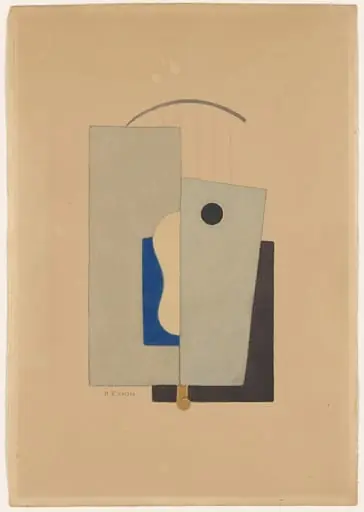
This image shows a simple, flat design of a bird with a human-like neck and head. The bird’s body is a black oval with a red circle inside it. Its head is a blue half-circle with a small yellow eye and black beak. The neck holds a white rectangular object with a gold chain loop at the top.
The artist used bold colors and sharp shapes to create a striking, almost cartoonish look. This piece was made in 1921 using a mix of lithograph and watercolor.
Next, check out Lothar Schreyer to see more of his bold, playful work.
Overview
Created in 1921, this lithograph with watercolor additions is one of Lothar Schreyer’s experimental prints from his time at the Bauhaus. The work combines printmaking with hand-applied color, reflecting the school’s interest in blending craft and abstraction. Its simplified forms and vivid palette suggest a move away from naturalism toward symbolic representation, characteristic of early modernist experimentation in Germany.
Subject & Meaning
The image depicts a stylized avian figure with a human-like neck and head, suggesting a hybrid creature that blurs animal and anthropomorphic traits. The black oval body, red central circle, and blue head imply symbolic rather than literal representation. The white rectangle suspended by a gold chain may reference ritual objects or symbolic authority, hinting at themes of transformation or spiritual hierarchy common in expressionist thought of the period.
Technique & Style
Schreyer employed lithography as a base, then added watercolor by hand to enhance form and color. The composition relies on flat, geometric shapes—circles, ovals, and rectangles—rendered in bold, unmodulated hues. Sharp outlines and minimal detail create a graphic, almost emblematic quality. The technique reflects a deliberate move toward abstraction, prioritizing symbolic clarity over realistic depiction.
History & Provenance
Made during Schreyer’s tenure as the first Master of Stage at the Bauhaus, the work emerged from a period of intense interdisciplinary exploration. It was likely produced in connection with his theatrical experiments, which sought to merge movement, color, and form. The piece entered the collection of The Museum of Modern Art, where it remains as part of its early modernist print holdings.
Context
In early 1920s Germany, artists like Schreyer were redefining visual language in response to postwar upheaval and the rise of new artistic movements. His work at the Bauhaus emphasized abstraction and symbolic form, aligning with broader trends in Expressionism and early Constructivism. This print reflects a broader interest in reducing imagery to essential signs, often tied to spiritual or theatrical themes.
Legacy
Schreyer’s experimental prints, including this one, contributed to the Bauhaus’s broader investigation into the relationship between form, color, and meaning. Though less widely known than his contemporaries, his work influenced later developments in graphic design and abstract illustration. The integration of hand-coloring into printmaking helped expand the possibilities of the medium beyond mechanical reproduction.
Artist & collection
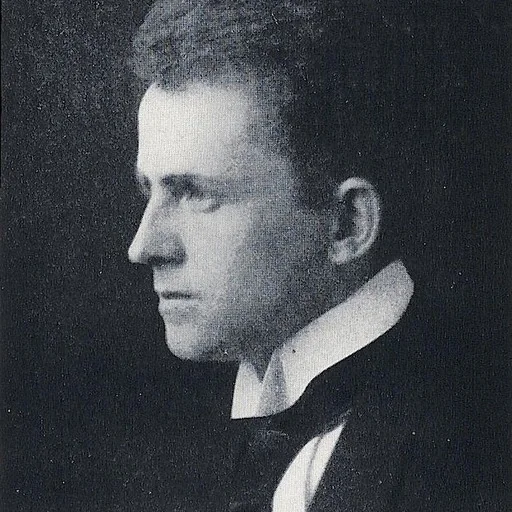
Artist
Lothar Schreyer (19 August 1886, Blasewitz – 18 June 1966, Hamburg) was a German artist, writer, editor, stage designer and gallery owner. He was the first Master of the stagecraft workshop at the Bauhaus art school.