Artwork
Entrance of the Palace of the Padishahs, Delhi
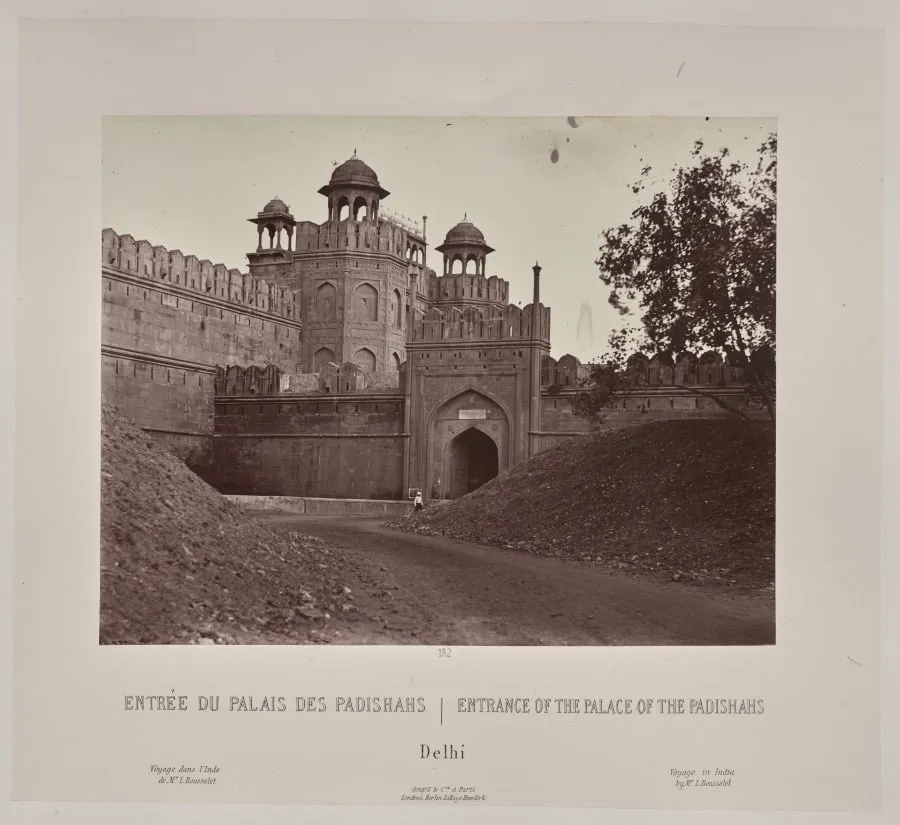
Entrance of the Palace of the Padishahs, Delhi is a photography by the Impressionist artist Louis-Théophile Marie Rousselet. It dates from 1866 and is held in the collection of the Cleveland Museum of Art.
About this work
Look up more works in the subject: france, 19th century to see how other artists pictured distant places.
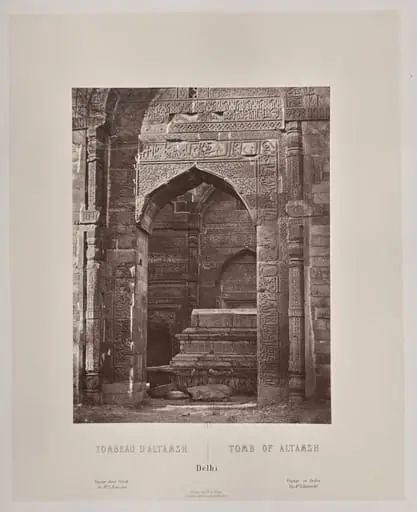
A grand stone archway frames a sunlit courtyard in Delhi. Men in turbans and robes stand near the entrance, while others sit in the shade.
Rousselet made this image just after learning photography in India. He wanted his pictures to show the real scale and detail of the buildings. The shadows and light help give the scene depth.
Look up more works in the subject: france, 19th century to see how other artists pictured distant places.
Overview
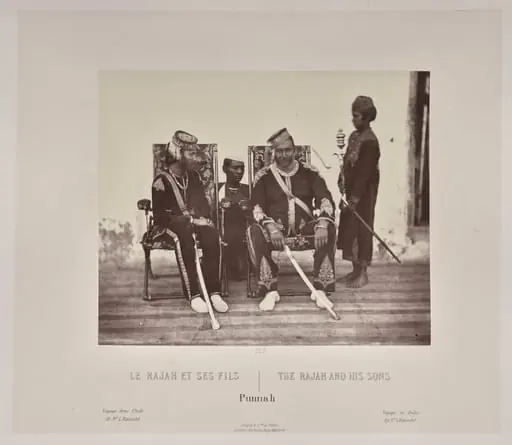
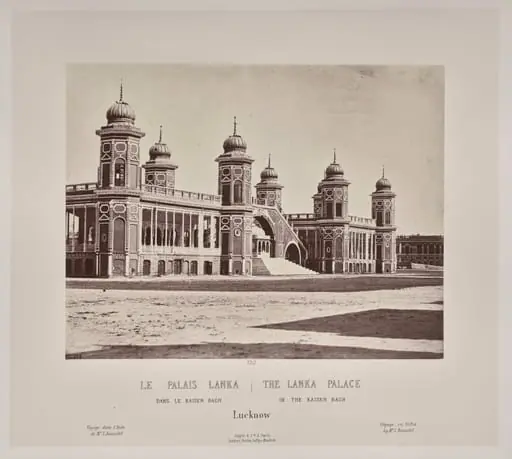
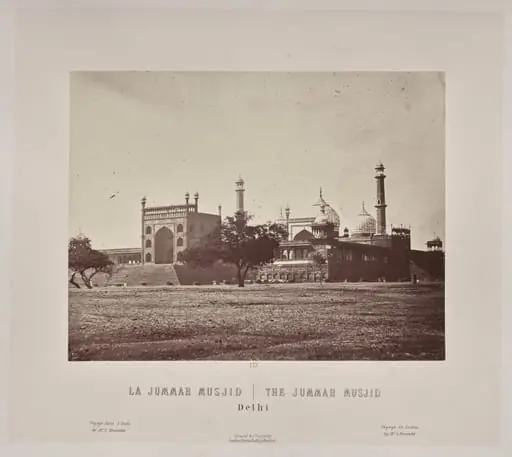
This early photograph captures the entrance to the Palace of the Padishahs in Delhi, presenting a broad stone arch that opens onto a sun‑lit courtyard. Figures in turbans and robes populate the foreground, some standing near the doorway, others seated in the shade, providing a sense of scale and everyday activity within the historic setting.
Subject & Meaning
The image documents a key architectural element of northern India’s imperial heritage, juxtaposing the monumental stonework with the presence of local inhabitants. By including both the built environment and the people who occupy it, the photograph conveys the continuity of cultural and political life that surrounds the palace complex.
Technique & Style
Taken shortly after the photographer acquired his skills in India, the picture demonstrates a careful handling of light and shadow to render depth. The composition balances the arch’s vertical lines with the open courtyard, while the contrast between illuminated stone and shaded figures enhances three‑dimensionality without reliance on artistic embellishment.
History & Provenance
Created in the mid‑19th century by the French artist‑traveler who turned to photography to more accurately record Indian monuments, the work forms part of a broader visual record of Sultanate, Rajput and Mughal sites. It was later compiled with other images of industrial scenes and portraits of Indian rulers, reflecting the photographer’s ambition to present a comprehensive view of the region.
Artist & collection
Artist
Louis-Théophile Marie Rousselet
Louis-Théophile Marie Rousselet (1845–1929) was a French artist.