Artwork
Upper Stories of Akber's Tomb, Secundra
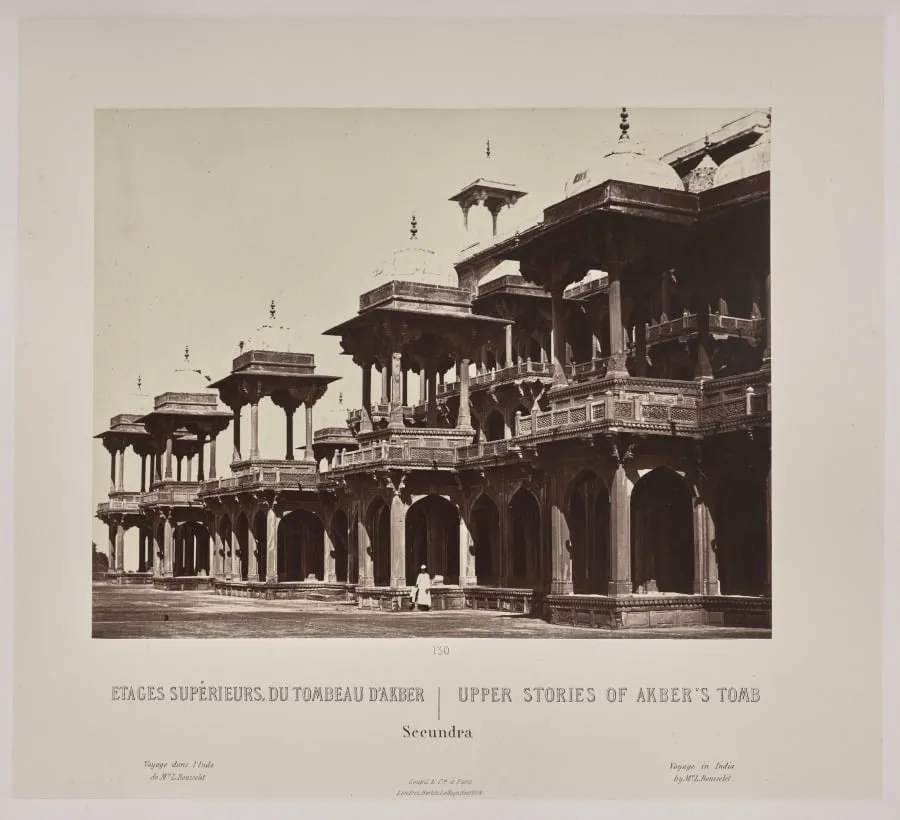
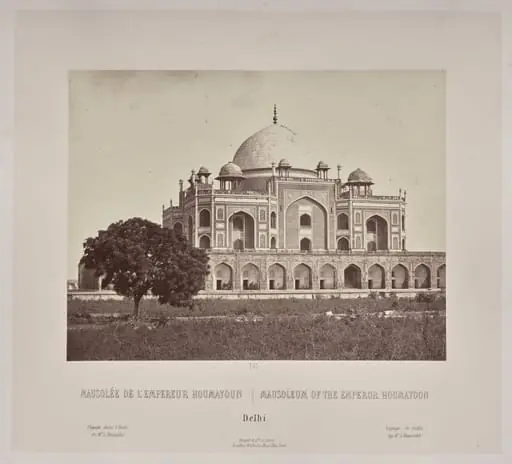
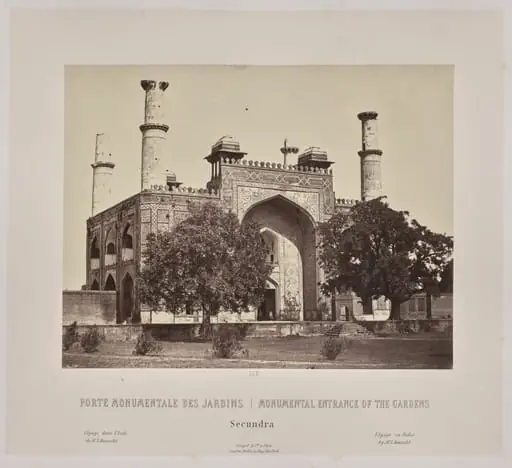
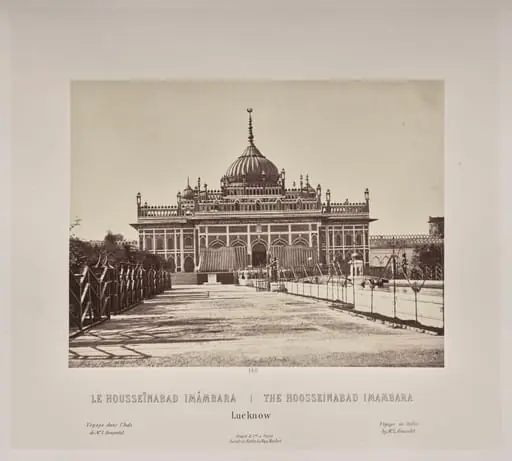
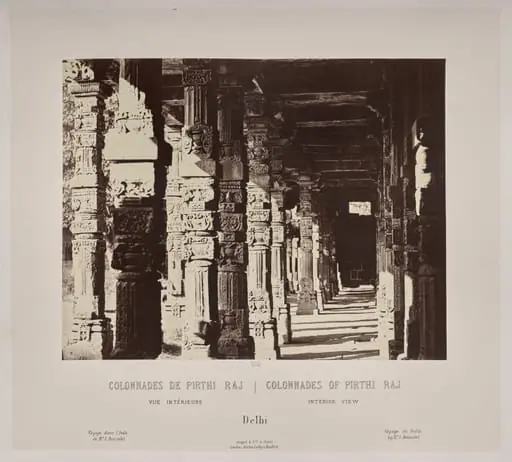
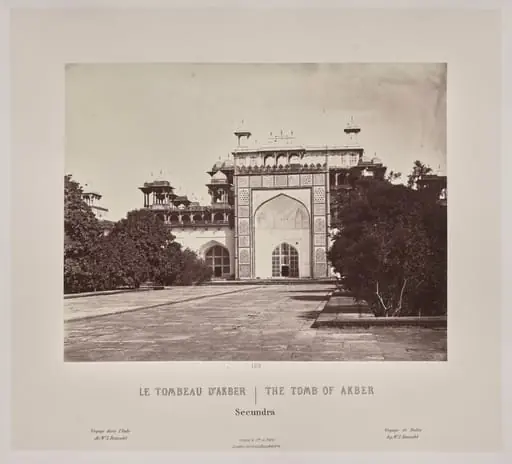
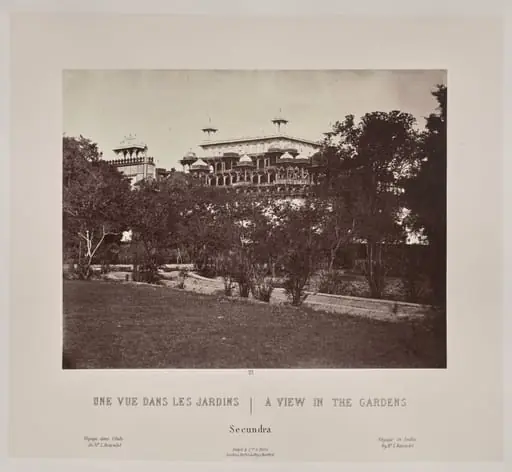
Upper Stories of Akber's Tomb, Secundra is a photography by the Impressionist artist Louis-Théophile Marie Rousselet. It dates from 1866 and is held in the collection of the Cleveland Museum of Art. This photograph captures the upper levels of Akbar’s tomb in Sikandra, taken by Charles Rousselet during his time in India.
About this work
Overview
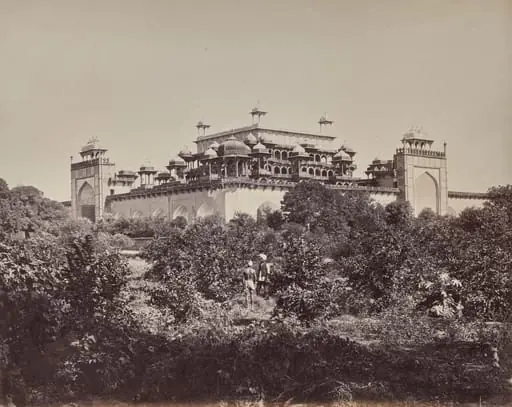
This photograph captures the upper levels of Akbar’s tomb in Sikandra, taken by Charles Rousselet during his time in India.
This photograph captures the upper levels of Akbar’s tomb in Sikandra, taken by Charles Rousselet during his time in India. Frustrated by the limitations of his sketches, Rousselet taught himself photography on-site, adapting early photographic techniques to document architectural details with greater accuracy. The image reflects his emerging skill in composition and his commitment to recording India’s monuments with fidelity.
Subject & Meaning
The tomb, built for the Mughal emperor Akbar, stands as a symbol of imperial legacy and syncretic design, blending Islamic, Hindu, and Persian elements. Rousselet’s focus on its upper stories highlights the structure’s verticality and ornate arched windows, emphasizing its role as both a funerary monument and a statement of power. The clear sky and sharp lines suggest a deliberate effort to convey permanence and order.
Technique & Style
Using early photographic equipment requiring long exposures, Rousselet achieved remarkable clarity and tonal contrast. The image’s precision mirrors the discipline of architectural drawing, with clean lines and balanced framing. Subtle chiaroscuro enhances the three-dimensionality of the sandstone surfaces, revealing texture and depth without artificial embellishment, reflecting his technical adaptation to the medium.
History & Provenance
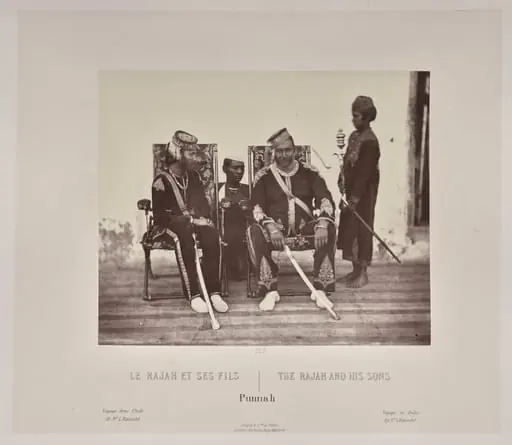
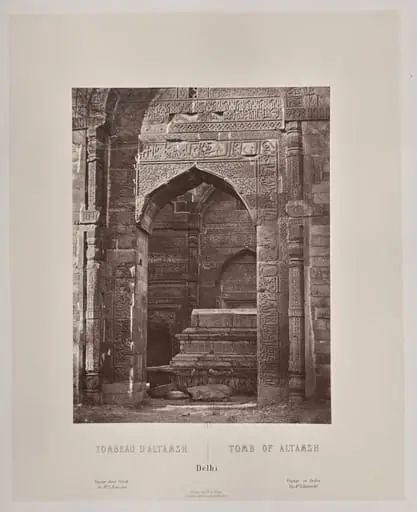
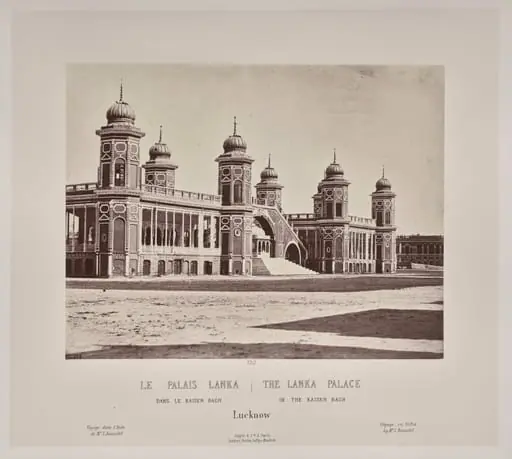
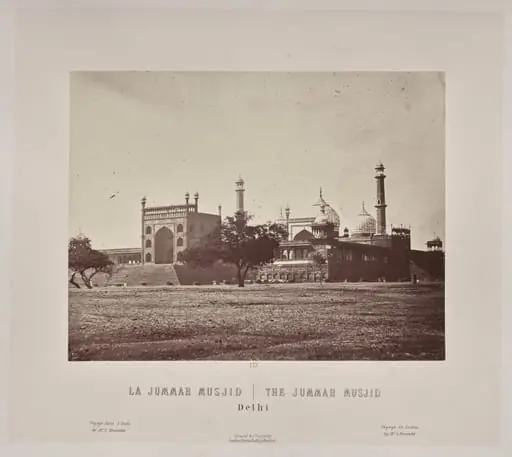
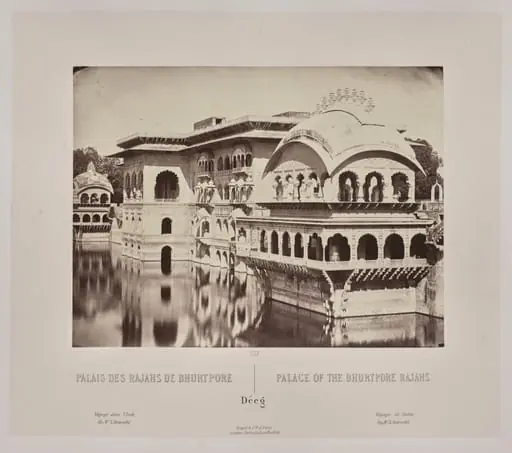
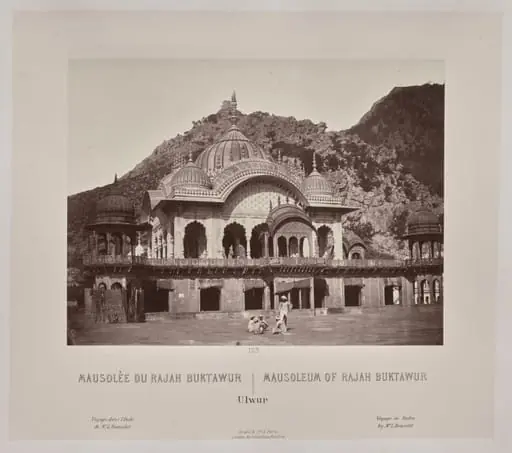
Rousselet produced this photograph during his 1860s travels across northern India, where he documented sites from Varanasi to Alwar. The image was later included in his published album, one of the earliest Western photographic records of Mughal architecture. Its survival offers insight into 19th-century European engagement with Indian heritage and the evolving role of photography in ethnographic documentation.
Context
In the mid-19th century, European travelers increasingly turned to photography to supplement or replace sketching, seeking objective records of non-European cultures. Rousselet’s work emerged amid British colonial interest in India’s architectural past, yet his approach remained observational rather than imperialistic, focusing on form and structure over narrative or exoticism.
Legacy
Rousselet’s photographs of Indian monuments contributed to a growing visual archive of South Asian heritage, influencing later scholars and preservationists. His technical initiative—learning photography mid-travel—demonstrates the adaptability of 19th-century documentarians. These images remain valuable for their unembellished record of structures before modern interventions and environmental wear.
Artist & collection
Artist
Louis-Théophile Marie Rousselet
Louis-Théophile Marie Rousselet (1845–1929) was a French artist.