Artwork
Minerva
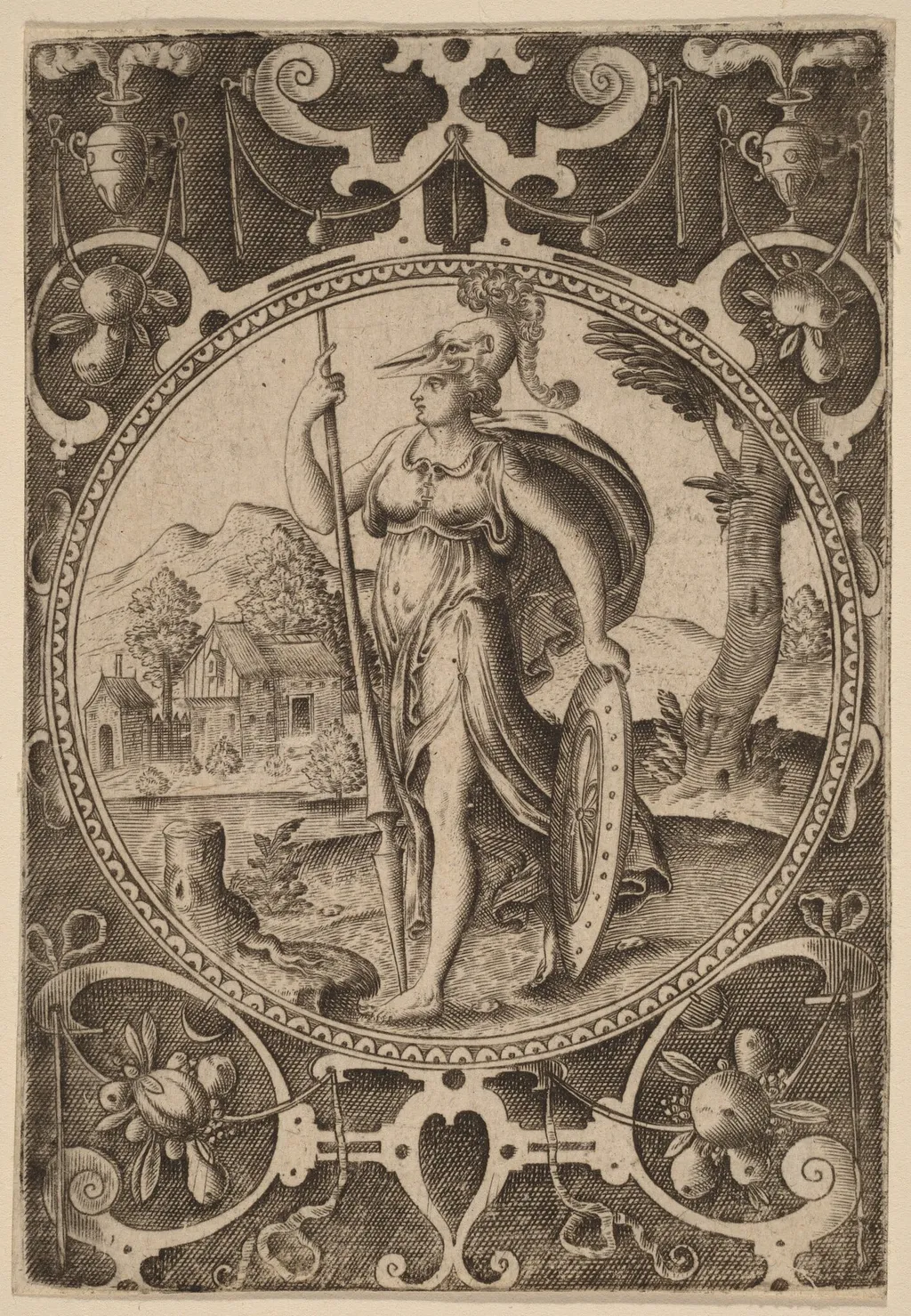
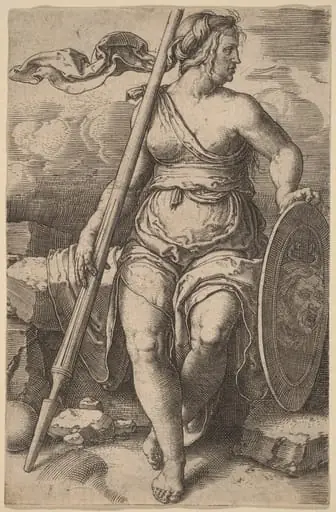
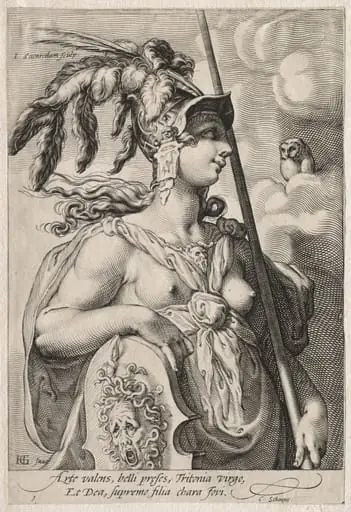
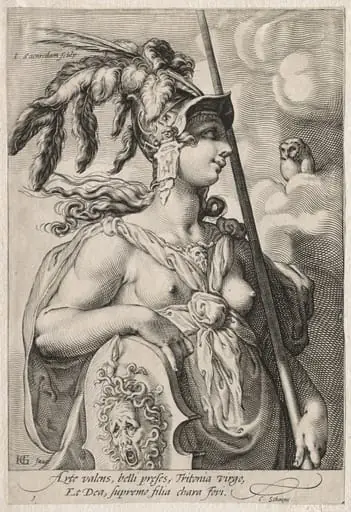
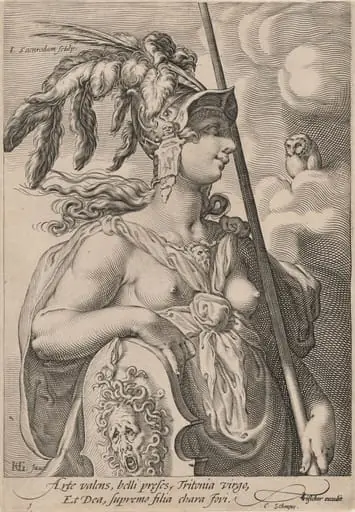
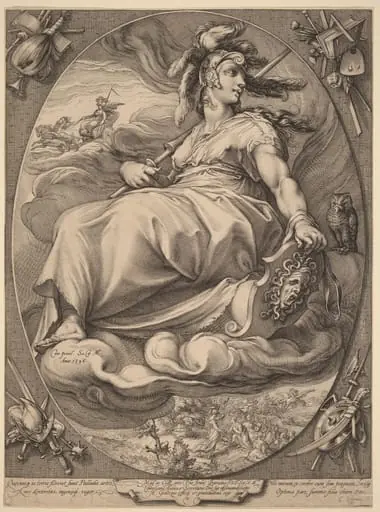
Minerva is an ink print by the Renaissance artist Netherlandish 16th Century. It dates from 1564 and is held in the collection of the National Gallery of Art.
About this work
Overview
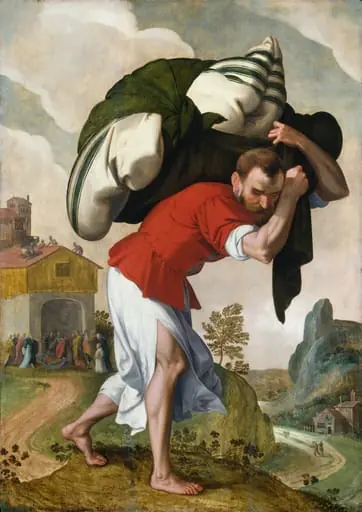
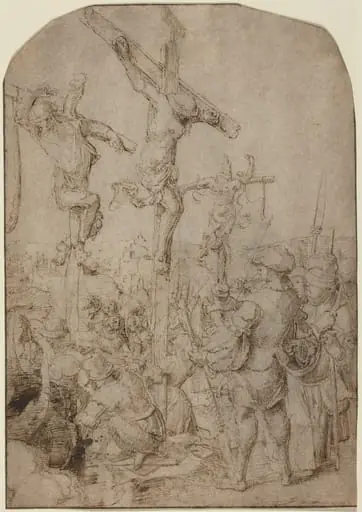
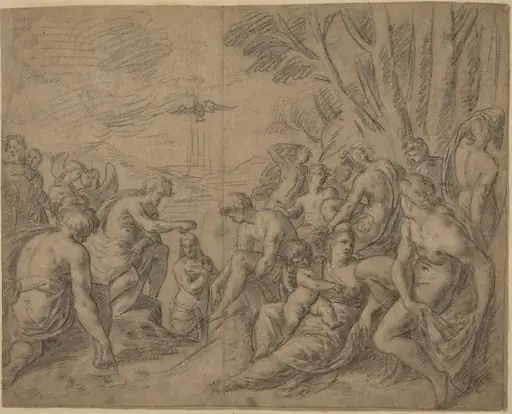
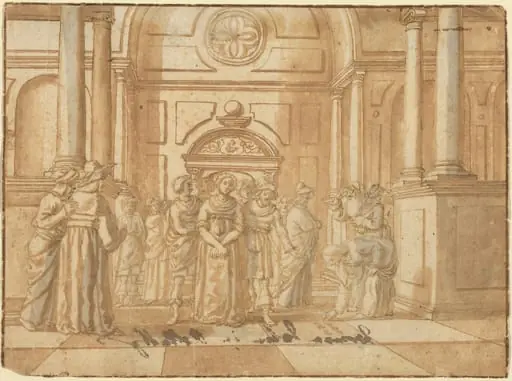
The work titled Minerva is an engraving executed on laid paper. It portrays a solitary female figure, dressed in a flowing robe, positioned within a natural landscape that includes a house, trees, and rolling hills.
Subject & Meaning
The central figure is identified as Minerva, the Roman goddess of wisdom and war, indicated by her laurel wreath, spear, and shield. The surrounding scenery provides a tranquil backdrop that contrasts with the martial attributes she carries, suggesting a balance between intellect and strength.
Technique & Style
The print demonstrates a highly detailed, realistic approach, employing fine lines and cross‑hatching to render texture and volume. The precision of the engraving and the careful modulation of light and shadow recall the meticulous methods associated with Albrecht Dürer’s prints.
History & Provenance
No specific information about the date of creation, the artist, or the work’s ownership history is provided. The piece is catalogued simply as a print titled Minerva, with its medium noted as engraving on laid paper.
Context
Depictions of Minerva were common in Renaissance and later European art, often emphasizing her role as a patron of the arts and strategic warfare. The inclusion of architectural elements and a natural setting aligns with the period’s interest in integrating mythological figures into recognizable landscapes.
Artist & collection

Artist
This artist carved scenes with fine lines, mostly religious and mythological ones.