Artwork
The Fountain and the Column of Trajan in Rome
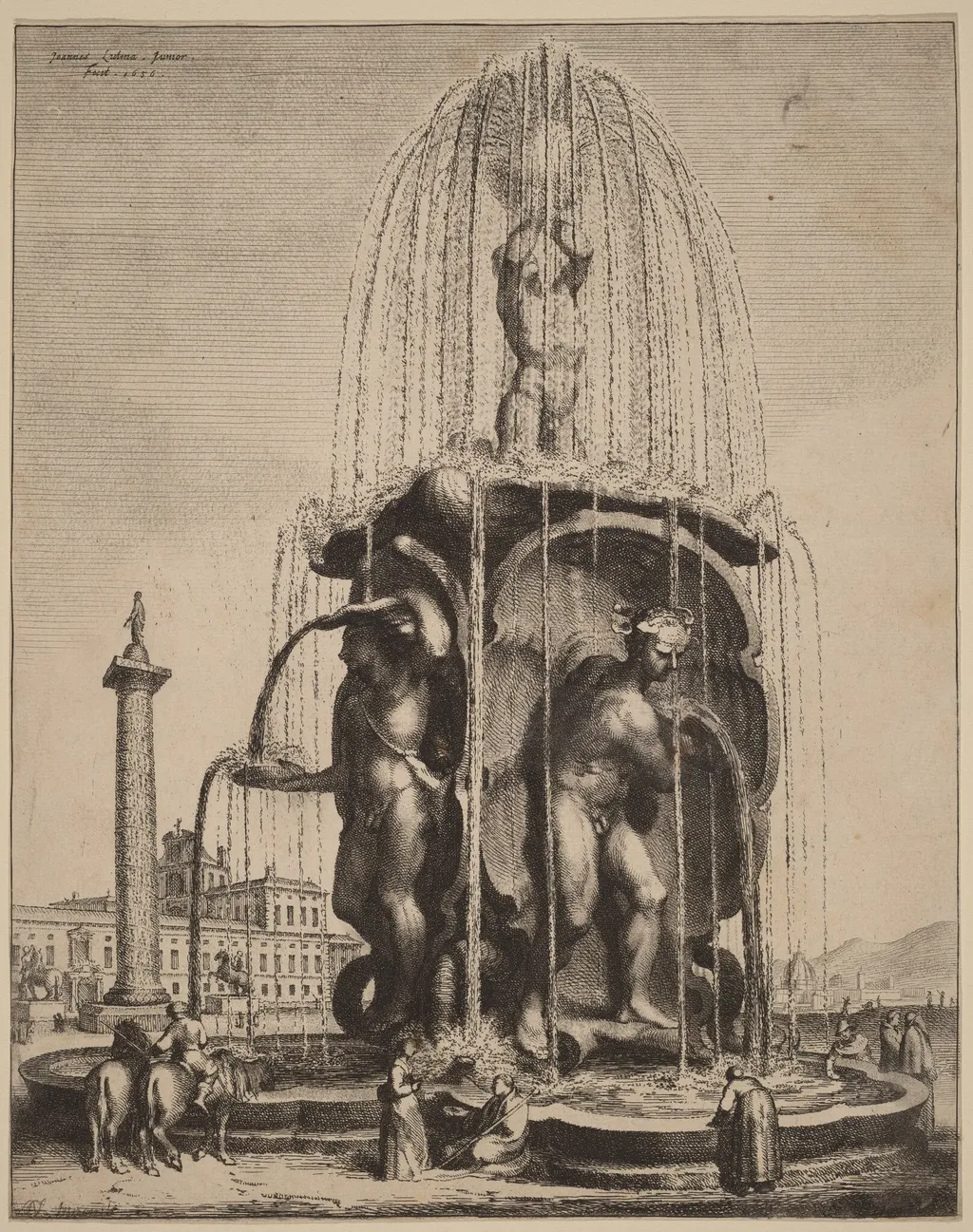
The Fountain and the Column of Trajan in Rome is an ink print by the Baroque artist Jan Lutma II. It dates from 1656 and is held in the collection of the National Gallery of Art.
About this work
Overview
Jan Lutma II’s 1656 print, titled *The Fountain and the Column of Trajan in Rome*, is an etching with punch‑engraved lines on laid paper. The work records a bustling urban vista, centering on the ancient triumphal column and an adjacent fountain, framed by surrounding architecture and figures.
Subject & Meaning
The composition presents the Column of Trajan, a Roman monument commemorating military victories, alongside a public fountain that would have supplied water to the city. By populating the scene with pedestrians, merchants, and nearby buildings, the print offers a glimpse of everyday activity in 17th‑century Rome, linking antiquity with contemporary urban life.
Technique & Style
Lutma employed a combination of etching and punch engraving, allowing fine linear detail and textured shading on the laid‑paper support. The method produces crisp outlines for architectural elements while the punched marks suggest surface texture, creating depth and a sense of atmospheric perspective.
History & Provenance
Created in the mid‑17th century, the print reflects the Dutch tradition of topographical engraving that catered to collectors interested in foreign cities. It is attributed to Jan Lutma II, a member of the Lutma family of engravers active in Amsterdam, and survives in several museum and private collections.
Context
During the 1650s, European artists frequently documented famous landmarks for an audience fascinated by travel and antiquity. Lutma’s depiction aligns with this trend, providing a visual record of Rome’s monumental heritage at a time when the city was a focal point of the Grand Tour.
Artist & collection


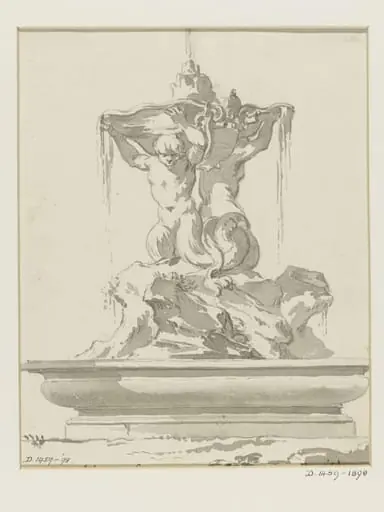 Drawing of a fountain
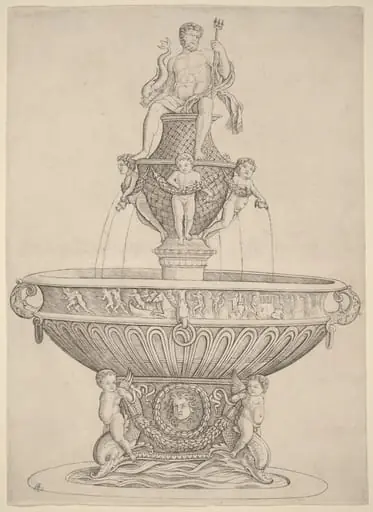 Fountain with Statue of Neptune
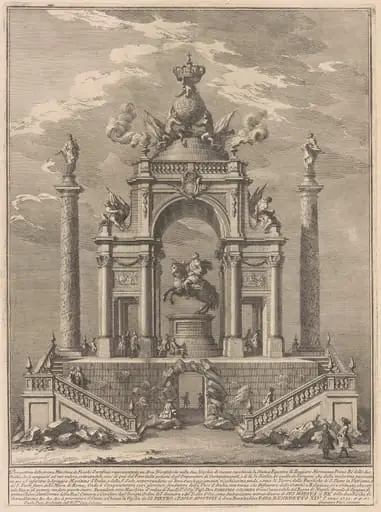 The Prima Macchina for the Chinea of 1751: Triumphal Arch for Roger I of Sicily
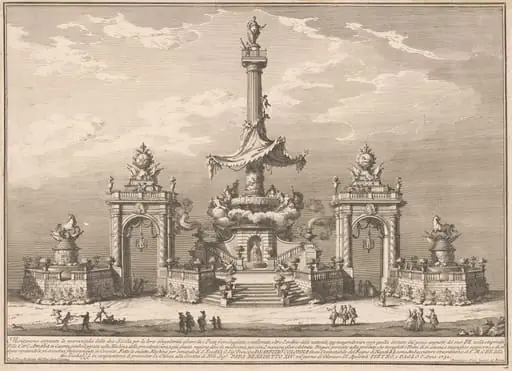 The Seconda Macchina for the Chinea of 1752: The Banquet of the Gods in Villa Carl'Amalia in Caserta
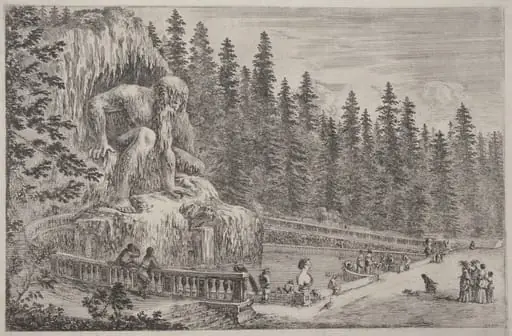 Colossal Statue of the Apennines
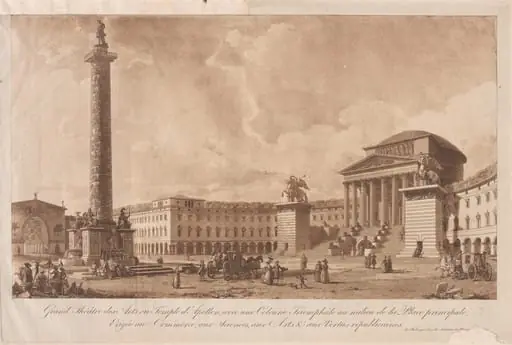 Grand Théâtre des Arts ou Temple d'Apollon, avec une Colonne Triomphâle au milieu de la Place principale, erigée au Commerce, aux Sciences, aux Arts & aux Vertus républicaines (Grand Theater of the Arts or Temple of Apollo, with a Victory Column in the Middle of the Main Square, Erected to Commerce, the Sciences, the Arts, and Republican Virtues)
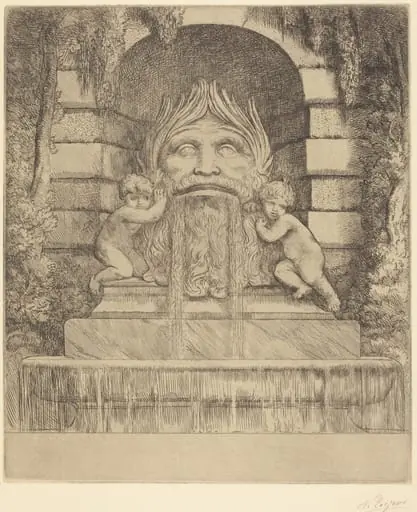 Fountain: Grotesque, Children and Basin (Une fountaine: Masque, enfants et bassin)
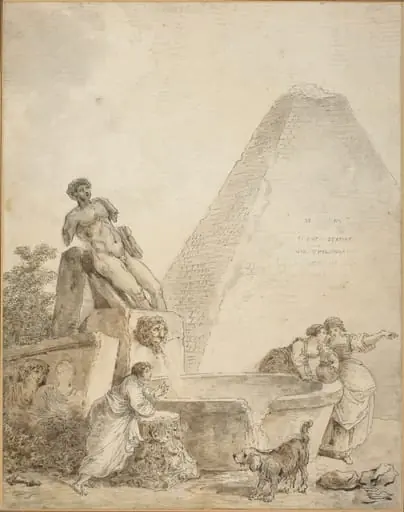 A Roman Capriccio with the Pyramid of Gaius Cestius
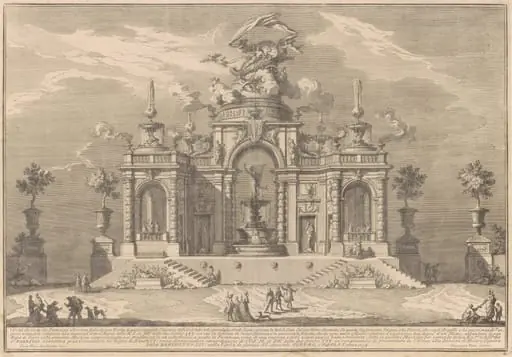 The Prima Macchina for the Chinea of 1754: The Palace of Venus in Cyprus
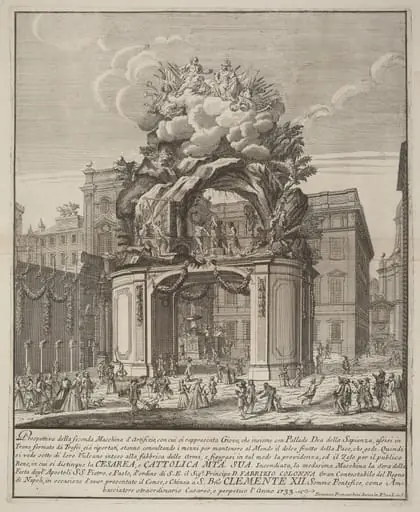 The Seconda Macchina for the Chinea of 1733: Jupiter and Minerva and the Forge of Vulcan
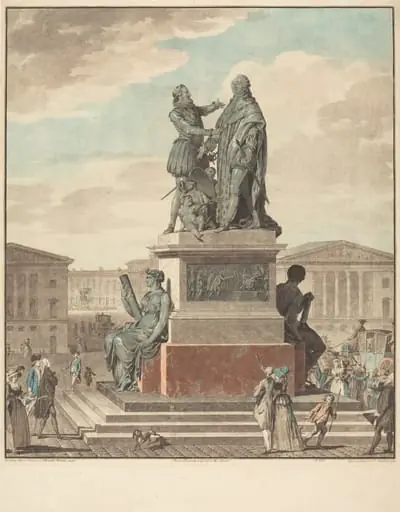 Projet d'un monument a ériger pour le roi
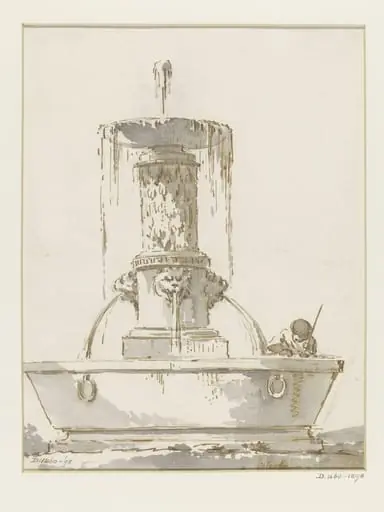 Drawing of fountain