Artwork
The Seconda Macchina for the Chinea of 1733: Jupiter and Minerva and the Forge of Vulcan
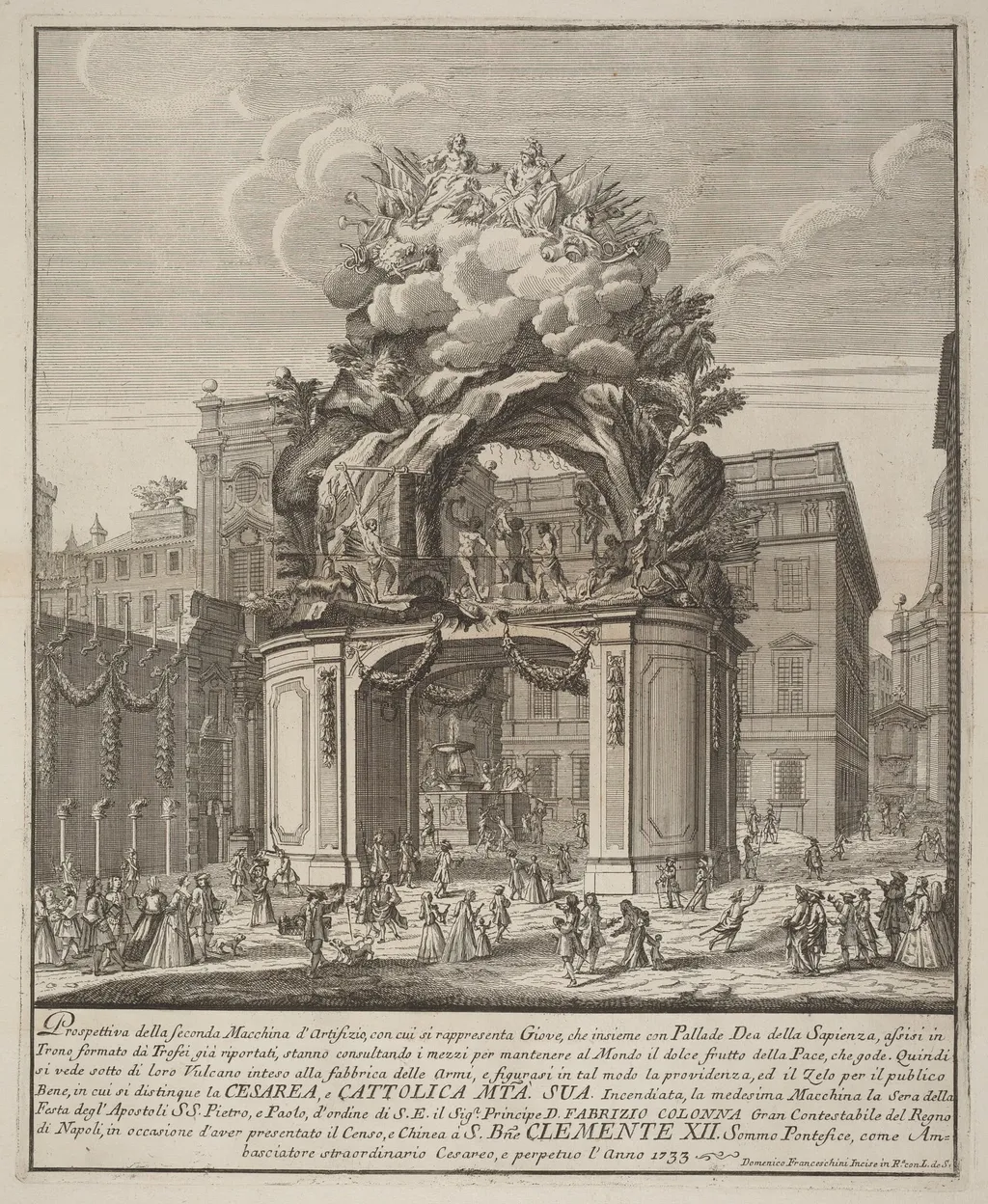
The Seconda Macchina for the Chinea of 1733: Jupiter and Minerva and the Forge of Vulcan is an ink print by the Baroque artist Domenico Franceschini. It dates from 1733 and is held in the collection of the National Gallery of Art.
About this work
The painting shows Jupiter and Minerva at the Forge of Vulcan.
It's an etching from 1733.
The details in this work are interesting because they show a scene from mythology, which was a common theme in art at the time, and the artist used a lot of lines to create texture and depth.
You can learn more about this style by looking into the technique: etching.
Overview
Domenico Franceschini’s 1733 print, titled *The Seconda Macchina for the Chinea of 1733: Jupiter and Minerva and the Forge of Vulcan*, is an etching and engraving executed on laid paper. The work belongs to the print medium and depicts a mythological tableau that was popular in eighteenth‑century visual culture.
Subject & Meaning
The composition brings together the Roman gods Jupiter and Minerva within the workshop of Vulcan, the divine smith. Their presence suggests a narrative of divine collaboration and the forging of celestial weapons, reflecting contemporary interest in classical mythology as a vehicle for moral and allegorical messages.
Technique & Style
Franceschini employed a combination of etching and engraving, using fine, intersecting lines to model forms and suggest the metallic textures of the forge. The dense linear network creates depth and a sense of tactile surface, characteristic of the meticulous hand‑work typical of early eighteenth‑century printmaking.
Context
The print was produced as part of the *Seconda Macchina* series for the Chinea, a ceremonial tribute presented by the Papal States to the King of Naples. Such commissions often featured grand mythological subjects, aligning the political prestige of the patron with the timeless authority of the gods.
Artist & collection


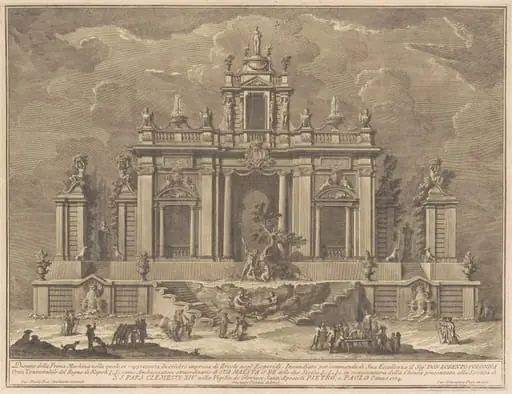 The Prima Macchina for the Chinea of 1774: Hercules and the Dragon in the Garden of the Hesperides
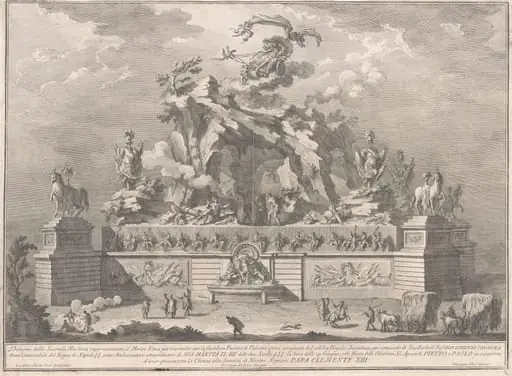 The Seconda Macchina for the Chinea of 1767: Mount Etna with the Forge of Vulcan
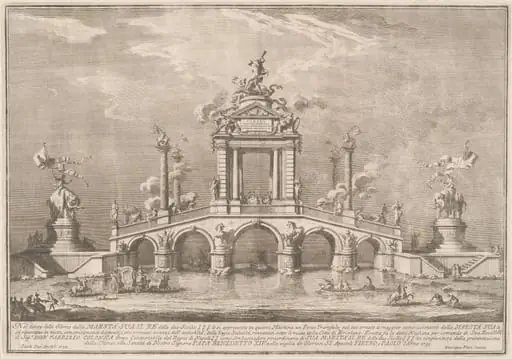 The Prima Macchina for the Chinea of 1755: A Triumphal Bridge with Antiquities from Herculaneum
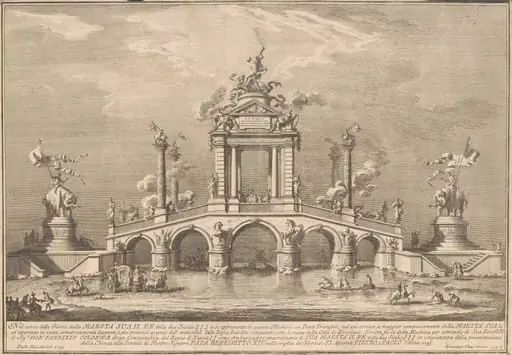 The Prima Macchina for the Chinea of 1755: A Triumphal Bridge with Antiquities from Herculaneum
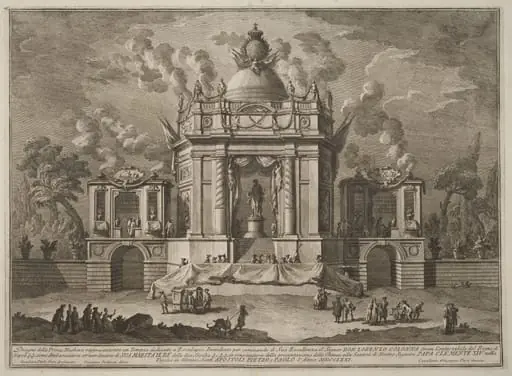 The Prima Macchina for the Chinea of 1771: The Temple of Asclepius
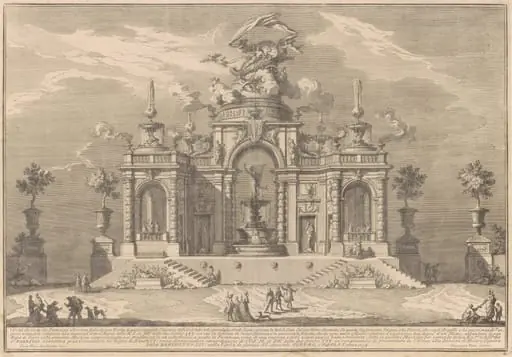 The Prima Macchina for the Chinea of 1754: The Palace of Venus in Cyprus
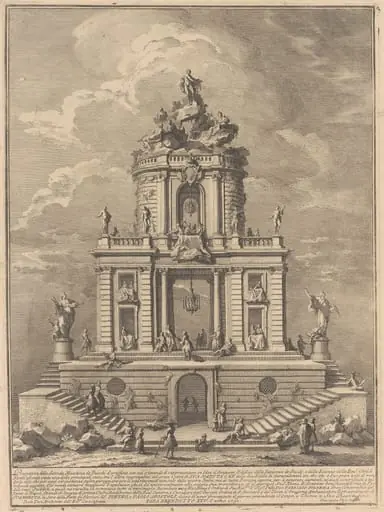 The Seconda Macchina for the Chinea of 1751: The Palace of Wisdom, Studies, and the Sciences
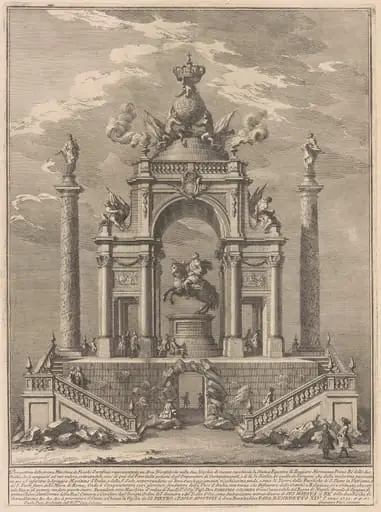 The Prima Macchina for the Chinea of 1751: Triumphal Arch for Roger I of Sicily
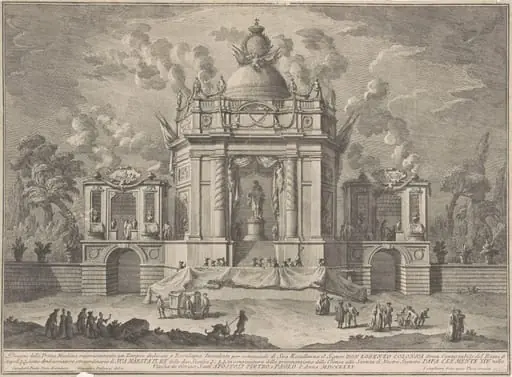 The Prima Macchina for the Chinea of 1771: The Temple of Asclepius
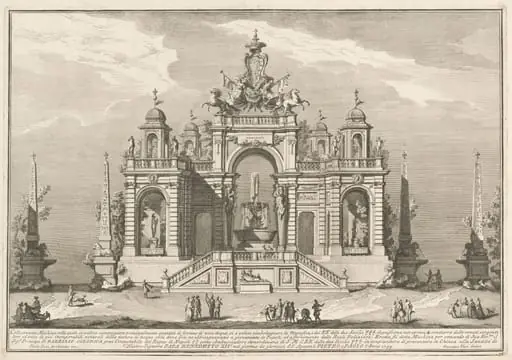 The Seconda Macchina for the Chinea of 1754: An Allegory of Waterworks
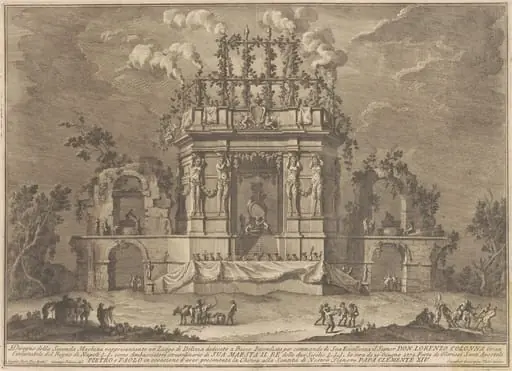 The Seconda Macchina for the Chinea of 1771: A Pleasure Palace Dedicated to Bacchus
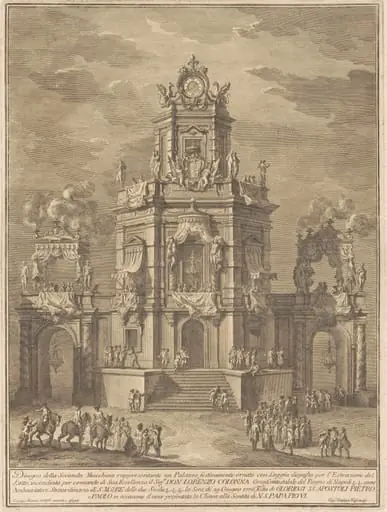 The Seconda Macchina for the Chinea of 1776: A Palace with a Loggia for the Lottery Draw
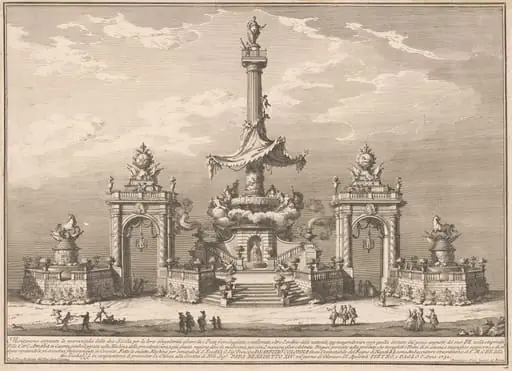 The Seconda Macchina for the Chinea of 1752: The Banquet of the Gods in Villa Carl'Amalia in Caserta
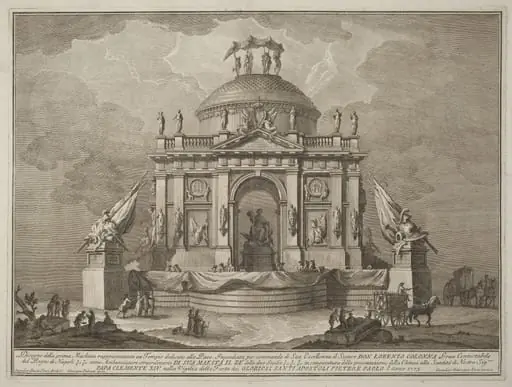 The Prima Macchina for the Chinea of 1773: The Temple of Peace
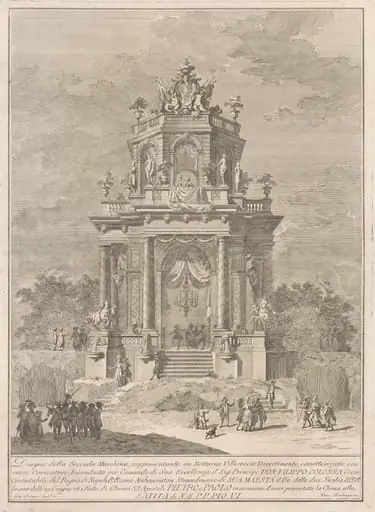 The Seconda Macchina for the Chinea of 1782: A Countryside Festival at Night