Artwork
Tablou „Omagiul Președintelui Țării”, ulei pe pânză; semnat Gheorghe Pogan și datat în partea dreaptă jos. Tabloul îi prezintă pe soții Ceaușescu întâmpinați cu flori de două personaje masculine (un miner și un petrolist), învăluiți de tricolor și steagul PCR. În dreapta lui Nicolae Ceaușescu (dreapta tabloului) trei elevi. Partea de jos a tabloului este completată cu reprezentarea Transfăgărășanului și a Canalului Dunăre - Marea Neagră. Comandat și oferit de Comitetul Județean de Partid Hunedoara (1988).
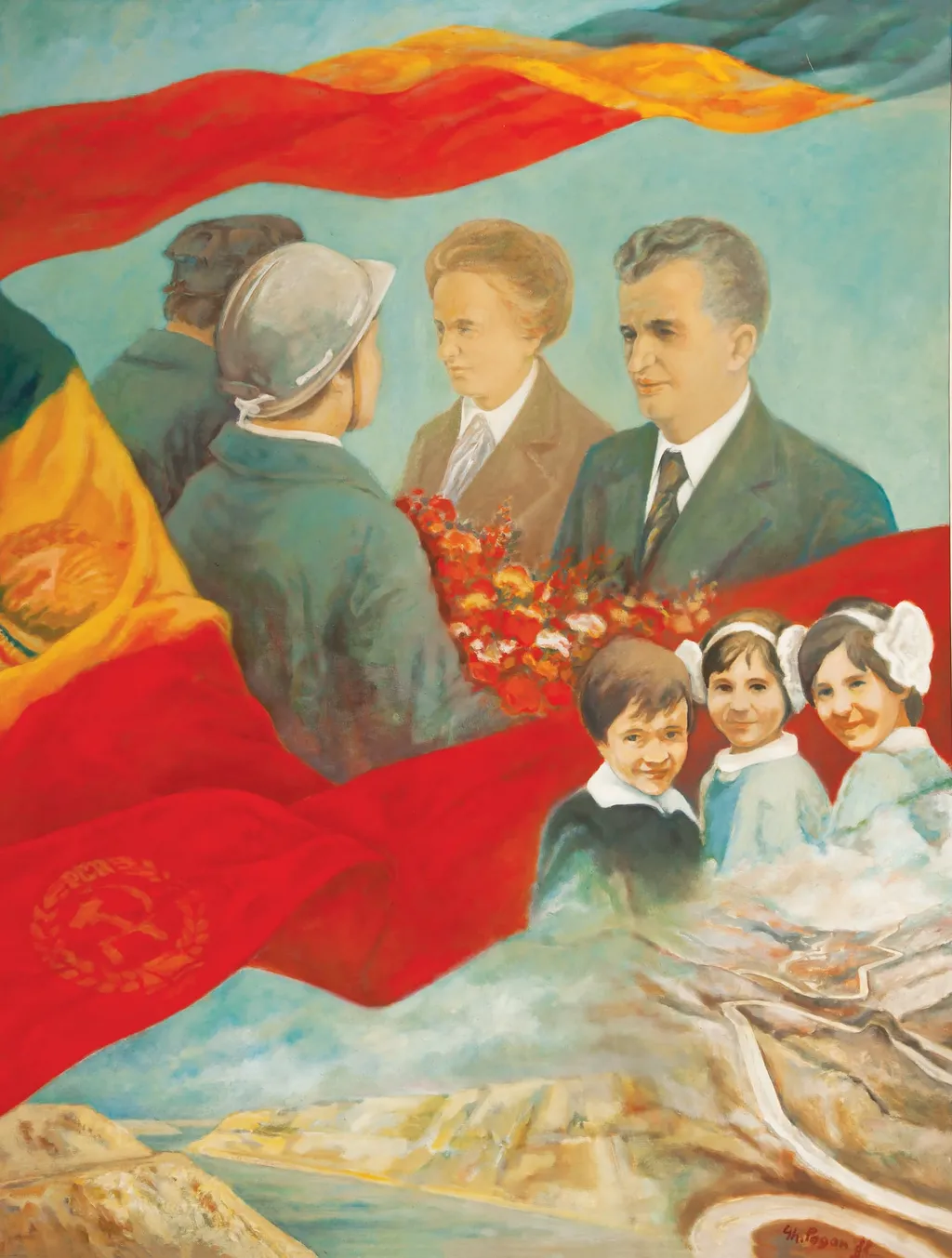
Tablou „Omagiul Președintelui Țării”, ulei pe pânză; semnat Gheorghe Pogan și datat în partea dreaptă jos. Tabloul îi prezintă pe soții Ceaușescu întâmpinați cu flori de două personaje masculine (un miner și un petrolist), învăluiți de tricolor și steagul PCR. În dreapta lui Nicolae Ceaușescu (dreapta tabloului) trei elevi. Partea de jos a tabloului este completată cu reprezentarea Transfăgărășanului și a Canalului Dunăre - Marea Neagră. Comandat și oferit de Comitetul Județean de Partid Hunedoara (1988). is a print by Gheorghe Pogan. It is held in the collection of the National Museum of Romanian History.
About this work
Overview
The oil on canvas titled “Omagiul Președintelui Țării” was painted by Gheorghe Pogan and bears his signature in the lower right corner. Commissioned by the Hunedoara County Party Committee in 1988, the work depicts a ceremonial reception of Nicolae and Elena Ceaușescu, surrounded by symbolic elements such as national colors and infrastructure motifs.
Subject & Meaning
In the composition the presidential couple is greeted by two male figures—a miner and an oil worker—who present bouquets, underscoring the regime’s claim to represent both industrial sectors. To the right of Nicolae Ceaușescu, three schoolchildren smile, reinforcing the image of popular support. The surrounding tricolor bands and the Party flag serve as visual affirmations of state authority.
Technique & Style
Pogan employs a realistic, figurative style typical of official socialist realism, with clear outlines and a relatively flat treatment of background elements. The palette is dominated by the red, white and blue of the national flag, while the foreground figures are rendered in detailed, almost photographic precision, creating a narrative clarity favored by state-sponsored art.
Context
Created during the final years of Romania’s communist regime, the painting reflects the cult of personality surrounding Nicolae Ceaușescu. The inclusion of the Transfăgărășan road and the Danube–Black Sea Canal highlights major national projects promoted as symbols of progress under the Party’s direction.
History & Provenance
The artwork was ordered and presented by the Hunedoara County Party Committee in 1988, likely intended for display in a local party venue or public building. Its subsequent whereabouts after the 1989 revolution are not documented in the available sources.
Artist & collection
Artist
Gheorghe Pogan worked in 1980s Romania, where every public wall got a paint job with the same smiling faces.

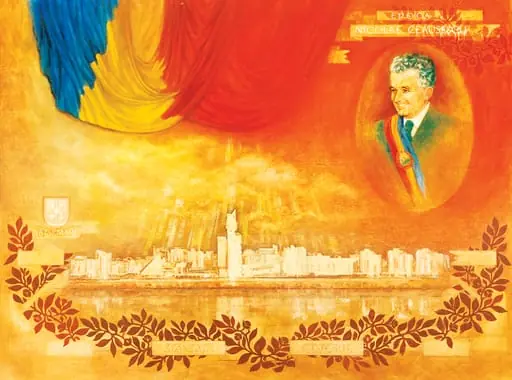 Tablou, ulei pe pânză, „Epoca Ceaușescu – Omagiu” semnat A. Cordea și datat 1986 în partea dreaptă jos. Tabloul îl prezintă pe Nicolae Ceaușescu în medalion dreapta sus privind zâmbitor la orașul Satu Mare scăldat de lumina soarelui, soarele reprezentat de tricolor și steagul PCR. Deasupra medalionului este notat cu majuscule ”EPOCA NICOLAE CEAUȘESCU”. În partea stângă stema județului Satu Mare. În partea de jos o ghirlandă, printre ramurile ei mesajul ”MĂREAȚĂ CTITORIE”. Comandat de Comitetul Județean de Partid Satu Mare (1986)
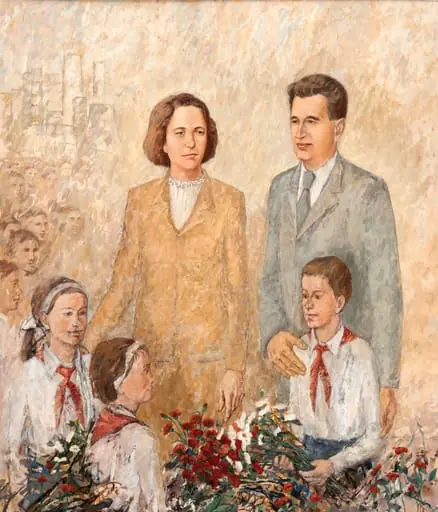 Tablou ulei pe pânză, „Omagiu”, semnat M.B, I.Ș. (atribuit Mircea Bejgu, Ion Șincă), datat 1984 în partea dreaptă jos. Elena și Nicolae Ceaușescu alături de pionieri. Comandat și oferit de Comitetul Județean de Partid Argeș (1984).
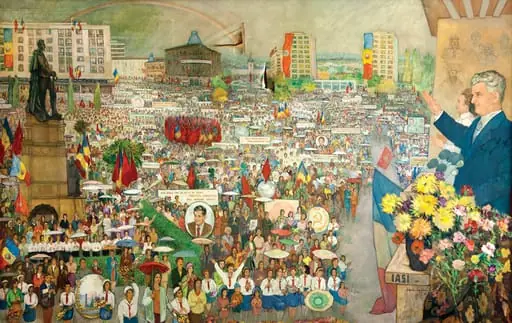 Tablou ”Mitingul din Piața Unirii din Iași de la 15 septembrie 1980”, semnat Costache Agafiței și datat în partea dreaptă jos. Tabloul îi înfățișază pe Elena și pe Nicolae Ceaușescu la balcon salutând mulțimea adunată în Piața Unirii din Iași. Comandat de Comitetul Județean de Partid Iași și dăruit soților Ceaușescu în octombrie 1981.
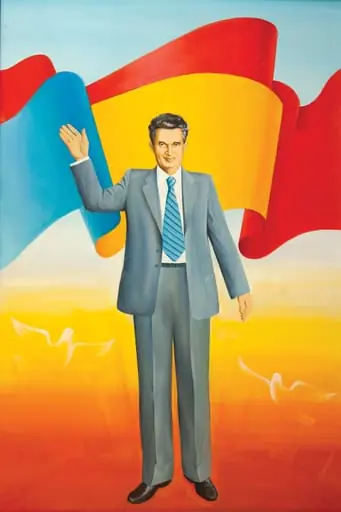 Tablou „ Ceaușescu Pace”, semnat M. Ceacîru și datat dreapta jos. Tabloul îl prezintă pe Nicolae Ceaușescu salutând, în spatele său flutură tricolorul și stegul PCR, în stânga și în dreapta sa doi porumbei albi în zbor.Comandat de Comitetul Județean de Partid Neamț (1989)
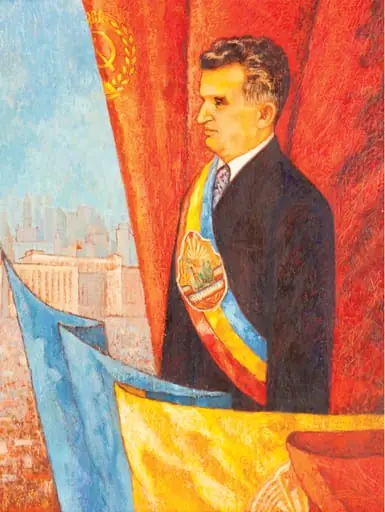 Tablou, ulei pe pânză, „Nicolae Ceaușescu, întâiul președinte al României”, semnat C.Aurel și datat 1974 în partea dreaptă jos. Nicolae Ceaușescu purtând banderolă tricoloră cu stema R.S.R., stând la balcon primind ovații din partea oamenilor muncii adunați într-o piață. În spatele său, steagul cu sigla PCR. Tablou oferit de către autor originar din Câmpina (Prahova), 19 august 1974.
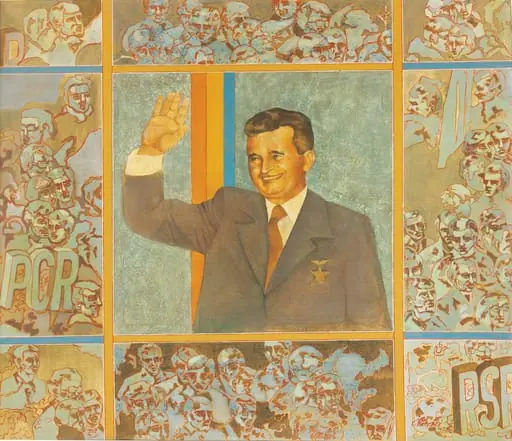 Tablou, ulei pe pânză, „Portret Nicolae Ceaușescu”, semnat în partea dreaptă jos C.Macavei și datat 1978. Tablou împărțit în mai multe registre, în plan central Nicolae Ceaușescu salutând oamenii muncii din celelalte registre. Comandat și oferit de Comitetul Județean de Partid Ilfov, 23 ianuarie 1978.
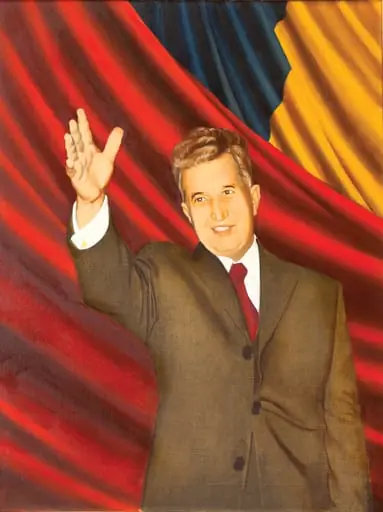 Tablou, ulei pe pânză, „Salutul președintelui”, atribuit lui Viorel Toma, nedatat. Nicolae Ceaușescu este reprezentat în centrul tabloului salutând, pe fundal steagul PCR și cel al RSR. Comandat și oferit de Comitetul Județean de Partid Timiș (1985).
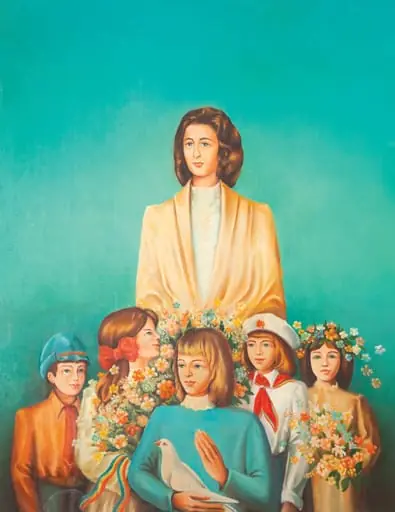 Tablou, ulei pe pânză, „Elena Ceușescu cu un grup de copii”, nesemnat, atribuit Constantin Oprea. Elena Ceaușescu este prezentată înconjurată de copii, șoimi ai patriei, pionieri. Autorul tabloului o înfățișează pe Elena Ceaușescu ca pe o profesoară, o îndrumătoare a tinerei generații. Comandat și oferit de Comitetul Județean de Partid Caraș Severin (1984).
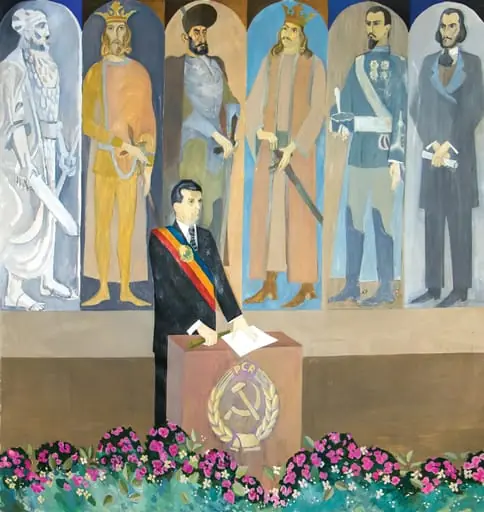 Tablou, ulei pe pânză, ”Omagiu”, semnat Constantin Piliuță. Nicolae Ceaușescu la un pupitru cu însemnele PCR depunând jurământul de învestire; poarte însemnele prezidențiale eșarfa tricoloră cu stema RSR, sceptrul, însemnul de ”Erou al Republicii Socialiste România”. Pe fundal sunt reprezentați Burebista, Mircea cel Bătrân, Mihai Viteazul, Ștefan cel Mare, Alexandru Ioan Cuza, Nicolae Bălcescu, personajele au o mimică solemnă, dau impresia că sunt garanții jurământului pe care-l face Nicolae Ceaușescu. Comandat și oferit lui Nicolae Ceaușescu de Consiliul Culturii și Educației Socialiste, ianuarie 1978.
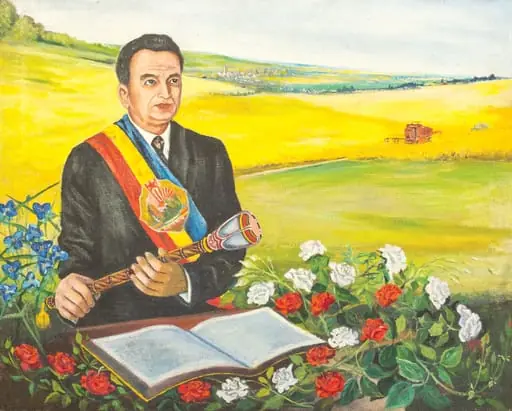 Tablou, ulei pe pânză, ”Nicolae Ceaușescu, președinte”, nesemnat, atribuit I.C. Popescu - Stolojan. Nicolae Ceaușescu este prezentat în momentul învestirii în funcția de președinte al Republicii Socialiste România. Poartă însemnele funcției eșarfa tricoloră, sceptrul prezidențial. Sala Marii Adunări Naționale a fost înlocută cu un fundal agricol - un lan de grâu treierat de o combină. Pupitrul este decorat cu trandafiri și iriși. Oferit de autor, 1976.
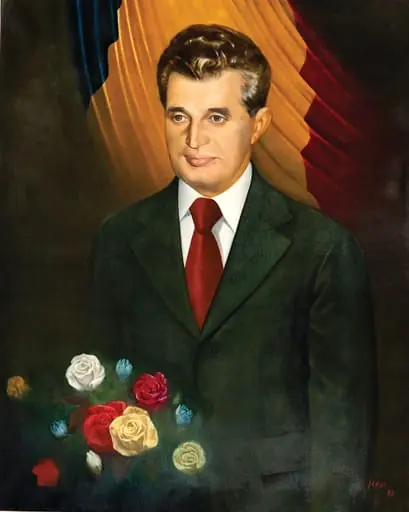 Tablou ulei pe pânză, portret Nicolae Ceaușescu semnat Ispas și datat în partea dreaptă jos. Este prezentat într-o postură solemnă cu un buchet de trandafiri, în spatele său tricolorul. Culorile drapelului se regăsesc și în coloritul trandafirilor. Comandat de Comitetul Județean de Partid Alba (1983).
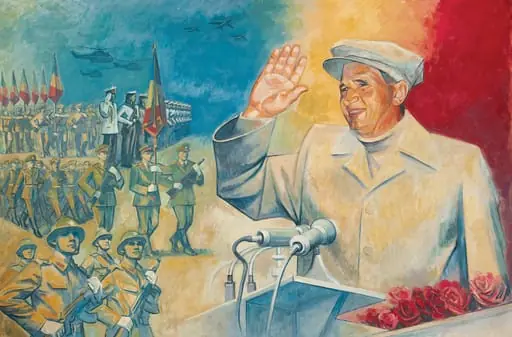 Tablou ulei pe pânză „Onor comandantului suprem”, semnat stânga jos în monogramă C.M., atribuit lui Maricel Chițac, nedatat. Tabloul îl prezintă pe ”comandantul suprem”, Nicolae Ceaușescu, la tribună primind onorul din partea aviației, trupelor de uscat și a marinei. Pe fundal tricolorul. Tablou comandat și oferit de Ministerul Apărării Naționale lui Nicolae Ceaușescu cu ocazia aniversării zilei de naștere (ianuarie 1989).
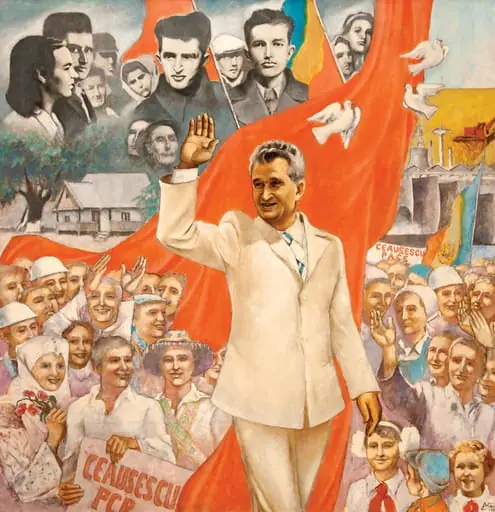 Tablou „Eroul României Socialiste” , semnat și datat în dreapta jos ”Constantin Nițescu 1988”. Comandat de Comitetul Județean de Partid Olt și oferit cadou lui Nicolae Ceaușescu la împlinirea vârstei de 70 de ani (ianuarie 1988).
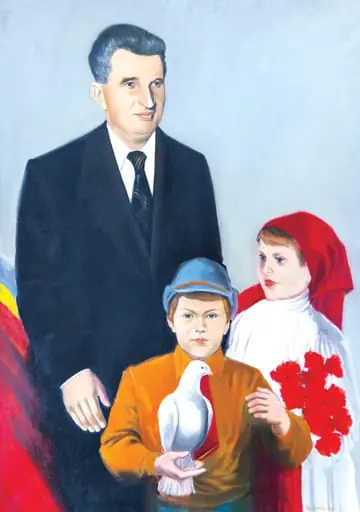 Tablou, ulei pe pânză, „Mesajul României”, semnat Nicolae Costachi în partea dreaptă jos și datat 1984. Nicolae Ceaușescu alături de doi copii, o fată îmbrăcată în costum popular ținând în mâini un buchet de garoafe roșii și un băiat în uniformă de șoim al patriei cu un porumbel alb în palma dreaptă. Comandat și oferit de Comitetul Județean de Partid Bistrița Năsăud (1985).
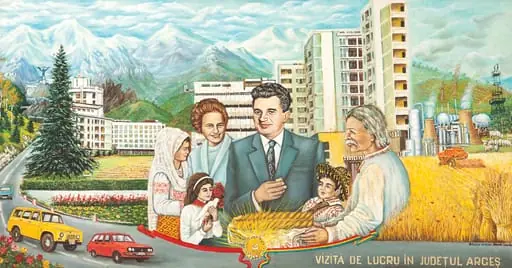 Tablou ”Vizită de lucru în Județul Argeș”, semnat artist amator Manda Vasile. În centru Nicolae și Elena Ceaușescu primind omagiul locuitorilor județului. Tabloul redă imaginea economiei argeșene în care se află fabrica de automobile ”Dacia” de la Colibașu și cea de autoturisme ”ARO” de la Câmpulung. Oferit de Comitetul Județean de Partid Argeș (1982).
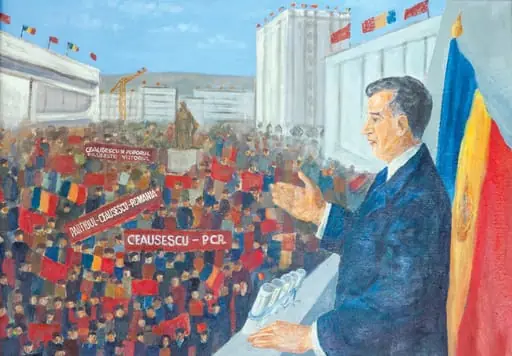 Tablou, ulei pe pânză, „Adunarea populară din Vaslui, iulie 1975”. Realizat de Cercul de Artă Plastică „Arta Vaslui”. Nicolae Ceaușescu vorbește de la balcon oamenilor muncii adunați în centrul civic din Vaslui. Se distinge statuia lui Ștefan cel Mare. Oamenii muncii flutură steaguri și pancarte (”Ceaușescu PCR”, ”Partidul - Ceaușescu - România”, ”Ceaușescu și Poporul Făurește Viitorul”. Oferit de Comitetul Județean de Partid Vaslui, 23 ianuarie 1978.
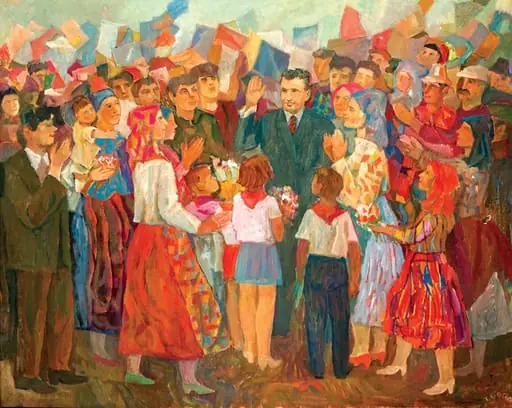 Tablou, ulei pe pânză, „Moment de sărbătoare bihoreană”, semnat T. Goga în partea dreaptă jos. Nicolae Ceaușescu este reprezentat în mijlocul oamenilor munci și al tinerilor din județul Bihor care-l întâmpină cu flori și aplauze. Comandat de Comitetul Județean de Partid Bihor,oferit lui Nicolae Ceaușescu în ianuarie 1978.
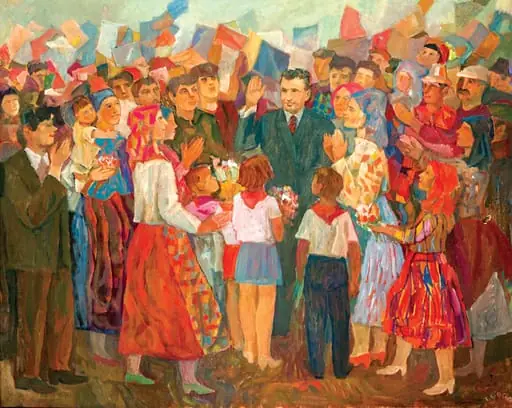 Tablou, ulei pe pânză, „Moment de sărbătoare bihoreană”, semnat în partea dreaptă jos T. Goga. Nicolae Ceaușescu este prezentat în mijolocul oamenilor muncii, bărbați si femei îl înconjoară, pionierii îi oferă flori în semn de bun venit. Oferit de Comitetul Județean de Partid Bihor, 22 ianuarie 1978.