Artwork
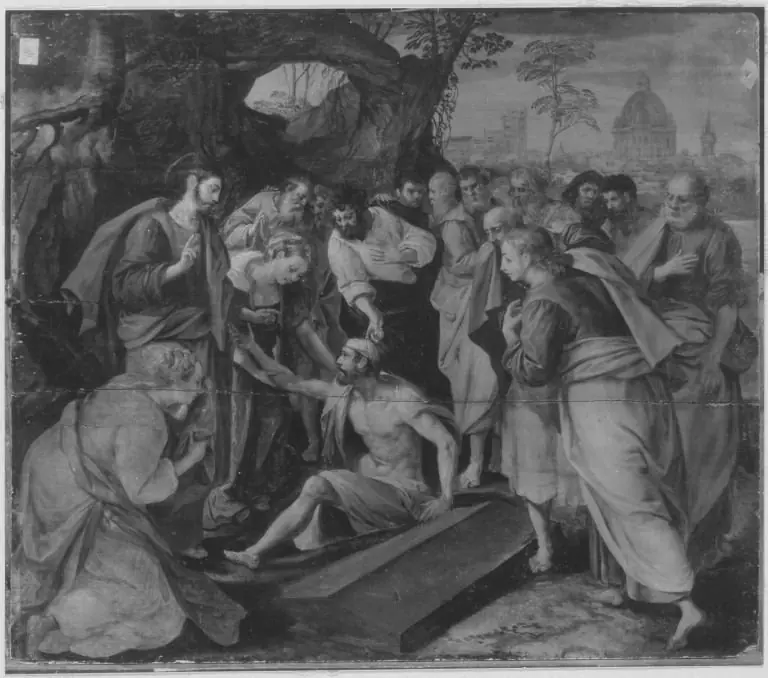
Hendrik IV van Castilië en zijn dochter vinden genezing aan de heilige Didacus' graf
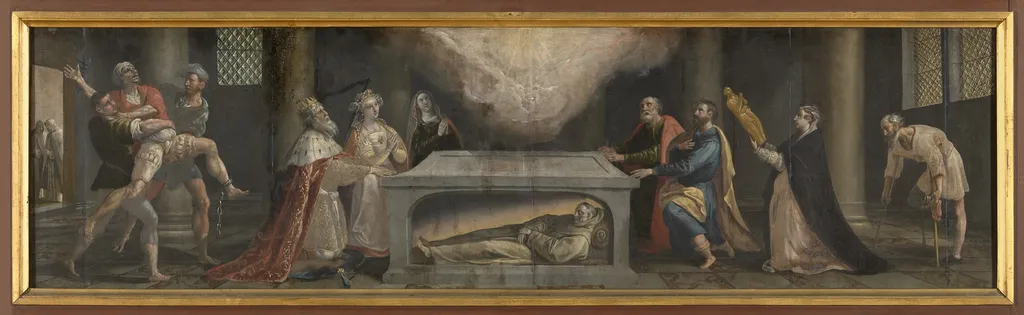
Hendrik IV van Castilië en zijn dochter vinden genezing aan de heilige Didacus' graf is an oil painting by the Flemish Baroque painting artist Maerten de Vos. It dates from 1598 and is held in the collection of the Royal Museum of Fine Arts Antwerp.
About this work
Overview
The painting is held in the Royal Museum of Fine Arts Antwerp, reflecting its significance in regional ecclesiastical art collections of the era.
Painted in 1598 by Maerten de Vos, this oil-on-panel work illustrates a devotional scene from the legend of Saint Didacus of Alcalá. De Vos, a prominent Antwerp artist of the late Renaissance, produced this piece during a period when religious imagery remained central to Flemish art despite the upheavals of iconoclasm. The painting is held in the Royal Museum of Fine Arts Antwerp, reflecting its significance in regional ecclesiastical art collections of the era.
Subject & Meaning
The scene portrays King Henry IV of Castile and his daughter seeking healing at the tomb of Saint Didacus, a 15th-century Spanish Franciscan lay brother revered for miracles. The king, shown supporting a sick man, and the woman in white, likely his daughter, kneel in supplication. The body on the table suggests a recent death, reinforcing the theme of divine intervention. The narrative underscores faith as a conduit for redemption, aligning with Counter-Reformation ideals of saintly intercession.
Technique & Style
De Vos employs oil paint with meticulous attention to fabric texture, facial expression, and architectural detail. The composition is structured around a central tomb, flanked by figures arranged in a semi-circle to guide the viewer’s gaze. Colors are subdued—ochres, grays, and muted browns—creating a solemn atmosphere. Lighting is soft and diffused, enhancing the quiet gravity of the moment without theatrical exaggeration.
History & Provenance
Commissioned during a time when religious art still held institutional support in the Southern Netherlands, the painting likely originated in a private or ecclesiastical context before entering public collection. It was documented in Antwerp’s artistic circles by the late 16th century and remained in regional hands, eventually being acquired by the Royal Museum of Fine Arts Antwerp, where it has been preserved since the 19th century.
Context
Created shortly after the Beeldenstorm, when religious imagery was under threat, this work reflects a revival of Catholic devotional painting in Flanders. De Vos’s style bridges late Mannerism and early Baroque, favoring clarity and emotional restraint over dynamism. The choice of Saint Didacus—a lesser-known Spanish saint—suggests a connection to Habsburg patronage, as Castilian royalty were closely tied to the Spanish crown under Philip II.
Legacy
Though not widely reproduced, the painting exemplifies the persistence of narrative religious art in post-iconoclastic Flanders. De Vos’s ability to convey spiritual gravity through restrained composition influenced later Antwerp painters. The work remains a quiet testament to the enduring role of saints’ cults in early modern devotional life, preserved as a historical artifact rather than a celebrated icon.
Artist & collection
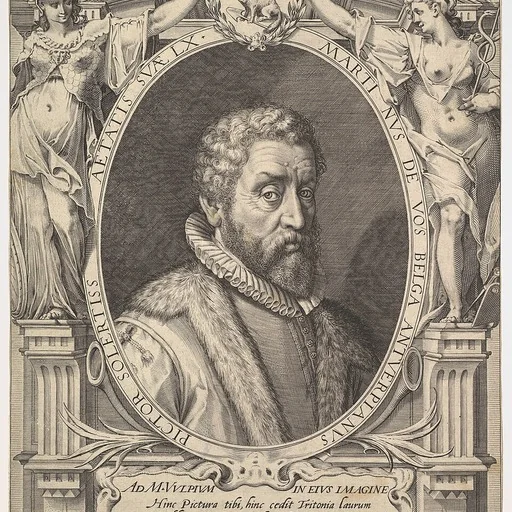
Artist
Maerten de Vos, Maerten de Vos the Elder or Marten de Vos (1532 – 4 December 1603) was a Flemish painter, known mainly for his history and allegorical paintings and portraits.

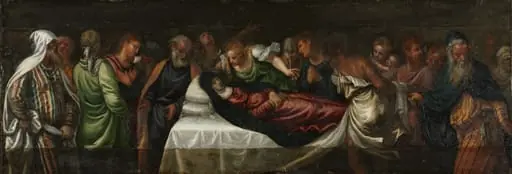 Death of the Virgin
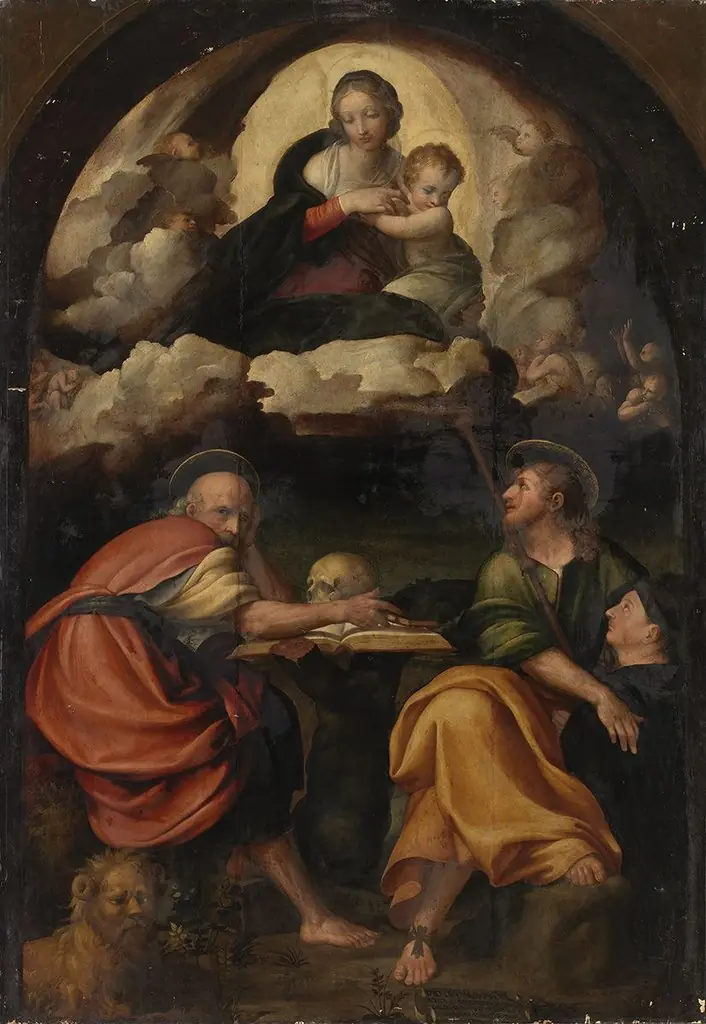 Maria mit Kind in der Glorie, den hll. Hieronymus und Jakobus mit Stifter (?)
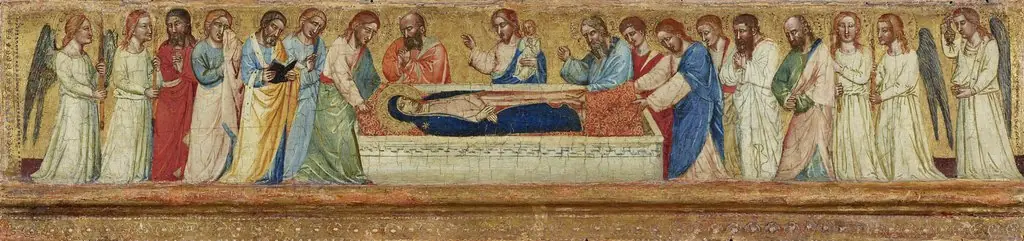 Entombment of Mary
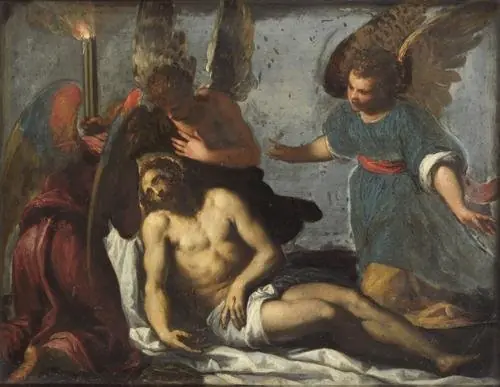 Lamentation with angels
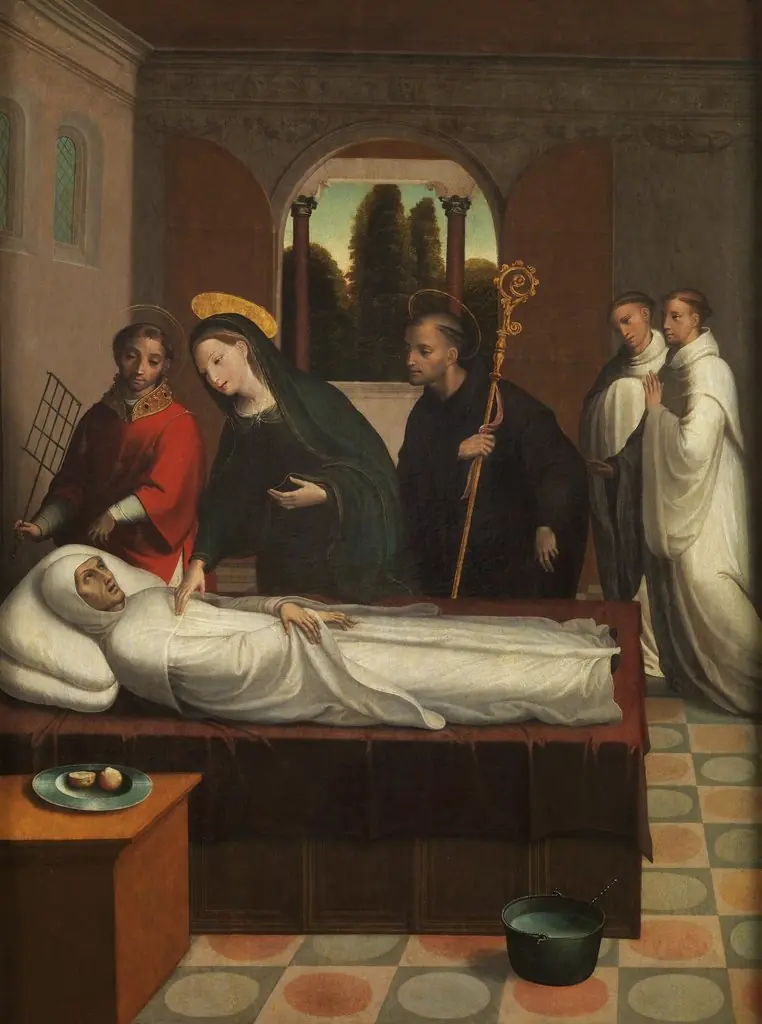 The Death of Saint Bernard
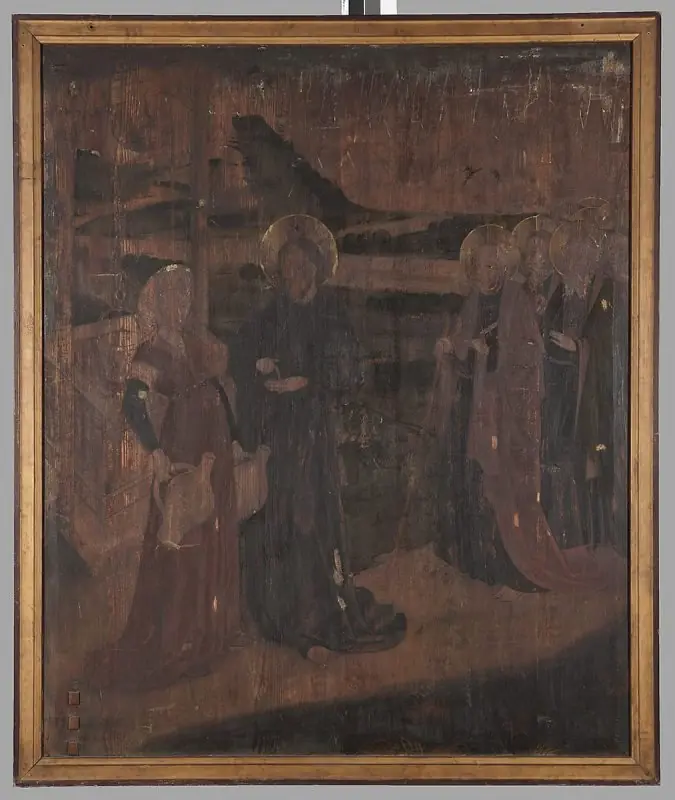 Legnica polyptych - right wing external - upper panel - obverse: St Barbara, St Catherine, St Dorothy; reverse: Christ and the Samaritan
 Death of Saint Didacus
 Saint Charles Borromeo attending to the ill
 Calvary Amongst Portraits
 Assunção da Virgem Maria - Frei Carlos
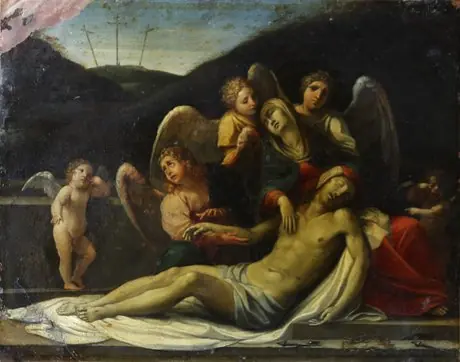 Lamentation of Christ
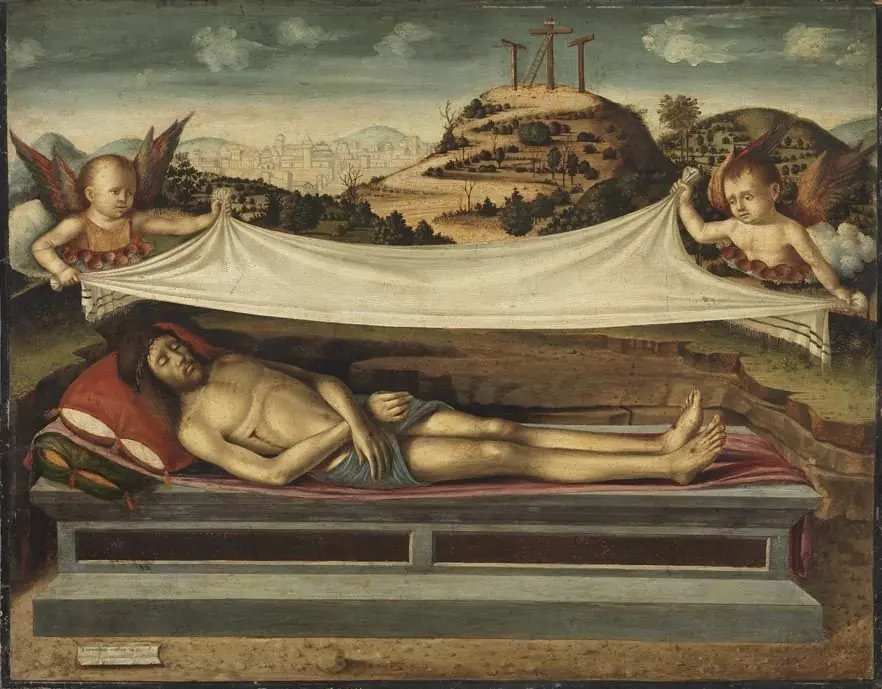 Lamentation of Christ