Artwork
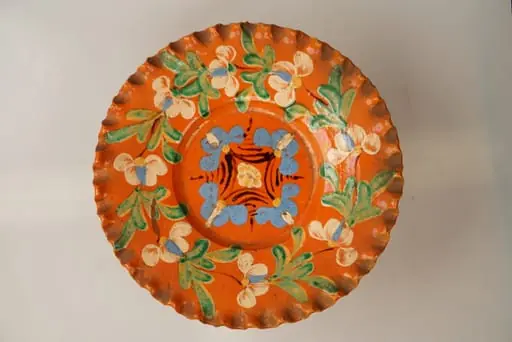
Vas de formă rotundă, smălțuit în interior și exterior, decorat pe suprafața interioară prin pictare manuală astfel: central, un motiv floral reprezentând buchetul cu flori; pe margine, motive florale dispuse circular (trandafiri și albăstrele). Pe fundul vasului este prezentă marca manufacturii din Hollóháza (inscripția Magyar. Gyártmányi 10 și casa cu corb). Cromatică: alb, albastru, verde, galben, roșu.
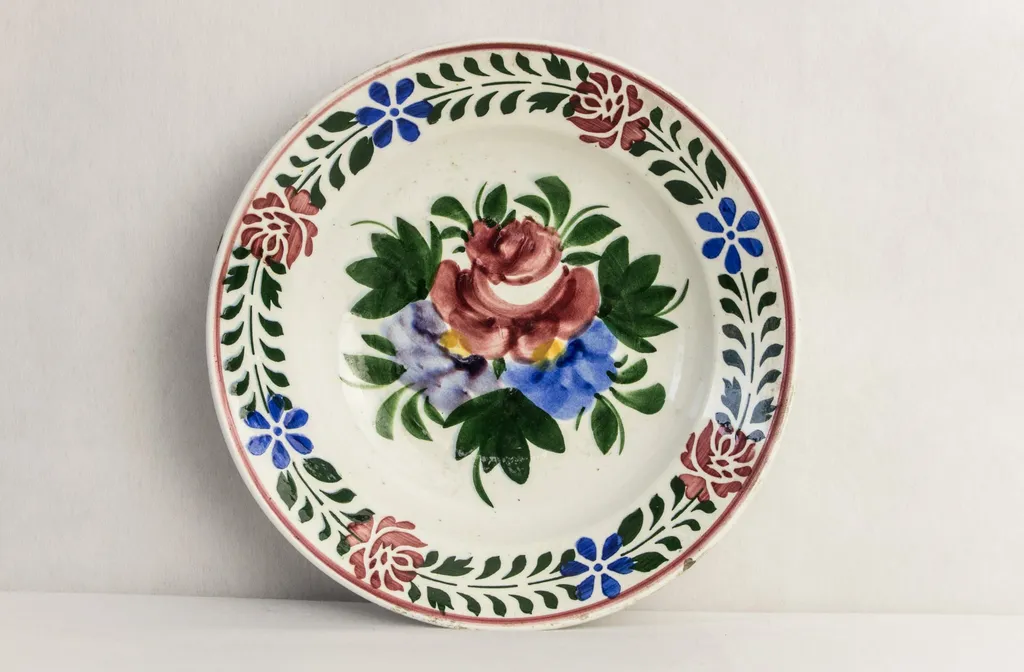
Vas de formă rotundă, smălțuit în interior și exterior, decorat pe suprafața interioară prin pictare manuală astfel: central, un motiv floral reprezentând buchetul cu flori; pe margine, motive florale dispuse circular (trandafiri și albăstrele). Pe fundul vasului este prezentă marca manufacturii din Hollóháza (inscripția Magyar. Gyártmányi 10 și casa cu corb). Cromatică: alb, albastru, verde, galben, roșu. is a photography by Magyar. Gyártmányi. It is held in the collection of the Gavrila Simion Eco-Museum Research Institute Tulcea. A round, glazed ceramic vessel with interior and exterior surfaces painted by hand.
About this work
Overview
A round, glazed ceramic vessel with interior and exterior surfaces painted by hand. The piece features a central floral bouquet surrounded by a circular band of smaller blossoms and foliage. The design employs a palette of white, blue, green, yellow, and red, with a bold red rim framing the composition. A manufacturer’s mark on the base identifies its origin as the Hollóháza factory in Hungary.
Subject & Meaning
The decoration centers on a naturalistic floral arrangement, combining roses and cornflowers with stylized leaves. These motifs reflect a broader 19th-century European interest in botanical precision and ornamental harmony. The circular layout suggests continuity and renewal, aligning with traditional decorative motifs used in domestic ceramics to evoke seasonal abundance and quiet elegance.
Technique & Style
The precision of the lines and the evenness of the glaze indicate skilled craftsmanship typical of industrial ceramic workshops of the period.
Hand-painted over a glazed white slip, the design uses fine brushwork to render delicate petals and stems. Colors are applied in translucent layers, allowing subtle gradations of pink, blue, and green to emerge. The red border is sharply defined, contrasting with the softer interior palette. The precision of the lines and the evenness of the glaze indicate skilled craftsmanship typical of industrial ceramic workshops of the period.
History & Provenance
Produced at the Hollóháza porcelain manufactory in Hungary, the piece bears the factory’s mark: 'Magyar. Gyártmányi 10' alongside a house-and-raven symbol. This mark was used between the 1870s and early 1900s. The factory specialized in decorative wares for domestic use, blending folk-inspired motifs with European ceramic traditions. This vessel likely served as a table or display piece in middle-class Hungarian households.
Context
This vessel reflects the rise of industrial ceramic production in late 19th-century Hungary, where factories sought to merge folk art traditions with mass production. The floral motifs echo both Central European embroidery patterns and the broader Art Nouveau fascination with nature. While not avant-garde, such pieces represented accessible luxury, bridging artisanal aesthetics with emerging consumer culture.
Legacy
Pieces from the Hollóháza manufactory are preserved in Hungarian ethnographic and decorative arts collections. Though not widely known internationally, they document a period when regional ceramic workshops contributed to national identity through design. The persistence of the factory’s mark on surviving examples underscores its role in standardizing quality and origin during Hungary’s industrial expansion.
Artist & collection
Artist
This Hungarian studio from Hollóháza made colorful, hand-painted ceramics in the 19th century.
Museum
Gavrila Simion Eco-Museum Research Institute Tulcea
Continue through works from the same source collection.
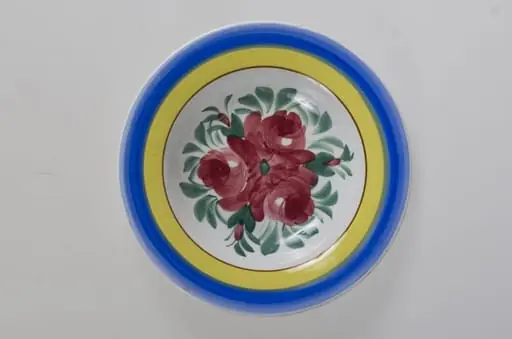 Farfurie de formă tronconică, adâncită; motive florale în centru (trandafiri); pe margine este decorat cu trei cercuri concentrice. Pe fund este o ștanță: o casă cu o pasăre pe acoperiș cu inscripție deasupra: ”MAGYAR” și dedesubt: ”1971” și un cuvânt indescifrabil. Pe fundul vasului sunt două incizii în care este introdus un șnur folosit la agățarea vasului pe perete. Vasul este smălțuit interior-exterior. Decor obținut prin pictare. Cromatică: fond: alb, motive: roșu; verde; albastru; galben.
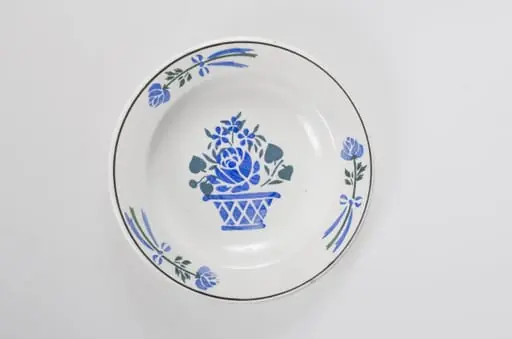 Vas tronconic și adânc realizat din porțelan. Pe fondul alb, central se află un coș albastru (realizat din motive geometrice: romuri și triunghiuri încadrate de două linii) cu un trandafir și trei floricele: pe marginimea farfuriei se observă trei secvențe cu trandafiri legate cu o fontiță. Marginea vasului este decorată cu un cerc. Cromatică: alb; motive: albastru; verde; negru.
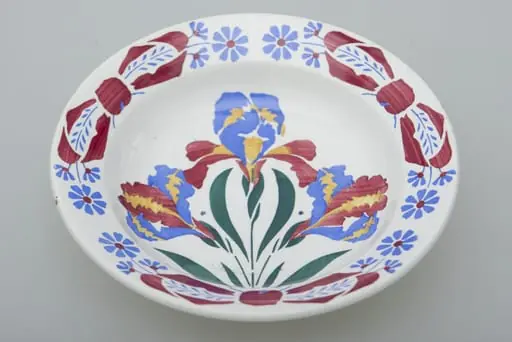 Farfurie de formă tronconică, ușor adâncită. Există două registre ornamentale, unul plasat de jur împrejurul buzei cu motive florale. Al doilea registru plasat în centru tot cu motive florale. Smălțuită. Cromatică: fond: alb; motive: albastru; verde; roșu; galben.
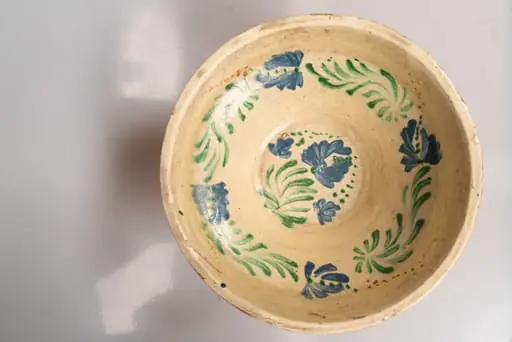 Vas de tip castron, cu corp de formă tronconică și buză lată, dreaptă. Piesa este modelată la roata olarului și angobată cu humă albă pe fața interioară. Decorul este realizat prin pictare cu pensula și constă în motive decorative florale stilizate (central, pe fundul farfuriei este pictată o tulpină cu frunze verzi și trei flori albastre, cea centrală mai mare, celelalte două, laterale, mai mici; pe peretele vasului sunt pictate patru flori albastre cu elemente fitomorfe între ele, formând o ghirlandă continuă). Cromatica: alb, verde, albastru, galben-ocru. Fața ornamentată a piesei este acoperită cu un strat de smalț transparent. Pe exteriorul farfuriei, în zona buzei, este realizat prin sgrafitare un decor dintr-o linie ondulată între două linii sub formă de cerc.
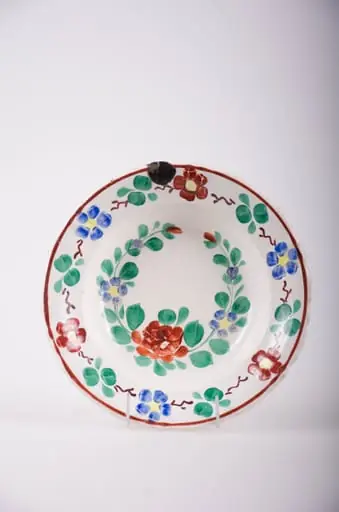 Farfurie de porțelan smălțuită pe fond alb. Decorată cu flori și frunze dispuse sub formă de ghirlande atât în centrul vasului cât și pe buza acestuia. De asemenea sunt prezente și motive geometrice: linia și linii întrerupte. Comatică: fond: alb; motive: verde; albastru; galben; roșu.
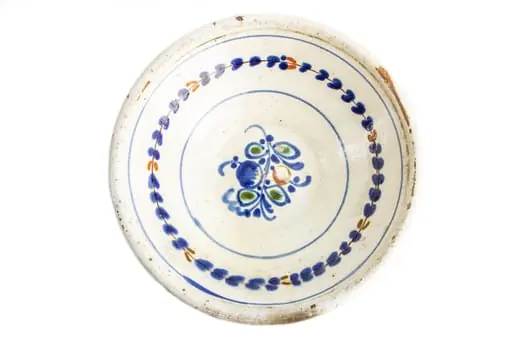 Formă tronconică; fond alb; culori: albastru, verde, cărămiziu; în centrul farfuriei este amplasat un buchet din flori albastre și una de culoare cărămizie, cu frunze verzi, înscris într-un cerc de culoare albastră. Pe perete este amplasat un vrej circular cu frunze albastre și cîteva de culoare cărămizie. Sub buză este dispus un cerc albastru.
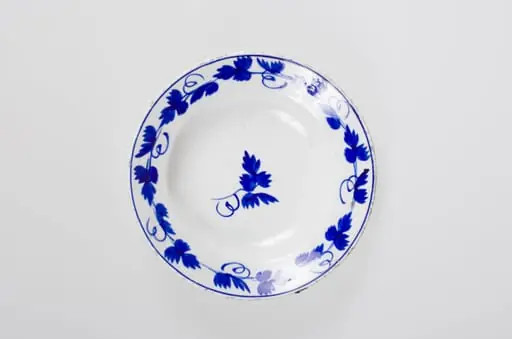 Obiect de uz casnic de formă tronconică. Pe fond alb se regăsește un ornament albastru: central două frunze de viță de vie. Pe margine farfuria este decorată cu frunze de viță de vie cu vrej și cu un cerc albastru. Cromatică: fond: alb; motive: albastru.
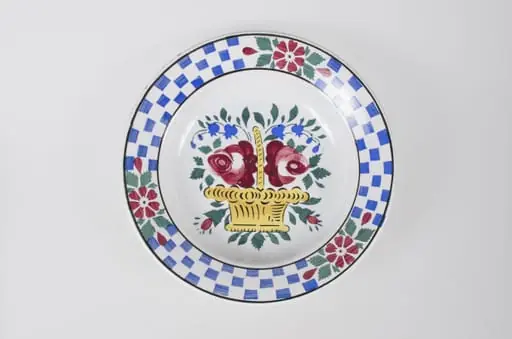 Vas de formă tronconică, adâncă. Pe fundul farfuriei se află un ornament format din: un coș de flori (trandafiri și clopoței). Pe marginea farfuriei între două cercuri concentrice apar trei flori despărțite de trei registre în formă de tablă de șah realizate din dreptunghiuri albastre. Cromatică: fond: alb; motive: galben; roșu; verde; albastru; negru.
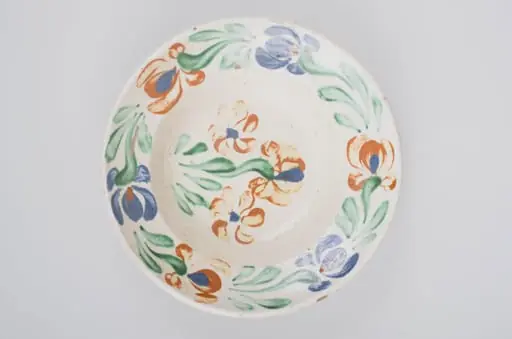 Farfurie cu fundul adâncit și buza evazată. Smălțuită numai în interior și scurgeri de smalț sub buză. Prezintă găuri pentru prinderea aței în vederea agățării. Decorată cu motive florale: central are trei flori iar pe margine un chenar floral. Cromatică: fond: alb; motive: maro; verde; albastru.
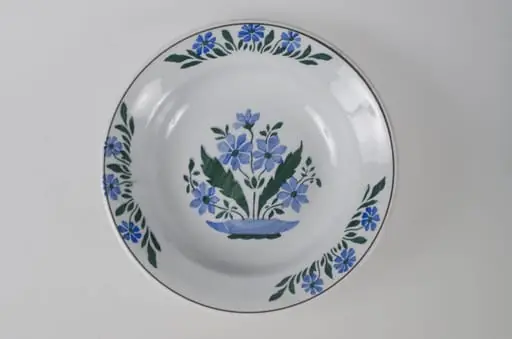 Vasul are formă tronconică, adâncită și este decorat cu motive florale dispuse în trei registre a câte trei flori pe margine, încadrate de o linie; în centru este decorat cu flori și frunze. Pe fund are trei cercuri concentrice care profilează trei registre. Vas evazat în partea superioară. Smălțuit interior-exterior. Cromatică: fond: alb; motive: verde; albastru; negru.
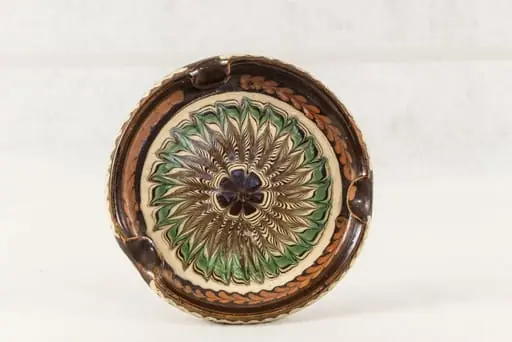 Vas de formă rotundă, smălțuit în interior, cu o buză ușor înălțată, teșită în trei locuri, decorat pe suprafața interioară prin tehnica jirăvitului cu gaița, cu motivele floarea, coada de cocoș și spicul de grâu. Pe marginea exterioară apare motivul vălurelul (șalul). Cromatică: negru, verde, alb, maro, cărămiziu.
 Farfurie de formă aplatizată, cu muchia buzei ondulată; suprafața interioară a farfuriei este acoperită cu un strat de angobă roșie peste care este pictat cu pensula decorul format din motive florale dispuse astfel: centrul farfuriei conține patru flori albastre cu mijlocul alb, dispuse în colțurile unui romb format din linii maro, având în centru o floare mică albă. Registrul decorativ de pe buza farfuriei este decorat cu o ghirlandă continuă dispusă circular, formată din flori cu petale albe și centru albastru, cu tulpină subțire maro și frunze verzi. Duprafața ornamentată a farfuriei este acoperită cu un strat de smalț transparent. Cromatica: roșu, alb, albastru, verde.