Artwork
Die kleine Post (The Small Post)
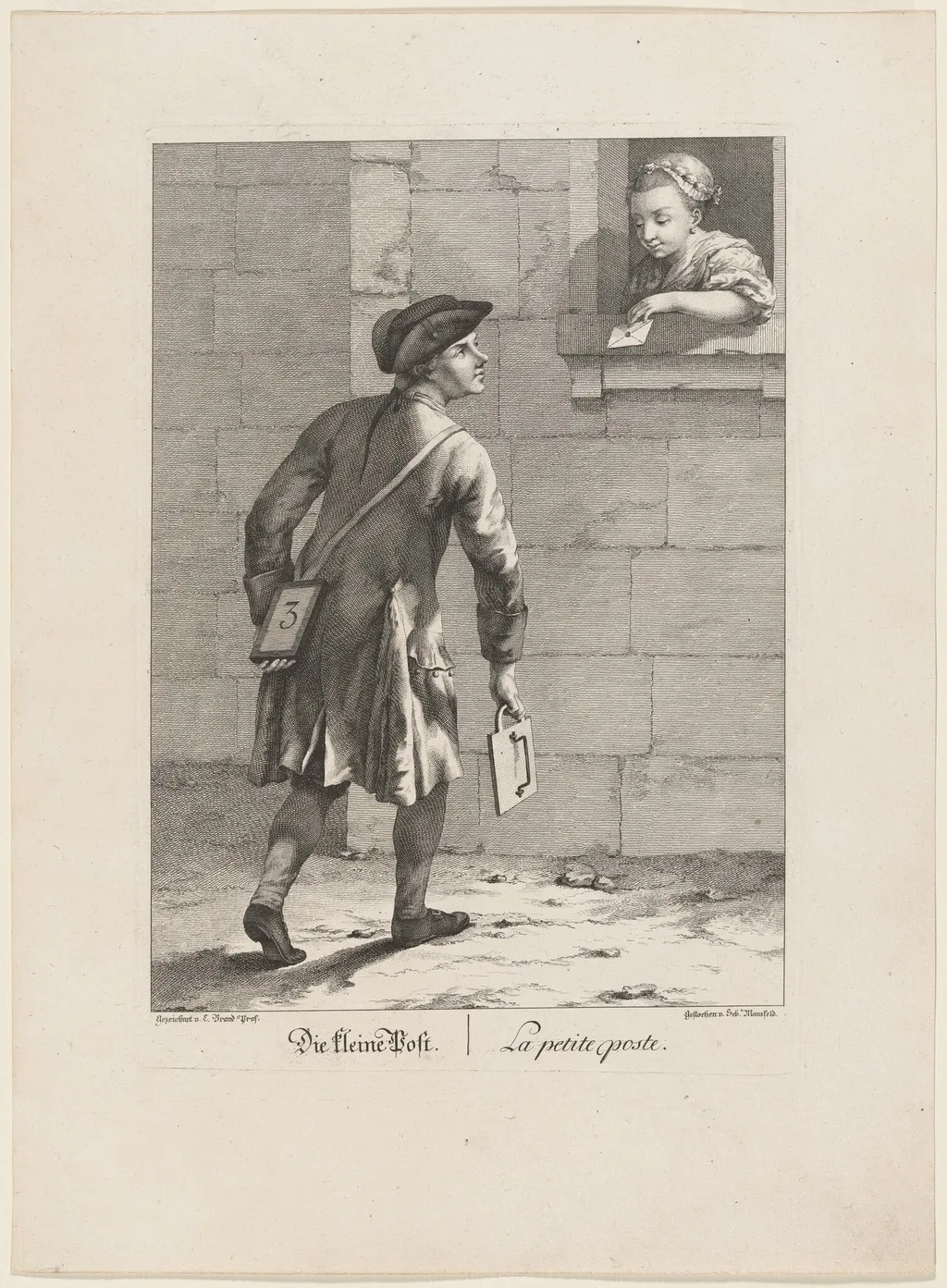
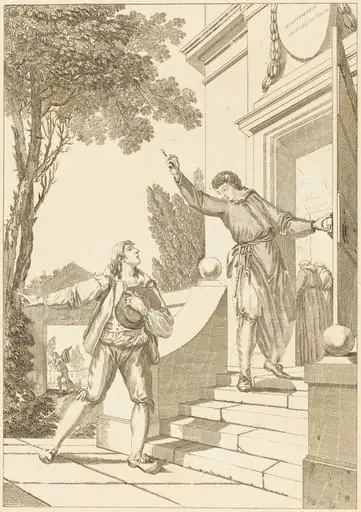
Die kleine Post (The Small Post) is an ink print by the Romanticist artist Sebastian Mansfeld. It dates from 1775 and is held in the collection of the National Gallery of Art.
About this work
Overview
The medium’s precision allows for subtle tonal gradations and fine detail, characteristic of printmaking techniques of the period.
Die kleine Post, created in 1775 by Sebastian Mansfeld, is a printed work combining engraving and etching on laid paper. It depicts a quiet moment of daily life in 18th-century Germany, centered on the delivery of correspondence. The composition captures a solitary figure approaching a residential building, engaged in an ordinary yet essential civic task. The medium’s precision allows for subtle tonal gradations and fine detail, characteristic of printmaking techniques of the period.
Subject & Meaning
The scene portrays a postal worker, dressed in period attire, carrying a labeled wooden box and a leather pouch, likely containing letters or small parcels. Above him, a young woman leans from a window, extending a letter downward. The interaction suggests a personal exchange within the framework of a formal delivery system. The title, 'The Small Post,' underscores the modest scale of this service, distinguishing it from official or institutional mail networks.
Technique & Style
Mansfeld employed engraving for sharp, controlled lines and etching to achieve softer, atmospheric effects. The textures of fabric, wood, and stone are rendered through meticulous hatching and cross-hatching, while the window frame and architectural details are defined with delicate etched lines. The contrast between the grounded figure and the elevated figure in the window adds depth and narrative tension, demonstrating the artist’s command of spatial composition within a small format.
History & Provenance
The print was produced in 1775 during a period when private and municipal postal services were expanding across German-speaking regions. While no documented early ownership records are widely known, the work aligns with a growing interest in scenes of everyday life among printmakers of the late Enlightenment. It likely circulated as a standalone image or in collections of genre prints, reflecting contemporary curiosity in civic routines.
Context
In the late 18th century, postal systems in Europe were becoming more accessible to the middle class, transforming communication beyond elite circles. Mansfeld’s image captures this shift, portraying a moment of personal connection within an emerging infrastructure. The scene reflects broader societal changes: the rise of literacy, the normalization of letter-writing, and the visibility of service workers in urban and suburban life.
Legacy
Die kleine Post remains a quiet testament to the dignity of routine labor in pre-industrial society. Though not widely reproduced or studied today, it contributes to a genre of 18th-century prints that documented the rhythms of daily life. Its preservation in institutional collections ensures its role as a visual record of communication practices before the advent of modern postal systems.
Artist & collection

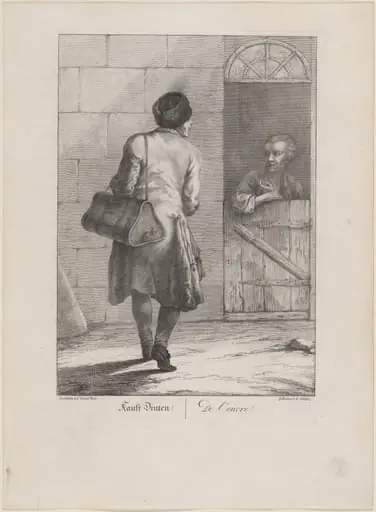 Kauft Tinter (Ink Seller)
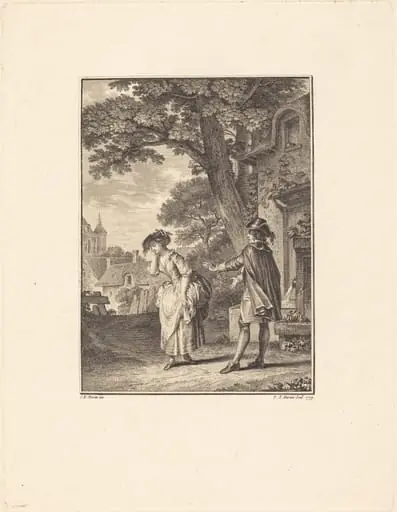 Le Devin du Village (Colette Weeping)
 Le Devin du Village (Colette Weeping)
 Alix malade
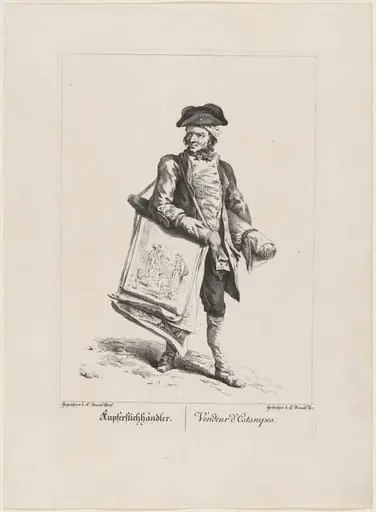 Kupferstichhändler (Print Seller)
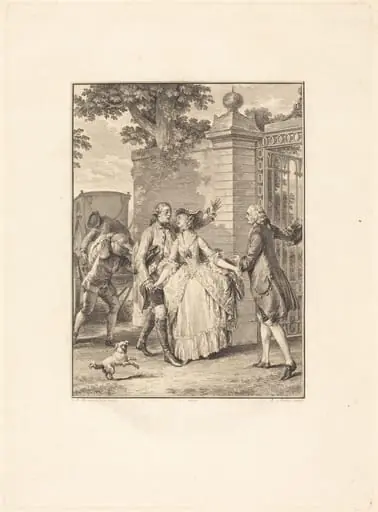 La confiance des belles âmes
 La confiance des belles âmes
 L'innocence en danger
 Poisson en habit de Païsan
 Lison dormait
 Bretzenbäck (Pretzel Baker)
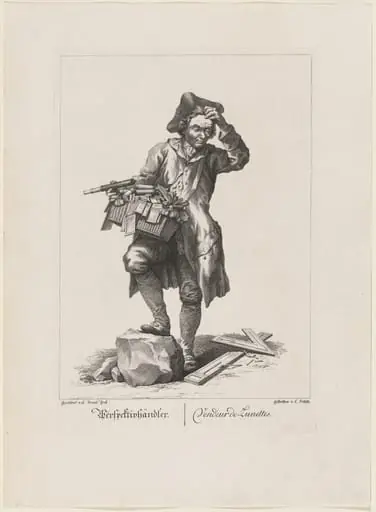 Perspektivhändler (Telescope Seller)