Artwork
Massacre of the Innocents (With the Fir Tree)
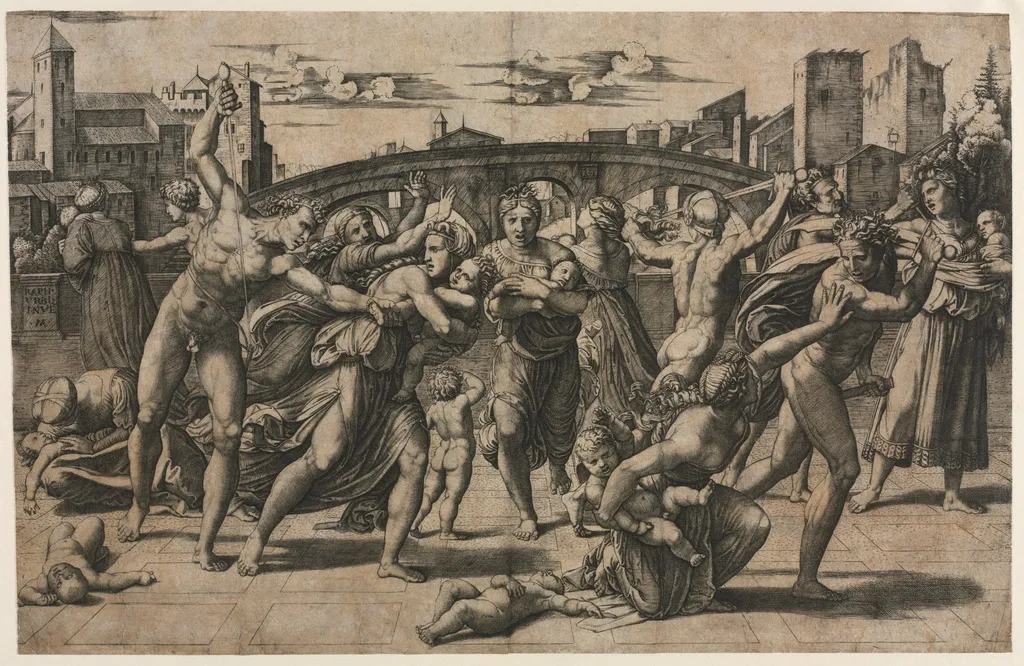
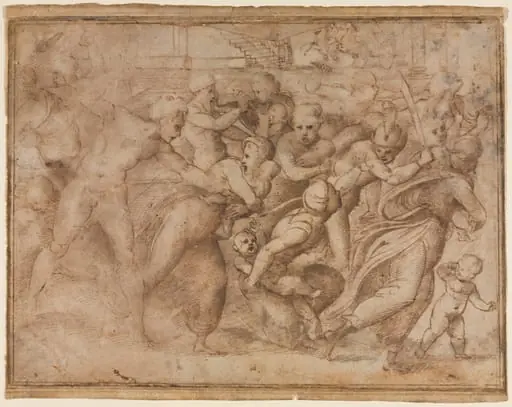
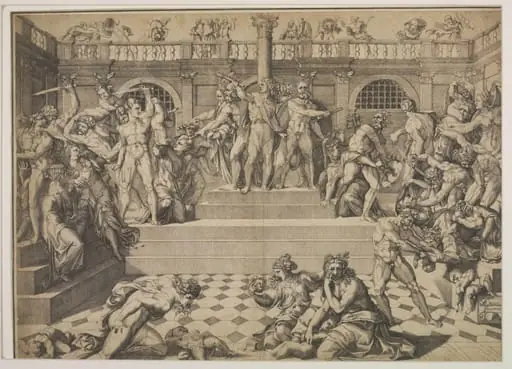
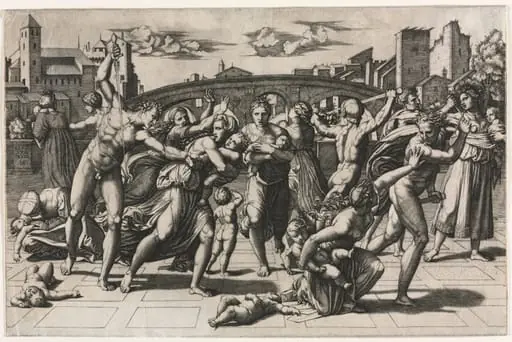
Massacre of the Innocents (With the Fir Tree) is a print by the Renaissance artist Marcantonio Raimondi. It dates from 1512 and is held in the collection of the Cleveland Museum of Art.
About this work
Overview
It resides in The Cleveland Museum of Art, where it is recognized for its intense emotional force and technical precision.
Created around 1512, this print by Marcantonio Raimondi depicts the biblical massacre of infants ordered by King Herod. Executed in engraving, the work is part of a series illustrating scenes from the Gospel of Matthew. It resides in The Cleveland Museum of Art, where it is recognized for its intense emotional force and technical precision. The composition channels violence through tightly arranged figures and dramatic lighting.
Subject & Meaning
The scene portrays the slaughter of Bethlehem’s male infants, a moment of divine tragedy described in Matthew 2:16–18. Central figures—adults and children—are locked in desperate motion: some clutch infants, others collapse or recoil. The inclusion of a distant fir tree, unusual in traditional renditions, may symbolize hope or the future cross, subtly contrasting the brutality with spiritual undertones.
Technique & Style
Raimondi employed engraving to achieve sharp contrasts of light and shadow, a method known as chiaroscuro. Bold, incised lines define muscular forms and turbulent gestures, heightening the sense of chaos. The background, rendered with finer strokes, recedes into a storm-lit landscape with a bridge and architecture, grounding the violence in a tangible, earthly setting while amplifying its emotional weight.
History & Provenance
The print was made during Raimondi’s collaboration with Raphael, who provided designs for his engravings. Though the exact origin of this composition is debated, it reflects the influence of Raphael’s drawings and the broader Renaissance interest in classical anatomy and dramatic narrative. It entered The Cleveland Museum of Art’s collection in the 20th century, where it remains a key example of early 16th-century Italian printmaking.
Context
In early 16th-century Italy, religious subjects were frequently rendered with heightened emotional realism. Raimondi’s work aligns with a trend of translating high art into accessible prints, spreading visual narratives beyond elite circles. The emphasis on physicality and movement reflects contemporary studies of the human form, while the stormy sky and architectural backdrop echo the theatricality of contemporary fresco cycles.
Legacy
Raimondi’s engraving helped standardize the dissemination of Renaissance imagery across Europe. His precise line work and dramatic compositions influenced generations of printmakers. Though less celebrated than his collaborations with Raphael, this print endures as a testament to the power of print to convey sacred violence with visceral clarity, bridging devotional intent and artistic innovation.
Artist & collection

Artist
Marcantonio Raimondi, often called simply Marcantonio (c. 1470/82 – c. 1534), was an Italian engraver, known for being the first important printmaker whose body of work consists largely of prints copying paintings. He…