Artwork
Coupole du Salon de la Paix (Cupola of the Salon of Peace) [pl. 44]
![Coupole du Salon de la Paix (Cupola of the Salon of Peace) [pl. 44], by Jean-Baptiste Massé, ink, 1752](https://artifactworldgallery.com/img/jean-baptiste-masse--coupole-du-salon-de-la-paix-cupola-of-the-salon-of-peace-pl--083dda9da8b00531-w1024.webp)
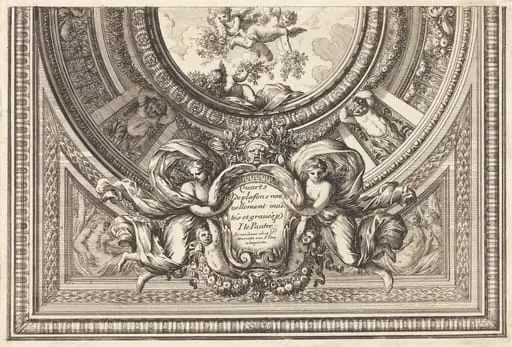
Coupole du Salon de la Paix (Cupola of the Salon of Peace) [pl. 44] is an ink print by the Romanticist artist Jean-Baptiste Massé. It dates from 1752 and is held in the collection of the National Gallery of Art.
About this work
Overview
Massé, known for his miniature painting and printmaking, produced the work as part of a broader documentation project of Charles Le Brun’s decorative schemes.
Created in 1752 by Jean-Baptiste Massé, this engraving on laid paper captures the interior dome of the Salon de la Paix at Versailles. Massé, known for his miniature painting and printmaking, produced the work as part of a broader documentation project of Charles Le Brun’s decorative schemes. The image is not a painting but a printed impression, made using fine incised lines to convey form and volume.
Subject & Meaning
The composition centers on a celestial assembly beneath the dome’s vault. Figures hover in midair, some bearing laurel wreaths, others playing musical instruments, while a central female figure reclines among cherubs. Above, two large faces emerge from clouds, suggesting divine oversight. The imagery evokes an allegory of peace, drawing on classical and mythological motifs to glorify the harmony associated with Louis XV’s reign.
Technique & Style
Massé employed the engraving technique, incising precise lines into a metal plate to create tonal gradations and spatial depth. The use of laid paper, with its subtle chain lines, adds texture to the surface. Delicate hatching and cross-contour lines model the figures, while ornamental borders of foliage and scrolls frame the scene, reflecting the decorative conventions of mid-18th-century French court art.
History & Provenance
The print was made during the production of the *Galerie de Versailles*, a multi-volume series commissioned to record Le Brun’s ceiling paintings. Massé, who had served as court painter and trained notable artists like Liotard, contributed several engravings to this project. This particular plate was likely intended for scholarly or aristocratic audiences interested in the visual legacy of the royal palace.
Context
The Salon de la Paix, part of Versailles’ State Apartments, was designed to celebrate the Treaty of Rastatt and the end of the War of the Spanish Succession. Its ceiling, painted by Le Brun, depicted allegories of peace and prosperity. Massé’s engraving served to disseminate this imagery beyond the palace walls, reinforcing the monarchy’s narrative of enlightened rule through accessible printed media.
Legacy
Though Massé is less widely known today, his engravings preserved key elements of Le Brun’s decorative programs for future generations. This print exemplifies the role of printmaking in documenting and circulating courtly imagery during the ancien régime. Its technical precision and symbolic content remain valuable for understanding the visual culture of 18th-century French royalty.
Artist & collection
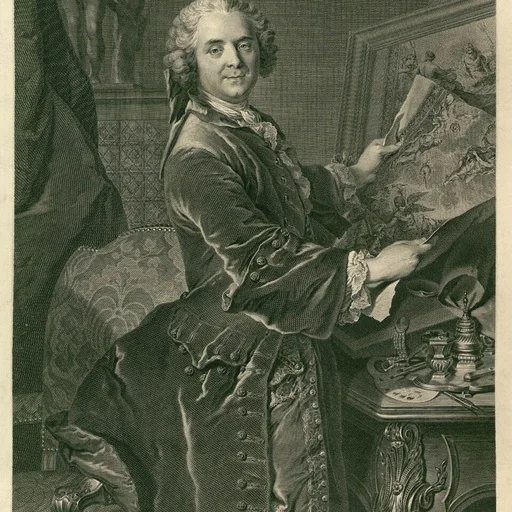
Artist
Jean-Baptiste Massé (29 December 1687, in Paris – 26 September 1767, in Paris) was a French miniature painter, engraver, and draftsman, best remembered as the court painter of Louis XV, for training Jean-Étienne Liotard…

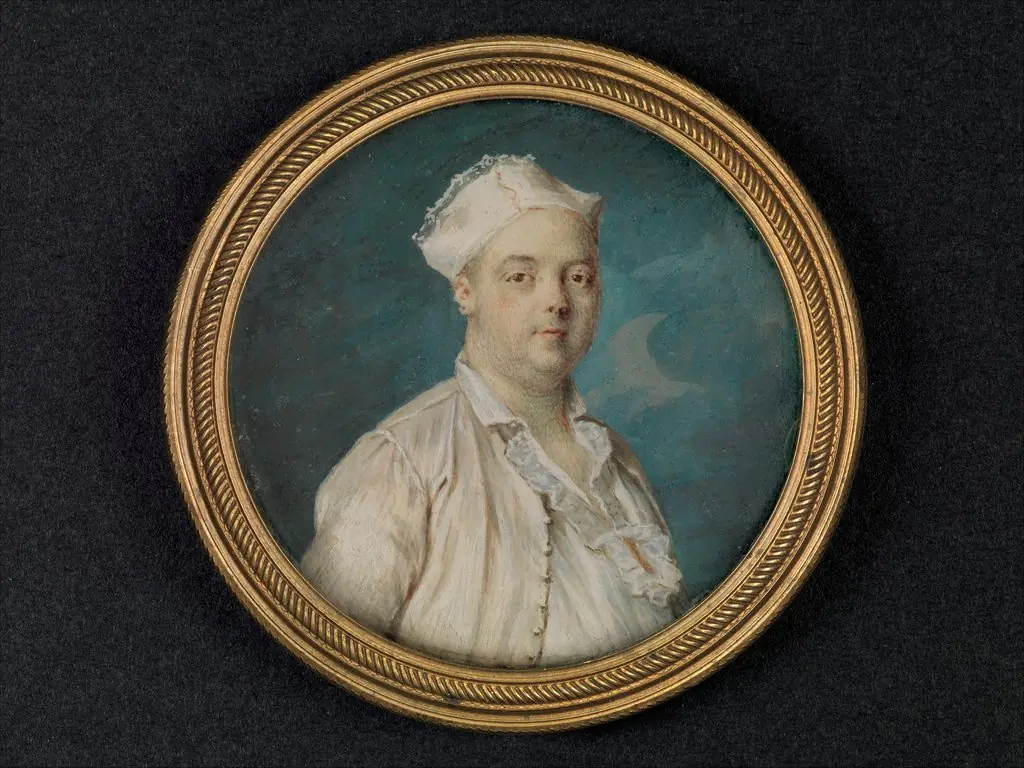 Pierre Louis Dubus (1721–1799), Called Préville, of the Comédie-Française
![Protection accordée aux beaux-arts 1663 (Protection Granted to the Fine Arts 1663) [pl. 24], by Jean-Baptiste Massé](https://artifactworldgallery.com/img/jean-baptiste-masse--protection-accordee-aux-beaux-arts-1663-protection-granted-t--045f3db9c3e49b51-w320.webp) Protection accordée aux beaux-arts 1663 (Protection Granted to the Fine Arts 1663) [pl. 24]
Protection accordée aux beaux-arts 1663 (Protection Granted to the Fine Arts 1663) [pl. 24]![La Prééminence de la France reconnue par l'Espagne 1662 (The Preeminance of France Recognized by Spain 1662) [pl. 17], by Jean-Baptiste Massé](https://artifactworldgallery.com/img/jean-baptiste-masse--la-preeminence-de-la-france-reconnue-par-l-espagne-1662-the--0865c0d8271fc4b5-w320.webp) La Prééminence de la France reconnue par l'Espagne 1662 (The Preeminance of France Recognized by Spain 1662) [pl. 17]
La Prééminence de la France reconnue par l'Espagne 1662 (The Preeminance of France Recognized by Spain 1662) [pl. 17]![L'Allemagne Cintre du Salon de la Guerre du côté des appartemens du Roi (Germany, Center of the Salon of War next to the King's Chambers) [pl. 37], by Jean-Baptiste Massé](https://artifactworldgallery.com/img/jean-baptiste-masse--l-allemagne-cintre-du-salon-de-la-guerre-du-cote-des-apparte--107e6bb2bd4fa1ce-w320.webp) L'Allemagne Cintre du Salon de la Guerre du côté des appartemens du Roi (Germany, Center of the Salon of War next to the King's Chambers) [pl. 37]
L'Allemagne Cintre du Salon de la Guerre du côté des appartemens du Roi (Germany, Center of the Salon of War next to the King's Chambers) [pl. 37]![L'Espagne Cintre du Salon de la Paix sur l'Arcade de la Galerie (Spain, Center of the Salon of Peace in the Gallery's Arcade) [pl. 47], by Jean-Baptiste Massé](https://artifactworldgallery.com/img/jean-baptiste-masse--l-espagne-cintre-du-salon-de-la-paix-sur-l-arcade-de-la-gale--1780f995882c221b-w320.webp) L'Espagne Cintre du Salon de la Paix sur l'Arcade de la Galerie (Spain, Center of the Salon of Peace in the Gallery's Arcade) [pl. 47]
L'Espagne Cintre du Salon de la Paix sur l'Arcade de la Galerie (Spain, Center of the Salon of Peace in the Gallery's Arcade) [pl. 47]![Coupole du Salon de la Guerre (Cupola of the Salon of War) [pl. 35], by Jean-Baptiste Massé](https://artifactworldgallery.com/img/jean-baptiste-masse--coupole-du-salon-de-la-guerre-cupola-of-the-salon-of-war-pl--2b9793f18c09c4bc-w320.webp) Coupole du Salon de la Guerre (Cupola of the Salon of War) [pl. 35]
Coupole du Salon de la Guerre (Cupola of the Salon of War) [pl. 35]![L'Europe Chrêtienne en Paix Cintre du Salon de la Paix du côté des appartemens de la Reine (Christian Europe in Peace, Center of the Salon of Peace next to the Queen's Chambers) [pl. 45], by Jean-Baptiste Massé](https://artifactworldgallery.com/img/jean-baptiste-masse--l-europe-chretienne-en-paix-cintre-du-salon-de-la-paix-du-co--42b41626259ce77e-w320.webp) L'Europe Chrêtienne en Paix Cintre du Salon de la Paix du côté des appartemens de la Reine (Christian Europe in Peace, Center of the Salon of Peace next to the Queen's Chambers) [pl. 45]
L'Europe Chrêtienne en Paix Cintre du Salon de la Paix du côté des appartemens de la Reine (Christian Europe in Peace, Center of the Salon of Peace next to the Queen's Chambers) [pl. 45]![L'Allemagne Cintre du Salon de la Paix en face de la Galerie (Germany, Center of the Salon of Peace Opposite the Gallery) [pl. 46], by Jean-Baptiste Massé](https://artifactworldgallery.com/img/jean-baptiste-masse--l-allemagne-cintre-du-salon-de-la-paix-en-face-de-la-galerie--447dbb6c5f024d11-w320.webp) L'Allemagne Cintre du Salon de la Paix en face de la Galerie (Germany, Center of the Salon of Peace Opposite the Gallery) [pl. 46]
L'Allemagne Cintre du Salon de la Paix en face de la Galerie (Germany, Center of the Salon of Peace Opposite the Gallery) [pl. 46]
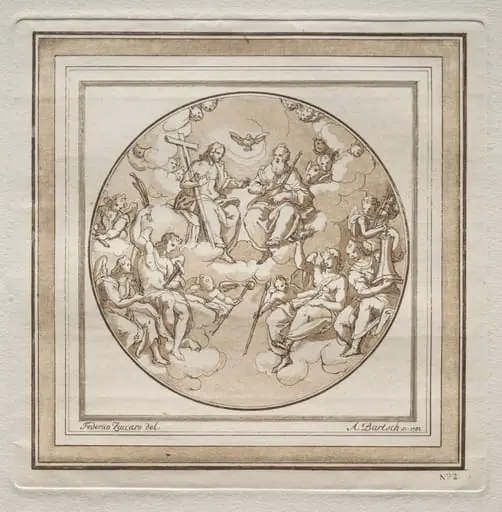 The Trinity
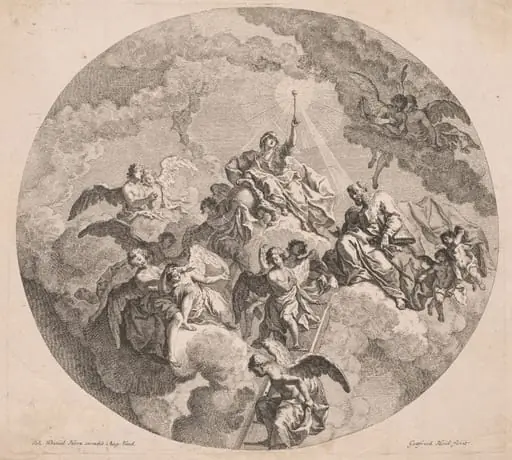 Virgin Enthroned in Glory with Saint Peter
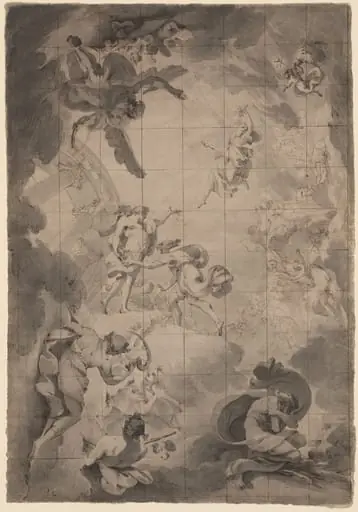 Studies of Aurora and Apollo
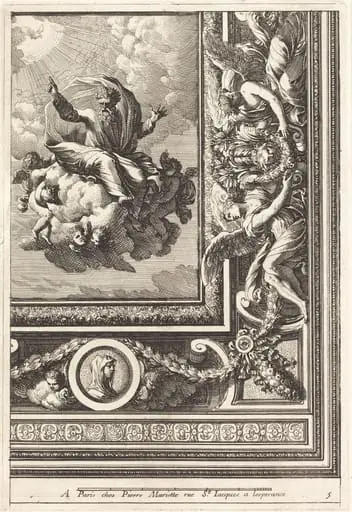 Quarts de plafons
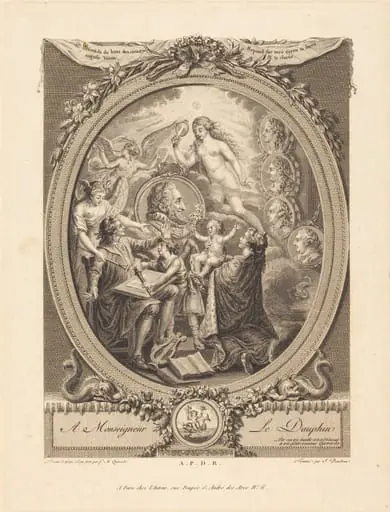 Allegory in Honor of Henri IV
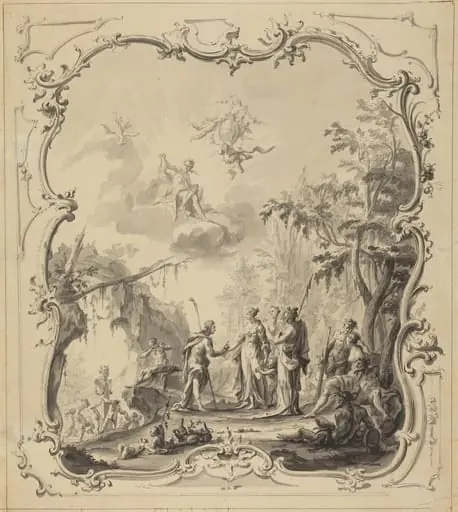 The Judgment of Paris
 God Enthroned Surrounded by Saints
 Aurora Heralding the Arrival of the Morning Sun
 The Assumption of the Virgin
 Design for the Ceiling of the Salon of the Palazzo Spinola, Genoa
 Title Page