Artwork
L'Allemagne Cintre du Salon de la Paix en face de la Galerie (Germany, Center of the Salon of Peace Opposite the Gallery) [pl. 46]
![L'Allemagne Cintre du Salon de la Paix en face de la Galerie (Germany, Center of the Salon of Peace Opposite the Gallery) [pl. 46], by Jean-Baptiste Massé, ink, 1752](https://artifactworldgallery.com/img/jean-baptiste-masse--l-allemagne-cintre-du-salon-de-la-paix-en-face-de-la-galerie--447dbb6c5f024d11-w1024.webp)
L'Allemagne Cintre du Salon de la Paix en face de la Galerie (Germany, Center of the Salon of Peace Opposite the Gallery) [pl. 46] is an ink print by the Romanticist artist Jean-Baptiste Massé. It dates from 1752 and is held in the collection of the National Gallery of Art.
About this work
Some figures look like they’re playing music, while others stand or sit around a central woman who seems important.
This print shows a busy scene with lots of people in a forest setting. Some figures look like they’re playing music, while others stand or sit around a central woman who seems important. Above her, a winged figure floats in the sky, and the whole scene has a dreamy, slightly dramatic feel.
The title at the bottom says it’s called *L’Allemagne* and was made in 1752. It’s not a painting but an engraving, which means it was carved into metal and printed.
Look up engraving to see how artists create detailed prints like this one.
Overview
Jean-Baptiste Massé’s 1752 engraving, executed on laid paper, presents a view of the Salon of Peace within the Palace of Versailles. The composition is arranged so that the viewer looks toward the gallery opposite the salon, capturing the architectural space and its decorative program. The work is a printed image rather than a painted tableau, produced by incising lines into a metal plate and transferring them to paper.
Subject & Meaning
The print foregrounds the Salon of Peace, a ceremonial room intended to celebrate diplomatic harmony. Central to the scene is a female figure, likely an allegorical personification of peace, surrounded by attendants and musicians. Above her, a winged figure hovers, reinforcing the theme of divine or celestial endorsement of concord. The arrangement underscores the salon’s role as a visual embodiment of political stability.
Technique & Style
Massé employed traditional copper engraving, carving fine lines that render architectural detail, drapery, and foliage with precision. The use of laid paper, with its ribbed texture, enhances the tonal variation achieved through cross‑hatching and stippling. The overall style reflects the Rococo taste for elegant ornamentation and a slightly theatrical atmosphere, balancing clarity of form with a subtle sense of movement.
History & Provenance
Created during Massé’s tenure as court painter to Louis XV, the engraving was likely intended for circulation among the French aristocracy and foreign dignitaries. It forms part of a series documenting the interiors of Versailles, a project that also included Massé’s contributions to the *Galerie de Versailles*. The print has survived in several museum collections, catalogued as plate 46 in the original series.
Context
The Salon of Peace was commissioned in the mid‑18th century as part of Versailles’ ongoing program of decorative symbolism, reflecting France’s diplomatic ambitions under Louis XV. Engravings such as Massé’s served both as records of royal architecture and as propaganda, disseminating the image of a harmonious court. The work thus sits at the intersection of artistic documentation and political messaging in the pre‑revolutionary era.
Artist & collection
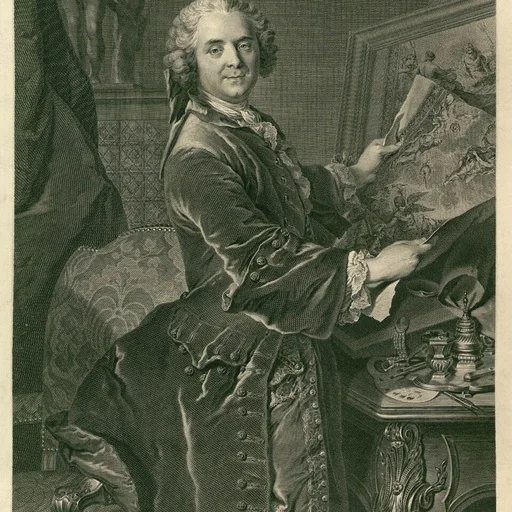
Artist
Jean-Baptiste Massé (29 December 1687, in Paris – 26 September 1767, in Paris) was a French miniature painter, engraver, and draftsman, best remembered as the court painter of Louis XV, for training Jean-Étienne Liotard…

 Pierre Louis Dubus (1721–1799), Called Préville, of the Comédie-Française
![Protection accordée aux beaux-arts 1663 (Protection Granted to the Fine Arts 1663) [pl. 24], by Jean-Baptiste Massé](https://artifactworldgallery.com/img/jean-baptiste-masse--protection-accordee-aux-beaux-arts-1663-protection-granted-t--045f3db9c3e49b51-w320.webp) Protection accordée aux beaux-arts 1663 (Protection Granted to the Fine Arts 1663) [pl. 24]
Protection accordée aux beaux-arts 1663 (Protection Granted to the Fine Arts 1663) [pl. 24]![Coupole du Salon de la Paix (Cupola of the Salon of Peace) [pl. 44], by Jean-Baptiste Massé](https://artifactworldgallery.com/img/jean-baptiste-masse--coupole-du-salon-de-la-paix-cupola-of-the-salon-of-peace-pl--083dda9da8b00531-w320.webp) Coupole du Salon de la Paix (Cupola of the Salon of Peace) [pl. 44]
Coupole du Salon de la Paix (Cupola of the Salon of Peace) [pl. 44]![La Prééminence de la France reconnue par l'Espagne 1662 (The Preeminance of France Recognized by Spain 1662) [pl. 17], by Jean-Baptiste Massé](https://artifactworldgallery.com/img/jean-baptiste-masse--la-preeminence-de-la-france-reconnue-par-l-espagne-1662-the--0865c0d8271fc4b5-w320.webp) La Prééminence de la France reconnue par l'Espagne 1662 (The Preeminance of France Recognized by Spain 1662) [pl. 17]
La Prééminence de la France reconnue par l'Espagne 1662 (The Preeminance of France Recognized by Spain 1662) [pl. 17]![L'Allemagne Cintre du Salon de la Guerre du côté des appartemens du Roi (Germany, Center of the Salon of War next to the King's Chambers) [pl. 37], by Jean-Baptiste Massé](https://artifactworldgallery.com/img/jean-baptiste-masse--l-allemagne-cintre-du-salon-de-la-guerre-du-cote-des-apparte--107e6bb2bd4fa1ce-w320.webp) L'Allemagne Cintre du Salon de la Guerre du côté des appartemens du Roi (Germany, Center of the Salon of War next to the King's Chambers) [pl. 37]
L'Allemagne Cintre du Salon de la Guerre du côté des appartemens du Roi (Germany, Center of the Salon of War next to the King's Chambers) [pl. 37]![L'Espagne Cintre du Salon de la Paix sur l'Arcade de la Galerie (Spain, Center of the Salon of Peace in the Gallery's Arcade) [pl. 47], by Jean-Baptiste Massé](https://artifactworldgallery.com/img/jean-baptiste-masse--l-espagne-cintre-du-salon-de-la-paix-sur-l-arcade-de-la-gale--1780f995882c221b-w320.webp) L'Espagne Cintre du Salon de la Paix sur l'Arcade de la Galerie (Spain, Center of the Salon of Peace in the Gallery's Arcade) [pl. 47]
L'Espagne Cintre du Salon de la Paix sur l'Arcade de la Galerie (Spain, Center of the Salon of Peace in the Gallery's Arcade) [pl. 47]![Coupole du Salon de la Guerre (Cupola of the Salon of War) [pl. 35], by Jean-Baptiste Massé](https://artifactworldgallery.com/img/jean-baptiste-masse--coupole-du-salon-de-la-guerre-cupola-of-the-salon-of-war-pl--2b9793f18c09c4bc-w320.webp) Coupole du Salon de la Guerre (Cupola of the Salon of War) [pl. 35]
Coupole du Salon de la Guerre (Cupola of the Salon of War) [pl. 35]![L'Europe Chrêtienne en Paix Cintre du Salon de la Paix du côté des appartemens de la Reine (Christian Europe in Peace, Center of the Salon of Peace next to the Queen's Chambers) [pl. 45], by Jean-Baptiste Massé](https://artifactworldgallery.com/img/jean-baptiste-masse--l-europe-chretienne-en-paix-cintre-du-salon-de-la-paix-du-co--42b41626259ce77e-w320.webp) L'Europe Chrêtienne en Paix Cintre du Salon de la Paix du côté des appartemens de la Reine (Christian Europe in Peace, Center of the Salon of Peace next to the Queen's Chambers) [pl. 45]
L'Europe Chrêtienne en Paix Cintre du Salon de la Paix du côté des appartemens de la Reine (Christian Europe in Peace, Center of the Salon of Peace next to the Queen's Chambers) [pl. 45]
![La Hollande Cintre du Salon de la Paix en face des Appartmens de la Reine (Holland, Center of the Salon of Peace Opposite the Queen's Apartments) [pl. 48], by Jean-Baptiste Massé](https://artifactworldgallery.com/img/jean-baptiste-masse--la-hollande-cintre-du-salon-de-la-paix-en-face-des-appartmen--9afba5d041a04a3b-w320.webp) La Hollande Cintre du Salon de la Paix en face des Appartmens de la Reine (Holland, Center of the Salon of Peace Opposite the Queen's Apartments) [pl. 48]
La Hollande Cintre du Salon de la Paix en face des Appartmens de la Reine (Holland, Center of the Salon of Peace Opposite the Queen's Apartments) [pl. 48]![L'Espagne Cintre du Salon de la Guerre en face de la Galerie (Spain, Center of the Salon of War Opposite the Gallery) [pl. 38], by Jean-Baptiste Massé](https://artifactworldgallery.com/img/jean-baptiste-masse--l-espagne-cintre-du-salon-de-la-guerre-en-face-de-la-galerie--d829189dd221d18c-w320.webp) L'Espagne Cintre du Salon de la Guerre en face de la Galerie (Spain, Center of the Salon of War Opposite the Gallery) [pl. 38]
L'Espagne Cintre du Salon de la Guerre en face de la Galerie (Spain, Center of the Salon of War Opposite the Gallery) [pl. 38]![La Hollande Cintre du Salon de la Guerre sur L'Arcade qui donne entrée dans la Galerie (Holland, Center of the Salon of War in the Arcade that Opens into the Gallery) [pl. 39], by Jean-Baptiste Massé](https://artifactworldgallery.com/img/jean-baptiste-masse--la-hollande-cintre-du-salon-de-la-guerre-sur-l-arcade-qui-do--fd044d5b0522362e-w320.webp) La Hollande Cintre du Salon de la Guerre sur L'Arcade qui donne entrée dans la Galerie (Holland, Center of the Salon of War in the Arcade that Opens into the Gallery) [pl. 39]
La Hollande Cintre du Salon de la Guerre sur L'Arcade qui donne entrée dans la Galerie (Holland, Center of the Salon of War in the Arcade that Opens into the Gallery) [pl. 39]![La Hollande accepte la paix et se détache de l'Allemagne et de l'Espagne 1678 Cintre de la Galerie du côté du Salon de la Paix (Holland Accepts Peace and Detaches Itself from Germany and Spain 1678, Center of the Gallery next to the Salon of Peace) [pl. 33], by Jean-Baptiste Massé](https://artifactworldgallery.com/img/jean-baptiste-masse--la-hollande-accepte-la-paix-et-se-detache-de-l-allemagne-et--21582d3cc94c3d89-w320.webp) La Hollande accepte la paix et se détache de l'Allemagne et de l'Espagne 1678 Cintre de la Galerie du côté du Salon de la Paix (Holland Accepts Peace and Detaches Itself from Germany and Spain 1678, Center of the Gallery next to the Salon of Peace) [pl. 33]
La Hollande accepte la paix et se détache de l'Allemagne et de l'Espagne 1678 Cintre de la Galerie du côté du Salon de la Paix (Holland Accepts Peace and Detaches Itself from Germany and Spain 1678, Center of the Gallery next to the Salon of Peace) [pl. 33]![Alliance de l'Allemagne et de l'Espagne avec la Hollande 1672 Cintre de la Gallerie du côté du Salon de la Guerre (Alliance of Germany and Spain with Holland 1672, Center of the Gallery next to the Salon of War) [pl. 31], by Jean-Baptiste Massé](https://artifactworldgallery.com/img/jean-baptiste-masse--alliance-de-l-allemagne-et-de-l-espagne-avec-la-hollande-167--4b670ecaa7c4c5d8-w320.webp) Alliance de l'Allemagne et de l'Espagne avec la Hollande 1672 Cintre de la Gallerie du côté du Salon de la Guerre (Alliance of Germany and Spain with Holland 1672, Center of the Gallery next to the Salon of War) [pl. 31]
Alliance de l'Allemagne et de l'Espagne avec la Hollande 1672 Cintre de la Gallerie du côté du Salon de la Guerre (Alliance of Germany and Spain with Holland 1672, Center of the Gallery next to the Salon of War) [pl. 31]