Artwork
L'Europe Chrêtienne en Paix Cintre du Salon de la Paix du côté des appartemens de la Reine (Christian Europe in Peace, Center of the Salon of Peace next to the Queen's Chambers) [pl. 45]
![L'Europe Chrêtienne en Paix Cintre du Salon de la Paix du côté des appartemens de la Reine (Christian Europe in Peace, Center of the Salon of Peace next to the Queen's Chambers) [pl. 45], by Jean-Baptiste Massé, ink, 1752](https://artifactworldgallery.com/img/jean-baptiste-masse--l-europe-chretienne-en-paix-cintre-du-salon-de-la-paix-du-co--42b41626259ce77e-w1024.webp)
L'Europe Chrêtienne en Paix Cintre du Salon de la Paix du côté des appartemens de la Reine (Christian Europe in Peace, Center of the Salon of Peace next to the Queen's Chambers) [pl. 45] is an ink print by the Romanticist artist Jean-Baptiste Massé. It dates from 1752 and is held in the collection of the National Gallery of Art.
About this work
Overview
Created in 1752 by Jean-Baptiste Massé, this engraving was produced as part of the decorative program in the Queen’s apartments at Versailles.
Created in 1752 by Jean-Baptiste Massé, this engraving was produced as part of the decorative program in the Queen’s apartments at Versailles. Rendered on laid paper, it forms the central panel of the Salon de la Paix, a space designed to convey royal ideals through visual allegory. Massé, known for his miniature painting and engraving, contributed to the broader visual narrative of Louis XV’s court, blending artistic refinement with political messaging.
Subject & Meaning
The scene depicts two female figures seated on a rocky outcrop, symbolizing Christian Europe in harmony. One holds a wreath, the other a lyre, while surrounding figures engage in quiet, harmonious activities—music, rest, and contemplation. A classical temple in the background reinforces the association with antiquity and order. The composition avoids warfare or grandeur, instead emphasizing peace as a cultivated, divine state under royal stewardship.
Technique & Style
Massé employed fine line engraving to render intricate details across a compact, curved format. The figures are delicately modeled with subtle shading, and ornamental scrollwork frames the composition, typical of Rococo decorative conventions. The use of laid paper, with its characteristic chain lines, reflects standard printmaking practices of mid-18th-century France, allowing for both precision and tactile richness.
History & Provenance
The engraving was commissioned as part of the interior decoration of the Queen’s private quarters at Versailles, likely for inclusion in the *Galerie de Versailles* series. Massé, a court artist with access to royal projects, produced works intended for both display and dissemination among elite circles. Its placement near the Queen’s chambers underscores its role in reinforcing the monarchy’s association with peace and cultural refinement.
Context
In the decades following the War of the Austrian Succession, the French court sought to project an image of stability and moral authority. This engraving aligns with broader efforts to use art as soft diplomacy, replacing military triumph with serene allegory. Classical motifs and pastoral imagery were favored to suggest timeless harmony, distancing the monarchy from recent conflict while affirming its divine right to rule.
Legacy
Though not widely reproduced outside court contexts, the engraving exemplifies the integration of printmaking into royal propaganda. Massé’s role as a teacher to artists like Liotard and Høyer extended his influence beyond his own works. His approach—blending miniature precision with monumental symbolism—helped shape the aesthetic language of French court art in the mid-18th century.
Artist & collection
Artist
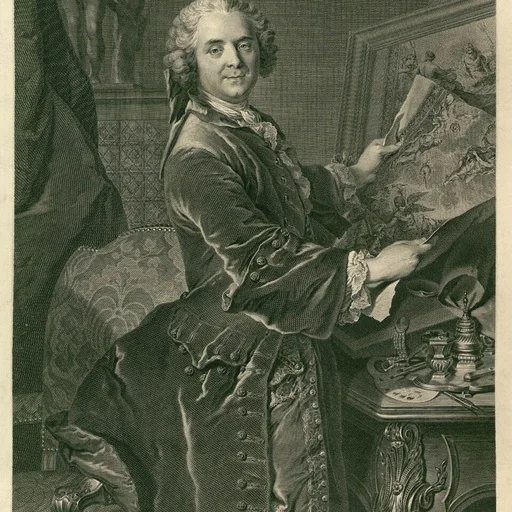
Jean-Baptiste Massé (29 December 1687, in Paris – 26 September 1767, in Paris) was a French miniature painter, engraver, and draftsman, best remembered as the court painter of Louis XV, for training Jean-Étienne Liotard…

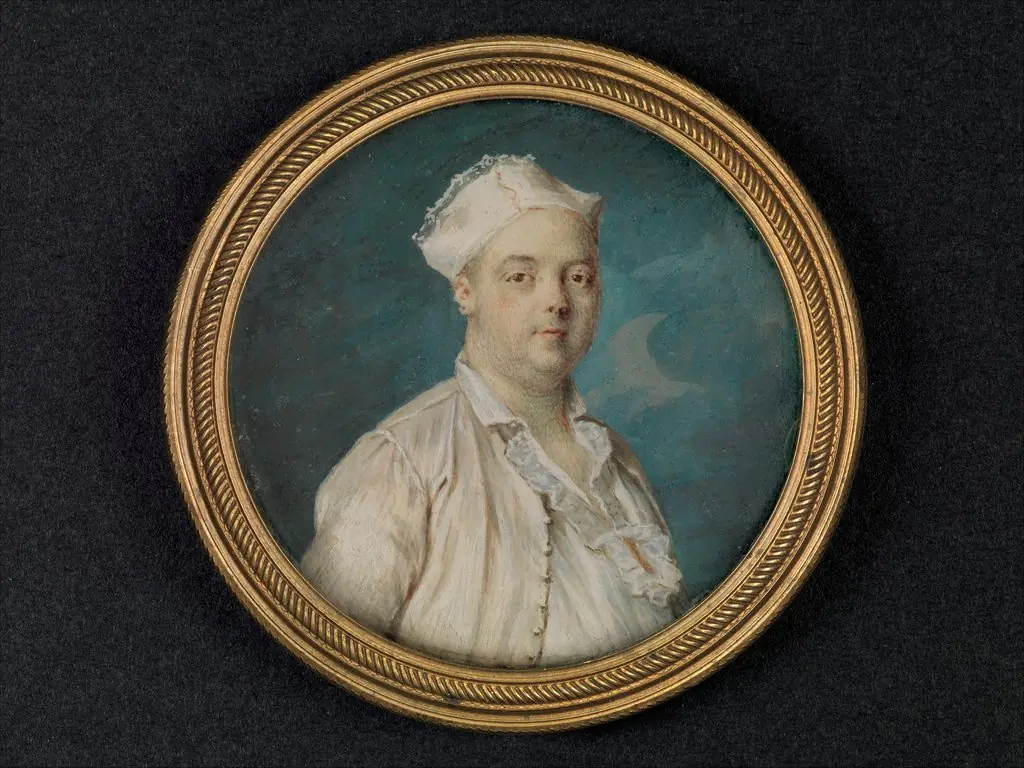 Pierre Louis Dubus (1721–1799), Called Préville, of the Comédie-Française
![Protection accordée aux beaux-arts 1663 (Protection Granted to the Fine Arts 1663) [pl. 24], by Jean-Baptiste Massé](https://artifactworldgallery.com/img/jean-baptiste-masse--protection-accordee-aux-beaux-arts-1663-protection-granted-t--045f3db9c3e49b51-w320.webp) Protection accordée aux beaux-arts 1663 (Protection Granted to the Fine Arts 1663) [pl. 24]
Protection accordée aux beaux-arts 1663 (Protection Granted to the Fine Arts 1663) [pl. 24]![Coupole du Salon de la Paix (Cupola of the Salon of Peace) [pl. 44], by Jean-Baptiste Massé](https://artifactworldgallery.com/img/jean-baptiste-masse--coupole-du-salon-de-la-paix-cupola-of-the-salon-of-peace-pl--083dda9da8b00531-w320.webp) Coupole du Salon de la Paix (Cupola of the Salon of Peace) [pl. 44]
Coupole du Salon de la Paix (Cupola of the Salon of Peace) [pl. 44]![La Prééminence de la France reconnue par l'Espagne 1662 (The Preeminance of France Recognized by Spain 1662) [pl. 17], by Jean-Baptiste Massé](https://artifactworldgallery.com/img/jean-baptiste-masse--la-preeminence-de-la-france-reconnue-par-l-espagne-1662-the--0865c0d8271fc4b5-w320.webp) La Prééminence de la France reconnue par l'Espagne 1662 (The Preeminance of France Recognized by Spain 1662) [pl. 17]
La Prééminence de la France reconnue par l'Espagne 1662 (The Preeminance of France Recognized by Spain 1662) [pl. 17]![L'Allemagne Cintre du Salon de la Guerre du côté des appartemens du Roi (Germany, Center of the Salon of War next to the King's Chambers) [pl. 37], by Jean-Baptiste Massé](https://artifactworldgallery.com/img/jean-baptiste-masse--l-allemagne-cintre-du-salon-de-la-guerre-du-cote-des-apparte--107e6bb2bd4fa1ce-w320.webp) L'Allemagne Cintre du Salon de la Guerre du côté des appartemens du Roi (Germany, Center of the Salon of War next to the King's Chambers) [pl. 37]
L'Allemagne Cintre du Salon de la Guerre du côté des appartemens du Roi (Germany, Center of the Salon of War next to the King's Chambers) [pl. 37]![L'Espagne Cintre du Salon de la Paix sur l'Arcade de la Galerie (Spain, Center of the Salon of Peace in the Gallery's Arcade) [pl. 47], by Jean-Baptiste Massé](https://artifactworldgallery.com/img/jean-baptiste-masse--l-espagne-cintre-du-salon-de-la-paix-sur-l-arcade-de-la-gale--1780f995882c221b-w320.webp) L'Espagne Cintre du Salon de la Paix sur l'Arcade de la Galerie (Spain, Center of the Salon of Peace in the Gallery's Arcade) [pl. 47]
L'Espagne Cintre du Salon de la Paix sur l'Arcade de la Galerie (Spain, Center of the Salon of Peace in the Gallery's Arcade) [pl. 47]![Coupole du Salon de la Guerre (Cupola of the Salon of War) [pl. 35], by Jean-Baptiste Massé](https://artifactworldgallery.com/img/jean-baptiste-masse--coupole-du-salon-de-la-guerre-cupola-of-the-salon-of-war-pl--2b9793f18c09c4bc-w320.webp) Coupole du Salon de la Guerre (Cupola of the Salon of War) [pl. 35]
Coupole du Salon de la Guerre (Cupola of the Salon of War) [pl. 35]![L'Allemagne Cintre du Salon de la Paix en face de la Galerie (Germany, Center of the Salon of Peace Opposite the Gallery) [pl. 46], by Jean-Baptiste Massé](https://artifactworldgallery.com/img/jean-baptiste-masse--l-allemagne-cintre-du-salon-de-la-paix-en-face-de-la-galerie--447dbb6c5f024d11-w320.webp) L'Allemagne Cintre du Salon de la Paix en face de la Galerie (Germany, Center of the Salon of Peace Opposite the Gallery) [pl. 46]
L'Allemagne Cintre du Salon de la Paix en face de la Galerie (Germany, Center of the Salon of Peace Opposite the Gallery) [pl. 46]
![La Hollande accepte la paix et se détache de l'Allemagne et de l'Espagne 1678 Cintre de la Galerie du côté du Salon de la Paix (Holland Accepts Peace and Detaches Itself from Germany and Spain 1678, Center of the Gallery next to the Salon of Peace) [pl. 33], by Jean-Baptiste Massé](https://artifactworldgallery.com/img/jean-baptiste-masse--la-hollande-accepte-la-paix-et-se-detache-de-l-allemagne-et--21582d3cc94c3d89-w320.webp) La Hollande accepte la paix et se détache de l'Allemagne et de l'Espagne 1678 Cintre de la Galerie du côté du Salon de la Paix (Holland Accepts Peace and Detaches Itself from Germany and Spain 1678, Center of the Gallery next to the Salon of Peace) [pl. 33]
La Hollande accepte la paix et se détache de l'Allemagne et de l'Espagne 1678 Cintre de la Galerie du côté du Salon de la Paix (Holland Accepts Peace and Detaches Itself from Germany and Spain 1678, Center of the Gallery next to the Salon of Peace) [pl. 33]![L'Espagne Cintre du Salon de la Guerre en face de la Galerie (Spain, Center of the Salon of War Opposite the Gallery) [pl. 38], by Jean-Baptiste Massé](https://artifactworldgallery.com/img/jean-baptiste-masse--l-espagne-cintre-du-salon-de-la-guerre-en-face-de-la-galerie--d829189dd221d18c-w320.webp) L'Espagne Cintre du Salon de la Guerre en face de la Galerie (Spain, Center of the Salon of War Opposite the Gallery) [pl. 38]
L'Espagne Cintre du Salon de la Guerre en face de la Galerie (Spain, Center of the Salon of War Opposite the Gallery) [pl. 38]![La Hollande Cintre du Salon de la Paix en face des Appartmens de la Reine (Holland, Center of the Salon of Peace Opposite the Queen's Apartments) [pl. 48], by Jean-Baptiste Massé](https://artifactworldgallery.com/img/jean-baptiste-masse--la-hollande-cintre-du-salon-de-la-paix-en-face-des-appartmen--9afba5d041a04a3b-w320.webp) La Hollande Cintre du Salon de la Paix en face des Appartmens de la Reine (Holland, Center of the Salon of Peace Opposite the Queen's Apartments) [pl. 48]
La Hollande Cintre du Salon de la Paix en face des Appartmens de la Reine (Holland, Center of the Salon of Peace Opposite the Queen's Apartments) [pl. 48]![Alliance de l'Allemagne et de l'Espagne avec la Hollande 1672 Cintre de la Gallerie du côté du Salon de la Guerre (Alliance of Germany and Spain with Holland 1672, Center of the Gallery next to the Salon of War) [pl. 31], by Jean-Baptiste Massé](https://artifactworldgallery.com/img/jean-baptiste-masse--alliance-de-l-allemagne-et-de-l-espagne-avec-la-hollande-167--4b670ecaa7c4c5d8-w320.webp) Alliance de l'Allemagne et de l'Espagne avec la Hollande 1672 Cintre de la Gallerie du côté du Salon de la Guerre (Alliance of Germany and Spain with Holland 1672, Center of the Gallery next to the Salon of War) [pl. 31]
Alliance de l'Allemagne et de l'Espagne avec la Hollande 1672 Cintre de la Gallerie du côté du Salon de la Guerre (Alliance of Germany and Spain with Holland 1672, Center of the Gallery next to the Salon of War) [pl. 31]