Artwork
Alexander and the High Priest of Jerusalem
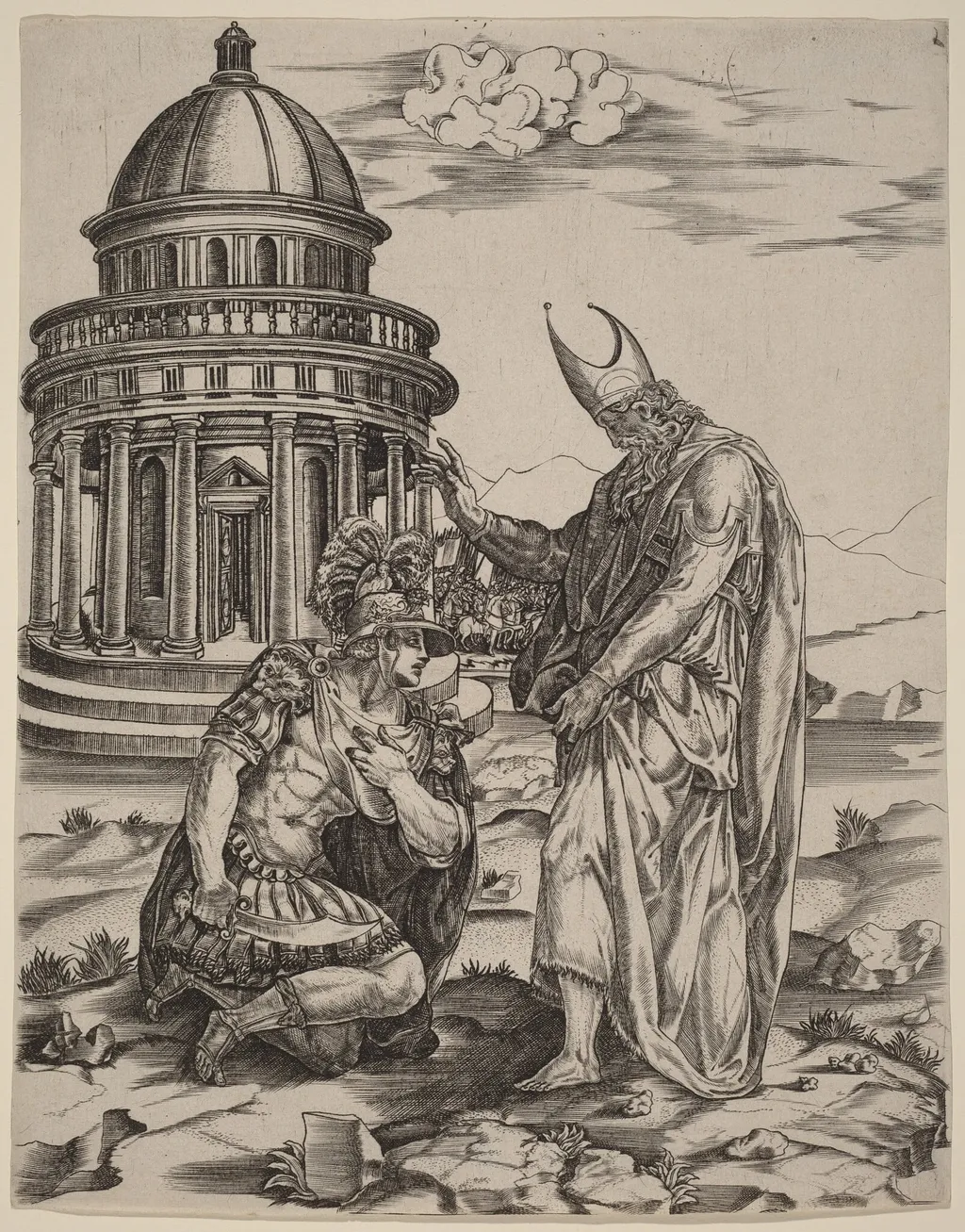
Alexander and the High Priest of Jerusalem is an ink print by the Renaissance artist Master IRs. It dates from 1515 and is held in the collection of the National Gallery of Art.
About this work
Overview
The composition suggests a moment of tribute, with the male figure offering a wreath to the armored woman, who kneels in submission or reverence.
Created in 1515, this engraving by Master IRs depicts a ceremonial encounter between a bearded male figure and a female warrior, set against an architectural backdrop of columns and a dome. The scene is rendered in fine linear detail, characteristic of early 16th-century printmaking. The composition suggests a moment of tribute, with the male figure offering a wreath to the armored woman, who kneels in submission or reverence. The rocky terrain and sparse vegetation ground the scene in a semi-idealized landscape.
Subject & Meaning
The imagery alludes to the historical episode of Alexander the Great’s encounter with the High Priest of Jerusalem, though the gender of the central figure diverges from traditional accounts. The armored woman may symbolize Jerusalem personified, or reflect a symbolic reinterpretation of divine authority. The wreath signifies honor or submission, while the architectural setting evokes sacred space. The scene blends historical narrative with allegorical representation, common in Renaissance visual culture.
Technique & Style
The artist employed fine, controlled lines to model form and texture, using hatching and cross-hatching to suggest volume in the robe, armor, and stonework. The metal plate was incised with precision, allowing for intricate detail in the folds of fabric and the segments of armor. The background architecture is rendered with geometric clarity, contrasting with the organic flow of the figures. The absence of tone or color emphasizes the linear discipline typical of engraving at the time.
History & Provenance
The engraving is attributed to Master IRs, an anonymous printmaker active in the early 1500s, likely in the German-speaking regions. No definitive record of its early ownership exists, but its technical quality suggests it was produced for a learned or devotional audience. It circulated among collectors of prints during the Renaissance, valued for its narrative clarity and craftsmanship rather than its authorship, which remained obscure.
Context
This work emerged during a period when biblical and classical histories were frequently reinterpreted in Northern European printmaking. Artists often adapted historical tales to suit contemporary religious or political ideals. The choice of Alexander’s encounter with Jerusalem’s priest—though altered in gender—reflects a broader trend of blending classical antiquity with Judeo-Christian symbolism, appealing to humanist interests in moral and spiritual authority.
Legacy
Though not widely reproduced or studied today, the engraving exemplifies the quiet sophistication of anonymous printmakers who shaped visual culture before the rise of named artistic celebrities. Its reinterpretation of a well-known historical moment reveals how Renaissance audiences engaged with myth and scripture through inventive, sometimes unconventional, imagery. It remains a quiet testament to the narrative power of line in early printmaking.
Artist & collection


 The Return of the Prodigal Son
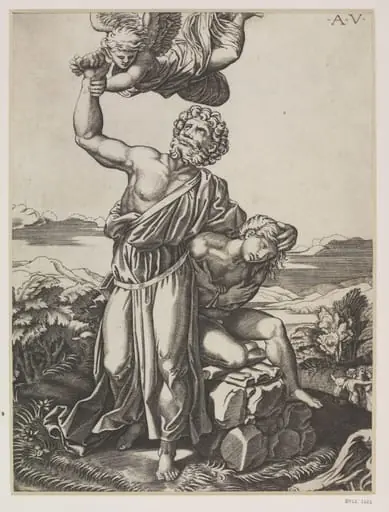 The Sacrifice of Abraham
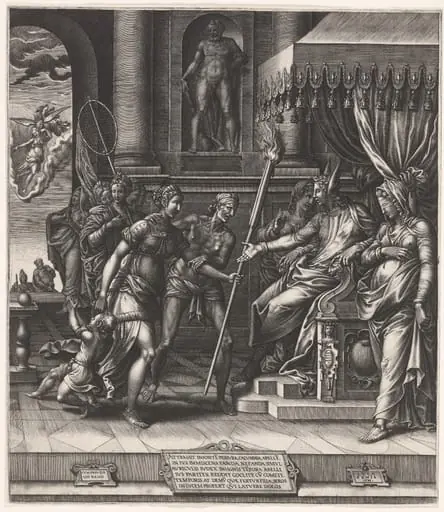 The Calumny of Apelles
 The Calumny of Apelles
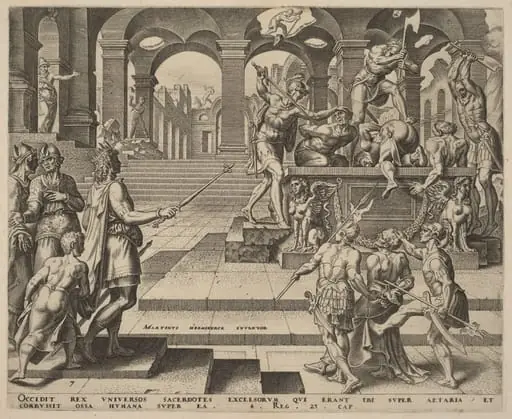 The Slaughter of the Priests of Samaria
 Hercules and Atlas
 Christ Tells His Disciples of the Last Judgment
 Christ Appearing to Mary Magdalene
 David Bringing Presents from His Father to Saul
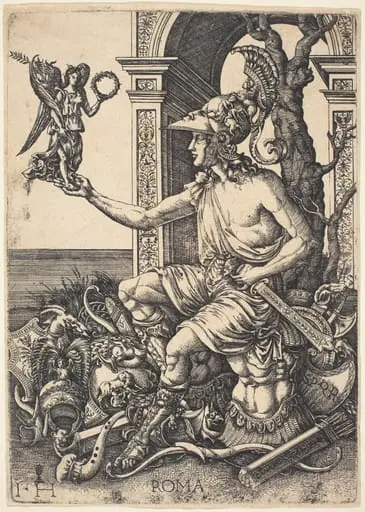 Personification of Rome
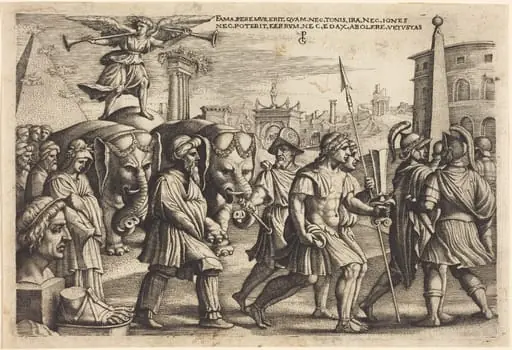 The Triumph of Fame