Artwork
The Sacrifice of Abraham
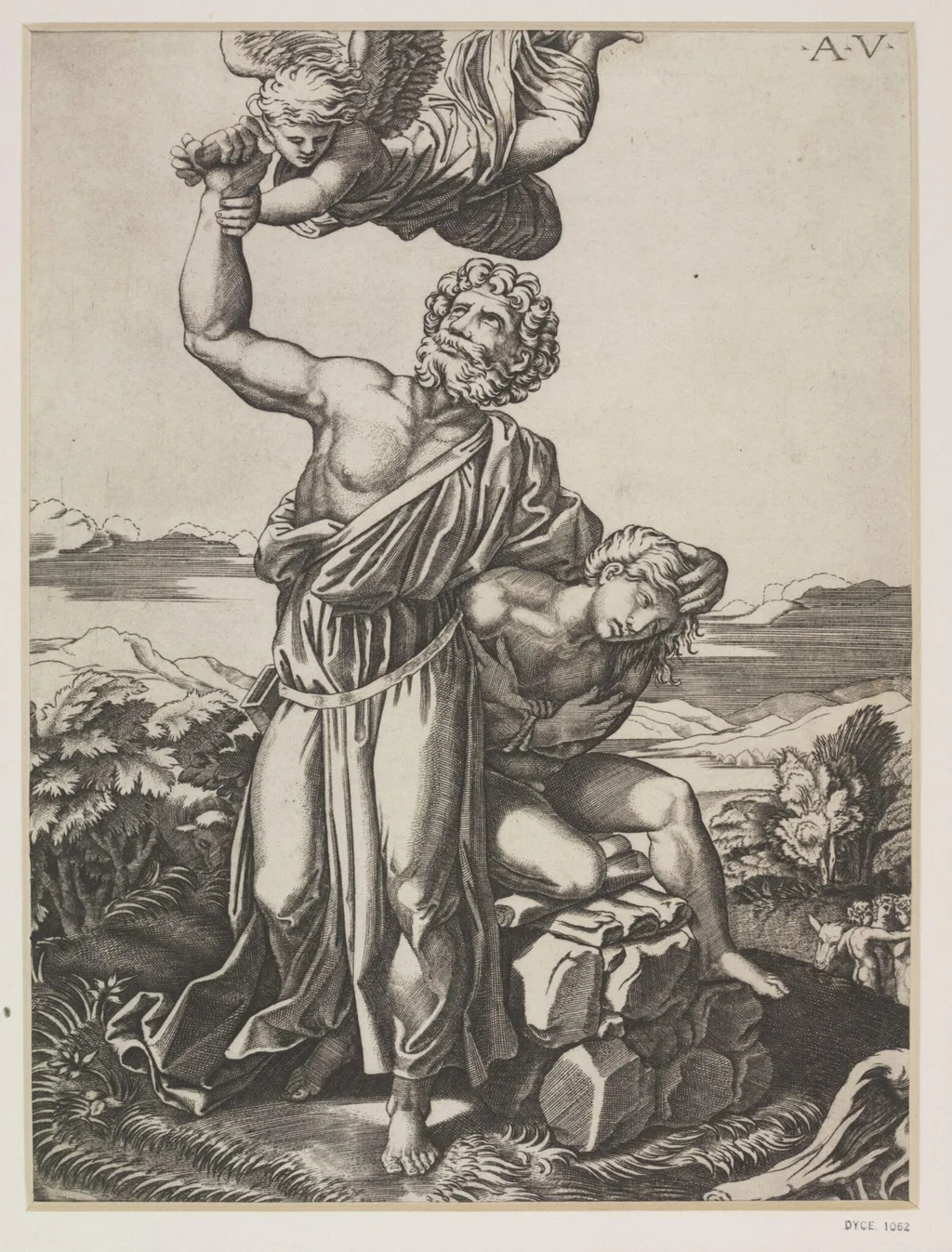
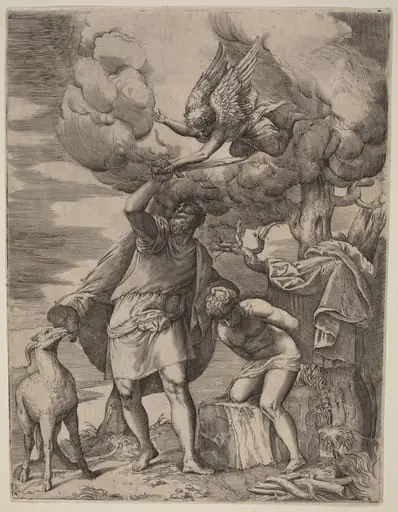
The Sacrifice of Abraham is a print by the Renaissance artist Agostino dei Musi. It dates from 1500 and is held in the collection of the Victoria and Albert Museum. This print on paper illustrates the biblical moment when Abraham is halted from sacrificing his son Isaac by a divine messenger.
About this work
Overview
This print on paper illustrates the biblical moment when Abraham is halted from sacrificing his son Isaac by a divine messenger.
This print on paper illustrates the biblical moment when Abraham is halted from sacrificing his son Isaac by a divine messenger. Created as a reproductive engraving after a design by Raphael, it belongs to the Dyce Collection, formally cataloged in 1874. The original drawing by Raphael resides in the British Museum’s Print Room, underscoring the print’s role as a mediated transmission of Renaissance composition to a wider audience through printmaking.
Subject & Meaning
The scene captures the climax of Genesis 22, where faith is tested and divine intervention prevents filicide. Abraham, knife raised, is arrested mid-action by an angel who seizes his arm, while Isaac lies bound on an altar. The moment conveys tension between obedience and mercy, a theological pivot point in Abrahamic traditions. The landscape background, though secondary, anchors the event in a tangible world, reinforcing its narrative gravity over symbolic abstraction.
Technique & Style
Rendered in fine linear engraving, the print employs chiaroscuro through controlled hatching and cross-contour shading to model forms with sculptural weight. Figures are rendered with anatomical precision and dynamic posture, reflecting Raphael’s classical ideals. The background’s delicate rendering of hills and trees provides spatial depth without distracting from the central drama. The medium’s precision suits the narrative’s emotional restraint, emphasizing clarity over theatricality.
History & Provenance
The print derives from a lost Raphael drawing, now known only through copies and engravings. It was produced during the 16th-century surge in reproductive prints, which disseminated high art beyond elite circles. The work entered the Dyce Collection in the 19th century, a significant assemblage of graphic art later absorbed into public institutions. Its cataloging in 1874 reflects Victorian-era efforts to systematize and preserve artistic heritage.
Context
In the early 1500s, Raphael’s designs were widely circulated via print, helping to standardize compositional ideals across Europe. This print emerged during a period when religious narratives were frequently reinterpreted through humanist lenses, blending theological gravity with classical form. The engraving’s existence speaks to the collaboration between painters, printmakers, and publishers who made visual culture more accessible, bridging elite and popular audiences.
Legacy
Though not an original work by Raphael, this print preserved and propagated his compositional genius to generations unfamiliar with his drawings. It contributed to the enduring visual vocabulary of biblical scenes in Western art. As part of the Dyce Collection, it became a reference point for scholars and collectors, affirming the role of reproductive prints in shaping artistic memory and historical continuity.
Artist & collection
Artist
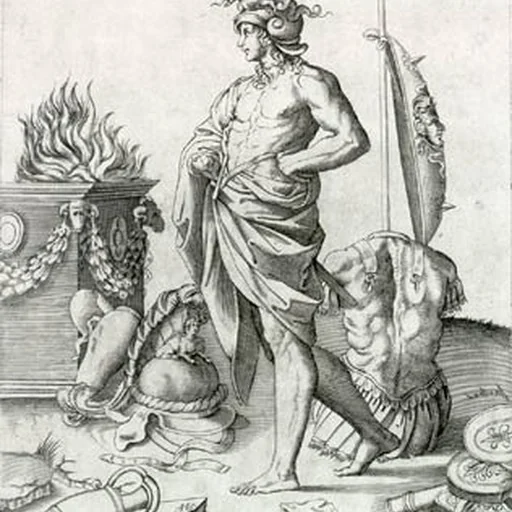
Agostino Veneziano ("Venetian Agostino"), whose real name was Agostino de' Musi (c. 1490 – c. 1540), was an important and prolific Italian engraver of the Renaissance.