Artwork
Judgment of Paris
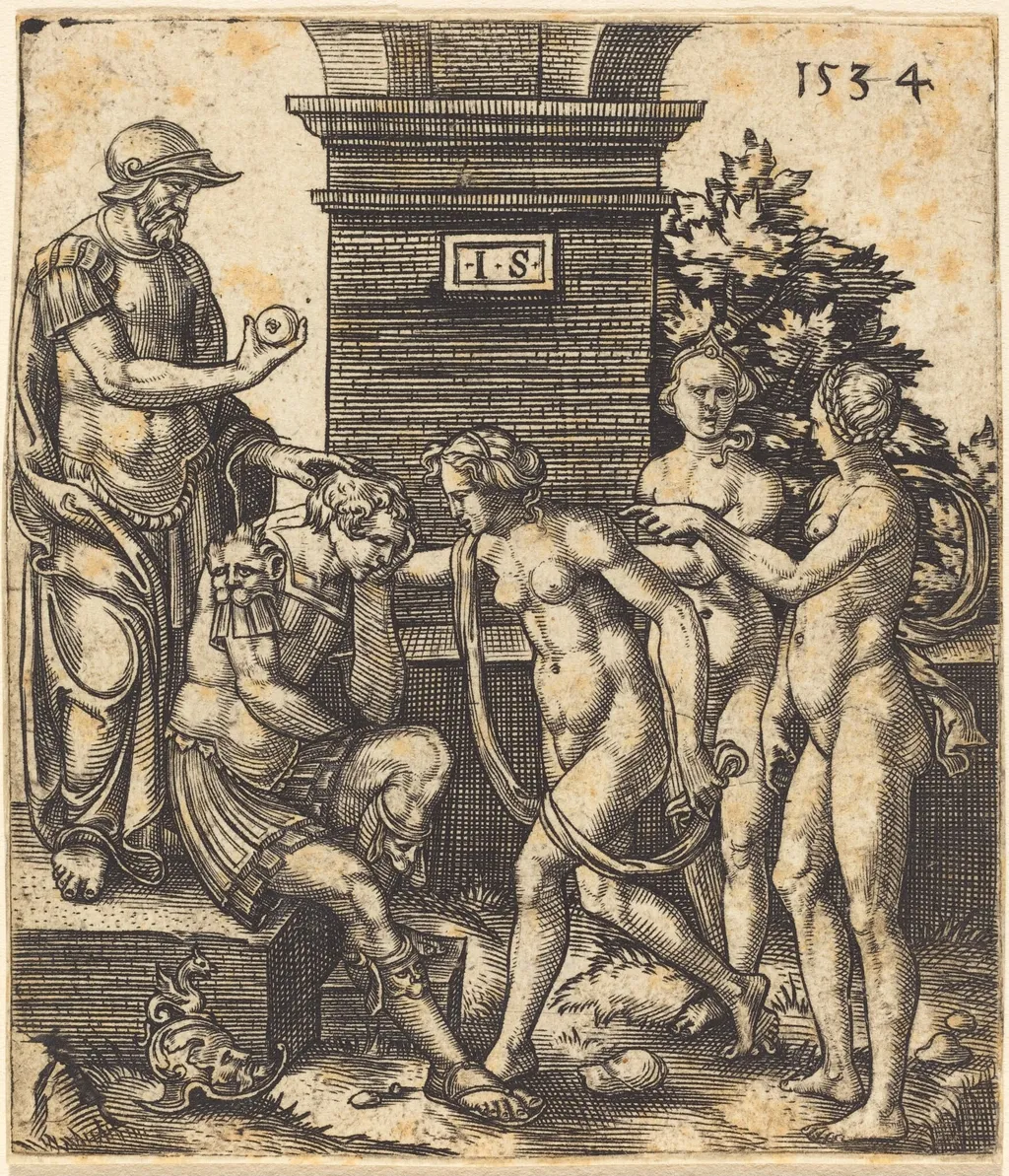
Judgment of Paris is an ink print by the Renaissance artist Master IS. It dates from 1534 and is held in the collection of the National Gallery of Art.
About this work
Overview
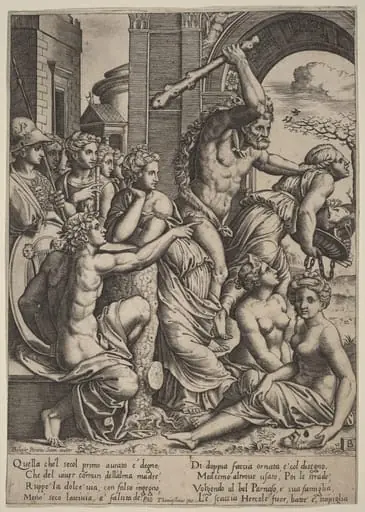
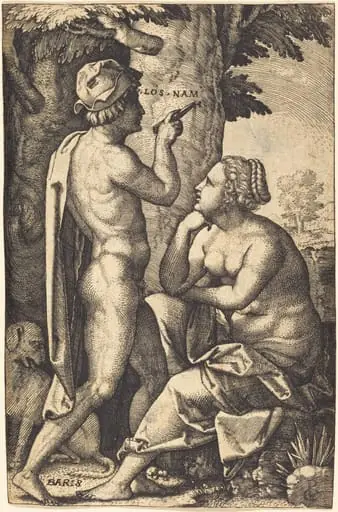
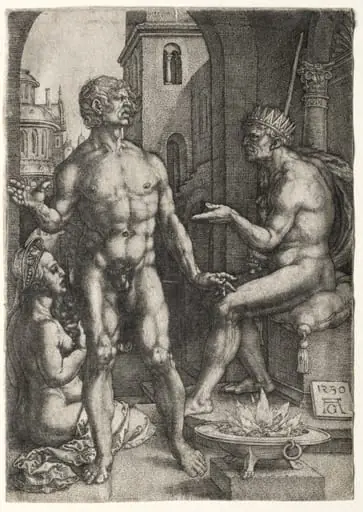
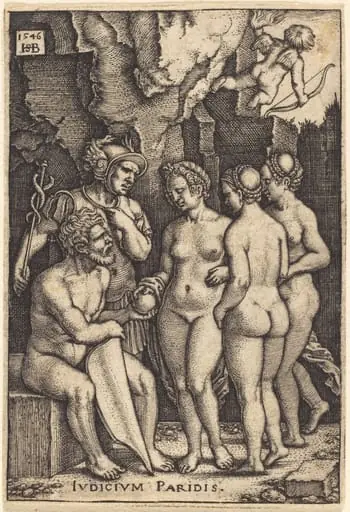
The 1534 engraving titled Judgment of Paris, attributed to the enigmatic Master I.S., presents a compact narrative scene typical of early Renaissance printmaking. Executed in black-and-white line work, the image balances a foreground group of figures with a modest architectural backdrop, creating a sense of spatial depth within the limited dimensions of the plate.
Subject & Meaning
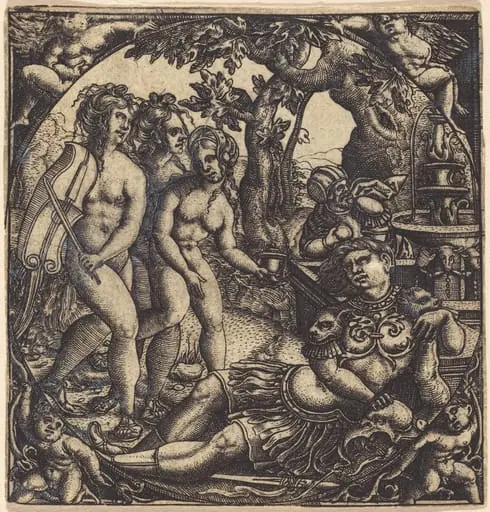
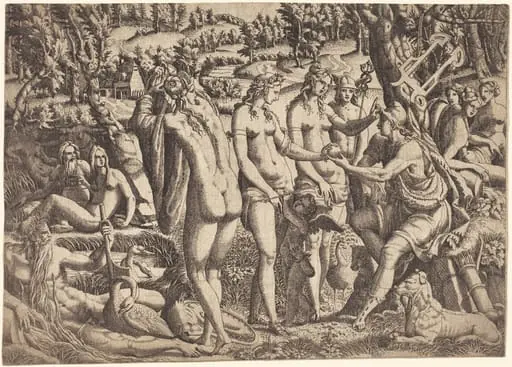
Central to the composition is a suited figure in a hat and armor extending an apple toward three nude women, evoking the mythological episode where Paris must choose the fairest goddess. The women’s varied postures—one kneeling, the others standing—suggest differing responses to the offered prize, hinting at the underlying themes of desire and judgment.
Technique & Style
The print exemplifies Renaissance engraving through its meticulous cross‑hatching, which generates tonal variation and a three‑dimensional effect. Fine parallel lines build shadows on the figures’ bodies and drapery, while broader strokes define the architectural elements, demonstrating the artist’s command of line to model form without color.
History & Provenance
Signed in the background with the monogram "I.S.", the work bears the hallmark of a workshop that remains largely unidentified, though the signature confirms the creator’s claim. The engraving has circulated among European collections since the sixteenth century, appearing in several early print catalogues that document its distribution.
Context
Produced during a period when mythological subjects were popular in print, the image reflects the humanist interest in classical narratives that characterized the Northern Renaissance. Its compact format made it suitable for private devotion or scholarly study, aligning with the era’s growing market for affordable, reproducible artworks.
Legacy
While the identity of Master I.S. remains obscure, the engraving contributes to our understanding of early print culture and the diffusion of classical themes across Europe. Its technical execution continues to be cited in studies of Renaissance engraving methods and the visual transmission of mythological iconography.
Artist & collection