Artwork
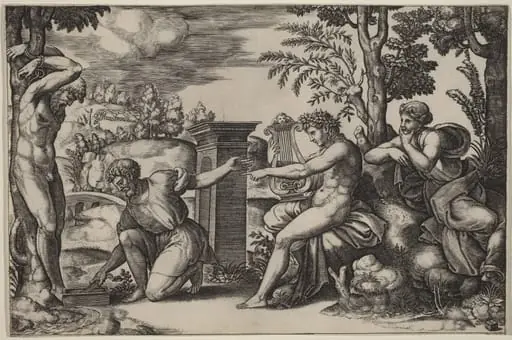
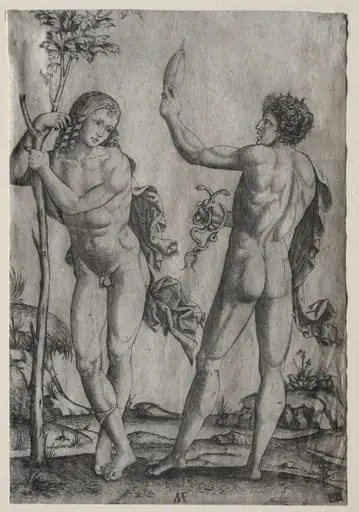
Paris Writing Words of Love to Oenone
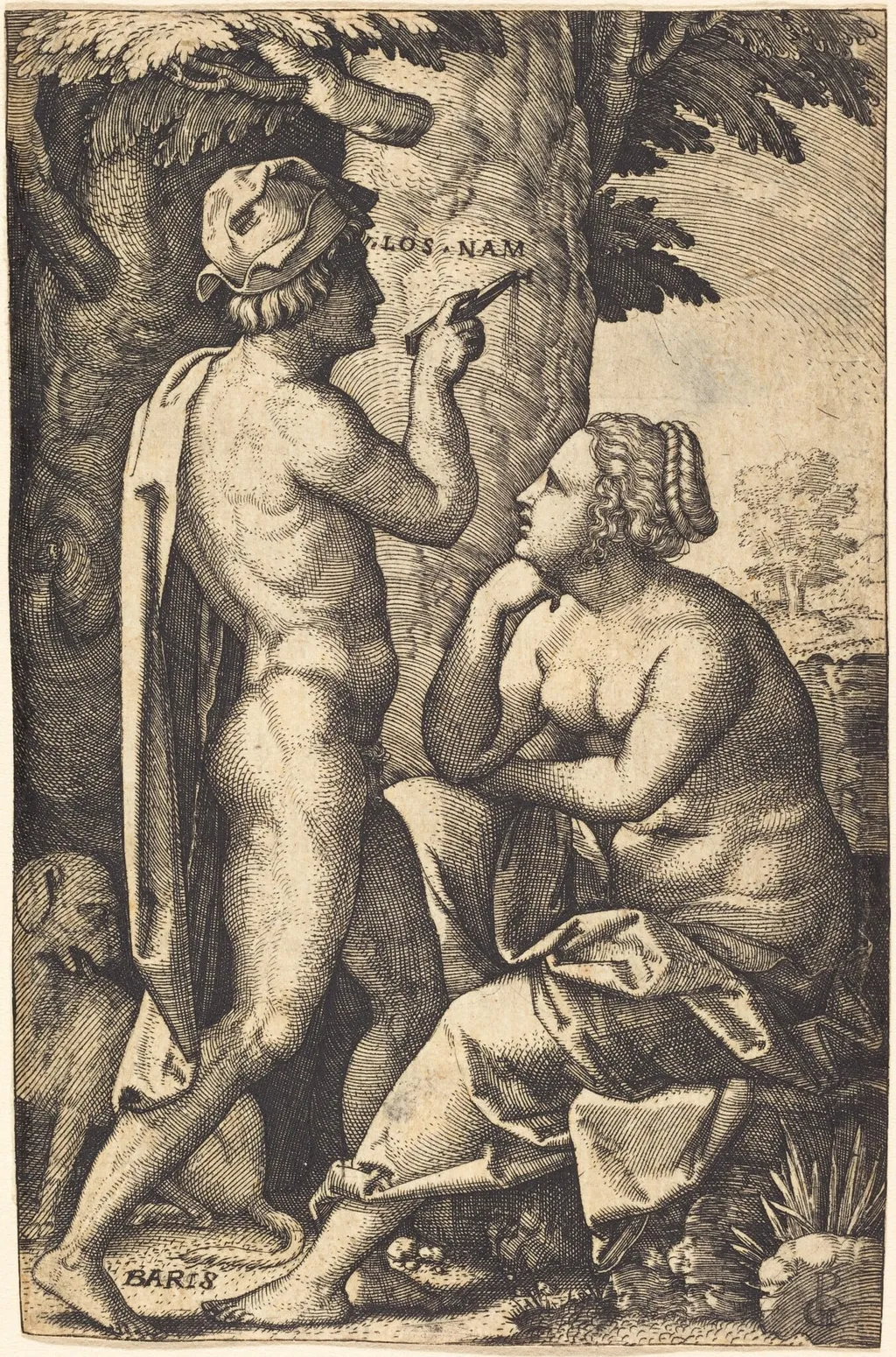
Paris Writing Words of Love to Oenone is an ink print by the Renaissance artist Georg Pencz. It dates from 1525 and is held in the collection of the National Gallery of Art.
About this work
Overview
Paris Writing Words of Love to Oenone is a 1525 engraving by Georg Pencz, a German artist trained under Albrecht Dürer, reflecting influences from both Nuremberg and Venetian art traditions.
Subject & Meaning
The engraving illustrates a mythological scene where Paris, standing, composes a love message to Oenone, with the kneeling figure (likely Oenone) attentively listening, conveying a moment of intimate communication within a natural setting.
Technique & Style
Pencz employed cross-hatching, a technique involving layered lines to achieve depth and texture, evident in the detailed rendering of trees, clothing, and the subtle play of shadows throughout the composition.
History & Provenance
Created in 1525, the same year Pencz faced imprisonment in Nuremberg for radical theological views, alongside the Beham brothers, highlighting the tumultuous context of its creation.
Context
Reflecting Pencz's diverse artistic exposures, the work blends the precision of Nuremberg's engraving tradition with the expressive qualities of Venetian art, as seen in collaborations with Marcantonio Raimondi.
Legacy
While specific long-term impacts of *Paris Writing Words of Love to Oenone* are not detailed, it represents a notable example of early 16th-century German engraving, showcasing Pencz's skill and the enduring influence of his mentors and contemporaries.
Artist & collection
Artist
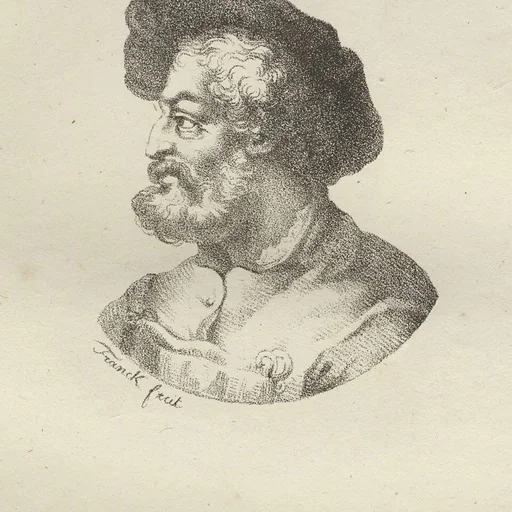
Georg Pencz (c. 1500 – 11 October 1550) was a German engraver, painter and printmaker. Pencz was probably born in Westheim near Bad Windsheim/Franconia. He travelled to Nuremberg in 1523 and joined Albrecht Dürer’s…