Artwork
The Great Tournament: Munich
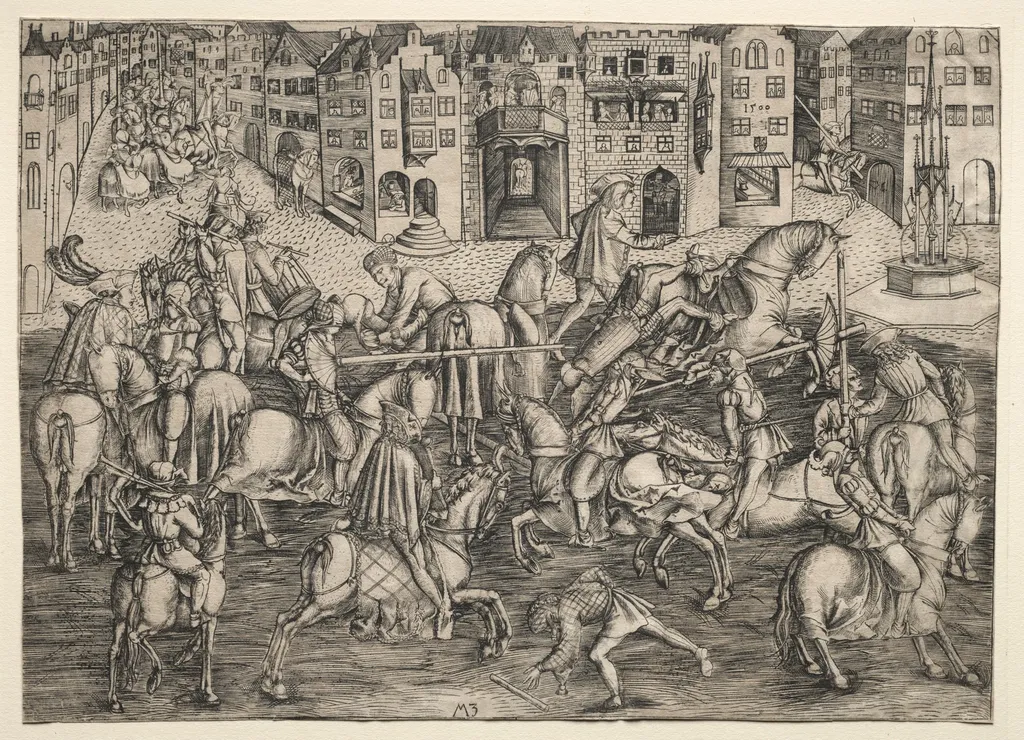
The Great Tournament: Munich is a print by the Renaissance artist Master MZ. It dates from 1500 and is held in the collection of the Cleveland Museum of Art.
About this work
Behind them, a crowd of onlookers watches from the street, while buildings with steep roofs and small windows line the background.
This crowded scene shows a chaotic tournament in a European town. Knights on horseback clash in the foreground, their armor and weapons tangled in the fight. Behind them, a crowd of onlookers watches from the street, while buildings with steep roofs and small windows line the background. Some horses rear up, adding to the sense of movement and danger.
The artist packed every inch with detail, from the riders’ helmets to the spectators’ faces. The year "1500" appears on one building, hinting this might be a snapshot of life at that time.
Look up Renaissance to see how this style shaped art and culture.
Overview
The Great Tournament: Munich is a print created by Master MZ in 1500, now part of The Cleveland Museum of Art's collection. This work depicts a chaotic medieval tournament scene in vivid detail.
Subject & Meaning
The print captures the intensity of a tournament in a European town, focusing on the clash of knights on horseback in the foreground and the observing crowd in the background. The inclusion of the year '1500' on a building suggests it may represent a contemporary snapshot of life at the turn of the 16th century.
Technique & Style
Master MZ's technique is characterized by densely packed compositions, evident in the meticulous detail given to armor, weapons, spectators' faces, and architectural elements. The dynamic poses of the horses and knights convey a strong sense of movement and energy.
History & Provenance
Created in 1500 by Master MZ, the print's history prior to its acquisition by The Cleveland Museum of Art is not detailed here. The work is dated on-site through the '1500' inscription on one of the depicted buildings.
Context
This work reflects the Renaissance interest in detailed, realistic depictions of life and events. The tournament scene also highlights the cultural significance of such events in medieval Europe, blending sport, nobility, and public spectacle.
Legacy
While specific influences or direct artistic descendants are not outlined, The Great Tournament: Munich contributes to the broader understanding of early 16th-century printmaking and the visual documentation of medieval tournaments.
Artist & collection


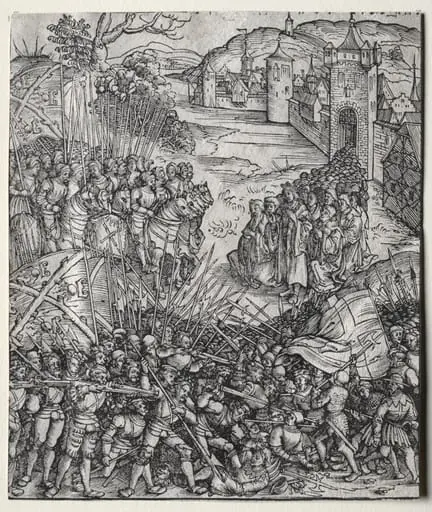 First Flemish Rebellion
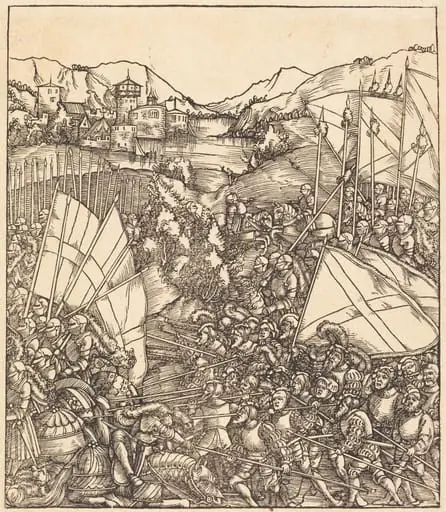 The War at Hainault
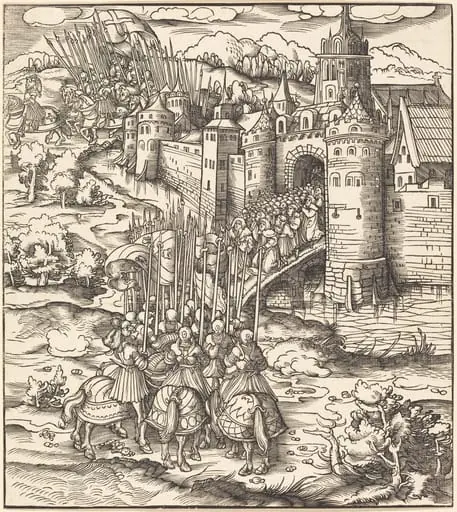 Various Men Kneeling on a Bridge in front of a Town
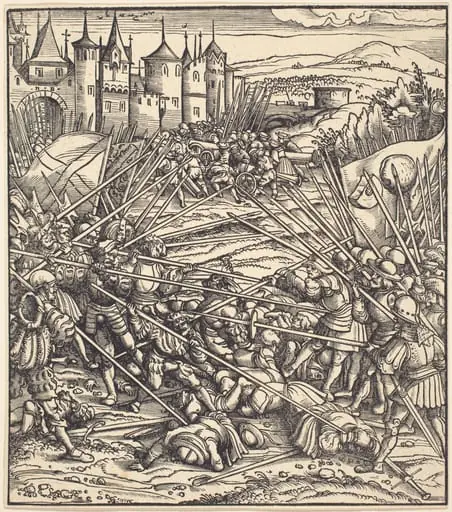 Battle of the Foot Soldiers with Lances
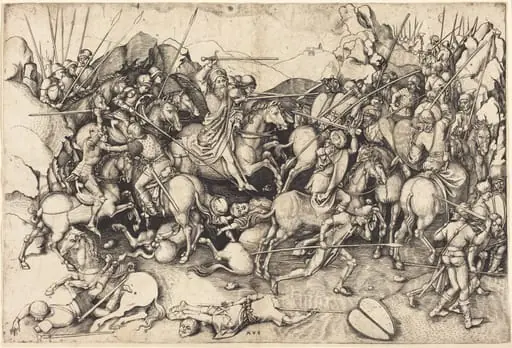 The Battle of Saint James at Clavijo
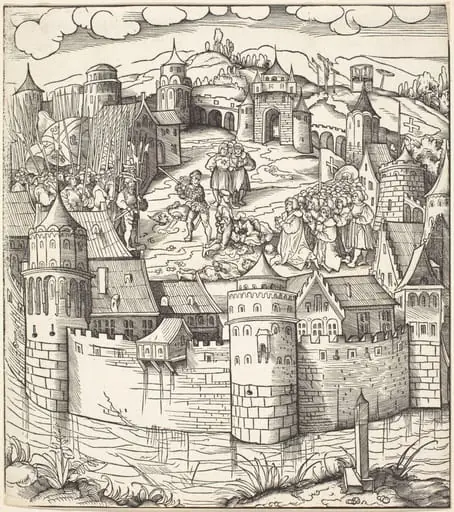 Execution of a Man at a Market-Place of a Town
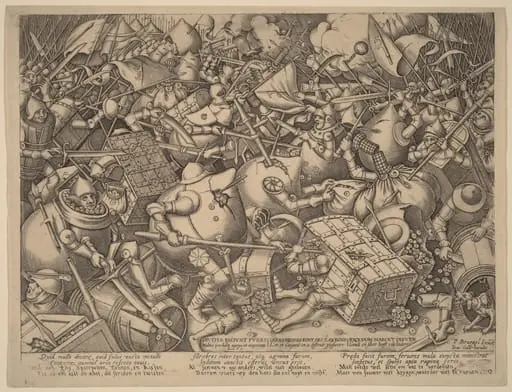 The Battle of the Moneybags and the Strongboxes
 Der Weisskunig (The White King): The Siege of Padua