Artwork
Execution of a Man at a Market-Place of a Town
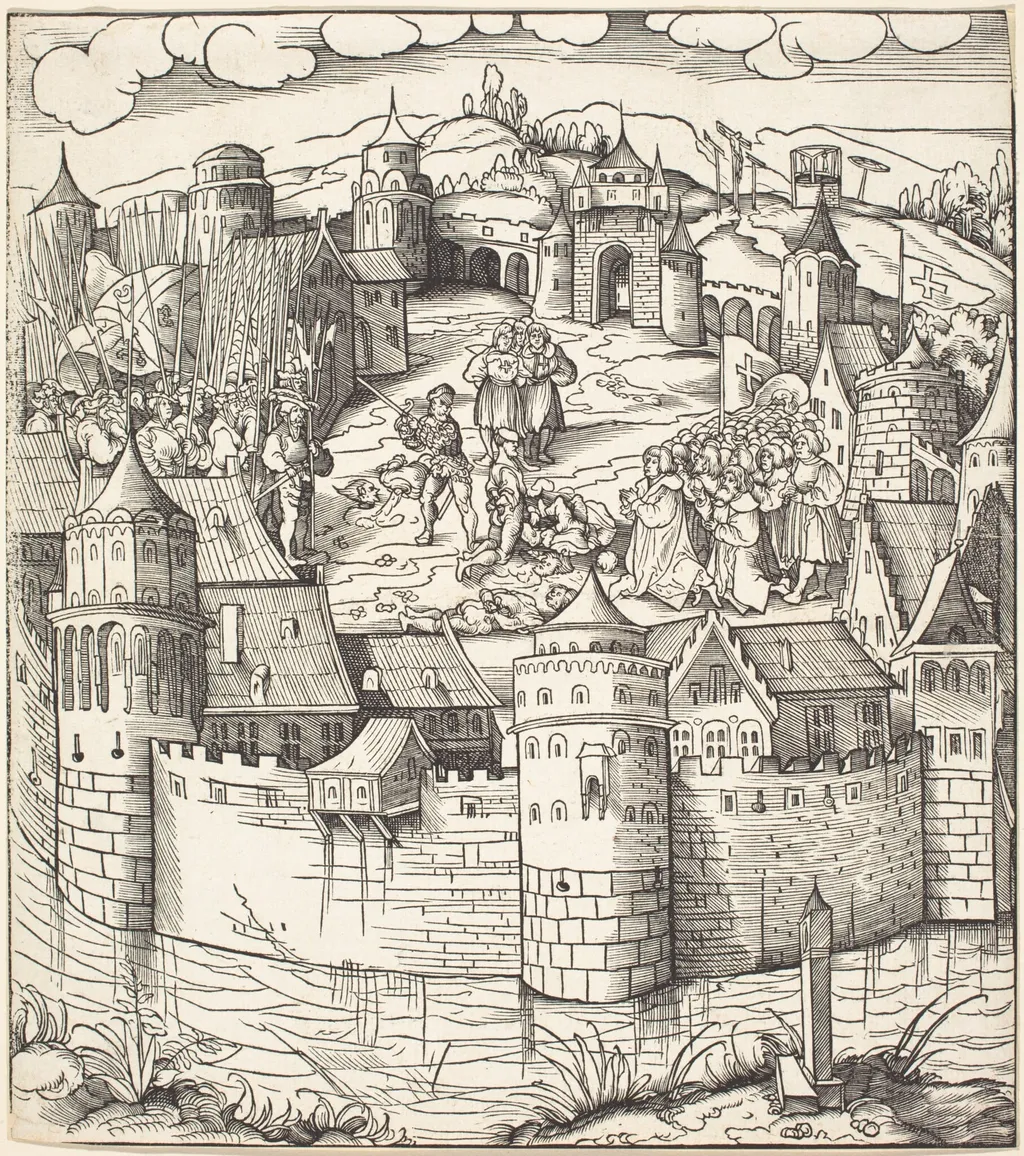
Execution of a Man at a Market-Place of a Town is an ink print by the Renaissance artist Leonhard Beck. It dates from 1515 and is held in the collection of the National Gallery of Art.
About this work
The crowd is depicted in various poses, some of whom are looking on in horror, while others appear to be indifferent to the scene unfolding before them.
This painting depicts a scene of execution in a market place. The central figure is a man being beheaded by a swordsman, while a crowd of people watches from the surrounding area. The scene is set against the backdrop of a town, with buildings and a gate visible in the background.
In the foreground, the executioner is shown in the act of beheading the man, who is kneeling on the ground. The crowd is depicted in various poses, some of whom are looking on in horror, while others appear to be indifferent to the scene unfolding before them.
The painting is a woodcut, created by Leonhard Beck in 1514/1516, and is held at the National Gallery of Art, Washington. If you're interested in learning more about this style of art, you might want to explore the Renaissance movement.
Overview
Leonhard Beck, an early‑16th‑century German artist active in Augsburg, produced the woodcut titled *Execution of a Man at a Market‑Place of a Town* around 1515. The print portrays a public beheading taking place in a bustling square, with surrounding buildings and a gate framing the scene. It is part of the National Gallery of Art’s collection in Washington, D.C.
Subject & Meaning
The image captures a condemned individual kneeling before a swordsman who is delivering the fatal blow, while a heterogeneous crowd watches. Some onlookers display shock or horror, whereas others appear detached, suggesting a commentary on the varied public attitudes toward capital punishment in early modern urban life.
Technique & Style
Executed as a woodcut, the work demonstrates Beck’s precise, illustrative approach, marked by fine line work and careful delineation of figures and architecture. The composition balances foreground action with a detailed background, employing the high‑contrast black‑and‑white palette typical of German printmaking of the period.
History & Provenance
Beck, the son of miniaturist Georg Beck, trained in his father’s workshop before assisting Hans Holbein the Elder on an altarpiece. Later he contributed to projects commissioned by Emperor Maximilian I’s artistic circle, which frequently employed woodcuts for propaganda and narrative purposes. The print entered the National Gallery of Art’s holdings in the 20th century, though earlier ownership records are sparse.
Context
Created during a time when public executions were both legal punishment and public spectacle, the print reflects contemporary civic rituals. Augsburg’s thriving print industry and the patronage of Maximilian I’s court provided a fertile environment for artists like Beck to produce works that documented and disseminated such events.
Artist & collection
Artist
Leonhard Beck (c. 1480 – 1542) was a painter and woodcuts designer in Augsburg, Germany. He was the son of Georg Beck, a miniaturist who was active in Augsburg c. 1490–1512/15. Leonhard collaborated with his father on…

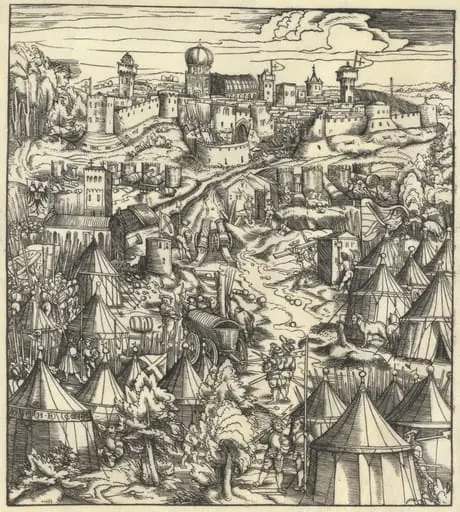 The Battle of Padua
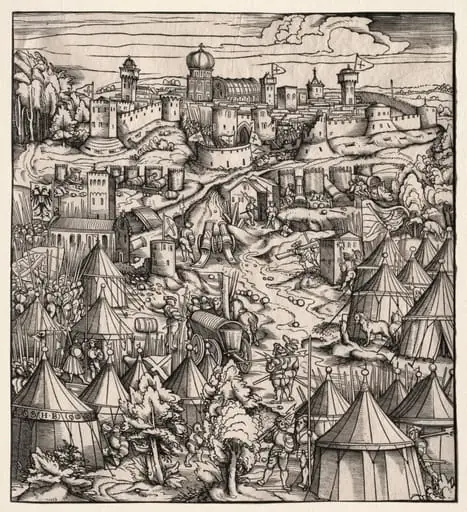 Der Weisskunig (The White King): The Siege of Padua
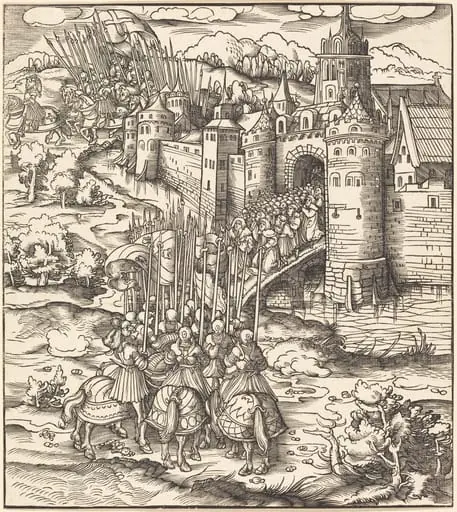 Various Men Kneeling on a Bridge in front of a Town
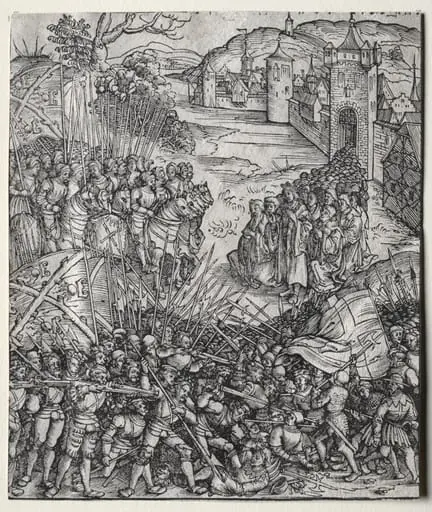 First Flemish Rebellion
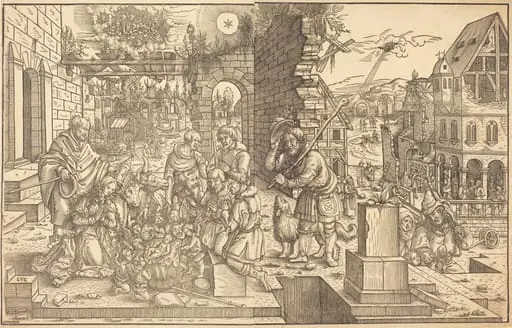 The Adoration of the Shepherds
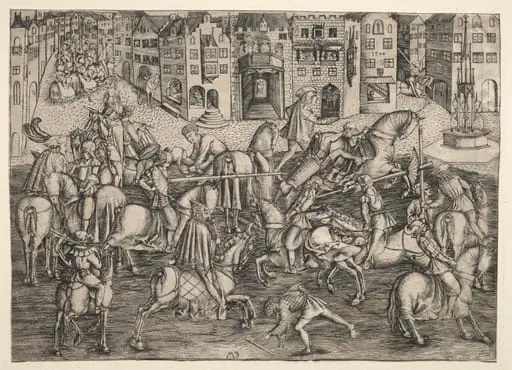 The Great Tournament: Munich
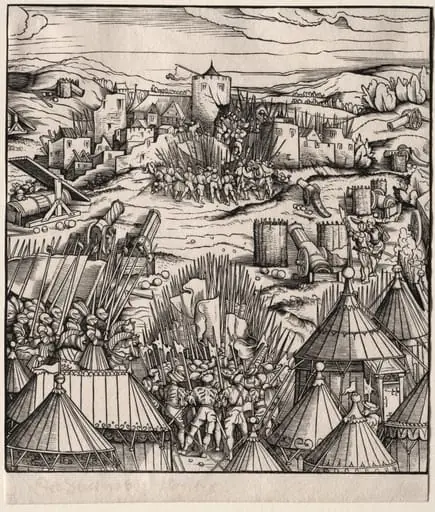 The Storming of Nantes
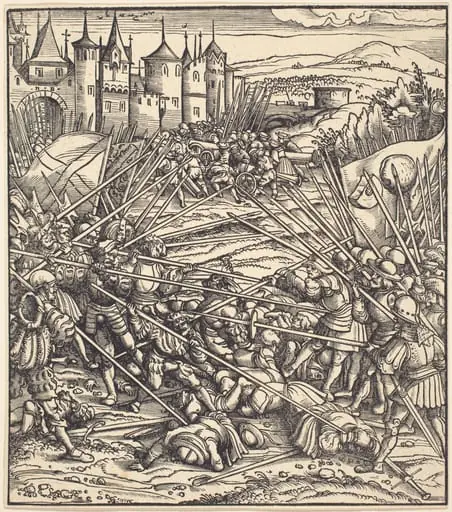 Battle of the Foot Soldiers with Lances
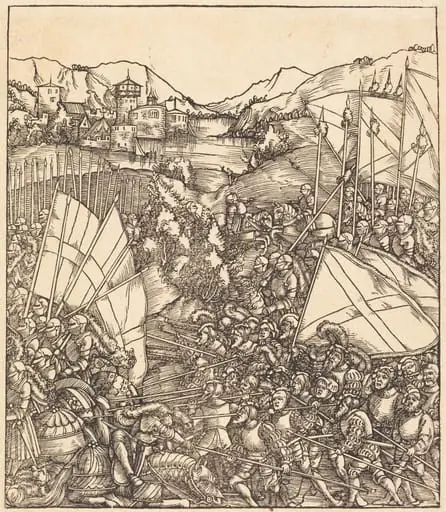 The War at Hainault
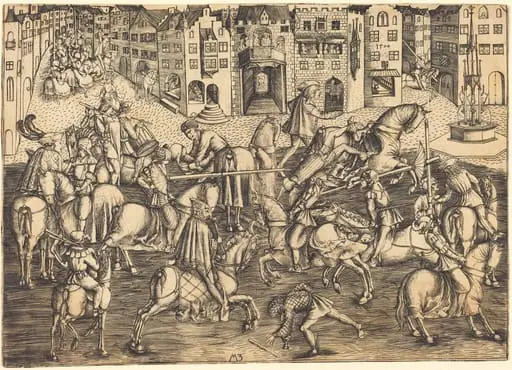 The Tournament
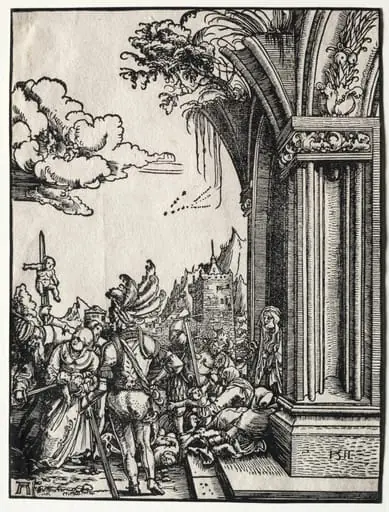 The Massacre of the Innocents