Artwork
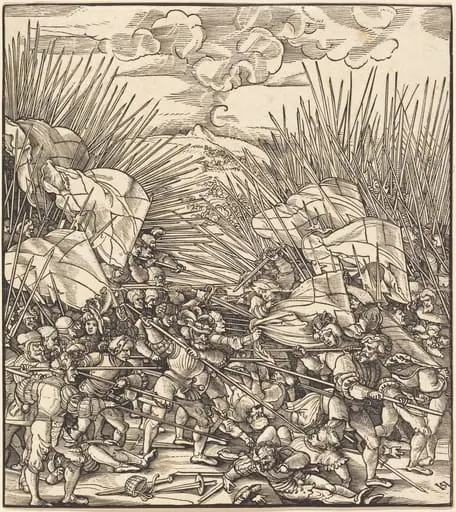
Battle of the Foot Soldiers with Lances
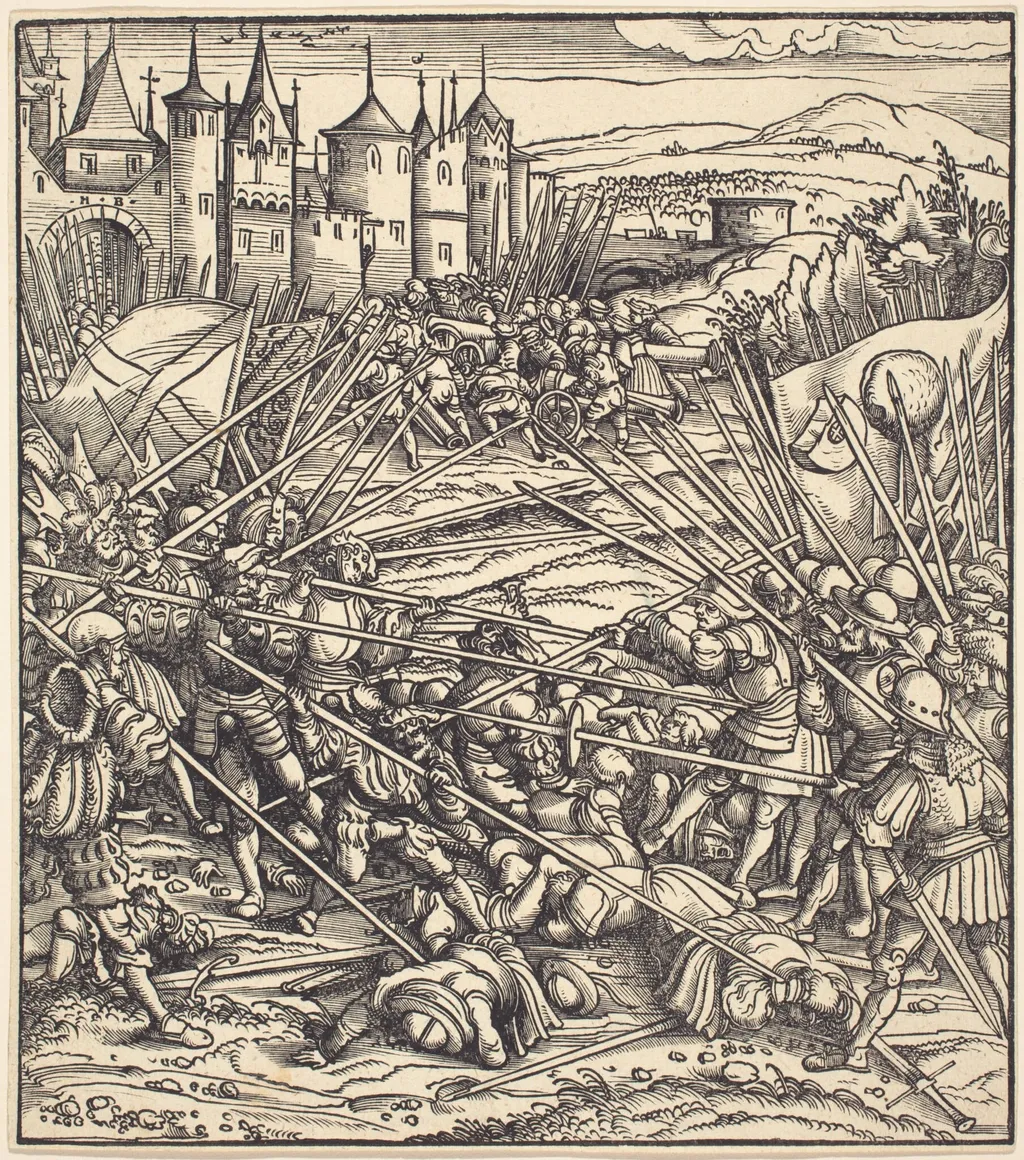
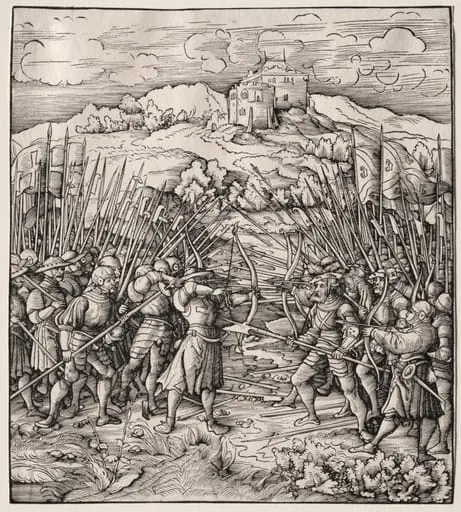
Battle of the Foot Soldiers with Lances is an ink print by the Renaissance artist Hans Burgkmair the Elder. It dates from 1515 and is held in the collection of the National Gallery of Art. Created in 1515, this woodcut by Hans Burgkmair I depicts a dense, violent clash of infantry armed with lances.
About this work
Overview
Created in 1515, this woodcut by Hans Burgkmair I depicts a dense, violent clash of infantry armed with lances.
Created in 1515, this woodcut by Hans Burgkmair I depicts a dense, violent clash of infantry armed with lances. Rendered on laid paper, the print captures a moment of chaotic melee, with figures compressed into tight ranks. The composition emphasizes movement and disorder, characteristic of early 16th-century German printmaking, where the woodcut medium was used to convey dynamic scenes with minimal detail but strong visual impact.
Subject & Meaning
The scene portrays a melee of foot soldiers locked in close combat, some collapsing under the weight of battle, others pressing forward with lances leveled. Behind them, a fortified castle looms, suggesting a siege or territorial conflict. The absence of identifiable leaders or banners implies a focus on the collective violence of war rather than any specific historical event, reflecting a broader commentary on the brutality of infantry combat.
Technique & Style
Burgkmair employed the woodcut technique, carving lines into a wooden block to create raised surfaces that held ink. Sharp, angular strokes define the soldiers’ forms, while deep black areas heighten contrast and convey depth. The dense patterning of lances and bodies creates rhythmic repetition, enhancing the sense of claustrophobic chaos. The method’s inherent linearity suits the graphic intensity of the scene, typical of Northern European printmakers of the period.
History & Provenance
The print was produced during Burgkmair’s active years in Augsburg, a center of print production in the early 1500s. While its original commission or audience is unrecorded, it likely circulated among patrons interested in military imagery or as part of a series of battle scenes. Surviving impressions are held in major European collections, indicating its early reception and preservation within scholarly and artistic circles.
Context
In the early 16th century, woodcuts were widely used to disseminate images of war, religion, and daily life. Burgkmair’s work reflects the influence of Albrecht Dürer and the growing demand for printed imagery among the literate middle class. The depiction of infantry combat aligns with contemporary European conflicts, including the Italian Wars, where pike formations and close-quarters fighting were common, making such scenes both topical and visually compelling.
Legacy
This woodcut exemplifies the transition from medieval to Renaissance printmaking in Germany, where narrative clarity and emotional intensity were prioritized over idealized form. Though not widely reproduced in later centuries, it remains a key example of Burgkmair’s skill in translating complex scenes into the constraints of the woodcut medium, influencing subsequent generations of printmakers focused on realism and movement.
Artist & collection
Artist
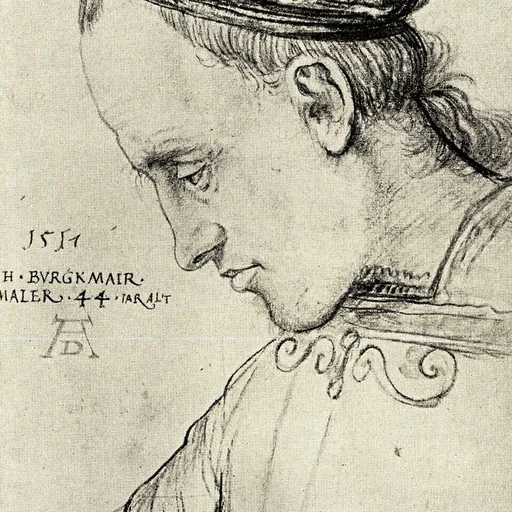
Hans Burgkmair the Elder (1473–1531) was a German artist, born in Augsburg.

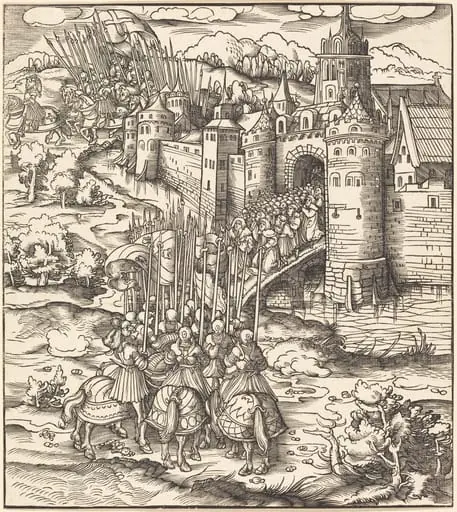 Various Men Kneeling on a Bridge in front of a Town
 The Battle Against the Blue Company
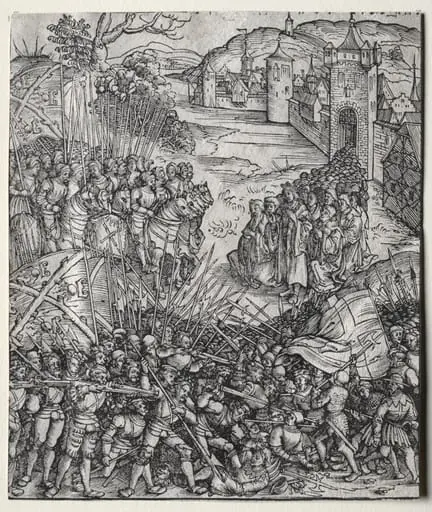 First Flemish Rebellion
 Battle of Cividale
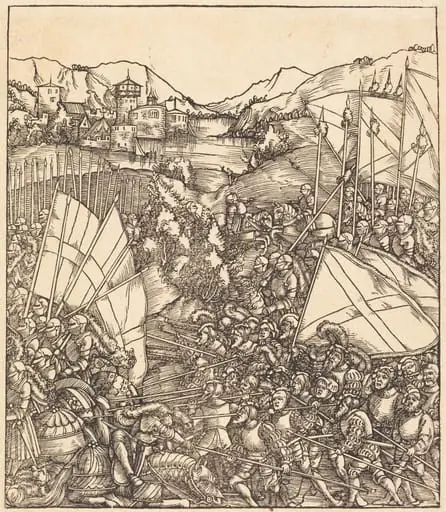 The War at Hainault
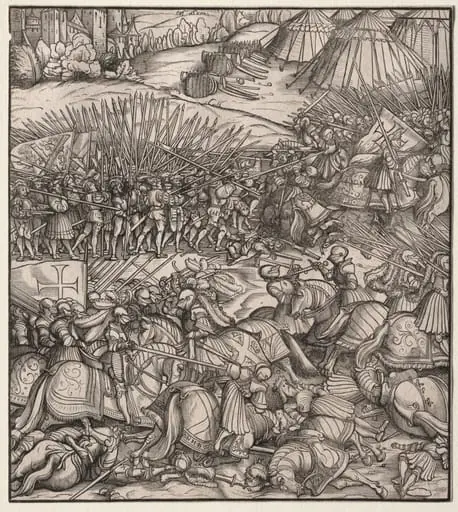 How the French King made war on the King of Feuereisen in his realm and how the King of Feuereisen died in the battle
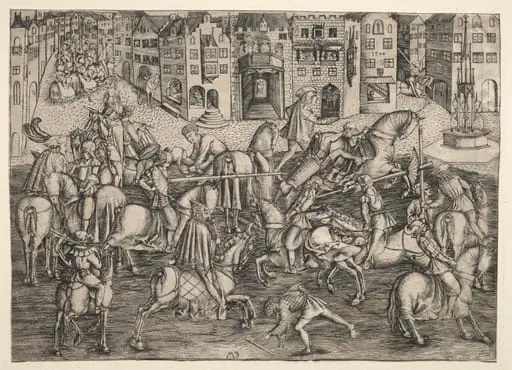 The Great Tournament: Munich
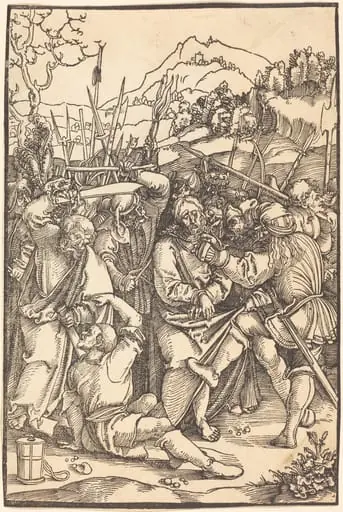 Christ Taken Prisoner
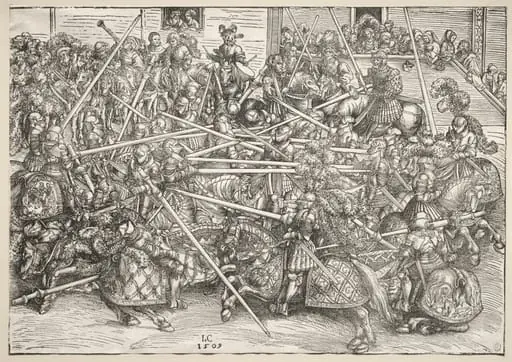 The Tournament with lances
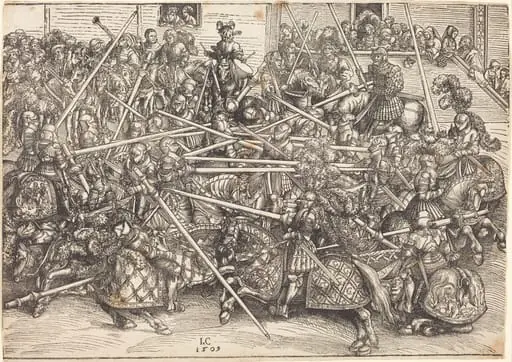 The Third Tournament
 The Betrayal of Christ
 The Storming of Nantes