Artwork
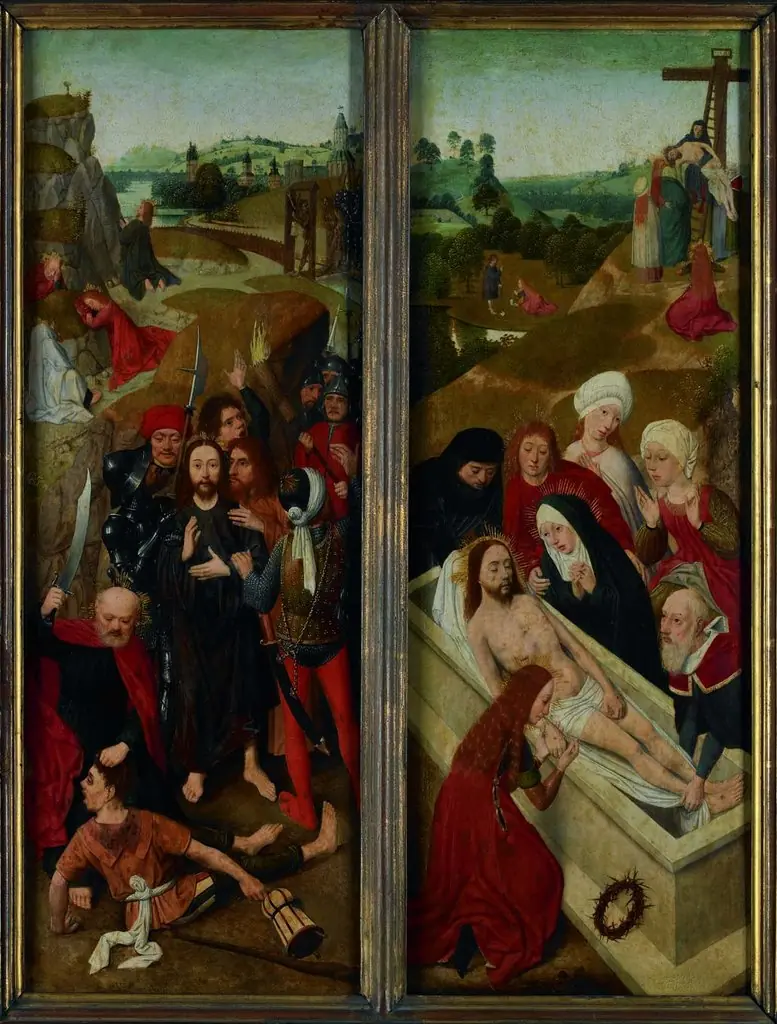
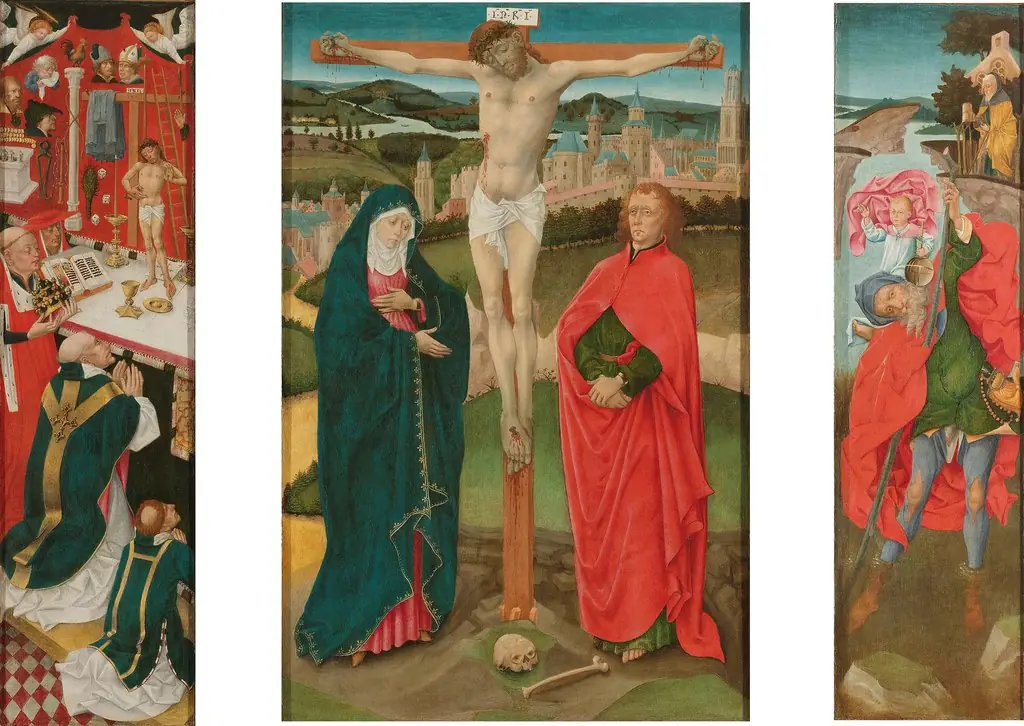
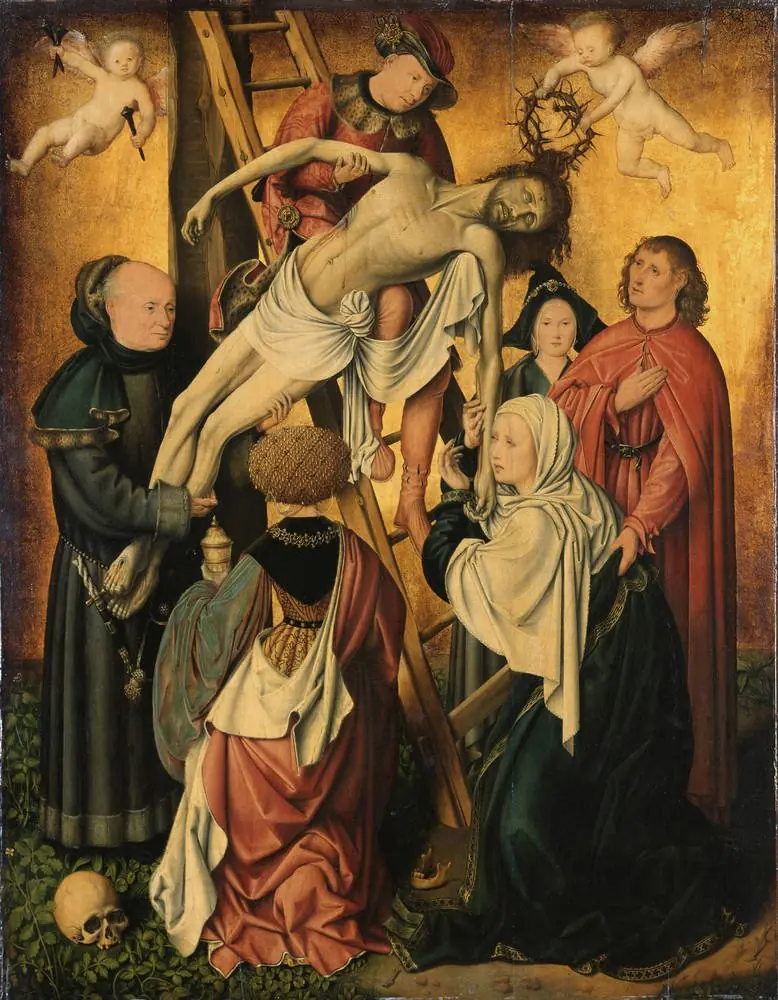
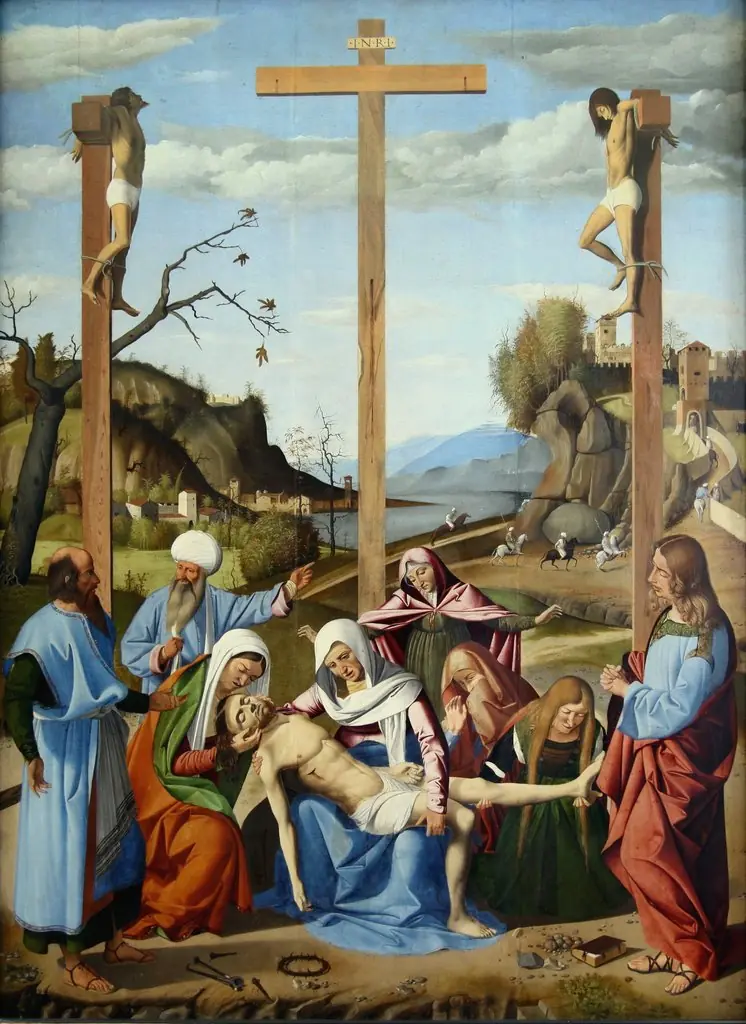
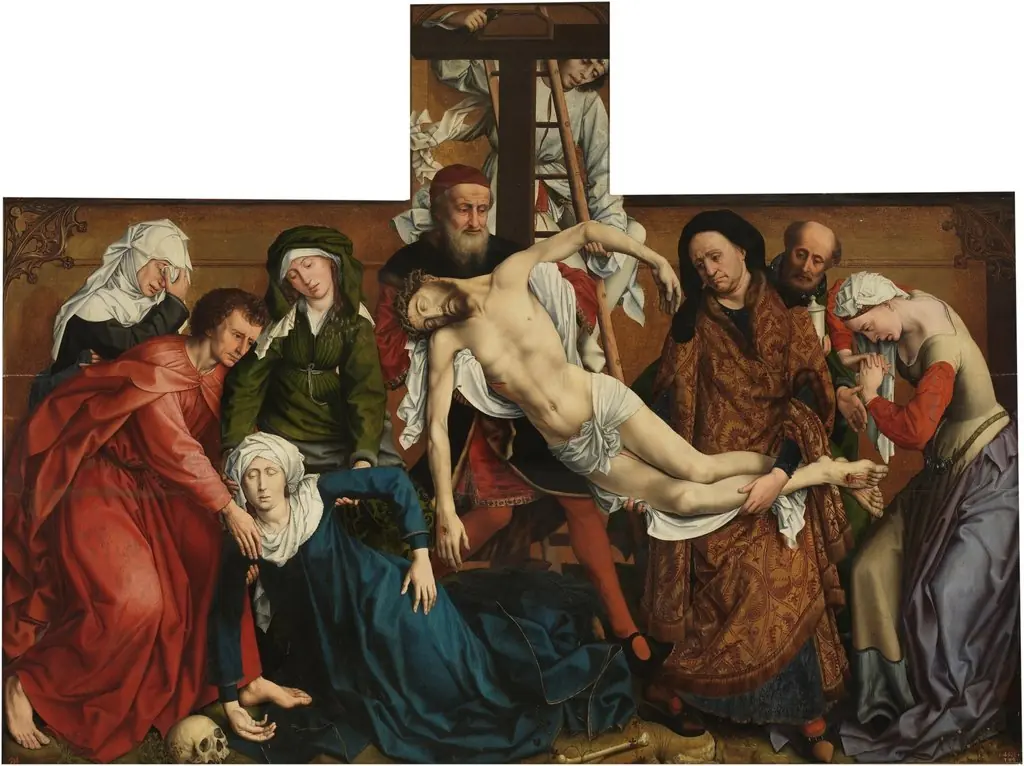
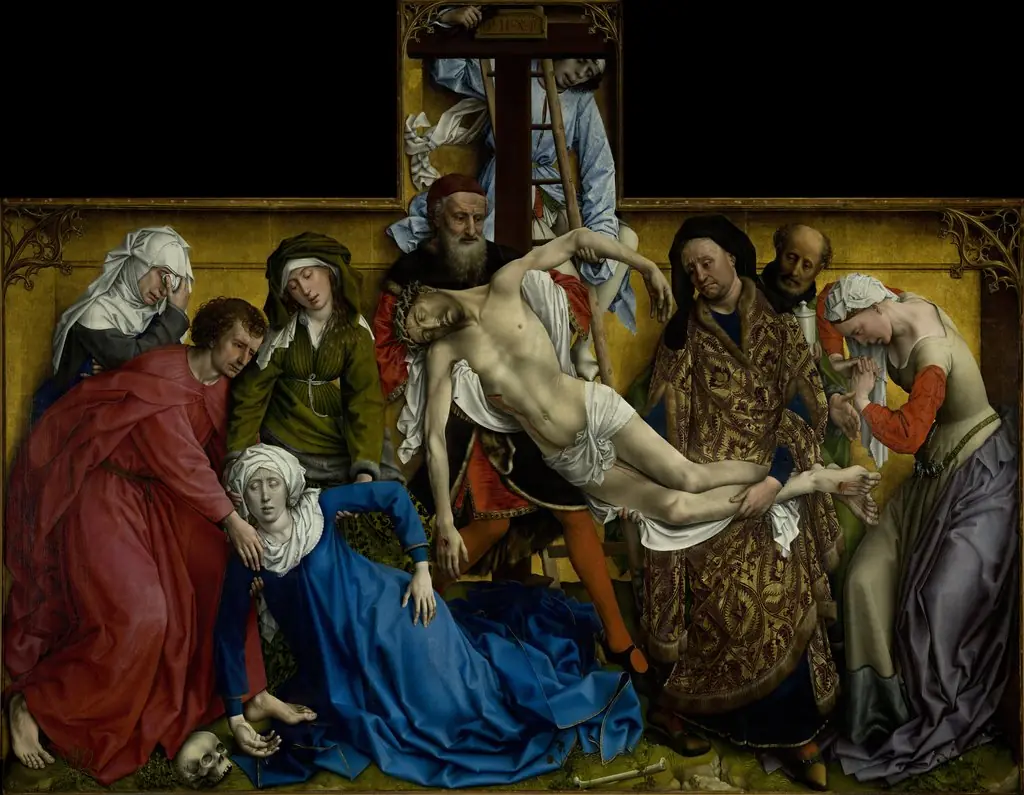
De graflegging (links), Maria, Johannes de Evangelist, Jozef van Arimatea, Nicodemus en de drie Maria's verlaten het graf (rechts)
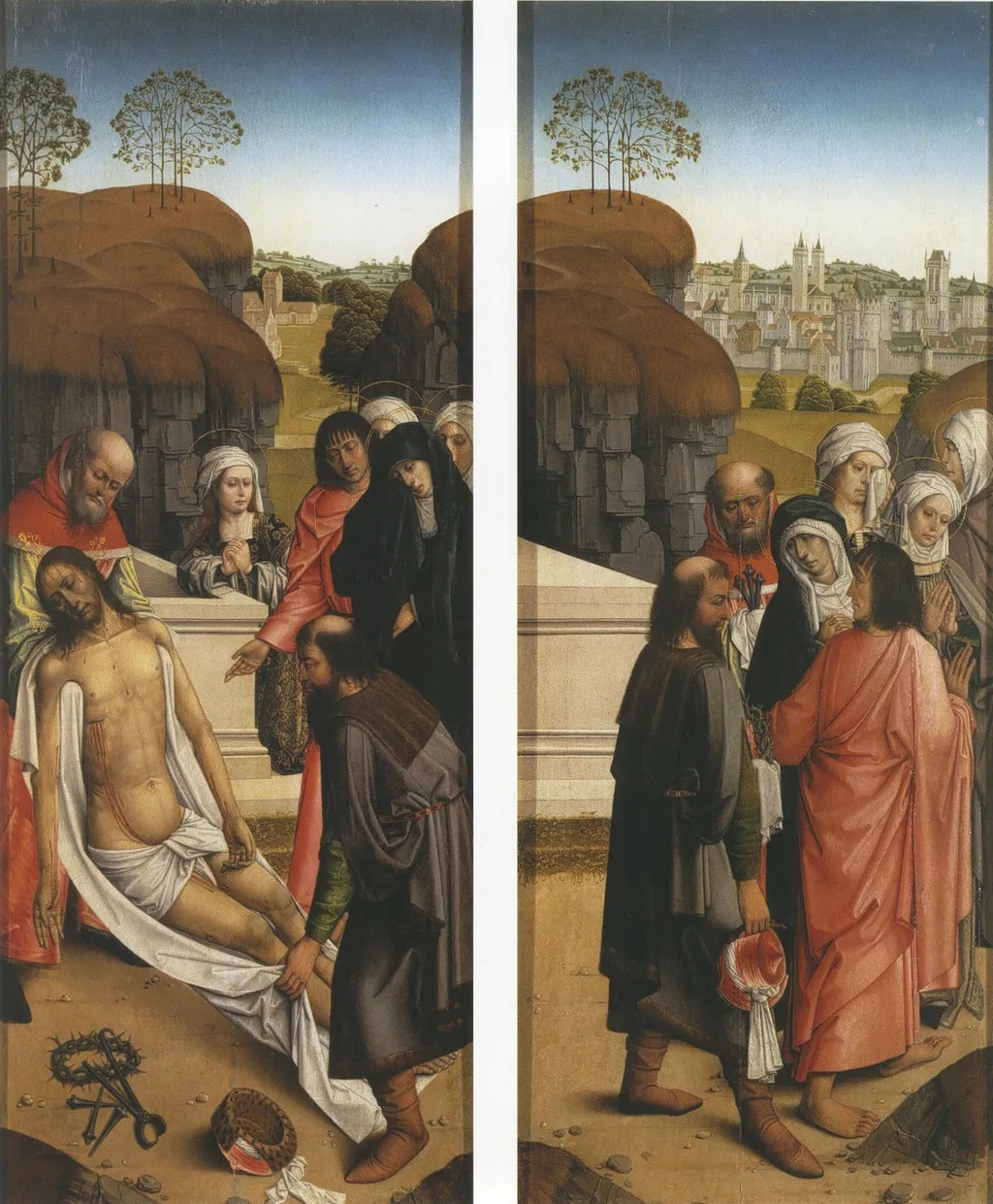
De graflegging (links), Maria, Johannes de Evangelist, Jozef van Arimatea, Nicodemus en de drie Maria's verlaten het graf (rechts) is an oil painting by the Northern Renaissance artist Master of Affligem. It dates from 1497 and is held in the collection of the Royal Museums of Fine Arts of Belgium.
About this work
Overview
Created in 1497, *De graflegging* is an oil painting attributed to the anonymous Master of Affligem, an artist active in Brussels during the late 15th century. Executed in the Northern Renaissance idiom, the work portrays the moment after Christ’s crucifixion when his followers are preparing his body for burial. The composition is held by the Royal Museums of Fine Arts of Belgium.
Subject & Meaning
The scene gathers the Virgin Mary, John the Evangelist, Joseph of Arimathea, Nicodemus, and three women named Mary as they lower the lifeless Christ, wrapped in a white shroud, onto a stone slab. A crown of thorns lies nearby, underscoring the Passion narrative and emphasizing themes of sacrifice and mourning within the Christian tradition.
Technique & Style
Rendered in oil on panel, the painting employs the glazing methods typical of the period, allowing subtle tonal transitions and a muted palette of browns, grays, and soft whites. Careful attention to the drapery’s folds and the texture of the landscape demonstrates the artist’s skill in creating depth and realism without sacrificing the devotional tone.
Context
The work reflects the devotional practices of the Burgundian Netherlands, where intimate, emotionally resonant depictions of Christ’s death were common in private chapels and confraternity settings. The inclusion of specific biblical figures aligns with contemporary liturgical texts, while the distant cityscape and rolling hills situate the biblical event within a familiar, local environment.
History & Provenance
After its creation, the painting entered the collection of the Royal Museums of Fine Arts of Belgium, where it remains part of the museum’s holdings of Northern Renaissance art. Its attribution to the Master of Affligem derives from stylistic analysis linking it to other works produced in Brussels between 1470 and 1500.
Artist & collection
Artist
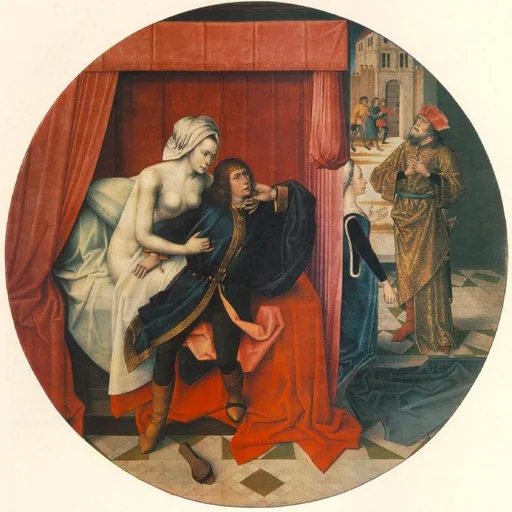
The Master of Affligem or Master of the Joseph Sequence (working c. 1470–1500) was an accomplished painter of the South Netherlandish school, apparently working in Brussels, whose name is not known, but whose hand can…

Museum
Royal Museums of Fine Arts of Belgium
Continue through works from the same source collection.